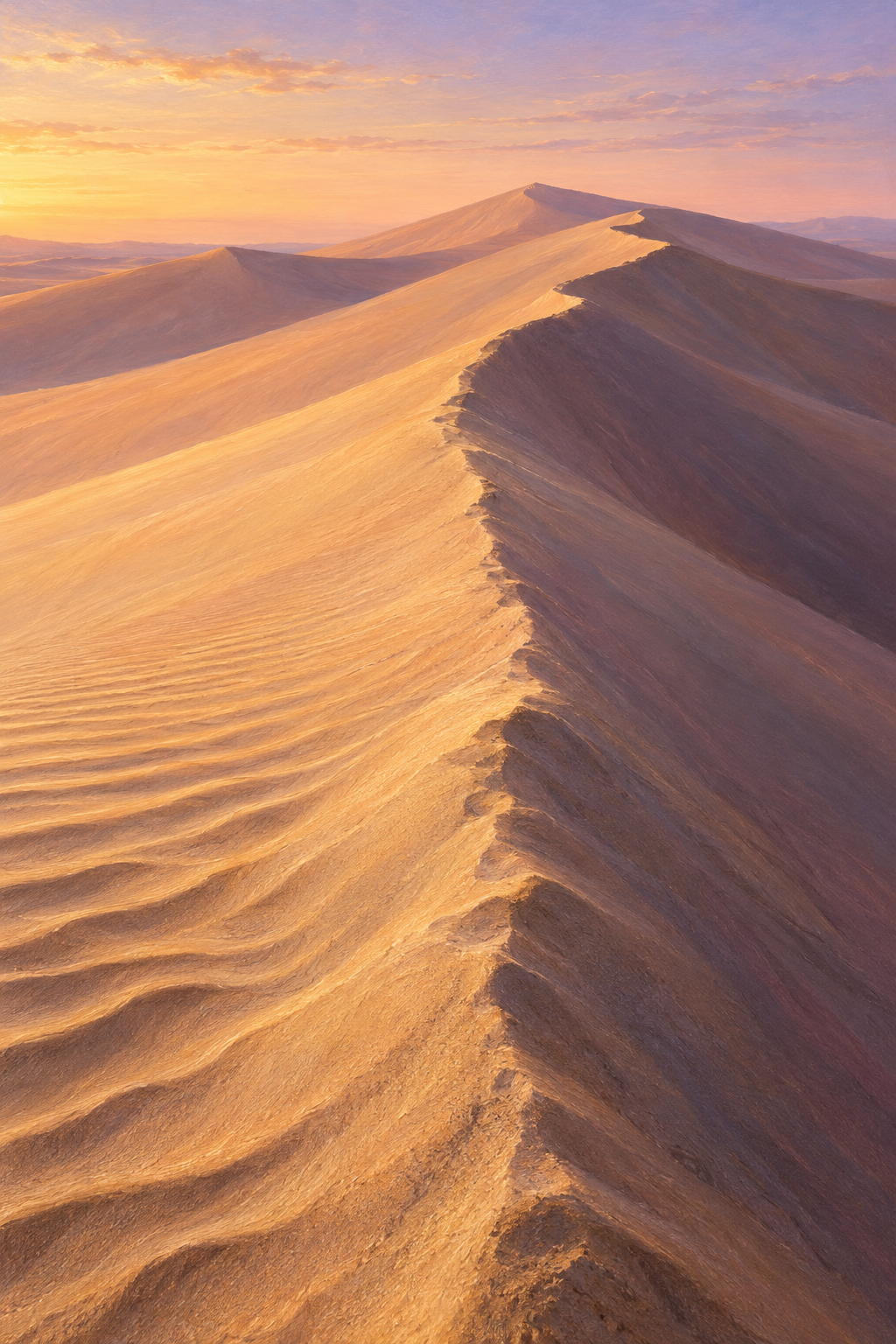
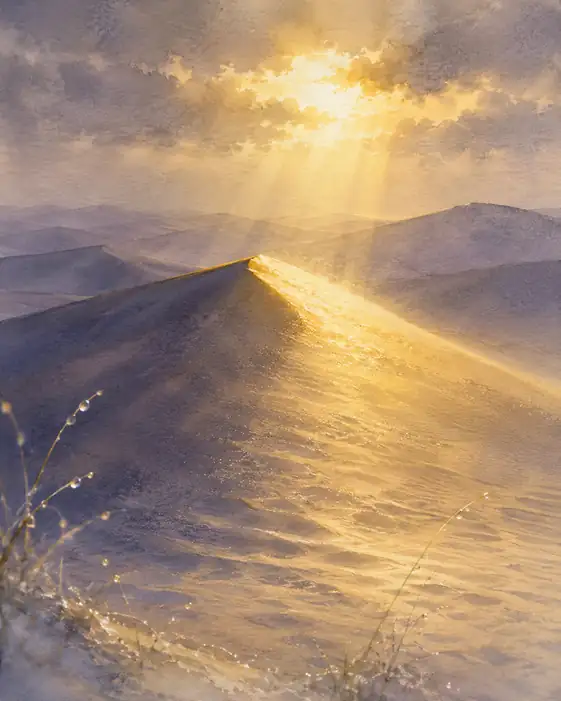
Where the Wind Traces Silence
Critique
1. Introduction This desert landscape focuses on the razor-sharp crest of a monumental sand dune undulating into the distance under late-afternoon light. By contrasting a sun-gilded slope striated with wind ripples against an immense face cast in purple shadow, the painting distills the wilderness into a meditation on form and light. 2. Description Traversing the frame toward the distant horizon, a sinuous ridgeline divides the composition into two realms. The sunlit left flank glows in apricot and golden-amber hues, carved into ripple marks by winds. In contrast, the sweeping slope on the right falls into deep shade, modeled in plum, mauve, and dusty lilac. Successive dune peaks fade into the horizon beneath a pastel-tinted dusk sky. 3. Analysis The compositional geometry relies on the knife-edge crest as a visual spine, orchestrating spatial recession across the expanse. A chromatic dialogue pairs warm cadmium yellows against cool complementary violets within the shadowed declivity. The painter employs textured, directional brushwork to register the grain of shifted sand along ripples, contrasting with smooth gradations that suggest evening haze in the distance. 4. Interpretation and Evaluation The stark bifurcation of the dune ridge serves as a metaphor for cosmic dualities: day and night, heat and cold, presence and void. Ever-shifting yet immemorial, the desert landscape embodies silent permanence amid change. Through austere restraint and chromatic equilibrium, the artist elevates topography into a contemplation of solitude, stillness, and primordial grace. 5. Conclusion While the minimalist aesthetic impresses with graphic purity, sustained viewing reveals sensitivity to texture and radiant light. The artwork endures as a serene monument to the poetic grandeur of the earth.
Same Subcategory
Similar Artworks
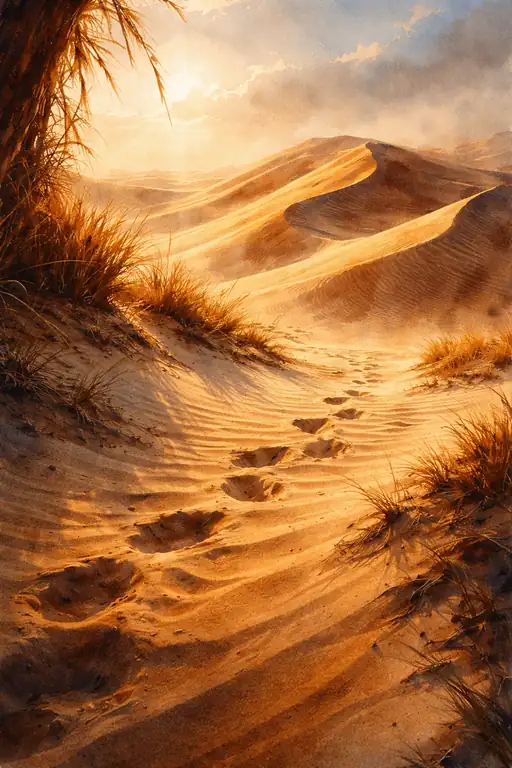 Footsteps in the Golden Sand
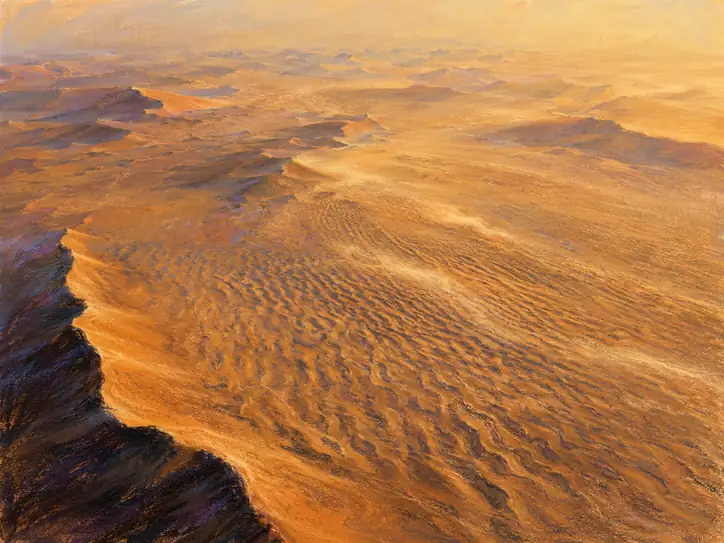 Ripples of Eternal Time
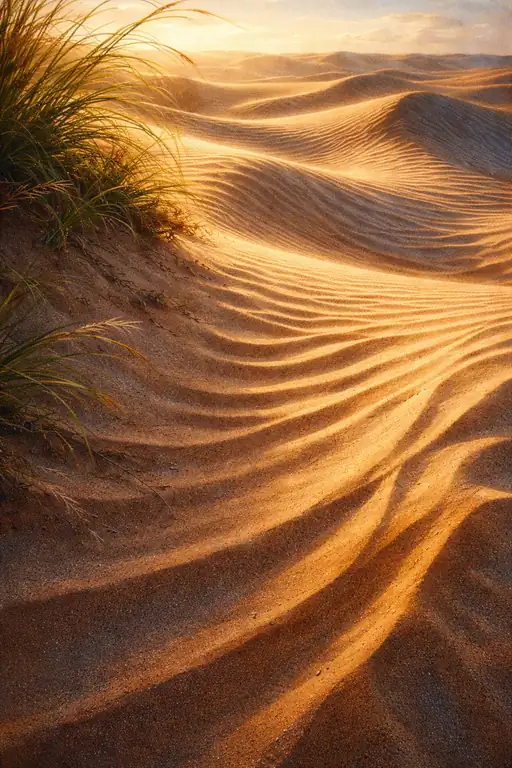 The Echo of Golden Sands
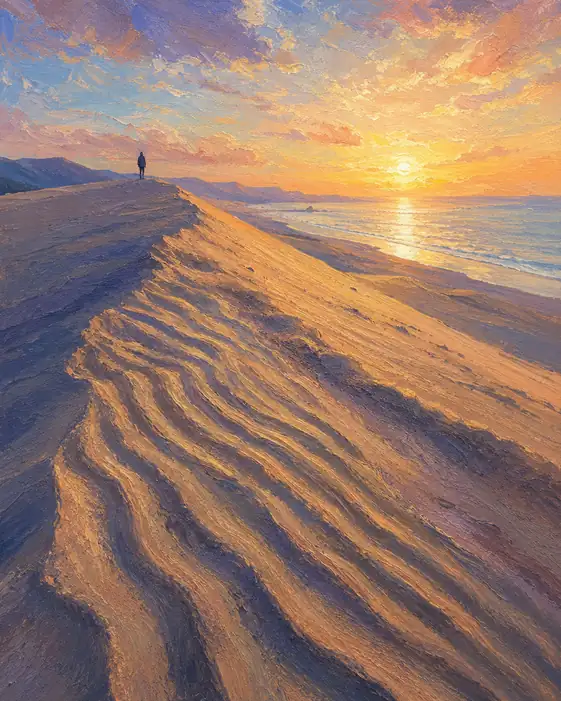 The Wind Leaves a Road to the Sea
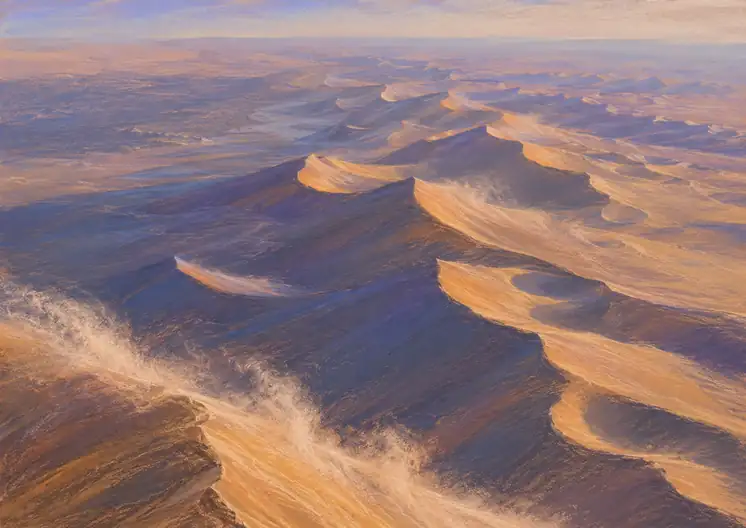 Where the Wind Carves the Earth
 Twilight Whispers on White Dunes
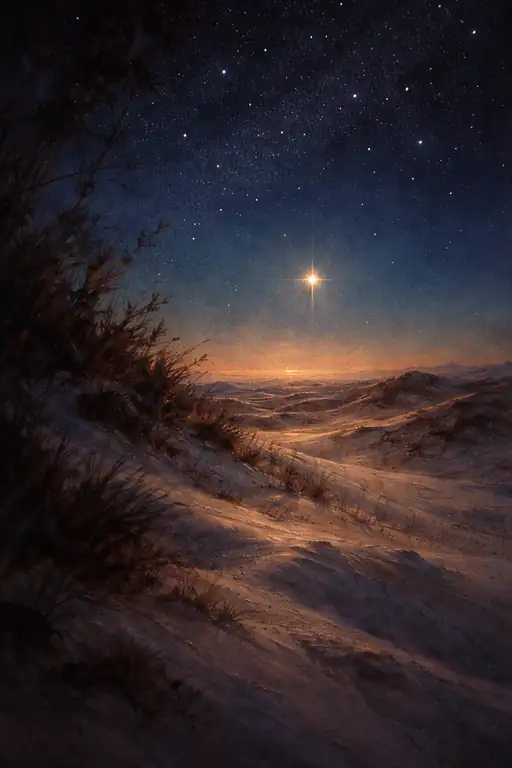 A Solitary Star Over the Frozen Sands
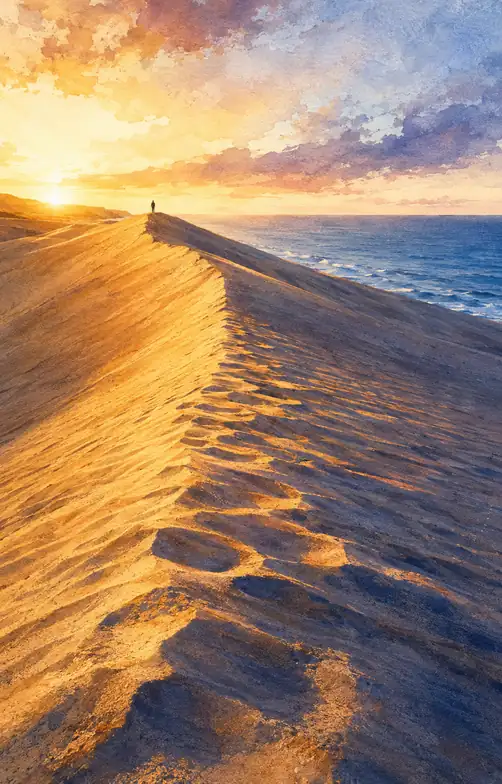 Atop the Dune, Awaiting a Vision of You
 Golden Crest in the Silent Solitude
 Divided by Light