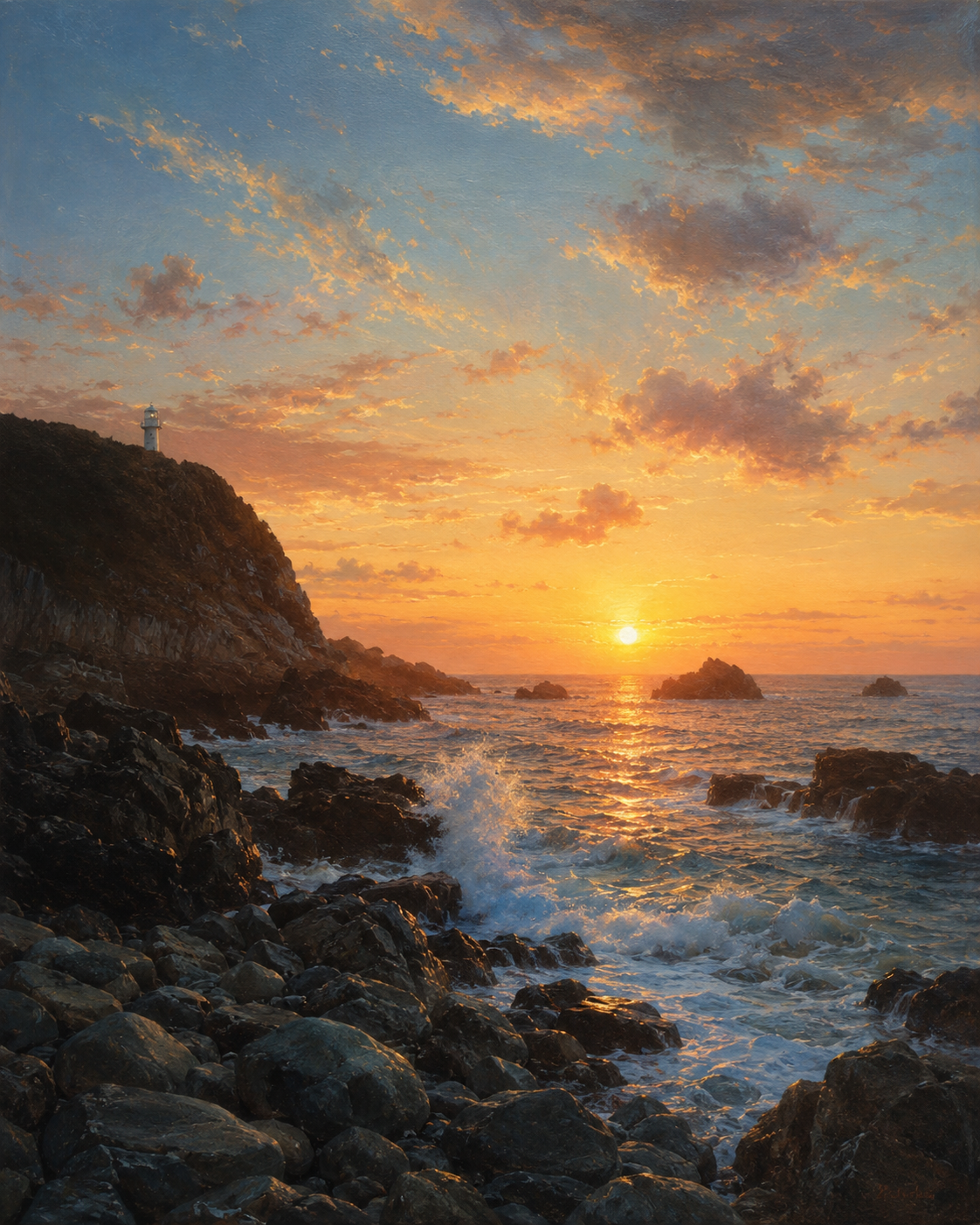
Twilight Glow Embracing the Rocky Coast and Distant Beacon
Critique
Introduction This vertical coastal landscape places a broad sunset sky above a rock-strewn shore. The lighthouse stands small on the left headland, while the low sun occupies the central horizon. Unlike a close wave study, the scene emphasizes distance, atmosphere, and the long field of rocks leading seaward. Description Pale blue remains visible between scattered orange and mauve clouds, with a darker cloud mass near the upper right. The left cliff descends into rounded foreground stones and jagged black outcrops. A modest wave breaks at center, sending a narrow white splash upward. Offshore rocks punctuate the horizon, and the sun lays an orange path across rippled water. Analysis The large sky gives the composition openness despite the crowded lower shore. Diagonals in the headland and foreground rocks funnel attention toward the central sun, while the lighthouse provides a small vertical counterpoint. Alternating dark rocks and white foam establish depth. Cool blue-gray intervals temper the orange palette and make illuminated cloud edges and reflected water more distinct. Interpretation and Evaluation The modest scale of both lighthouse and wave favors contemplation over drama. Human guidance, tidal motion, and sunset appear as separate rhythms within a larger coastal cycle. Careful atmospheric transitions and convincing rock recession show descriptive skill, while the spacious distribution of clouds gives the familiar subject individuality. Color is luminous but structurally controlled. Conclusion At first the low sun seems to be the destination, but closer viewing reveals the shore as a sequence of visual steps toward it. The painting finds grandeur through distance rather than impact, balancing permanence, motion, and fading light.
Same Subcategory
 Whitecaps of Petals on the Sunset Path
Similar Artworks
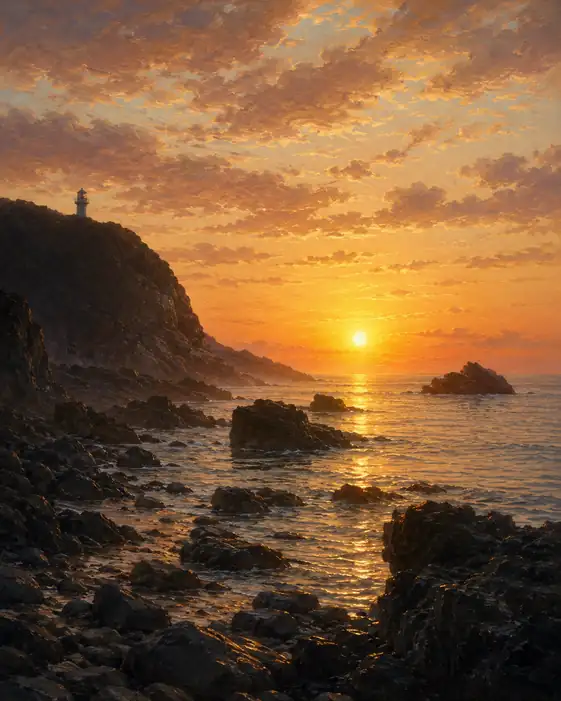 Cape Lighthouse Bathed in the Golden Horizon Sunset
 Lighthouse Watching Ocean Spray Under a Dawn Sky
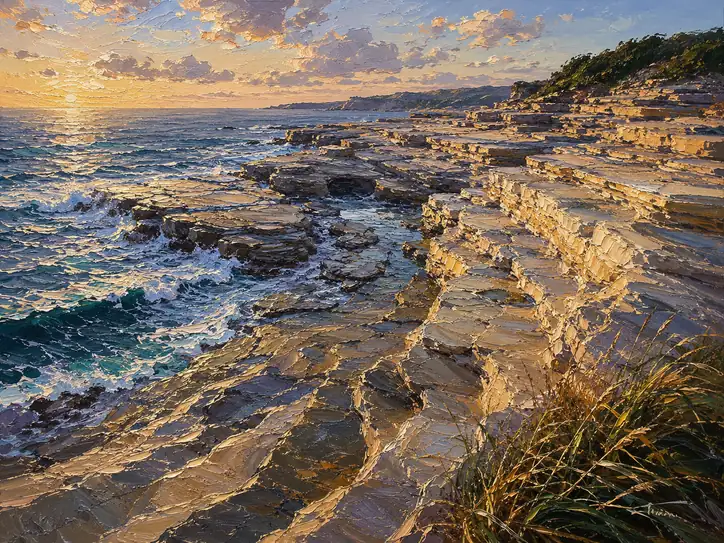 Golden Pulse of the Ancient Shore
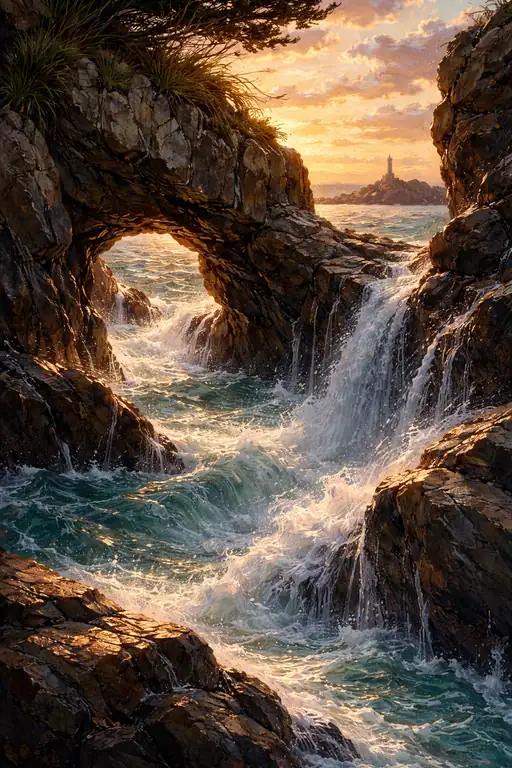 Sublime Light of the Coastal Arch
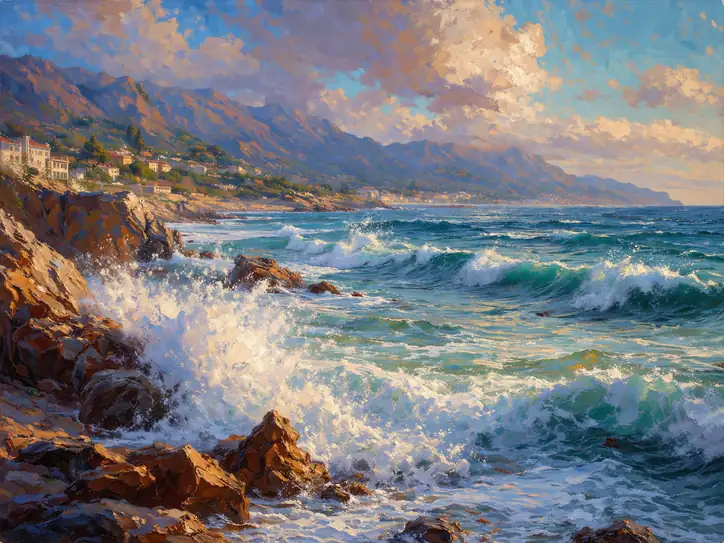 The Majestic Dance of the Golden Shore
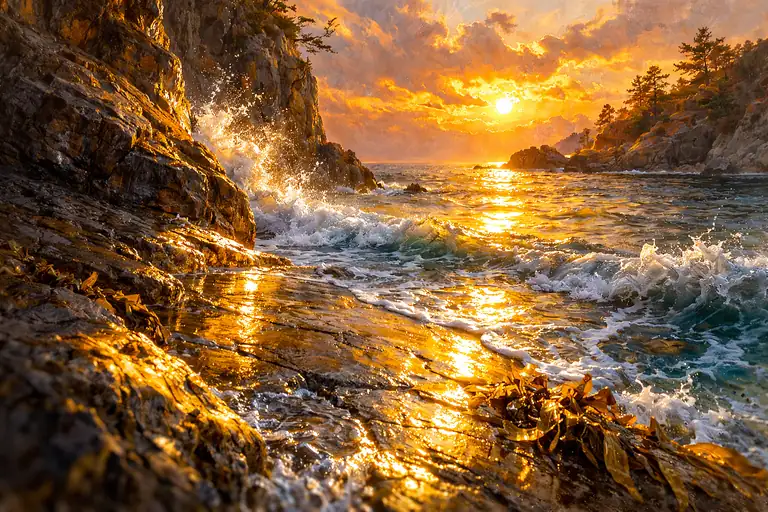 Clash of the Crimson Heavens
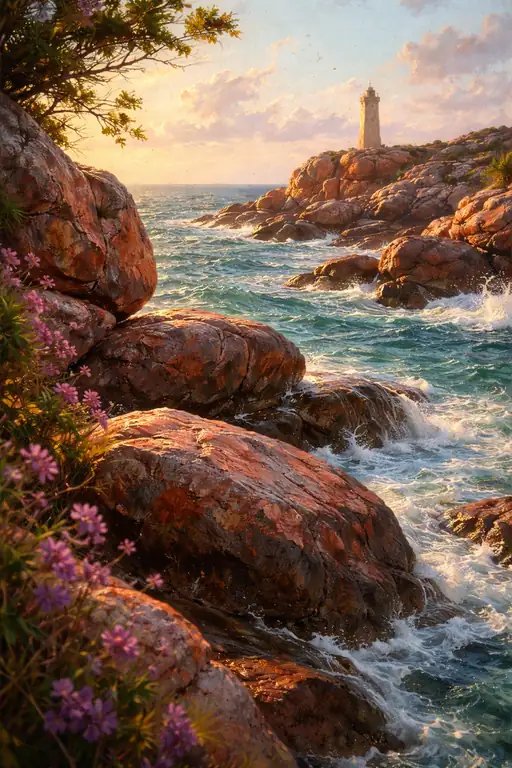 Solitary Sentinel of the Coast
 Dusk's Golden Reflection
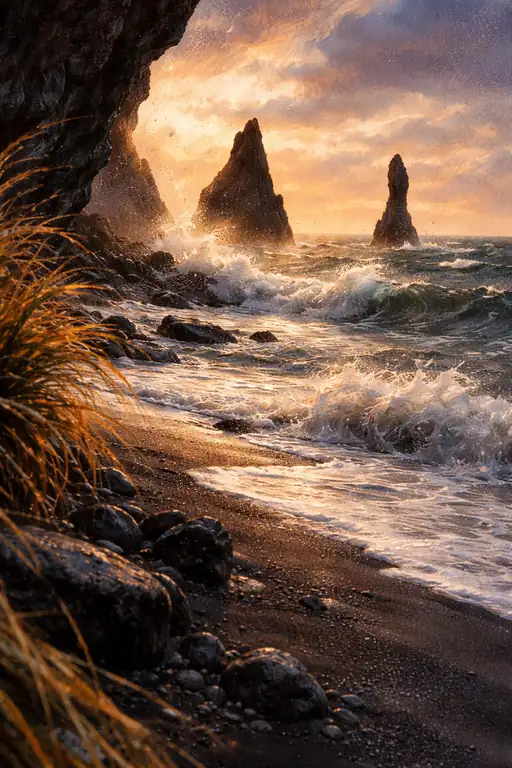 Golden Rays upon the Rugged Shore
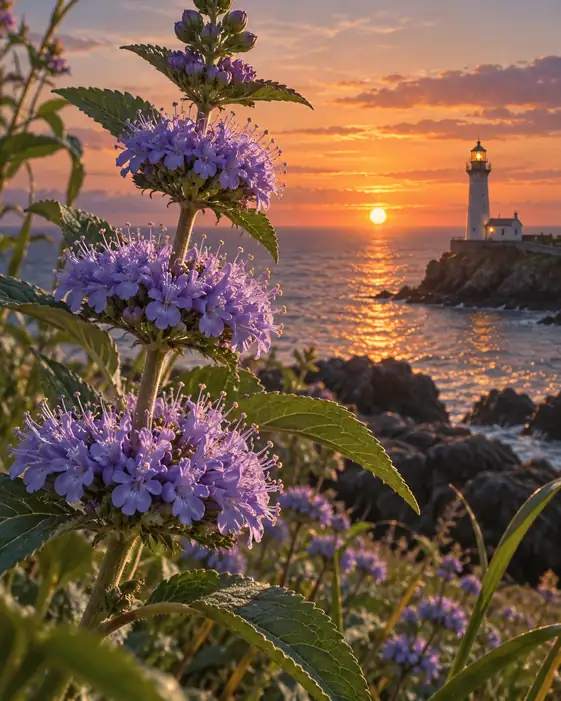 Cape Lighthouse and Sunset Caryopteris