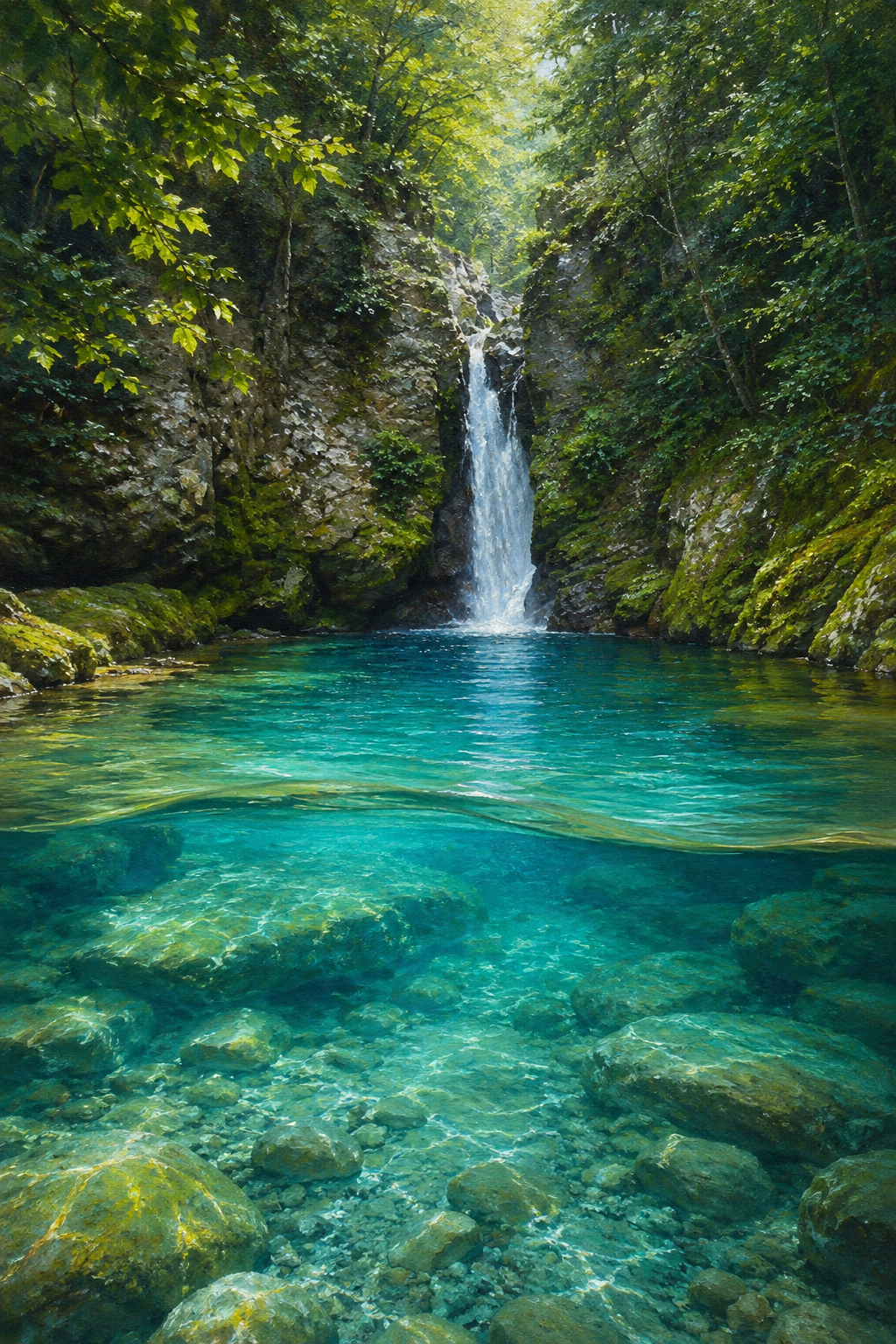
Symphony of Light Across the Crystal Basin
Critique
Introduction This vertical landscape depicts a narrow waterfall entering a luminous forest pool, with a low split-level viewpoint revealing large submerged rocks. The cascade stands near the upper center, while the waterline bends across the middle and opens the foreground into a transparent turquoise basin. Description Dense leaves close around steep gray walls, although sunlight enters through a bright opening above the falls. The white stream widens as it descends and reflects faintly on the green-blue surface. Underwater, broad rounded boulders and smaller stones recede through clear water; shifting yellow-white light patterns cross their moss-colored surfaces. Analysis The nearly central waterfall provides a stable vertical axis, but the brighter foliage at upper left and heavier right wall prevent strict symmetry. The curved waterline introduces a strong horizontal counterforce. Crisp leaf clusters and broken cliff planes contrast with softened underwater edges. Color changes from warm yellow-green overhead to emerald and then cool cyan, giving depth a coherent chromatic order. Interpretation and Evaluation The pool is presented as an extension of the ravine rather than a reflective endpoint. Careful rendering of refraction, stone scale, and diminishing contrast makes the submerged terrain convincing. The composition is balanced yet natural, and the split viewpoint adds an exploratory quality to a familiar motif. Its descriptive skill is strongest where light changes character across air, surface, and water. Conclusion At first the waterfall appears to organize the entire scene, but sustained viewing shifts attention toward the silent architecture below. Controlled color, varied textures, and persuasive transparency join movement and permanence within one continuous landscape.
Same Subcategory
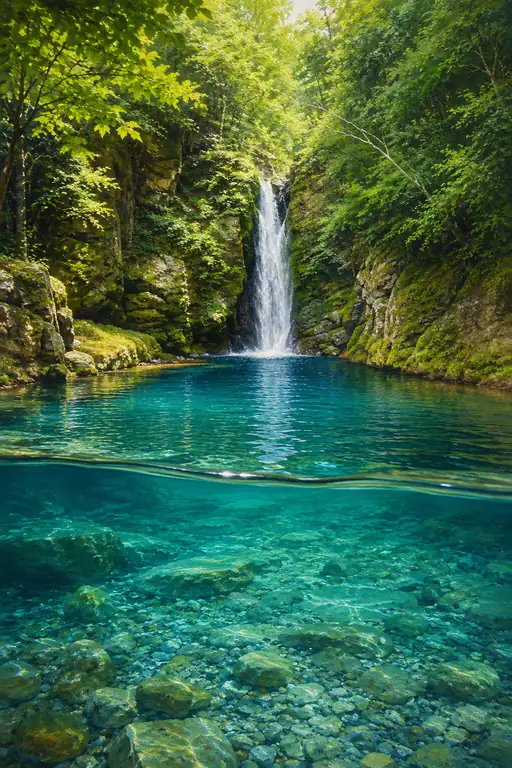 Hidden Waterfall Basin Surrounded by Lush Greenery
Similar Artworks
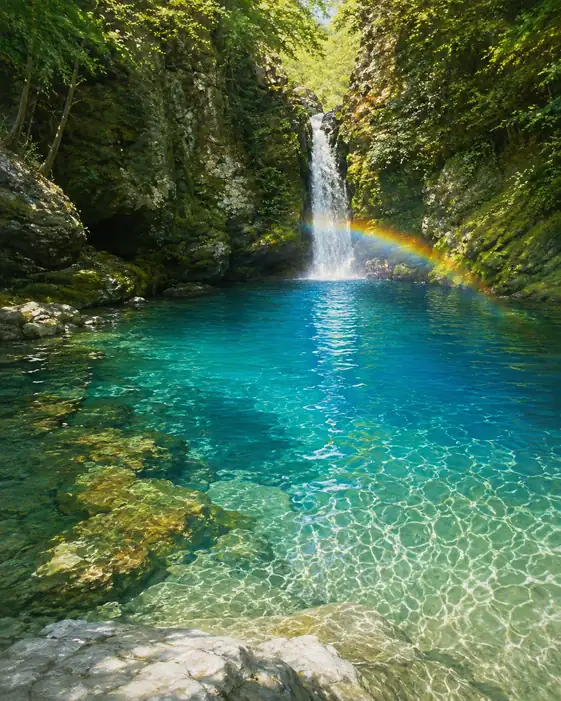 Rainbow Arc Gracing the Emerald Waterfall Basin
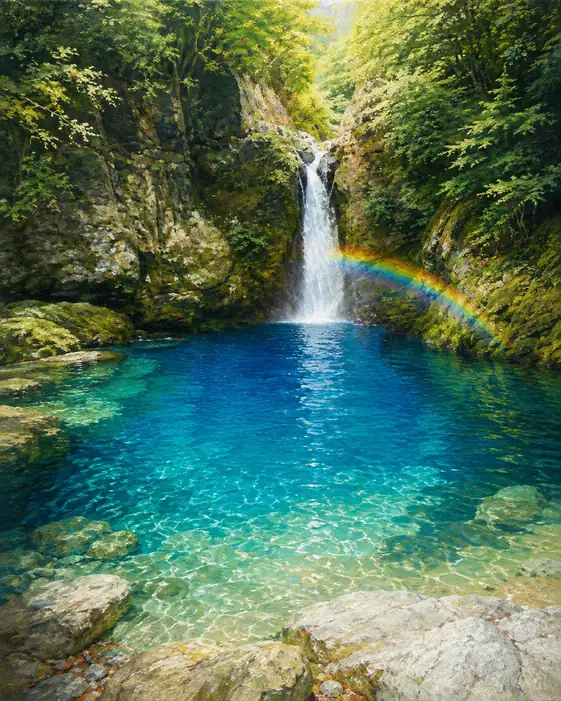 Celebration of Seven Hues Woven from Waterfall Mist
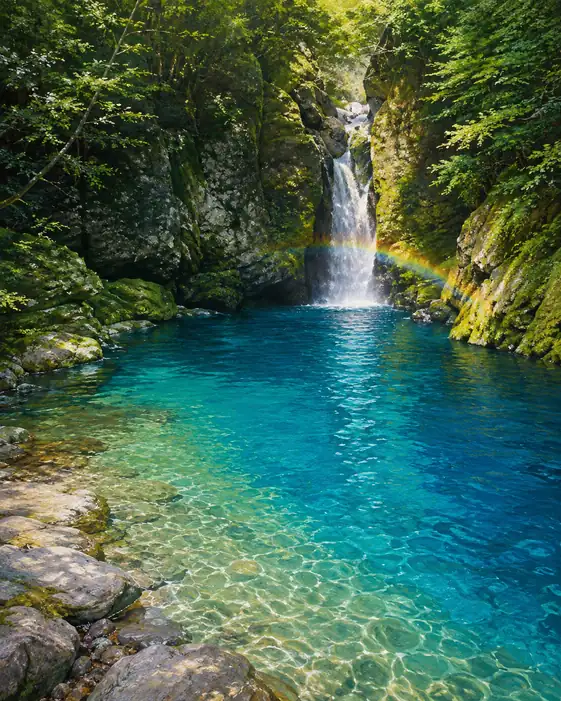 Melody of Rainbows Resonating over Azure Depths
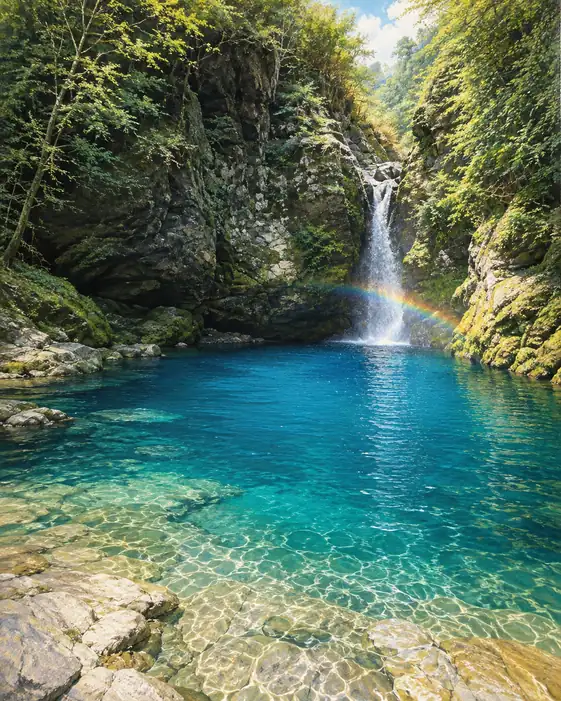 Seven-Hued Rainbow Resting on Turquoise Waters
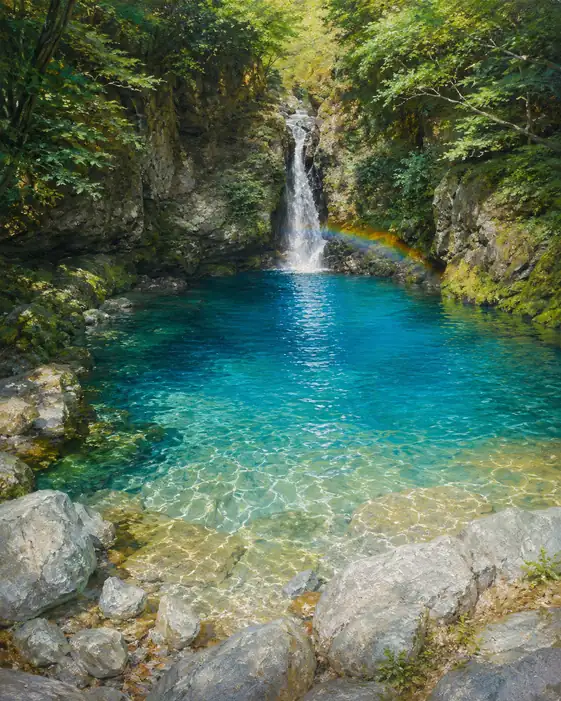 Pebbled Riverbed Shimmering Under a Waterfall Rainbow
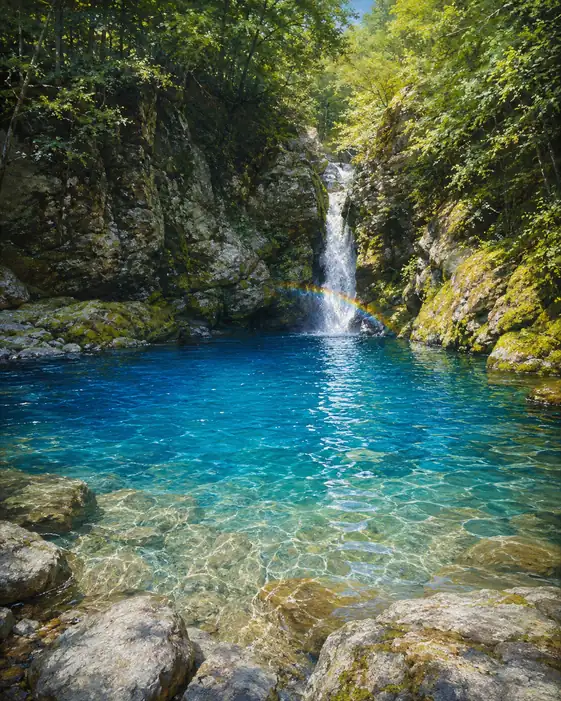 Bridge of Light Spanning the Turquoise Gorge
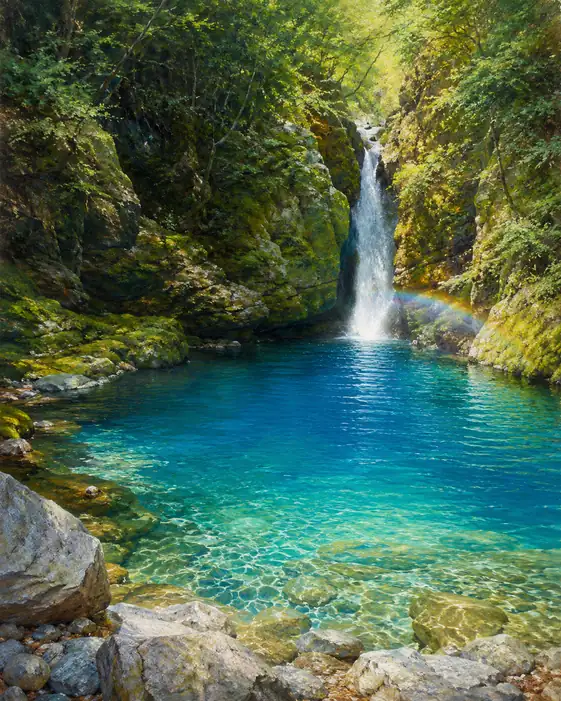 Rainbow Arching Over the Cobalt Waterfall Pool
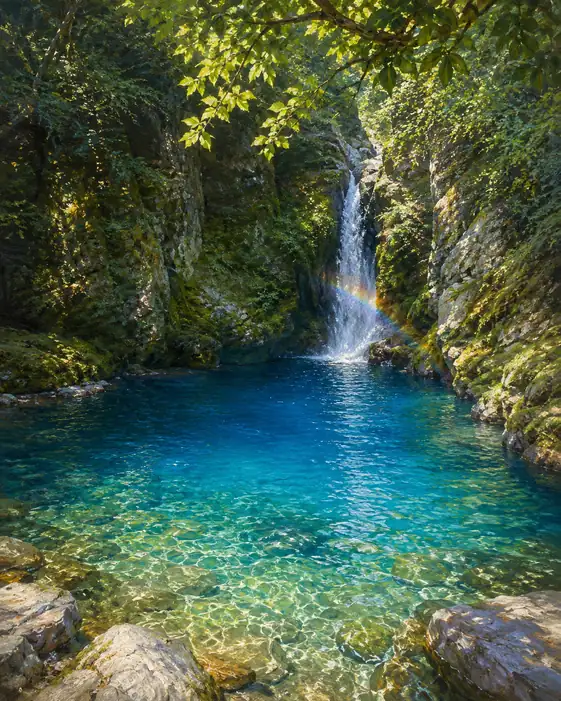 Sunlit Canopy Canopying the Rainbow Waterfall
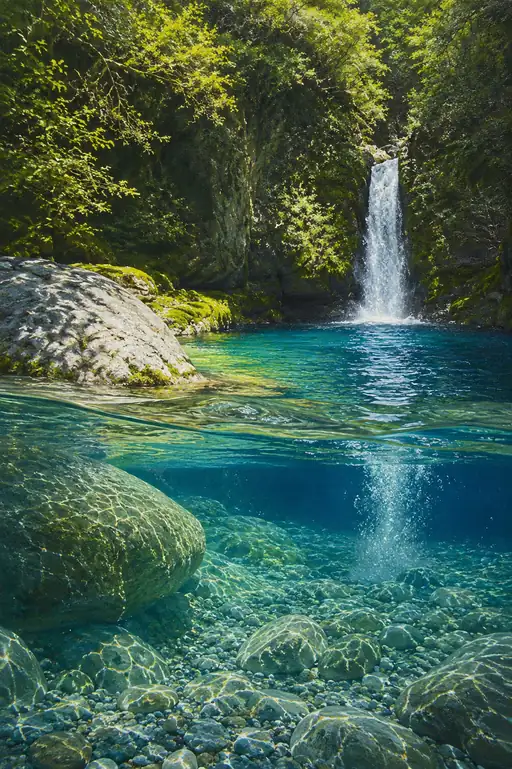 Split-Level View of the Glistening Waterfall Basin
 Whispers of the Emerald Basin