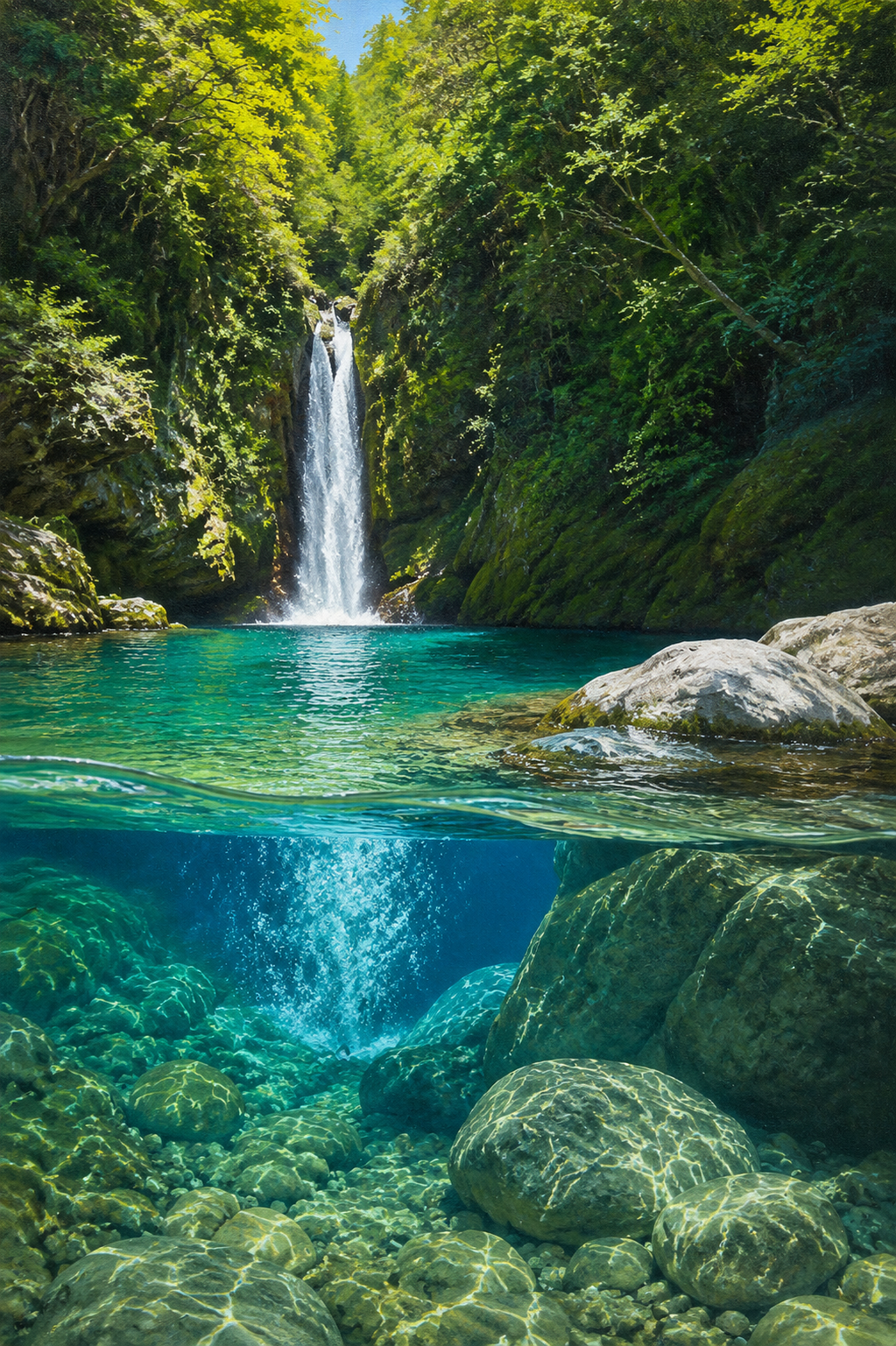
Riverbed Pebbles Beneath a Pure Mountain Waterfall
Critique
Introduction This vertical landscape depicts a narrow waterfall entering an intensely clear mountain pool, seen simultaneously above and below the surface. The waterfall stands near the center, framed by high green walls, while large rounded stones establish a substantial foreground beneath the water. Description Bright foliage opens toward a small patch of blue sky at the top, and the surrounding ravine descends through mossy rock into shadow. A twin stream of white water meets the turquoise pool. Below the gently arcing waterline, bubbles fall through deep blue water among green-gray boulders traced with luminous networks of refracted sunlight. Analysis The nearly central cascade creates a firm vertical axis, but the pale rock projecting from the right bank prevents rigid symmetry. Above, fine branches and broken highlights produce a porous enclosure; below, broad stones and darker blue intervals give the space weight. Repeated white accents link waterfall, surface reflections, bubbles, and light patterns across the rocks. Interpretation and Evaluation The image presents the pool as both inviting surface and structured underwater environment. Its descriptive precision is strongest in the changing behavior of light: scattered in leaves, sharpened on falling water, and bent into moving lines below. A disciplined green, cyan, and blue palette supports spatial clarity, while the split viewpoint supplies originality without sacrificing the believable character of the scene. Conclusion The first impression of refreshing brightness gradually expands into an awareness of the ravine as one continuous ecological space. Balanced composition, convincing depth, and differentiated textures make the visible and submerged portions mutually reinforcing rather than merely decorative.
Same Subcategory
Similar Artworks
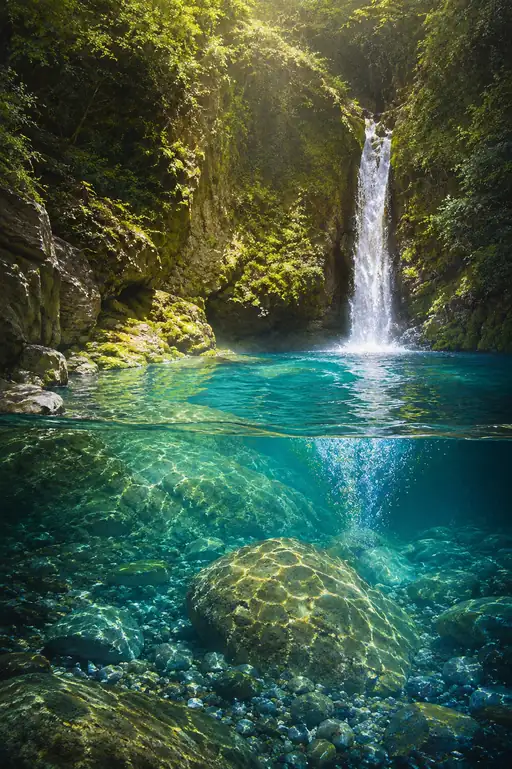 Sunbeams Piercing the Depths of a Verdant Plunge Pool
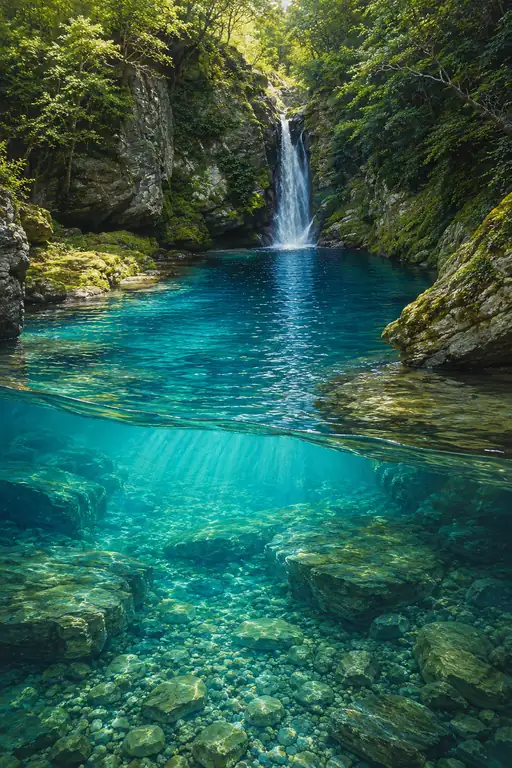 Sunlit Cavern Pool Glistening in Azure Clarity
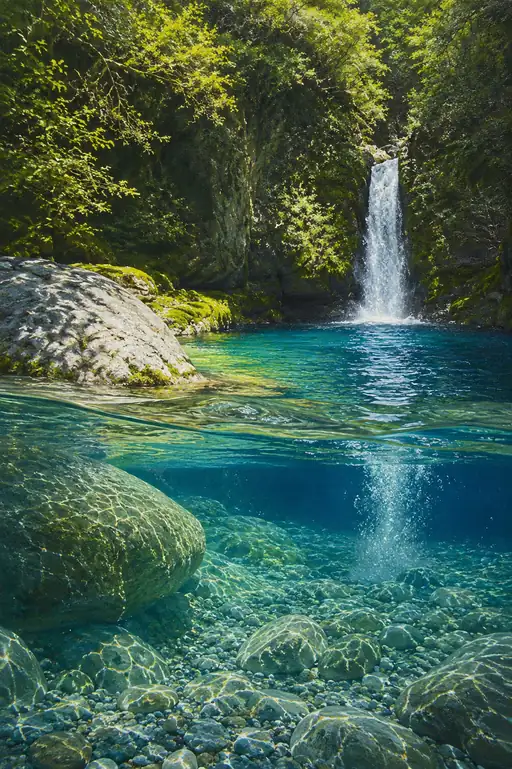 Split-Level View of the Glistening Waterfall Basin
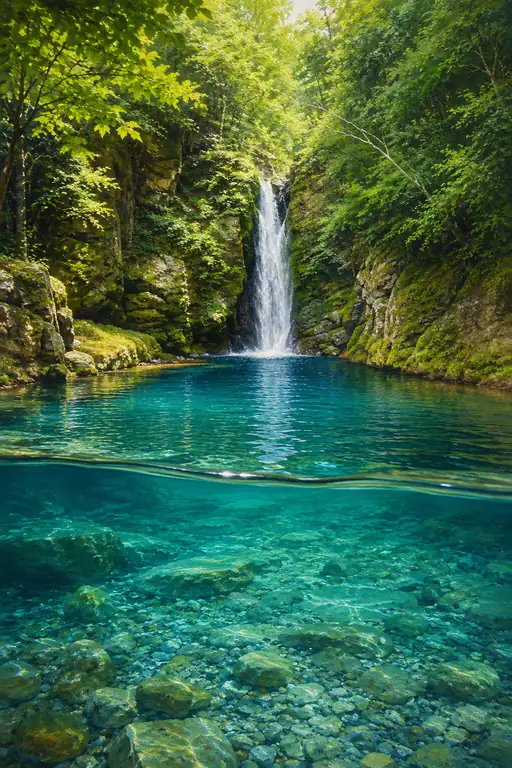 Hidden Waterfall Basin Surrounded by Lush Greenery
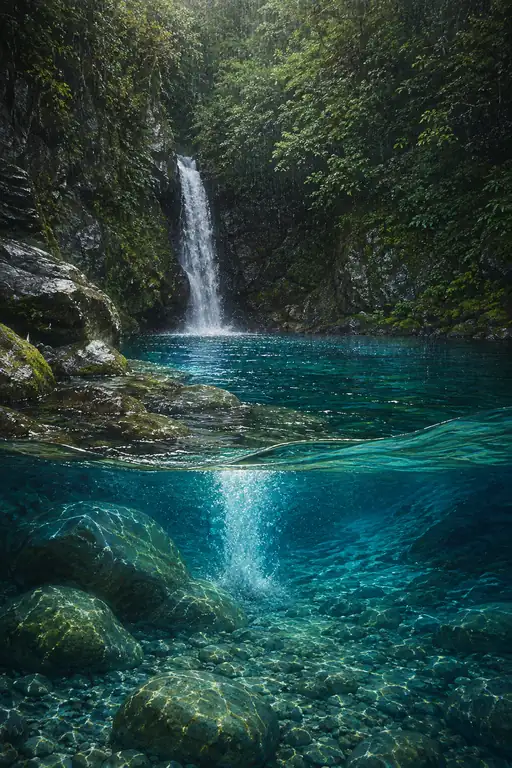 Misty Waterfall Over Crystalline Turquoise Depths
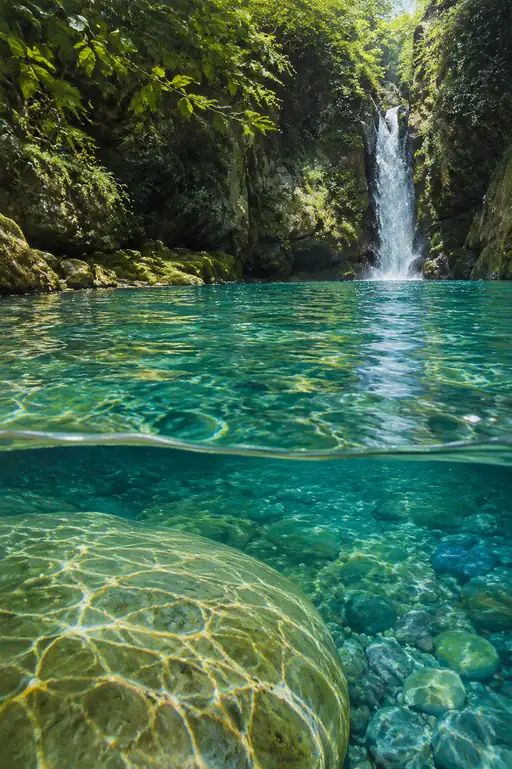 Ripples of Sunlight Dancing Over River Stones
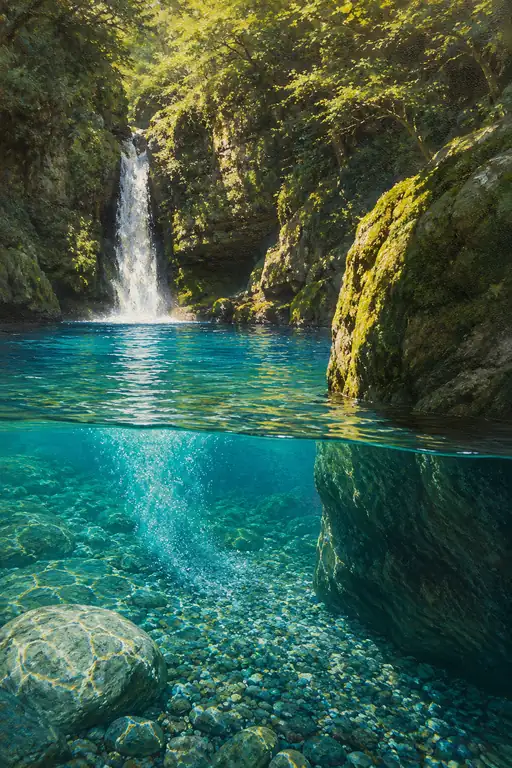 Mossy Crags and Sunlit Shallows Beneath the Cascades
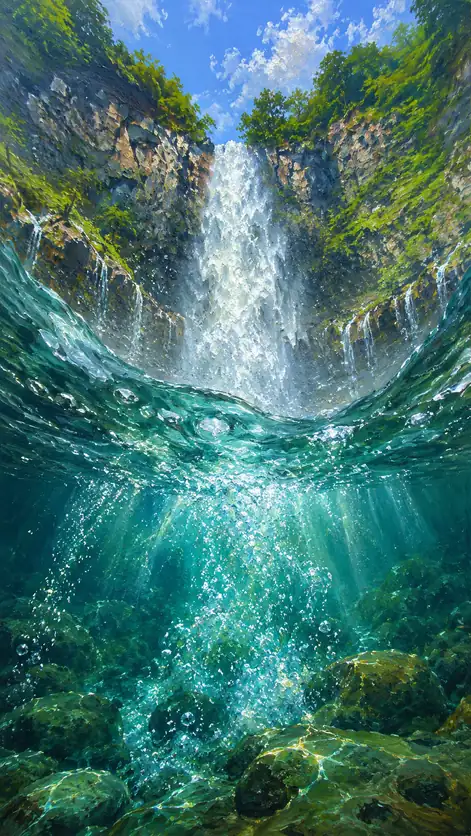 Kegon: From the Depths of Light
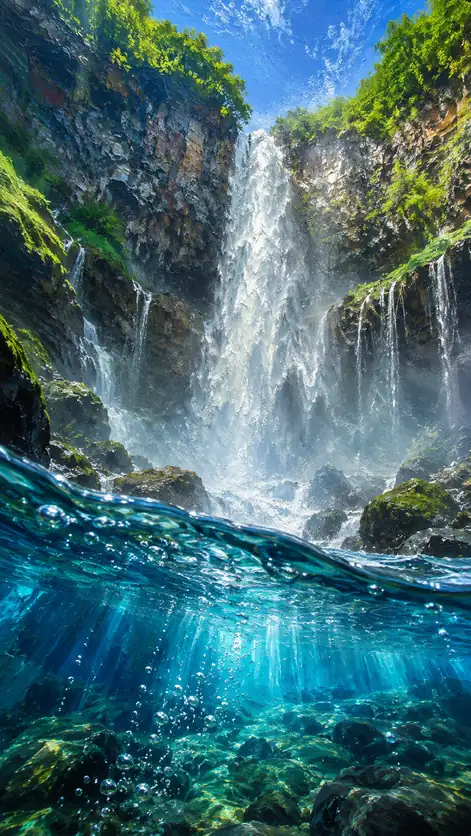 Beneath the Waterfall, Another Sky
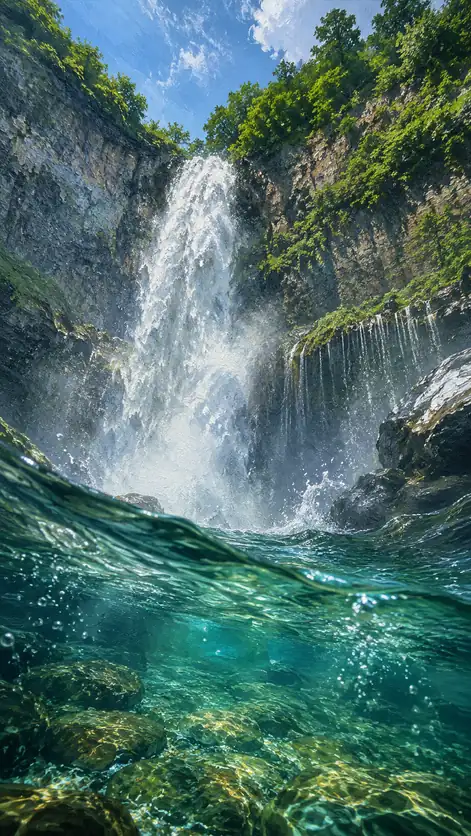 The Current Remembers the Blue Above