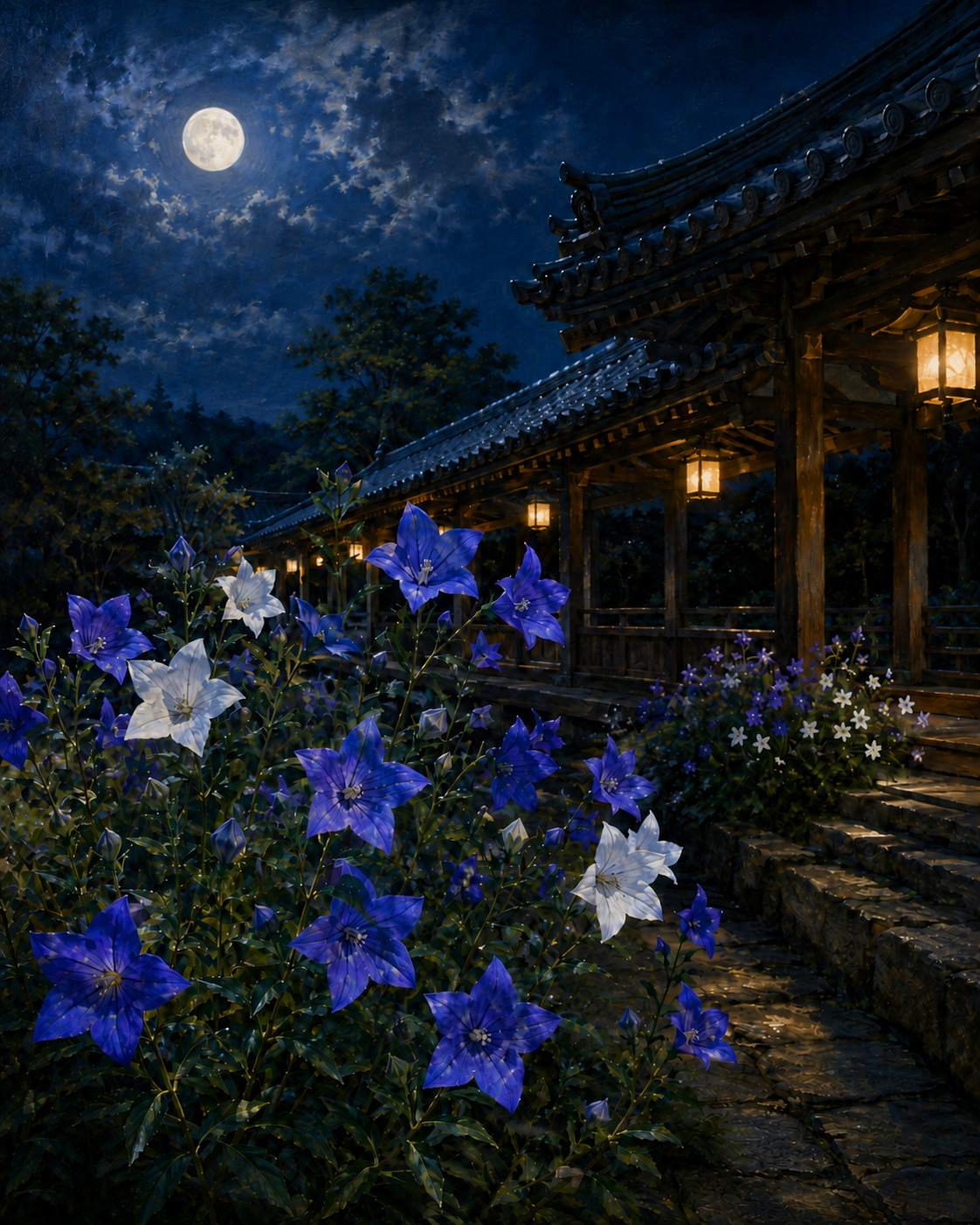
Moonlit Wooden Corridor and Purple-White Bellflowers
Critique
1. Introduction This vertical nocturnal landscape depicts a traditional wooden temple gallery under a luminous full moon, fronted by a lush garden of blooming purple and white bellflowers. The painting captures a sacred atmosphere of timeless tranquility, merging classic architecture with seasonal botanical beauty. 2. Description In the foreground, numerous star-shaped balloon flowers in deep indigo, violet, and pristine white cluster along weathered stone steps, their petals illuminated by hanging lanterns and moonlight. To the right, an open wooden cloister with traditional tiled eaves extends upward, illuminated by warm glowing paper lanterns. Above, a brilliant full moon shines through delicate clouds in a deep starry sky. 3. Analysis The composition balances the verticality of the foreground blossoms with the strong architectural perspective of the receding covered walkway. A harmonious color harmony is achieved between the cool ultramarines of the midnight sky and the warm amber radiance emanating from the lanterns. Subtle light reflections across the tiled roof and stone pavement enhance the palpable atmosphere of nocturnal calm. 4. Interpretation and Evaluation The painting embodies the spiritual peace of Japanese Buddhist temple architecture, where cultivated nature and human sanctuary coexist in sacred harmony. Technically, the artist demonstrates mastery in managing multiple light sources—balancing internal lantern warmth with external lunar radiance. The serene presence of the bellflowers evokes purity, mindfulness, and contemplation. 5. Conclusion While the glowing lanterns and crisp flowers immediately draw admiration, prolonged viewing reveals the architectural precision and tonal balance of the entire scene. The artist successfully transforms a moonlit temple evening into an enduring visual poem. It stands as an accomplished, emotionally uplifting masterpiece of nocturnal landscape art.
Same Subcategory
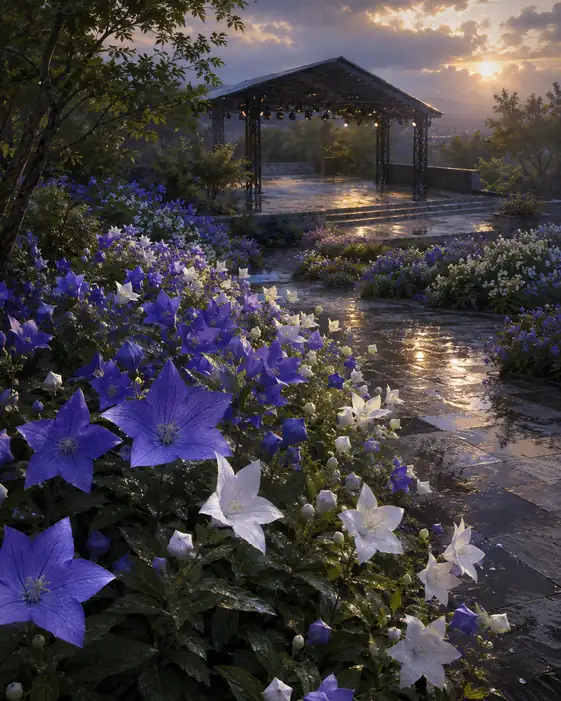 Sunset Outdoor Stage and Light-Gleaming Bellflowers
Similar Artworks
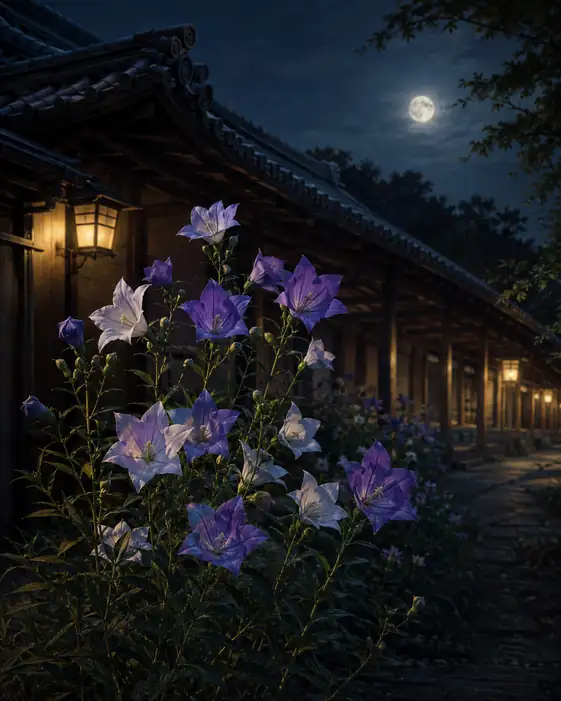 Moonlit Corridor and Bellflowers in Lantern Light
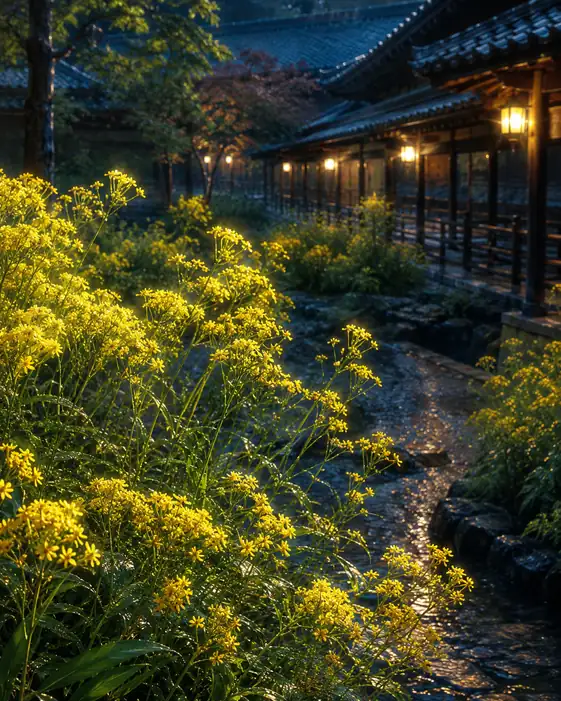 Golden Autumn Waves Along the Temple Corridor
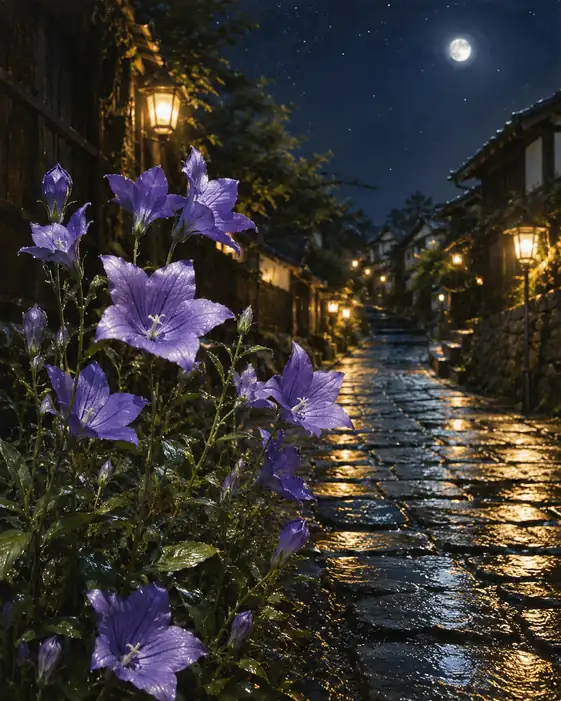 Moonlit Post-Town Slope and Night-Dew Bellflowers
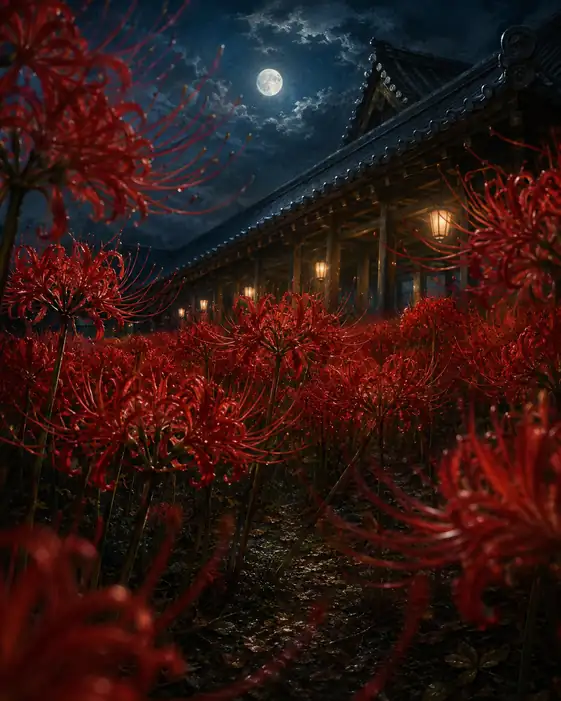 Moonlit Tiled Eaves and Mystically Blooming Lycoris
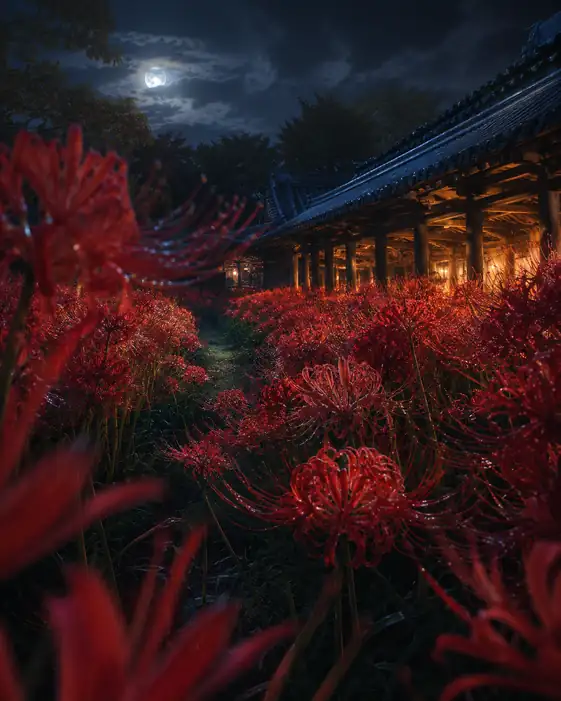 Moonlit Sanctuary and Lycoris Veiling the Corridor
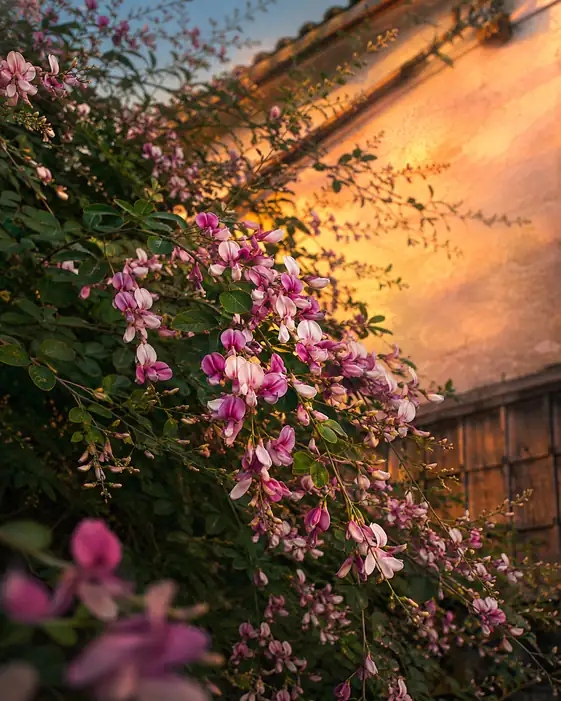 Bush Clover Shimmering Along the Sunset Wall
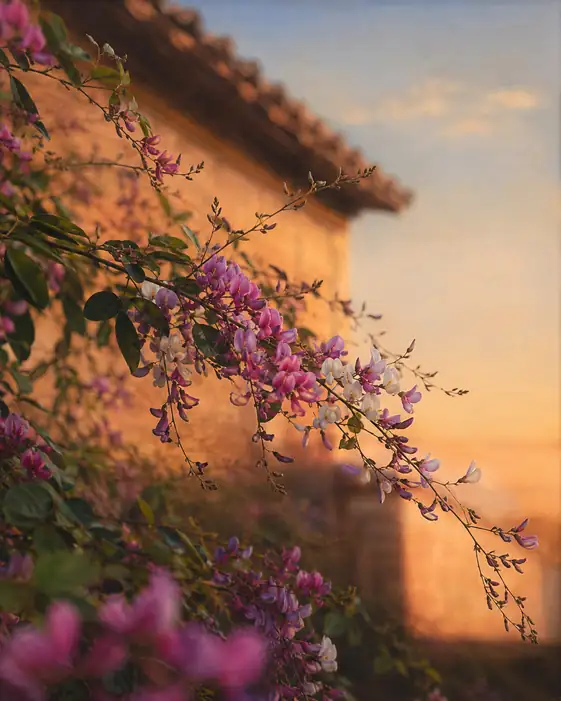 Bush Clover Cascading in the Sunset Glow
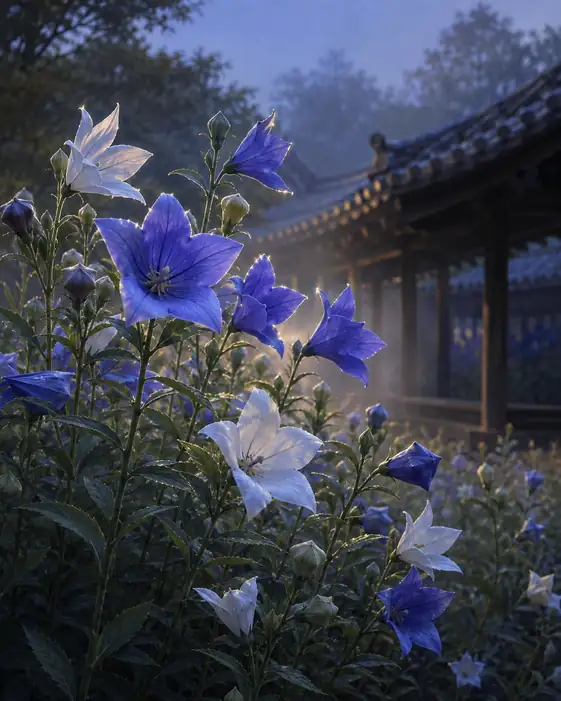 Sacred Bellflowers by the Cloister
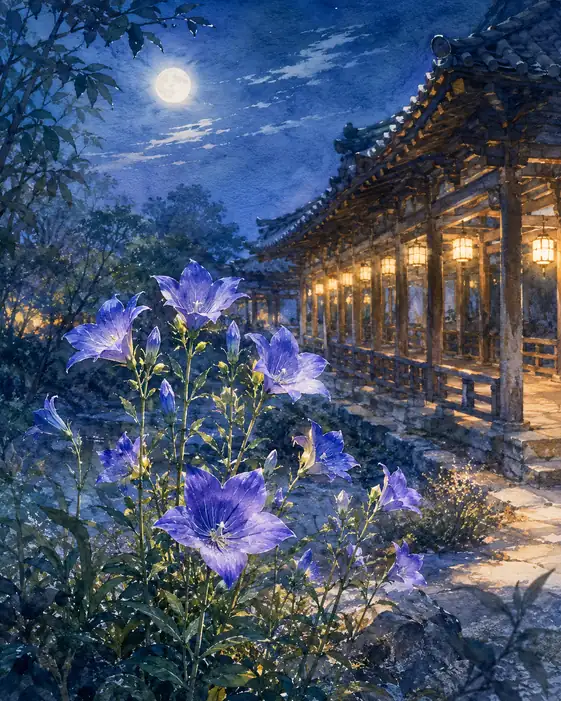 Moonlit Cloister and the Indigo Blossom
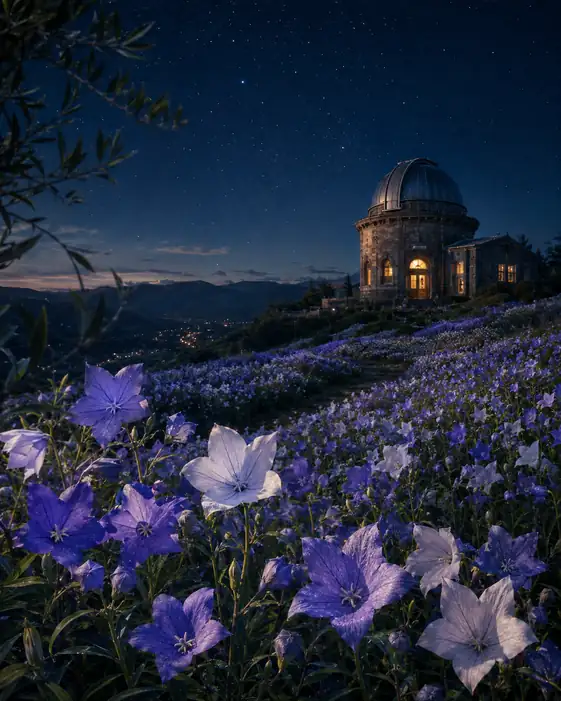 Starry Observatory and Bellflower Hill Gazing at the Night Sky