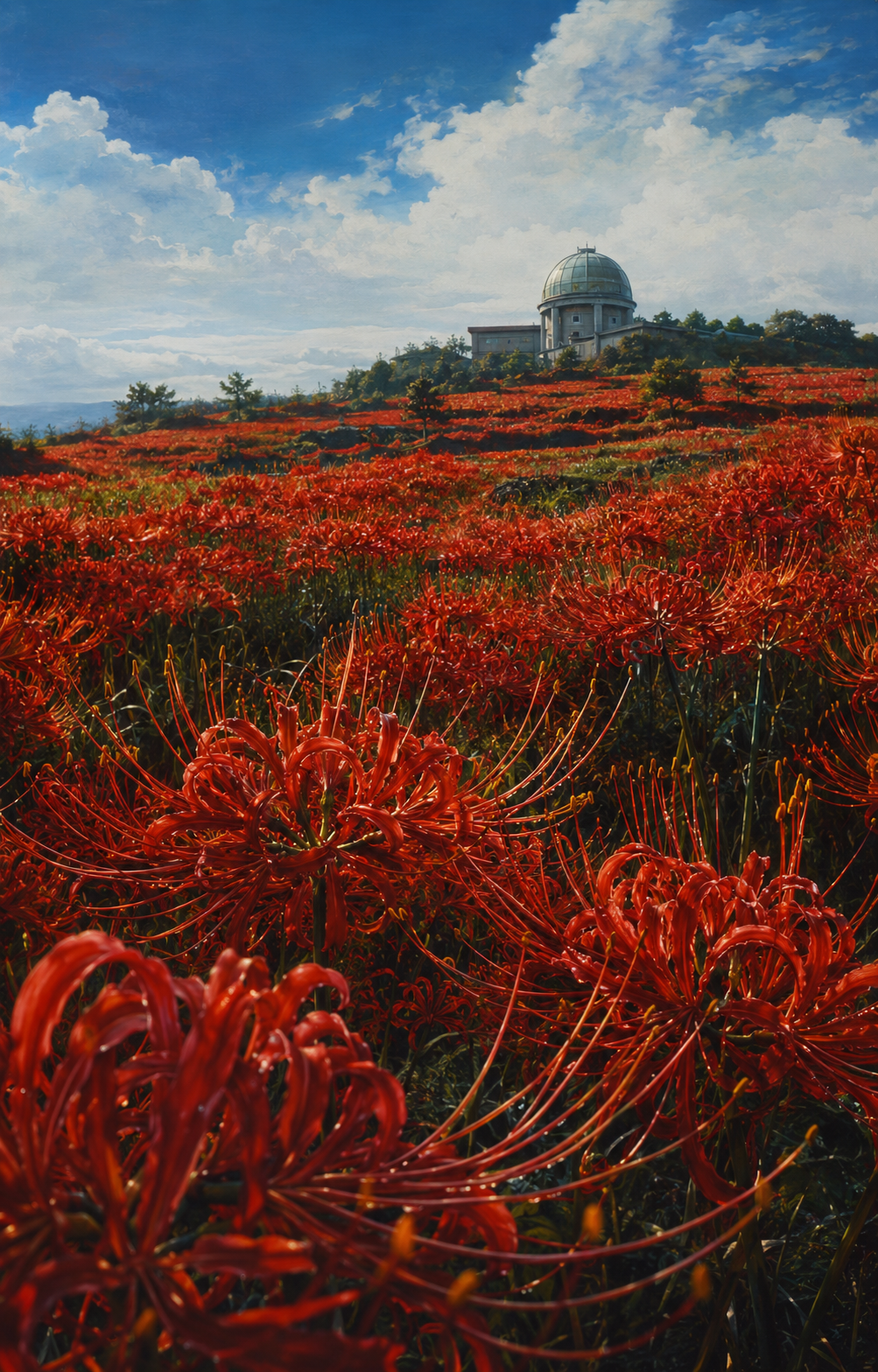
Hill Gazing at the Stars and the Celestial Scarlet Carpet
Critique
Introduction This vertical landscape presents a hillside covered with red spider lilies beneath a broad blue sky. A domed observatory occupies the upper-right ridge, providing a restrained architectural counterpoint to the abundant flowers and clouds. Description Large blossoms fill the immediate foreground, where curling petals and long stamens overlap in dense, dark foliage. Successive bands of smaller red flowers climb diagonally toward the building, interrupted by green shrubs, narrow earthen gaps, and scattered trees. Above them, white cumulus clouds expand across most of the sky. Analysis The low viewpoint exaggerates the scale of the nearest lilies and establishes a clear progression from sharply articulated foreground forms to compressed middle-distance bands. Their radiating filaments create restless linear movement, while the hill’s rising contours lead the eye toward the pale dome. Intense vermilion is balanced by deep green shadows and cool blue, and sunlight catches petal edges, cloud crests, and the observatory roof. Interpretation and Evaluation The contrast between cultivated architecture and prolific vegetation suggests two distinct ways of attending to the natural world: close observation at ground level and distant observation through the dome. The composition handles this idea convincingly without diminishing the flowers into decoration. Detailed rendering, controlled depth, and strong complementary color give the scene clarity, while the unusual pairing of spider lilies and observatory lends it an individual identity. Conclusion What first appears to be a brilliant seasonal flower field gradually reveals a carefully organized dialogue between earth and sky. The repeated blossoms, ascending slope, and elevated dome unite tactile immediacy with measured distance, producing an image whose technical precision supports a calm, expansive sense of inquiry.
Same Subcategory
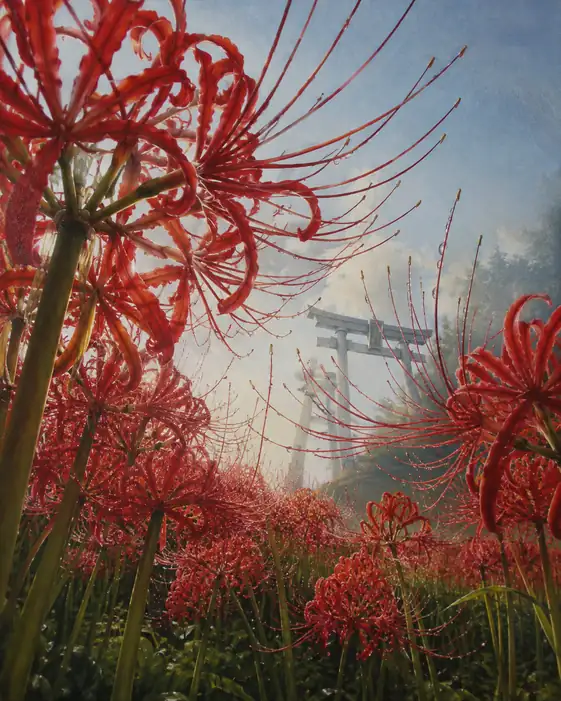
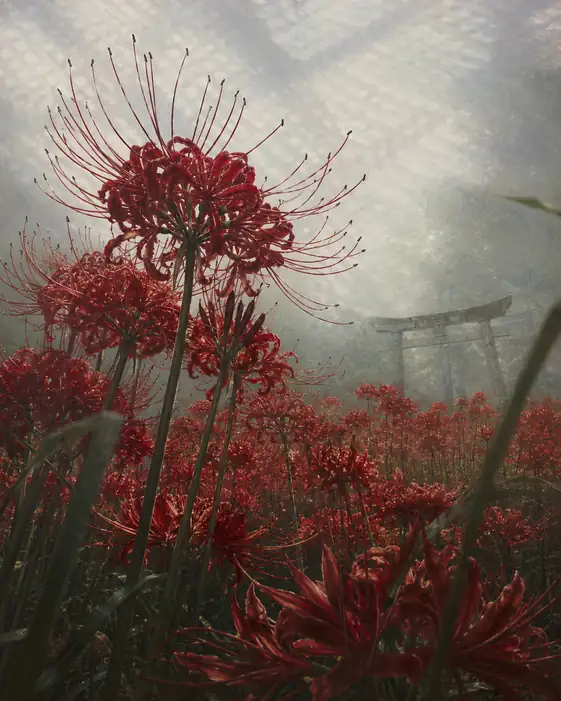 Scarlet Blooms Gazing Up at the Misty Sanctuary
 Golden Maiden Flowers and Basket Holding Autumn Ears
Similar Artworks
 Summer Clouds and Scarlet Bloom
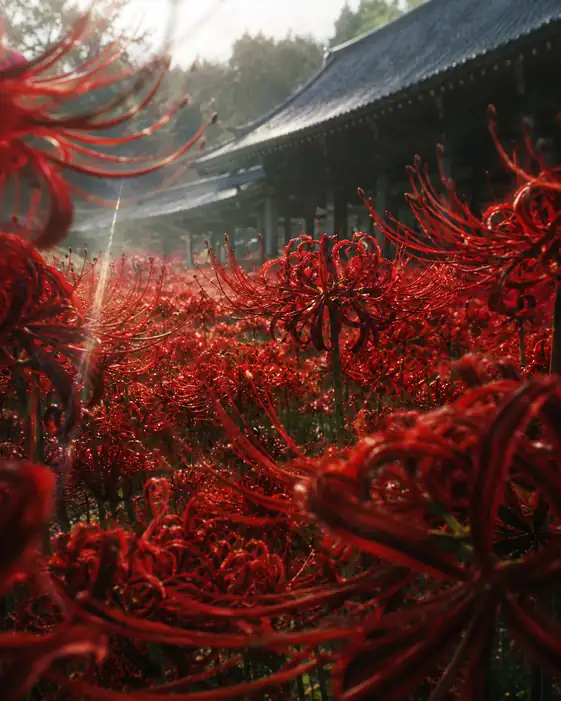 Vermilion Requiem Veiling the Sacred Hall
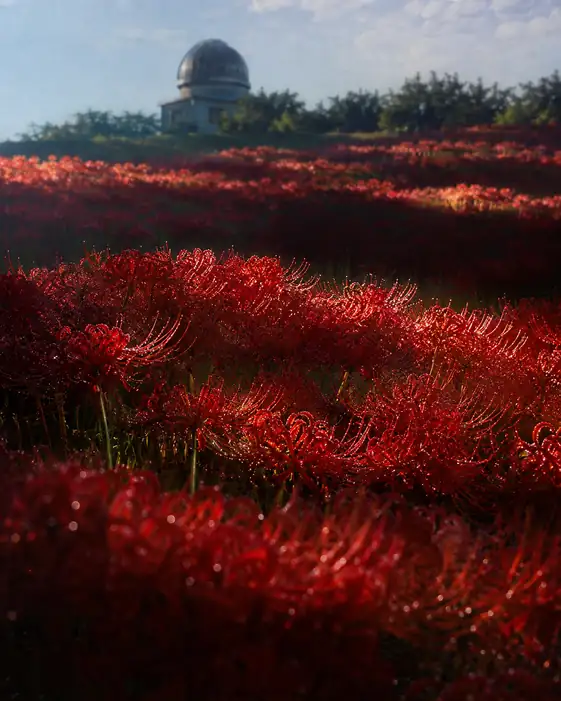 Observatory Hill in Scarlet Bloom
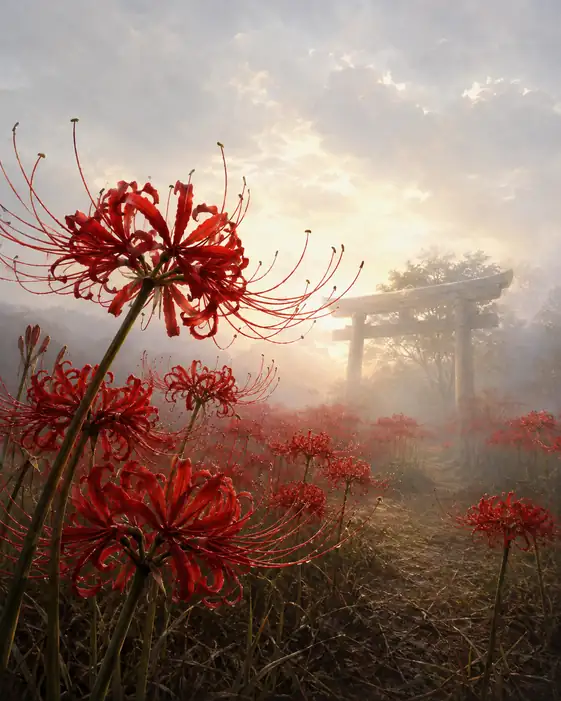 Stone Torii in Misty Sanctuary and Crimson Lycoris
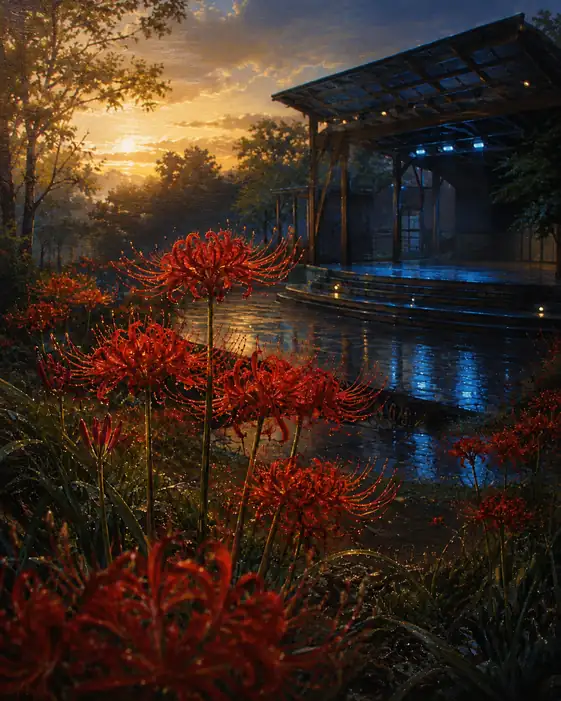 Sunset Outdoor Stage and Light-Laden Lycoris
 Red Spider Lilies Flaming on the Sunset Coast
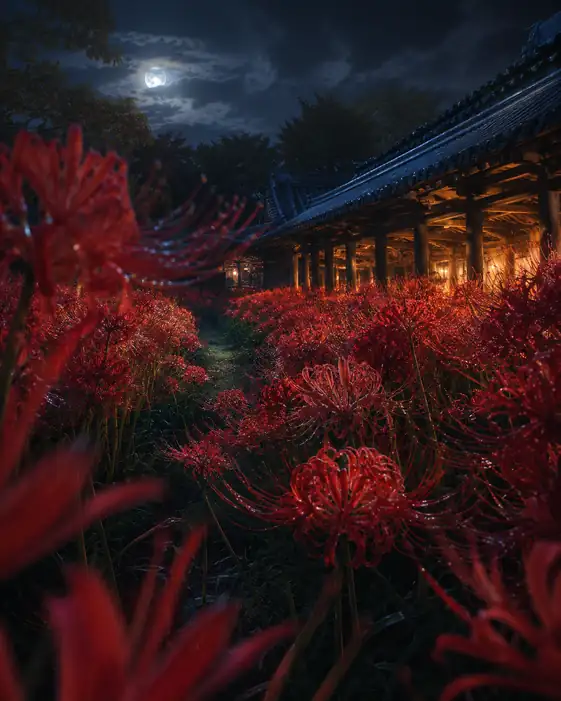 Moonlit Sanctuary and Lycoris Veiling the Corridor
 Rain-Drenched Lycoris Overlooking the Emerald Lake
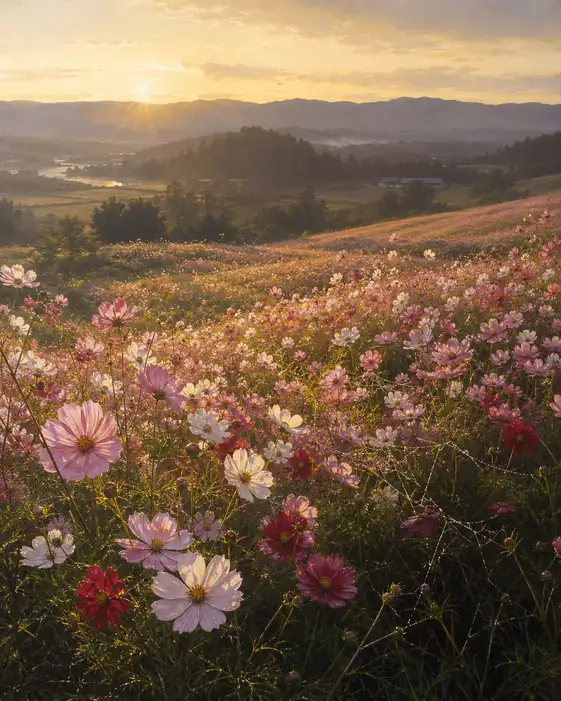 Golden Sunset upon the Cosmos Hills
 Scarlet Spires Beneath the Sacred Gate