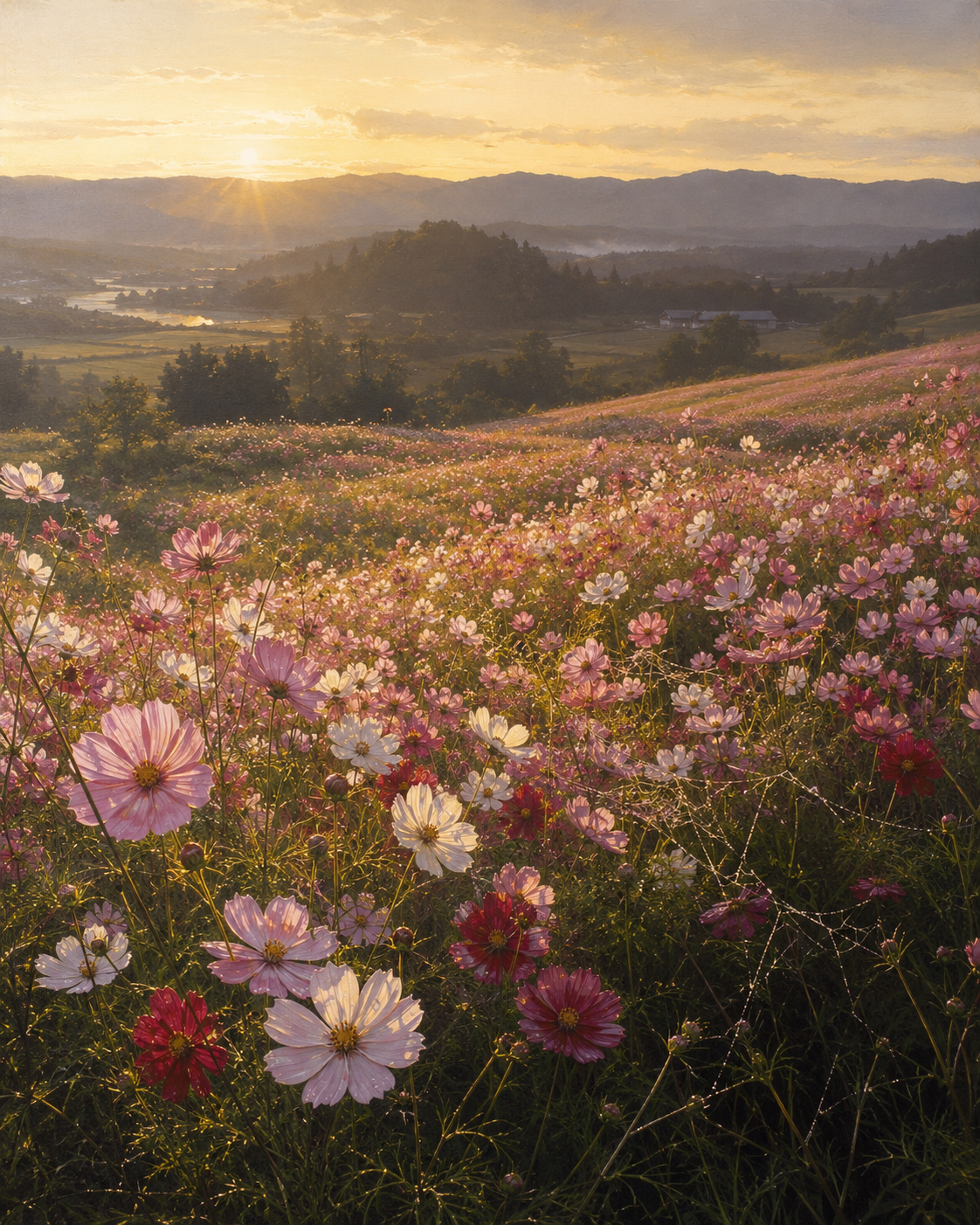
Golden Sunset upon the Cosmos Hills
Critique
Introduction This landscape presents a hillside of cosmos flowers descending toward a rural valley at sunset. The luminous blossoms attract attention, yet the distant ridge and low sun establish an equally important sense of scale and time. Description Large pink, white, and crimson flowers occupy the foreground, their petals separated against tangled dark stems. The field rises diagonally toward the right, while a wooded hill anchors the center. Beyond it, reflective water, cultivated plots, and pale-roofed buildings lead toward layered blue-gray mountains. The sun sits above the left ridge, sending slanting rays into the valley. Analysis The composition joins near and far space through repeated bands: flowers, field, settlement, forest, and mountain. Enlarged foreground blooms create a low viewpoint and strong depth, while the slope counters the horizontal skyline. Gold light catches petal edges, seed heads, and crossing grasses, producing delicate highlights against green shadow. Pink and red accents intensify the contrast between cool landforms and the glowing sky. Interpretation and Evaluation The carefully rendered petals and droplets give the foreground tactile specificity, whereas softened contours in the valley suggest atmospheric distance. This shift in edge clarity makes the scene feel observed rather than diagrammed. The coexistence of cultivated land, scattered buildings, and abundant flowers conveys a quiet continuity between human habitation and seasonal growth. Its controlled color, convincing illumination, and layered construction are more distinctive than novelty of subject alone. Conclusion What first appears to be a radiant flower field gradually reveals a balanced study of depth, light, and rural space. By allowing fragile blossoms to command the foreground without obscuring the expansive valley, the work turns a familiar sunset into a sustained meditation on transience and continuity.
Same Subcategory
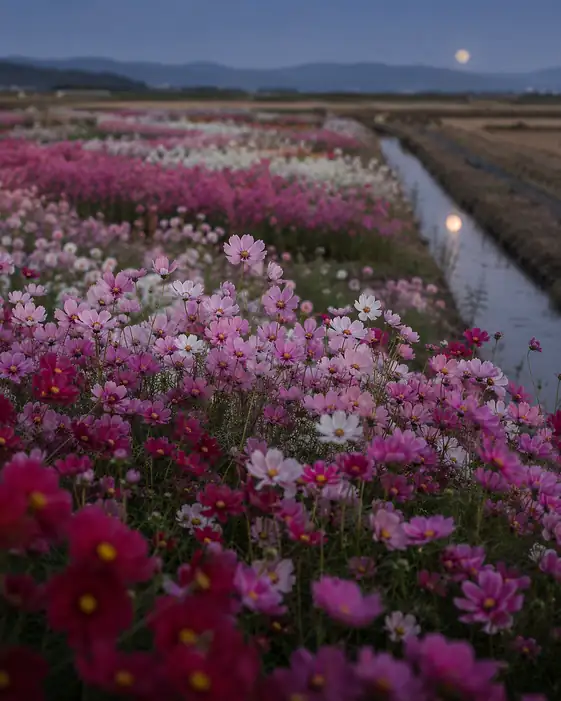 Moonlight Reflected in the Cosmos Canal
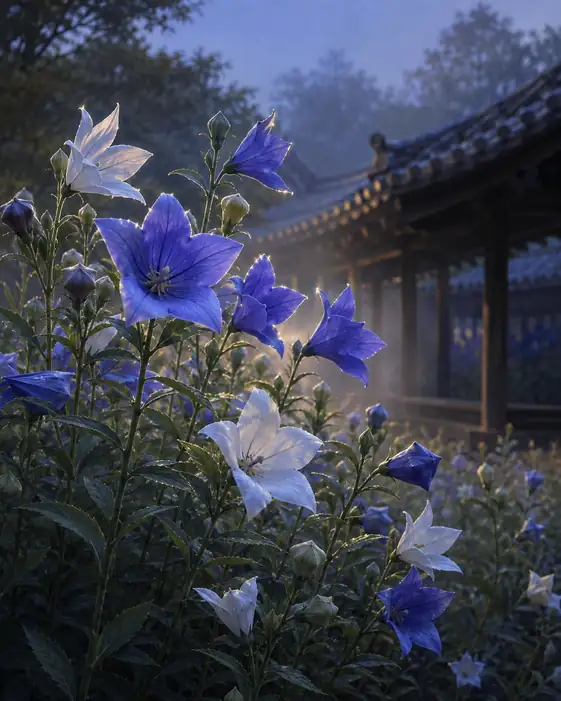 Sacred Bellflowers by the Cloister
Similar Artworks
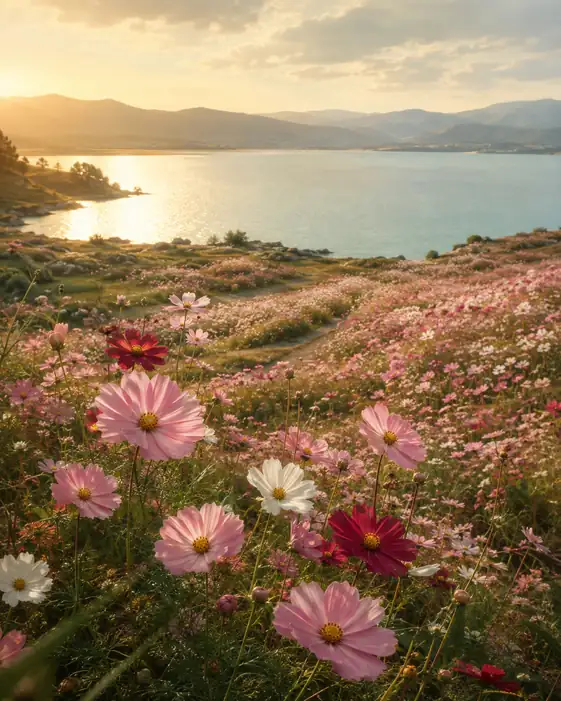 Sunset Lake View and Carpet of Blooming Cosmos
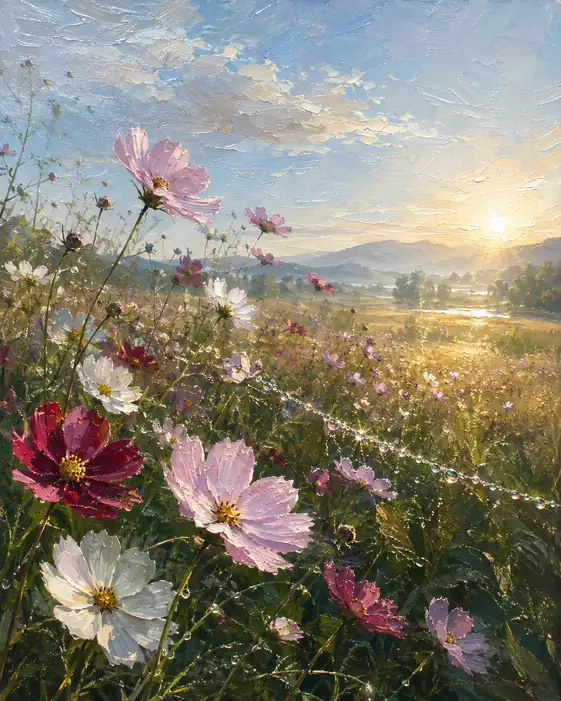 Glistening Dewdrops and Sunlit Cosmos
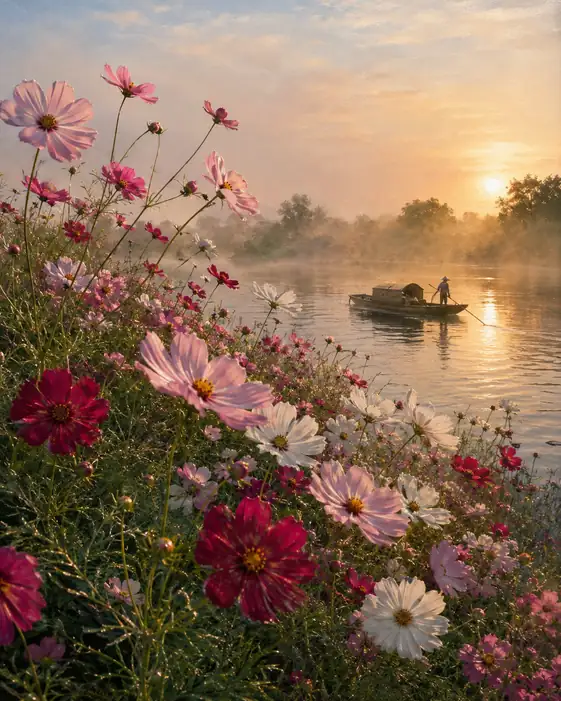 Golden Waterway Boat and Dew-Laden Cosmos on the Bank
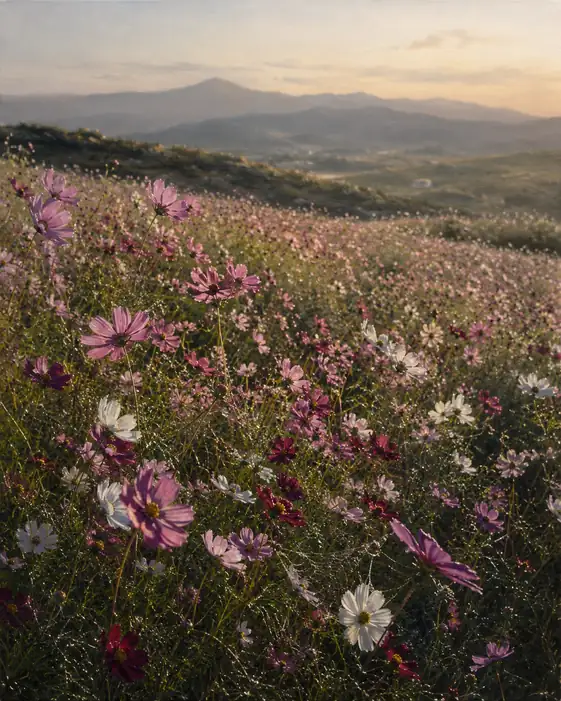 Sloping Fields of Evening Cosmos
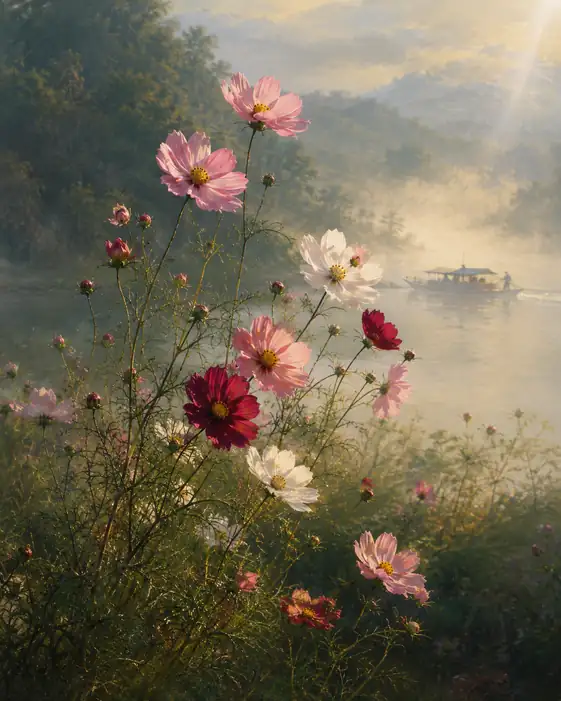 River Ferry Beyond the Morning Cosmos
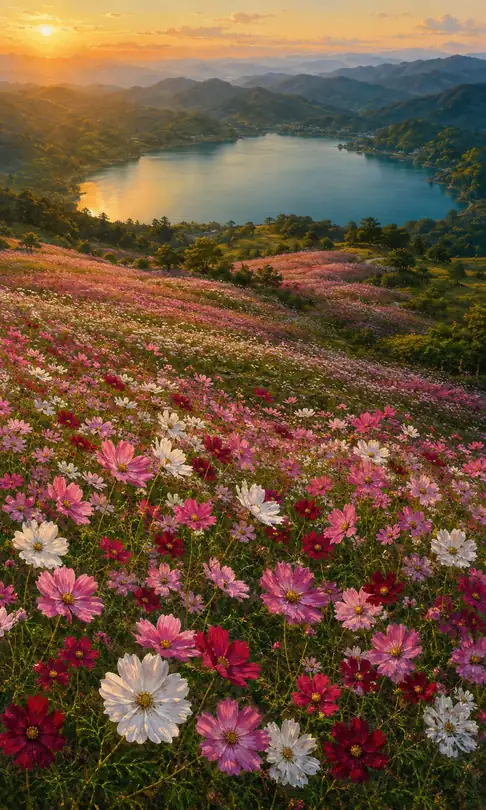 Sea of Cosmos Above the Sunset Lake
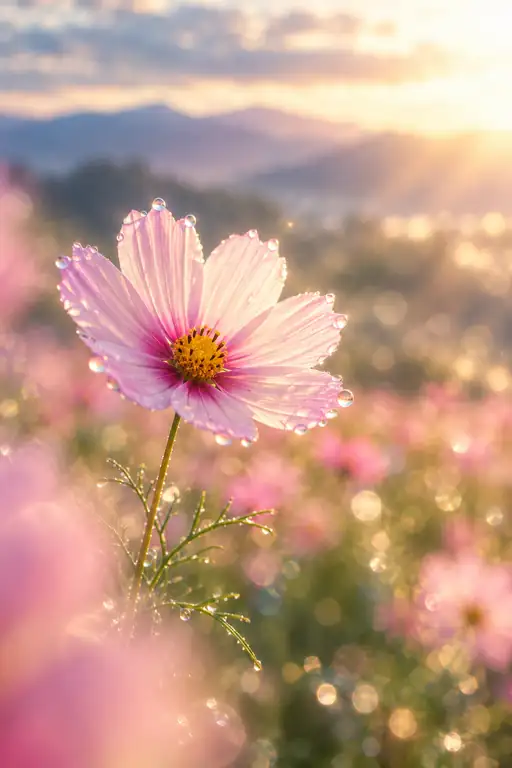 Dew Pearls upon the Pale Petals
 Heights Overlooking the Azure Lake and Breezy Maiden Flowers
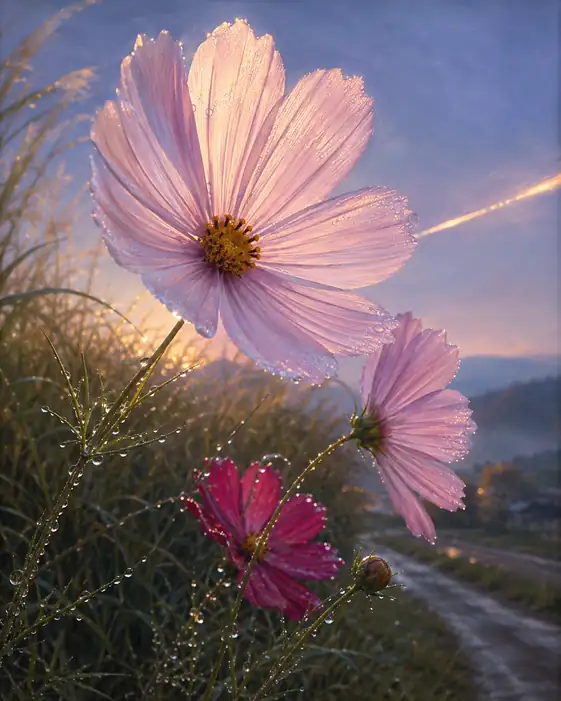 Morning Dew on Cosmos and the Trail Across the Dawn
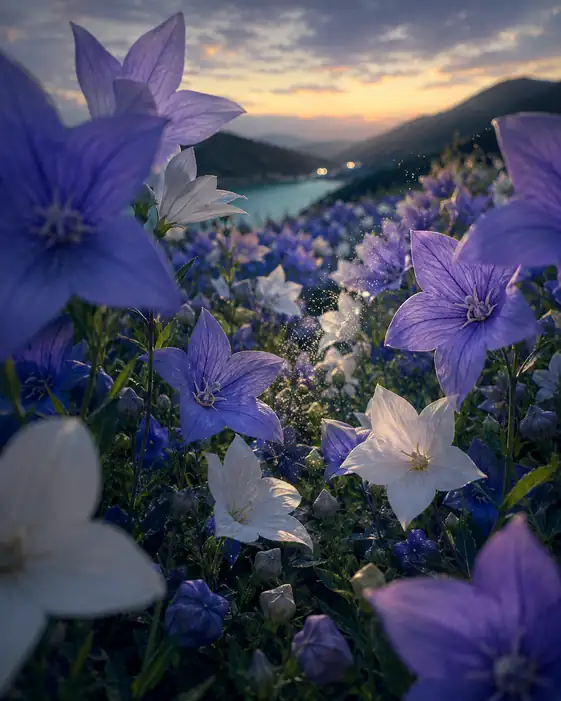 Floating Light Particles and Purple-White Bellflowers by the Twilight Lake