
Twilight Glasshouse in the Bloom
Critique
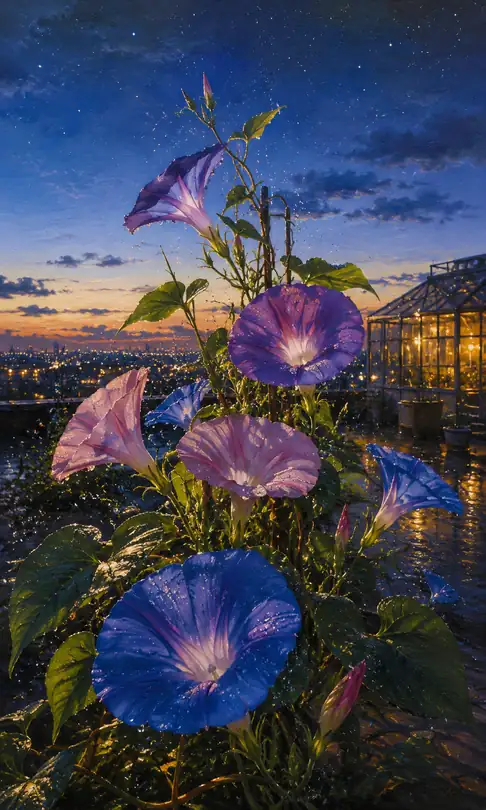
Introduction This vertical painting presents a field of purple coneflowers beneath a deepening blue sky. The impression is lush and immersive, yet the small illuminated greenhouse near the horizon gives the scene a quiet architectural center. Flowers, cultivated space, and evening atmosphere are joined in a carefully staged view. Description Large blossoms enter from every edge, with the nearest heads cropped at the lower corners and upper left. A sharply lit flower rises just right of center, while smaller blooms recede through bluish mist toward the greenhouse. Warm orange disks punctuate the violet petals, and a scattering of stars appears above thin pink clouds. Analysis The low viewpoint enlarges the foreground plants and turns their angled stems into converging guides toward the distant structure. Overlapping petals create depth, while alternating crisp and softened edges distinguish near forms from the hazy middle ground. Amber light catches petal tips and leaf ridges against cool blue shadows, producing a controlled contrast that unifies earth and sky. Interpretation and Evaluation The greenhouse suggests human care without dominating the living field around it. Its geometric panes answer the flowers' radial heads, establishing a subtle dialogue between cultivation and organic abundance. The convincing spatial recession, balanced color scheme, and varied surface handling demonstrate strong descriptive skill; the unusual flower-level viewpoint adds compositional originality without sacrificing clarity. Conclusion What first appears to be a radiant floral panorama gradually reveals a measured study of scale, shelter, and transition at dusk. Close observation shifts attention from individual blossoms to the visual path connecting their warm centers, the glowing glasshouse, and the first stars. The painting succeeds through this coherent movement from tactile foreground detail to expansive, contemplative distance.
Same Subcategory
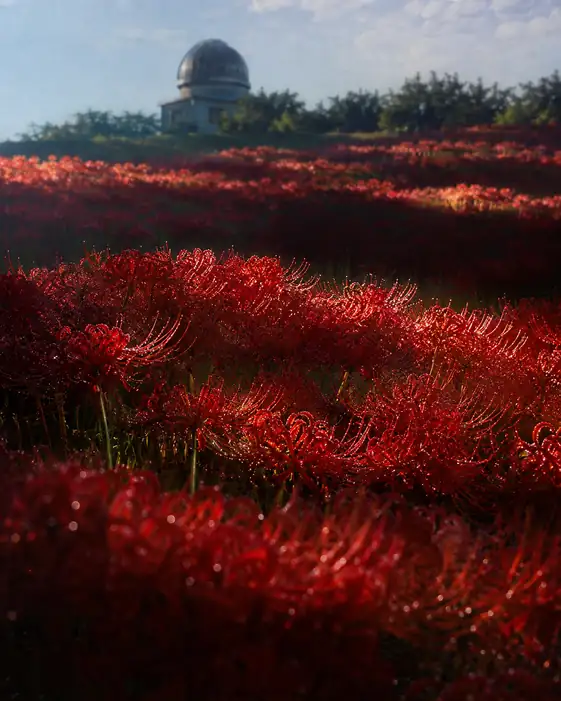 Observatory Hill in Scarlet Bloom
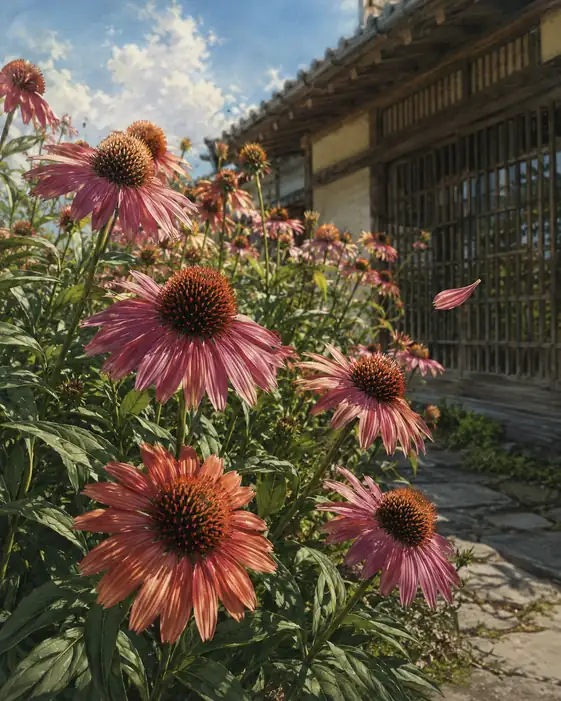 Fluttering Petal by the Latticed Wall
Similar Artworks
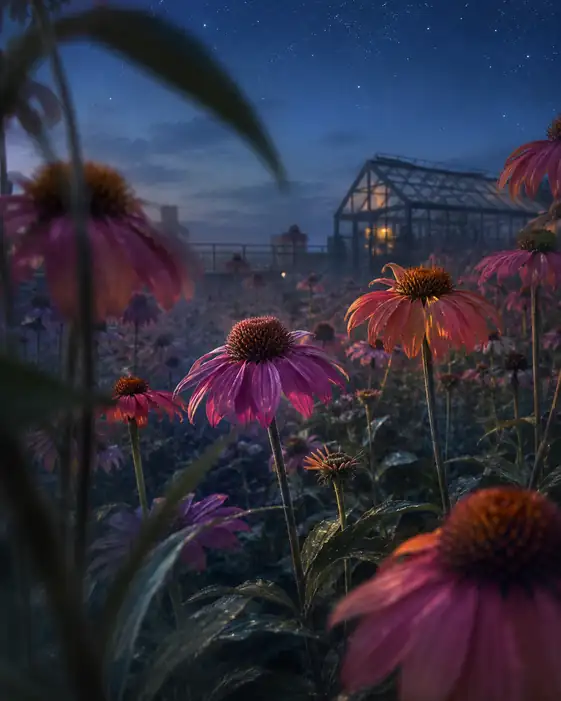 Starlit Greenhouse in the Meadow
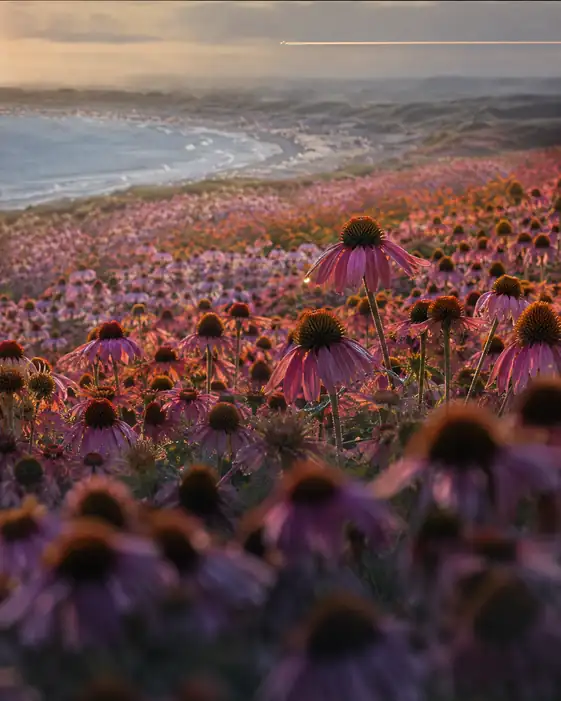 Coast of Violet Petals and the Evening Trail
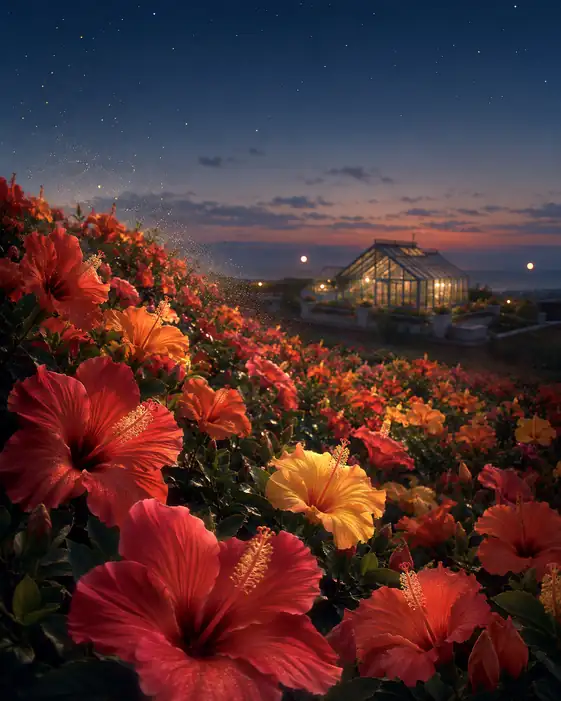 Hibiscus Hill beneath the Twilight Stars
 Crescent Moon at Dusk and Soft Pink Thoroughwort
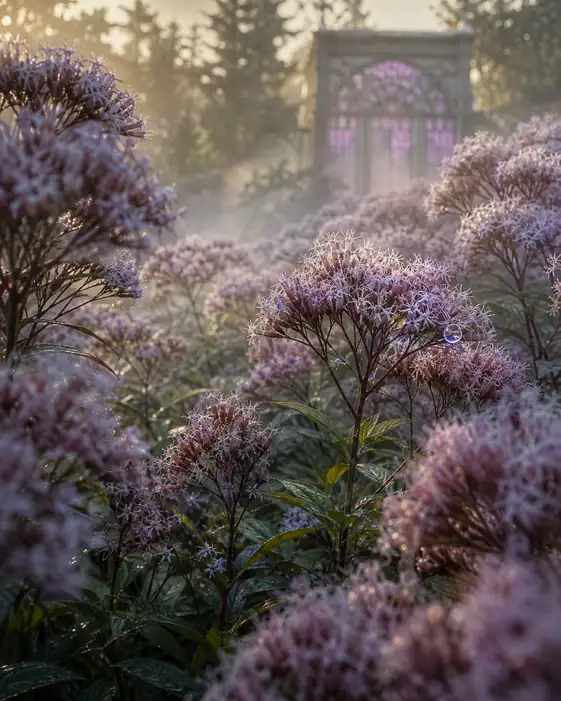 Morning Sunbeams over the Greenhouse and Dew-Laden Thoroughwort
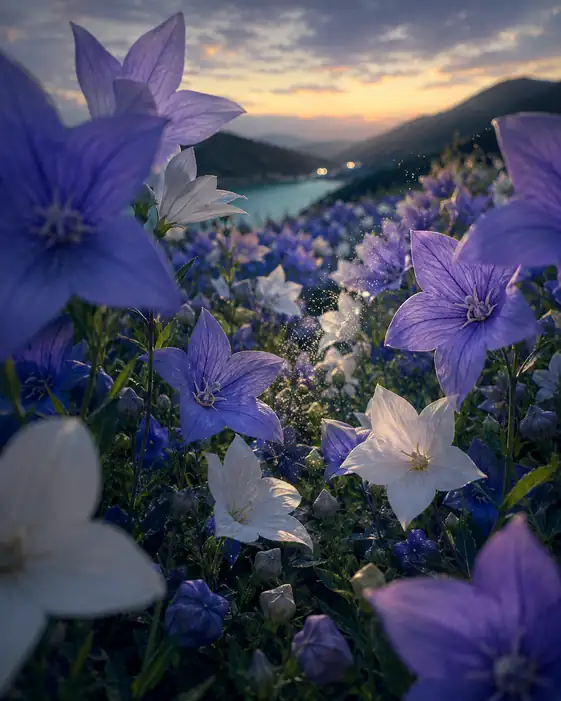 Floating Light Particles and Purple-White Bellflowers by the Twilight Lake
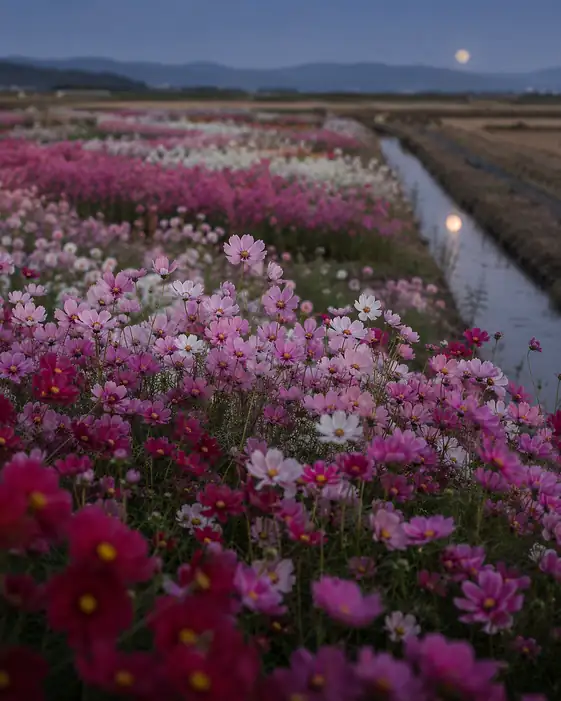 Moonlight Reflected in the Cosmos Canal
 Zinnias in the Greenhouse Twilight
 Blooms of the Rooftop Cosmos
 Field Path in Evening Mist and Golden Maiden Flower