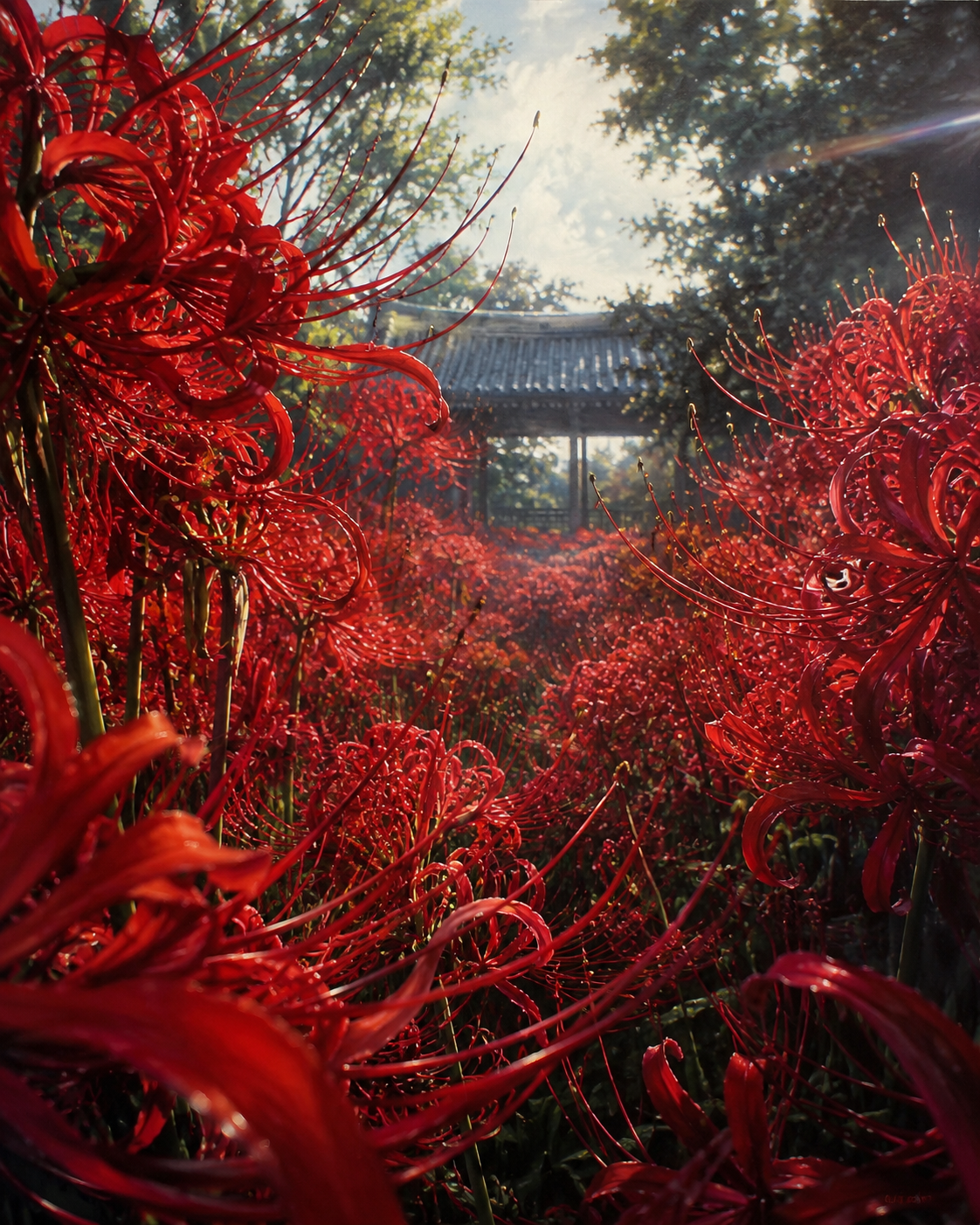
Crimson Sea before the Temple Gate
Critique
Introduction This work presents a dense field of red spider lilies viewed from a low position. Large blossoms press against the edges, while a tiled gate stands beneath a bright opening in the trees. The immediate impression is one of immersion, as though the viewer were placed within the flowers. Description The nearest petals and stamens are sharply enlarged, with several foreground forms falling into soft blur. Behind them, countless smaller blooms gather across the middle ground and establish a deep corridor toward the gate. Sunlight enters from the upper right, catching droplets and stamen tips, while the roof and surrounding foliage remain subdued in blue-green shadow. Analysis The composition is organized by a strong contrast between organic profusion and architectural order. Curving petals and radiating filaments create restless movement, whereas the gate supplies a quiet horizontal and two stable vertical supports. Repetition makes the flowers cohere as a mass, but shifts in scale, focus, and illumination prevent monotony and convincingly articulate distance. Interpretation and Evaluation The gate may be read as a threshold beyond the overwhelming abundance of the foreground. Its partial concealment gives the destination a reserved, contemplative character, while the red flowers make the approach feel ceremonial. The rendering is especially effective in its handling of translucent petal edges, pinpoints of moisture, and the difference between crisp highlights and vaporous background light; the saturated red also gains force from the complementary green surroundings. Conclusion The work combines descriptive precision, a close viewpoint, and disciplined color contrast to transform a flower garden into a spatial experience. What first appears to be a display of brilliant blossoms gradually reveals a directed passage from tactile nearness toward stillness and distance.
Same Subcategory
Similar Artworks
 Stone Torii in Misty Sanctuary and Crimson Lycoris
 Morning Sunbeam Torii and Burning Lycoris Approach
 Observatory Hill in Scarlet Bloom
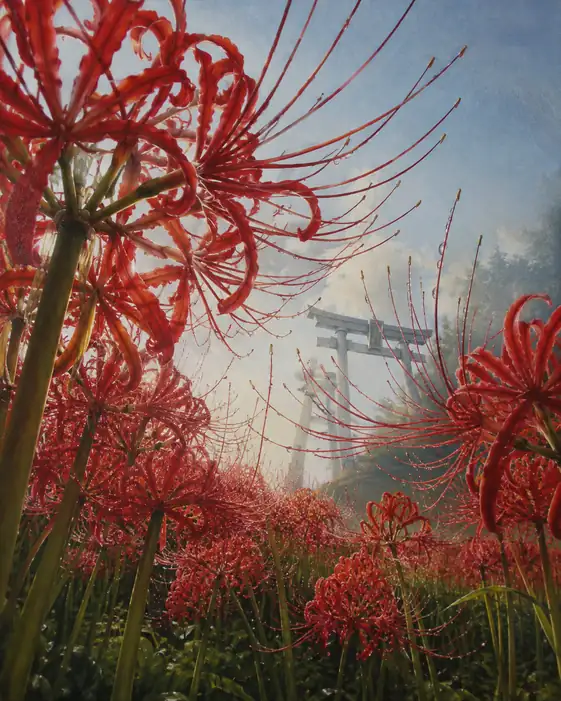 Scarlet Spires Beneath the Sacred Gate
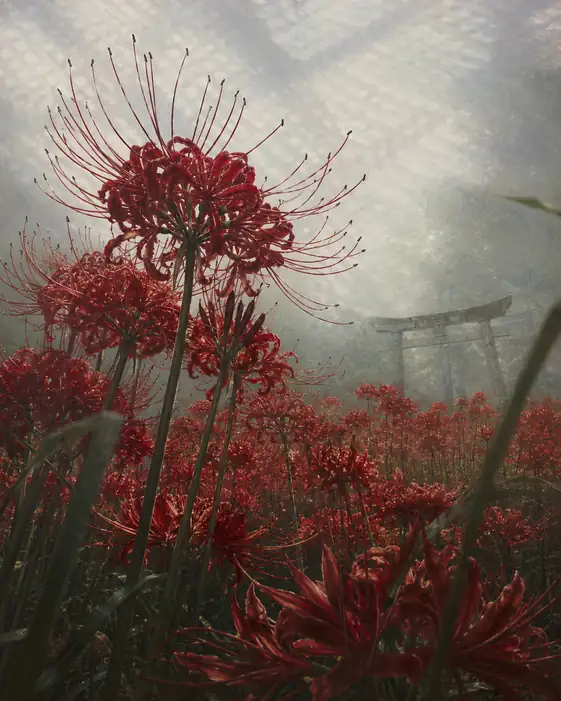 Scarlet Blooms Gazing Up at the Misty Sanctuary
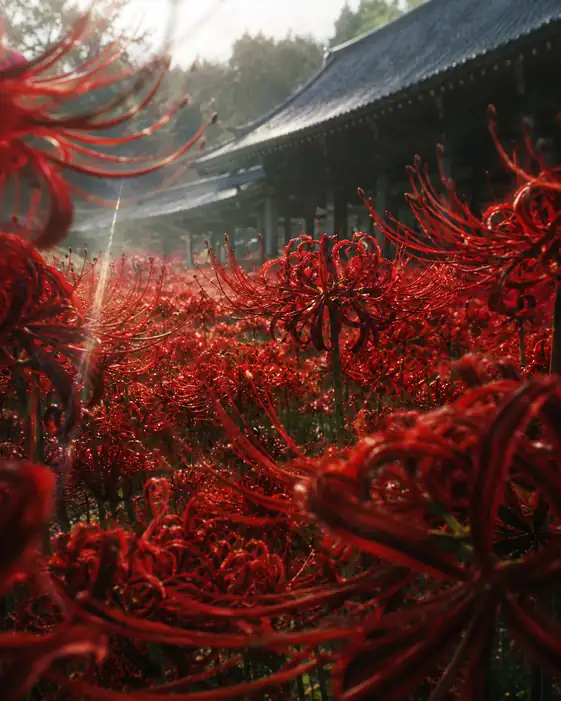 Vermilion Requiem Veiling the Sacred Hall
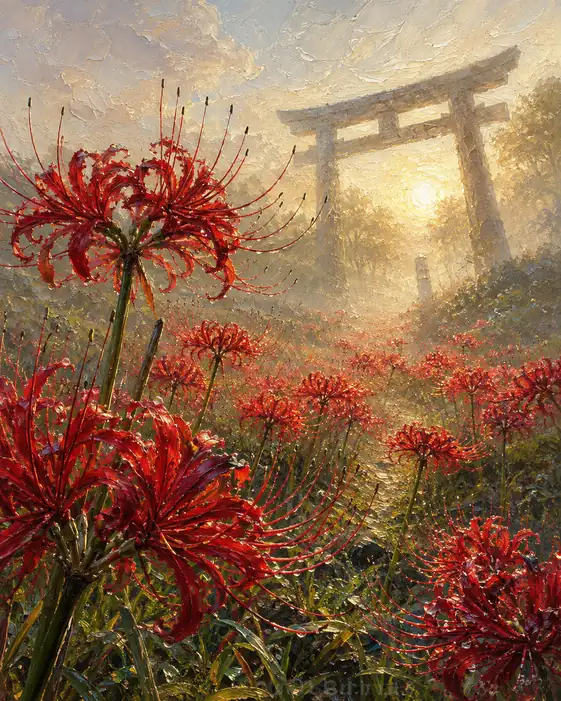 Crimson Path in the Sacred Morning Mist
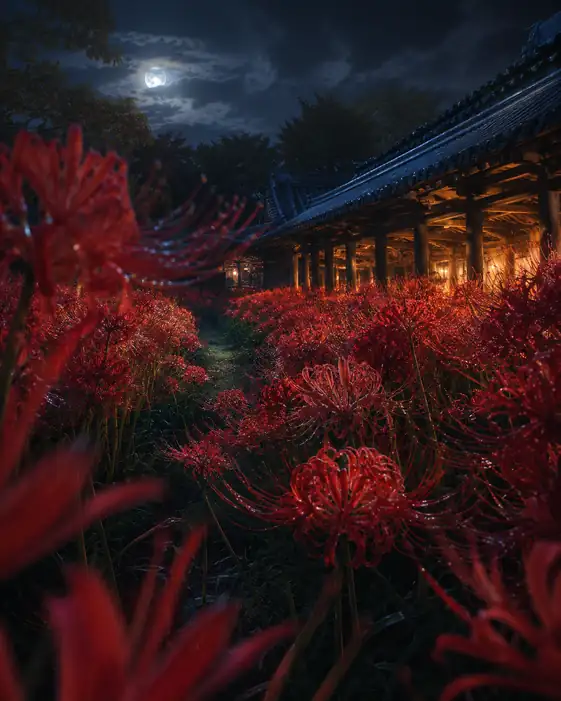 Moonlit Sanctuary and Lycoris Veiling the Corridor
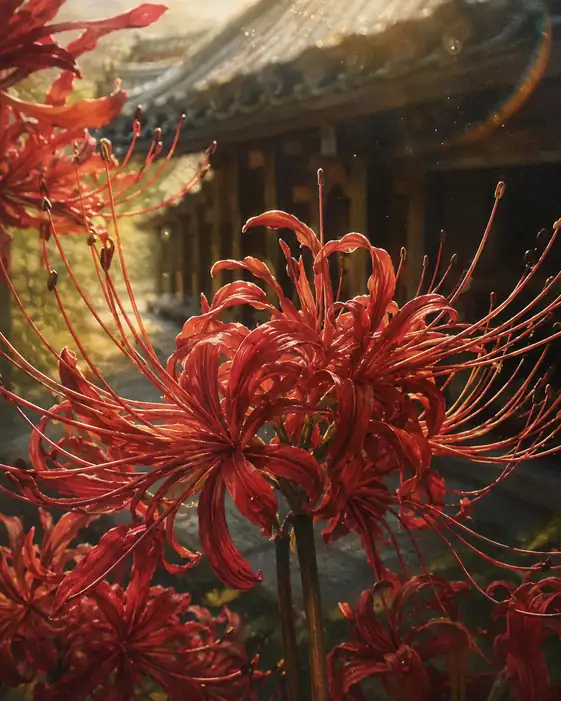 Rainbow Flare over the Corridor and Burning Lycoris
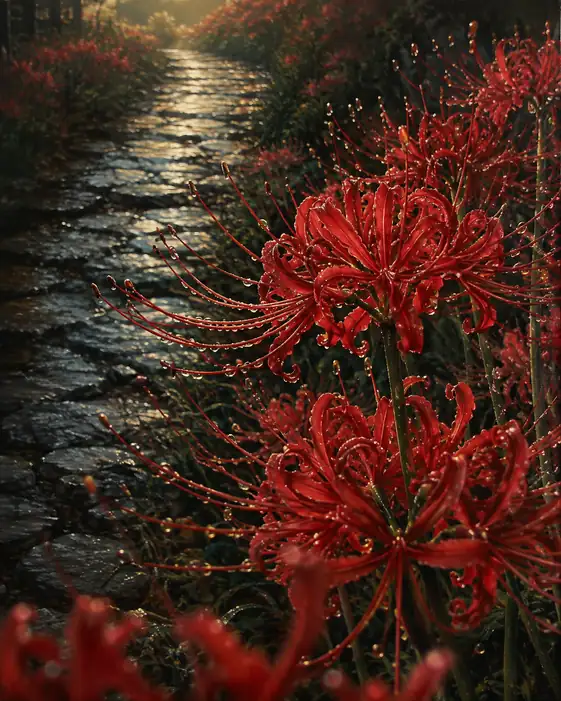 Crimson Flame along the Wet Cobblestones