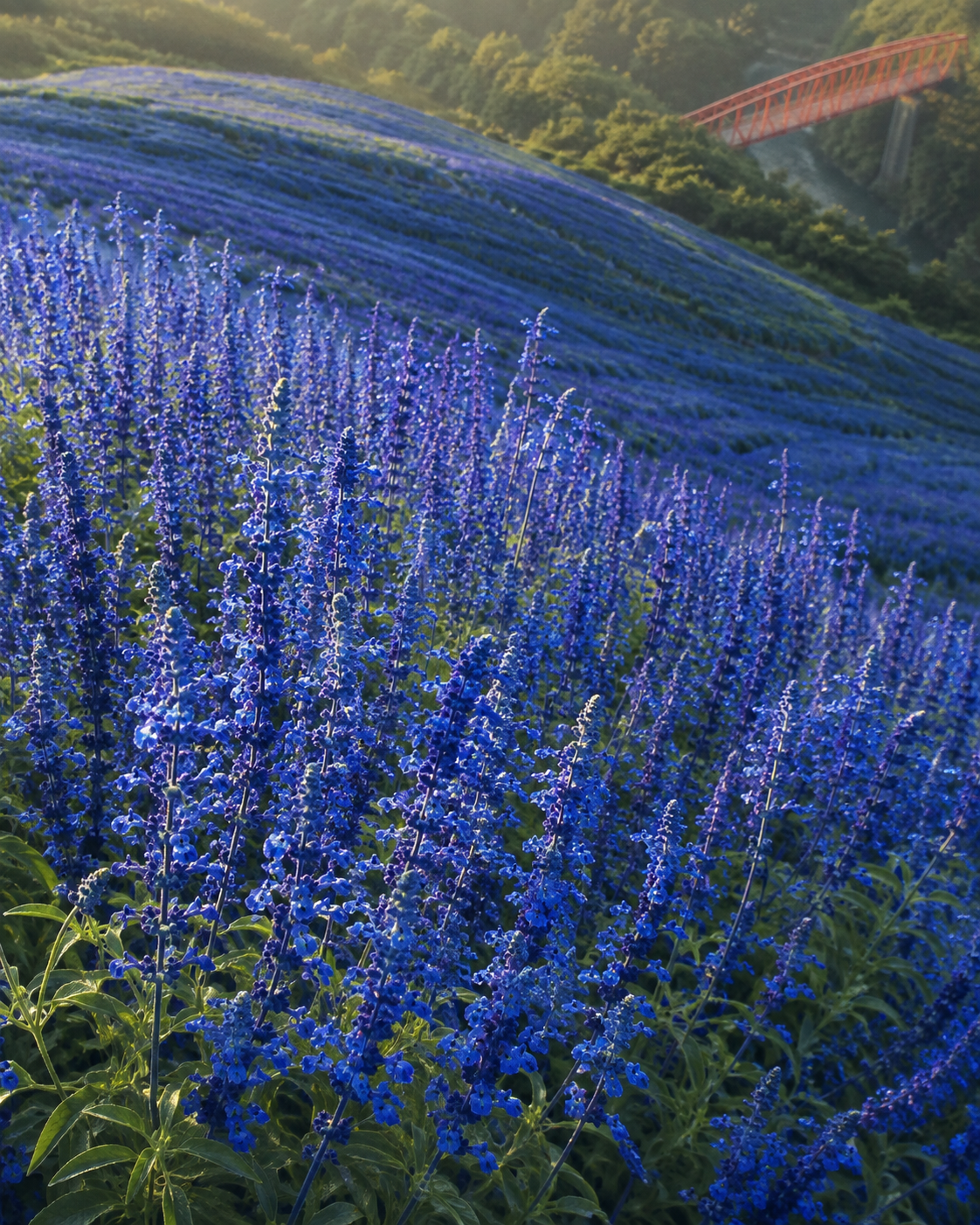
Blue Hills and the Crimson Arch
Critique
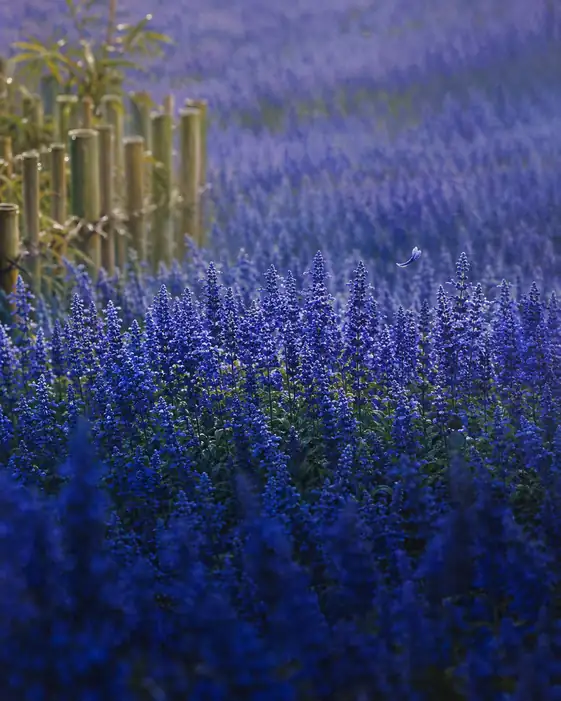
Introduction This work presents a hillside covered with blue flowering spikes, rising toward a wooded ridge. A red bridge at the upper right introduces an architectural accent into this study of cultivated nature. Description Tall blossoms crowd the foreground, where individual stems, curled petals, and pointed green leaves remain clearly legible. Behind them, repeated blue rows sweep diagonally across the slope from lower right to upper left. The distant trees form a soft olive-green band, while the bridge crosses a shadowed hollow near the top edge. Analysis The composition derives its movement from the tension between the diagonal hillside and the upright rhythm of the flower stalks. Dense detail and saturated ultramarine dominate the lower half, then soften into uniform bands with distance. Warm, low light catches the left edges of petals and leaves, producing pale violet sparks against deep blue shadow; the bridge’s coral red provides a complementary counterweight. Interpretation and Evaluation The close foreground gives the planted field a nearly immersive scale, yet the orderly rows reveal human cultivation beneath its apparent abundance. The elevated bridge extends this dialogue between landscape and construction without overwhelming the flowers. Convincing spatial recession, controlled color contrast, and varied edge treatment demonstrate strong descriptive skill, while the unusual pairing of intense blue vegetation and suspended red geometry gives the image a distinctive identity. Conclusion What first appears to be a straightforward celebration of blue flowers becomes, on closer viewing, a carefully structured encounter between repetition, wild texture, and engineered form. Its success lies in allowing small illuminated petals, sweeping agricultural lines, dark woodland, and the distant bridge to remain visually separate while contributing to one coherent passage through the scene.
Same Subcategory
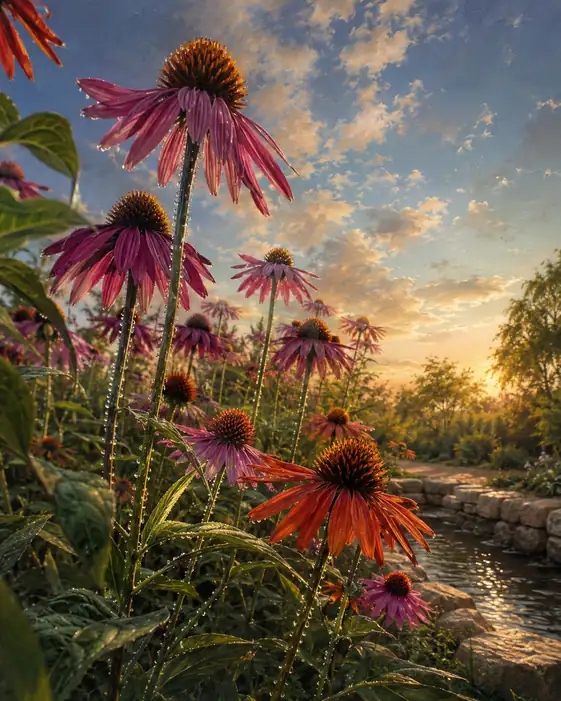 Ascending Blossoms Beneath Morning Clouds
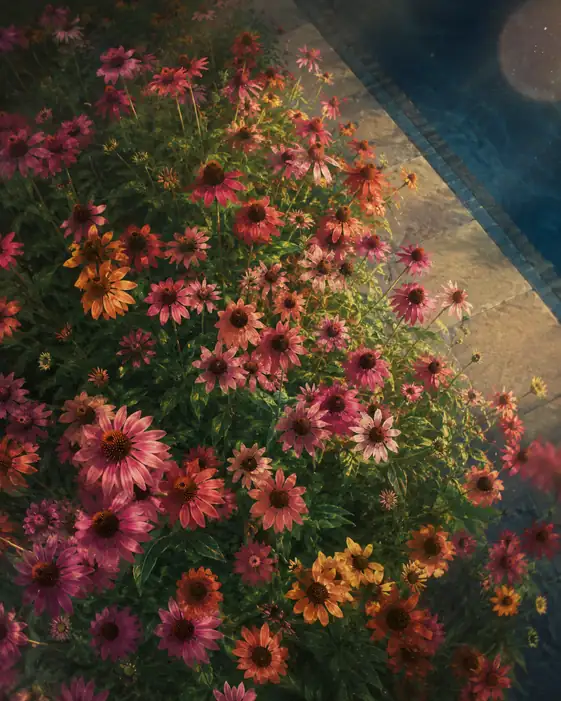 Twilight Echoes by the Poolside
Similar Artworks
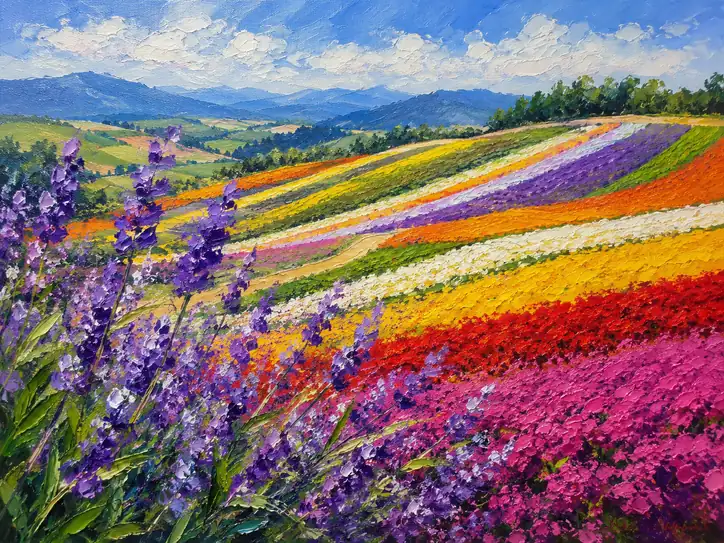 A Rainbow Journey to the Horizon
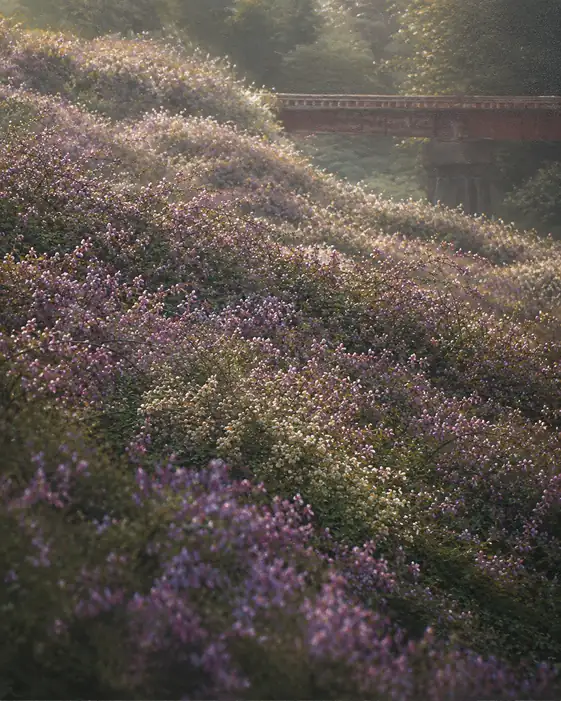 Bush Clover Slopes and the Old Iron Bridge Spanning the Mist
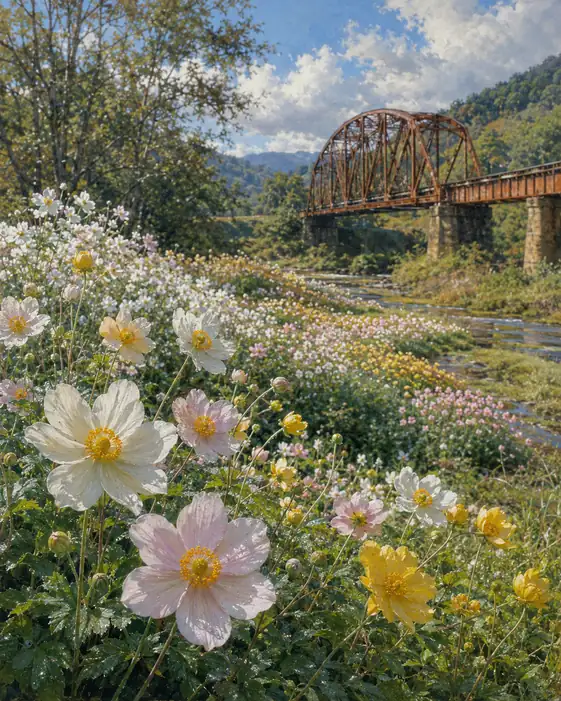 Rust-Red Trestle Above the River Meadow
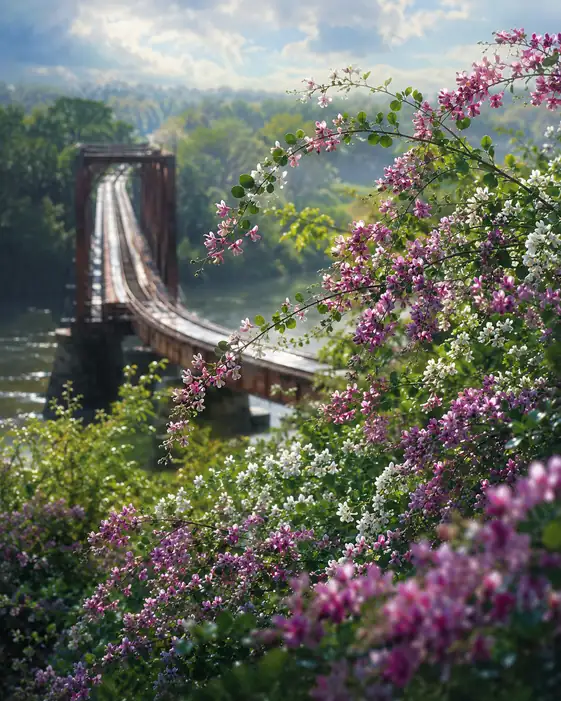 Bush Clover Overlooking the River Trestle
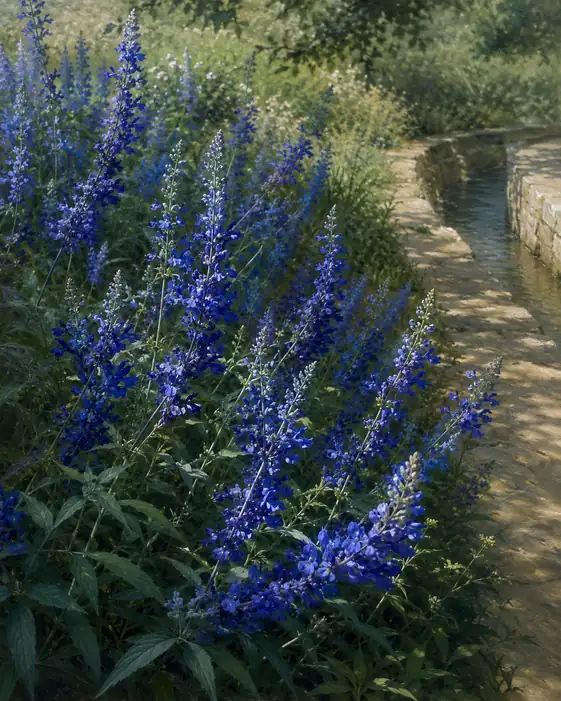 Azure Rhythms by the Curving Brook
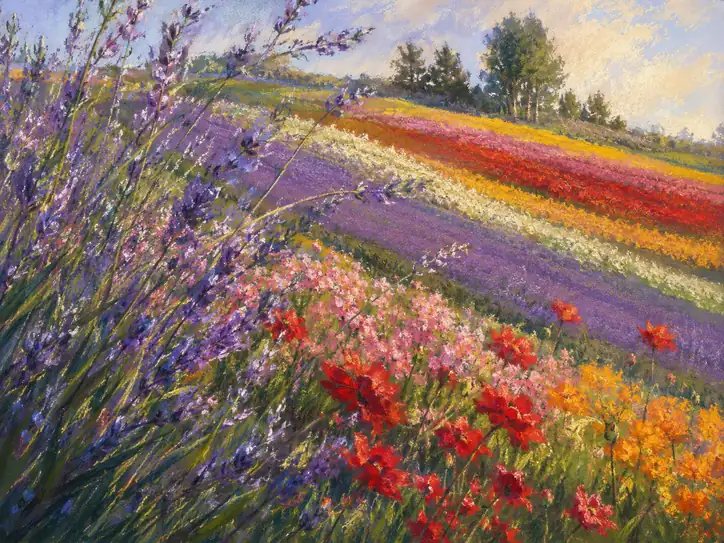 A Gradient of Summer Dreams
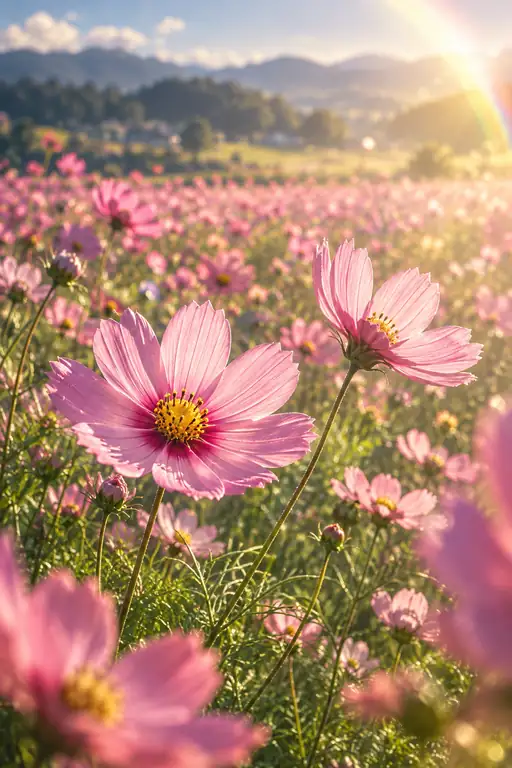 Cosmos Meadow Beneath Autumn Arc
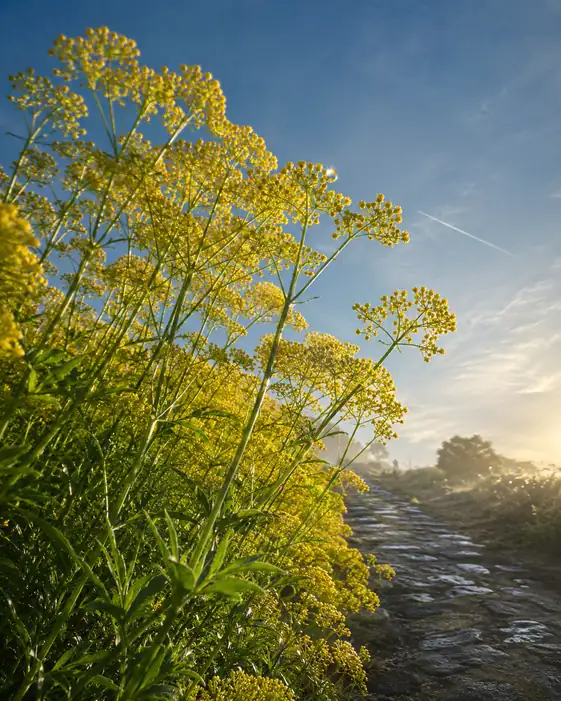 Cobblestone Path Gazing at Azure Sky and Sunny Yellow Blooms
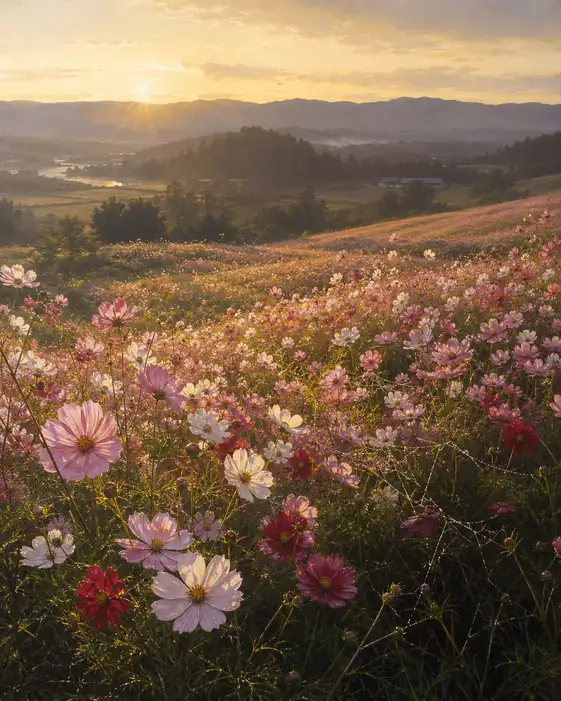 Golden Sunset upon the Cosmos Hills
 Floating Petal in the Violet Sea