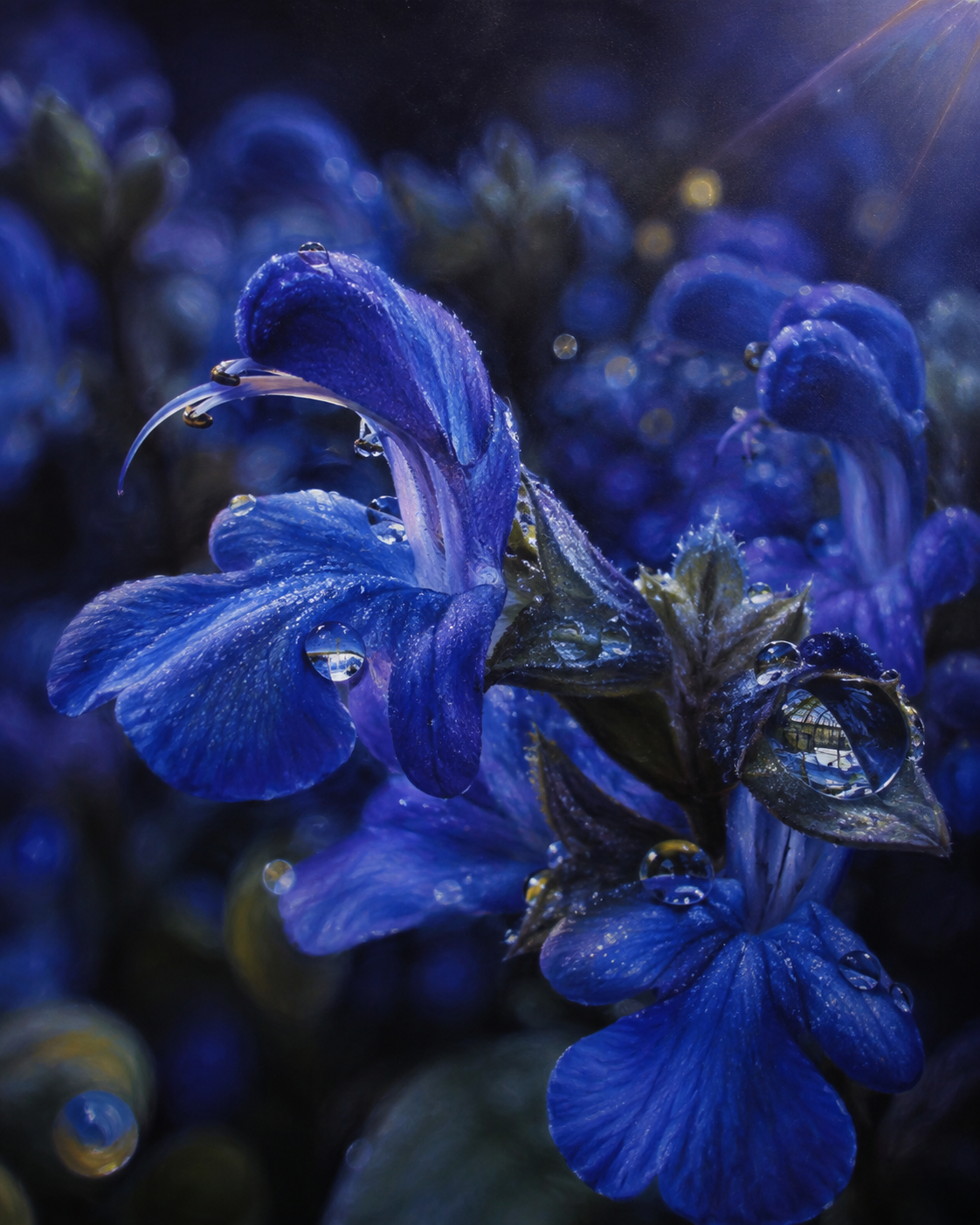
Sacred Cosmos in a Drop of Azure
Critique
Introduction This work presents a close view of blue flowers after rainfall, concentrating attention on petals, leaves, and suspended droplets. The compressed framing transforms a familiar botanical subject into an immersive field where saturated color and minute surface effects carry the principal expressive force. Description A large blossom occupies the left foreground, its curved upper petal arching above a pale, projecting filament. Smaller flowers cluster at the lower right and recede into the upper background. Water beads cover the velvety petals and pointed green leaves, while one especially large droplet reflects a windowed structure in sharp miniature. Analysis The composition is organized along a diagonal from the prominent left bloom through the dark central foliage to the lower-right flower. Shallow focus separates these crisp forms from soft blue circles behind them. Cool ultramarine and violet dominate, but narrow green passages, golden bokeh, and rays entering from the upper right prevent visual monotony. Interpretation and Evaluation The enlarged scale encourages close attention to transient moisture rather than conventional floral prettiness. Droplets function both as texture and as lenses, joining the enclosed garden to a world beyond the frame. The convincing rendering of wet, ribbed petals demonstrates strong descriptive skill, while selective focus and asymmetrical balance give the composition depth. Its distinctive color treatment makes ordinary flowers appear nocturnal and contemplative without sacrificing botanical structure. Conclusion What first appears to be a nearly monochrome floral study gradually reveals a carefully layered exchange between plant surfaces, water, and reflected architecture. Controlled light, tactile detail, and the movement between sharp foreground forms and diffused surroundings sustain a measured sense of discovery.
Same Subcategory
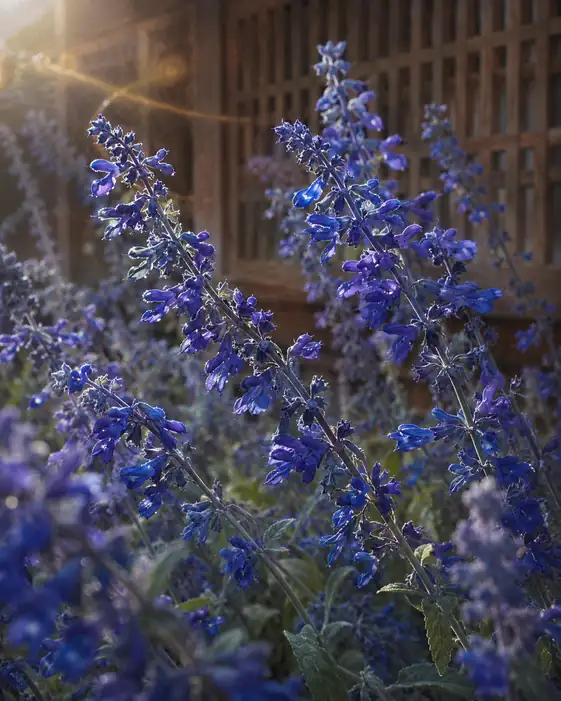 Sunlit Lattices and Blue Petals
Similar Artworks
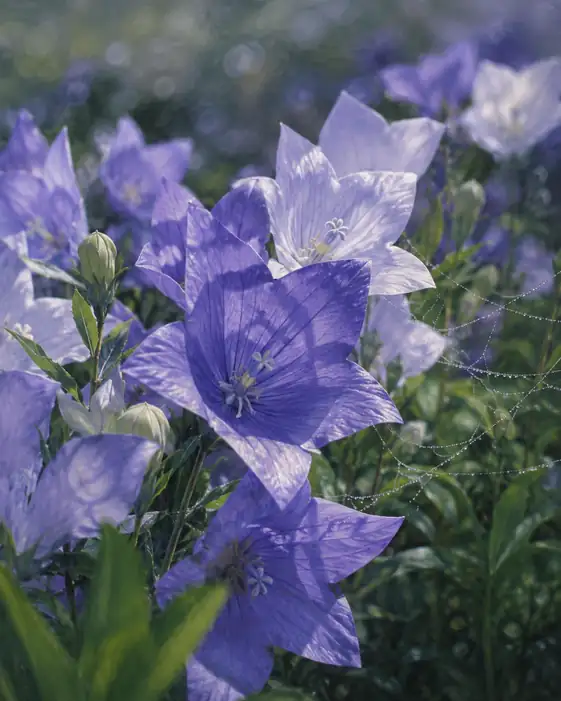 Dew-Laden Web and Bellflowers Opening in Deep Violet
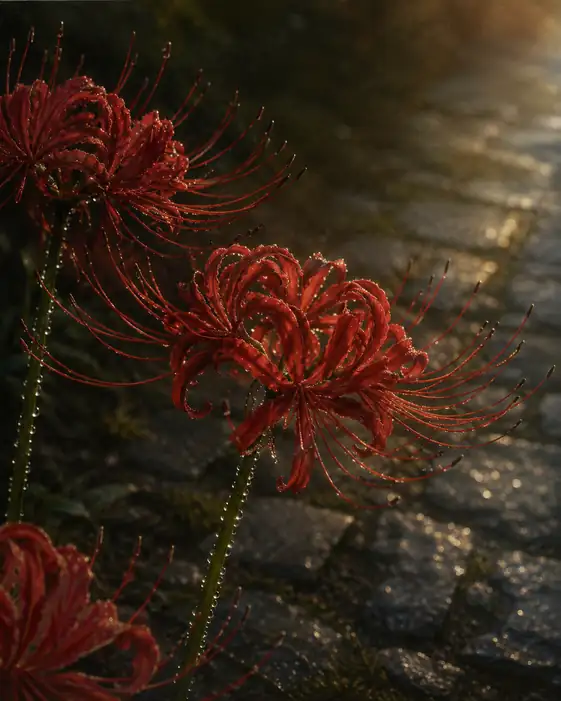 Dew Pearls on the Cobblestone Path and Scarlet Lycoris
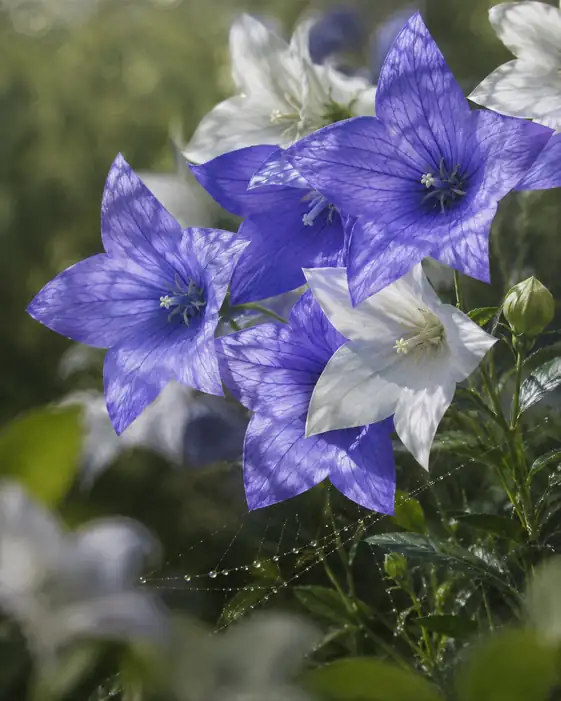 Morning Stars and Dewdrop Webs
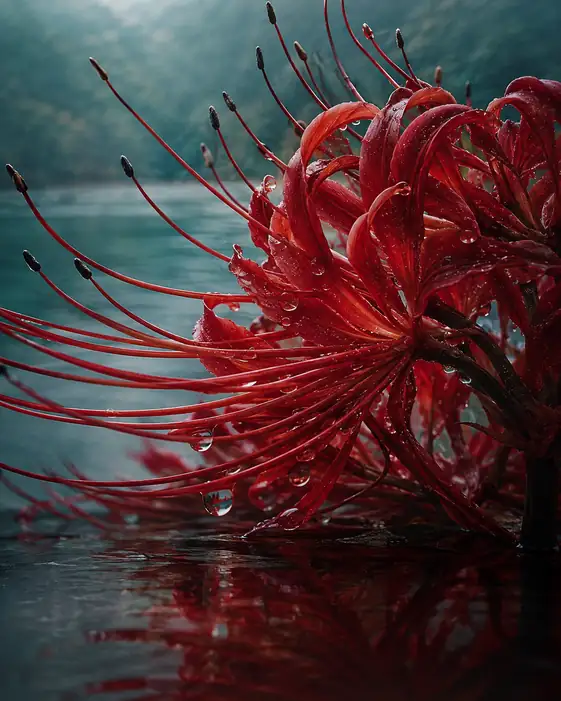 Dew Dripping onto the Water Mirror and Crimson Lycoris
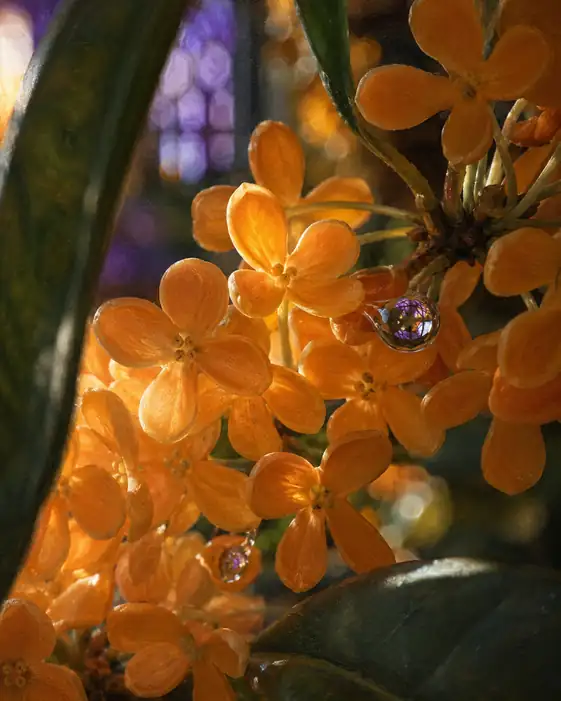 Fragrant Droplet and Stained Glass
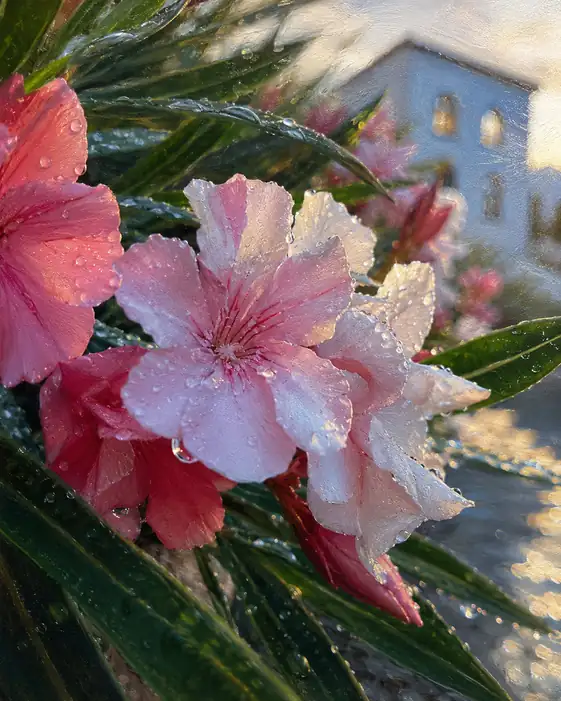 Morning Dew upon the Oleander
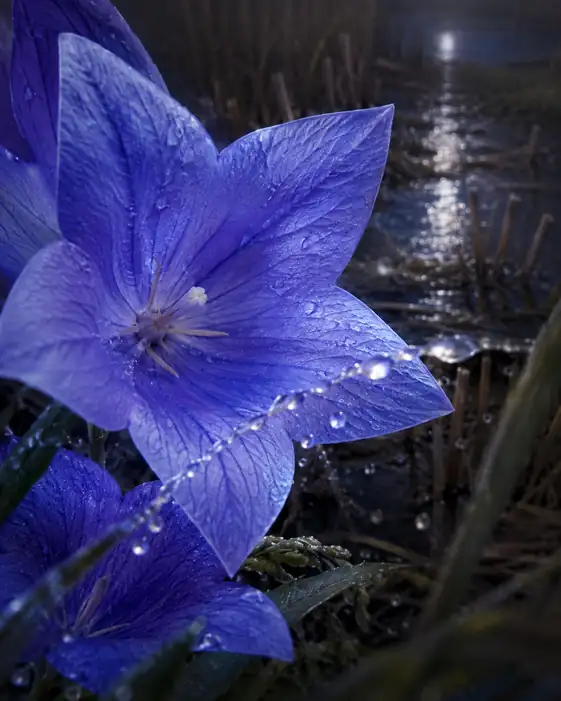 Moonlit Waterway through Reaped Fields and Dew-Strung Bellflower
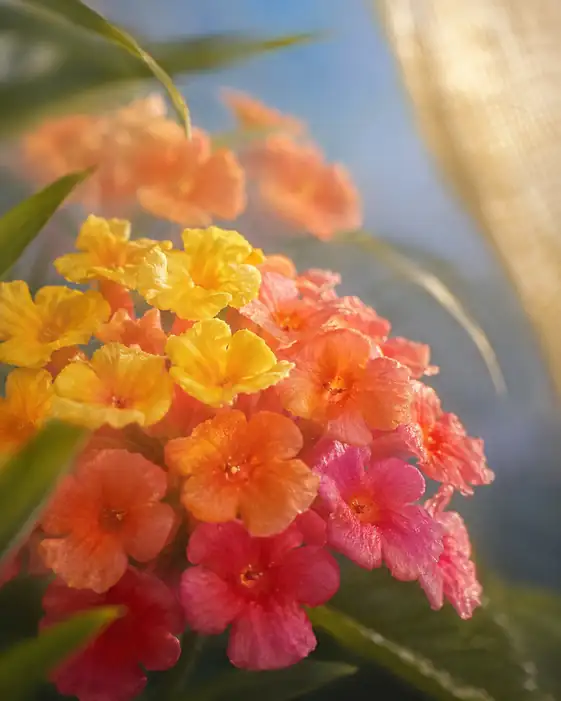 Morning Melody of Changing Hues
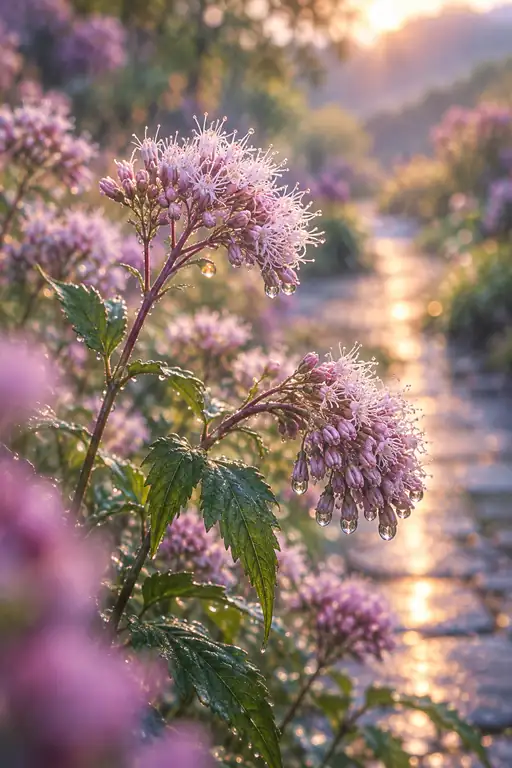 Dew Along the Evening Path
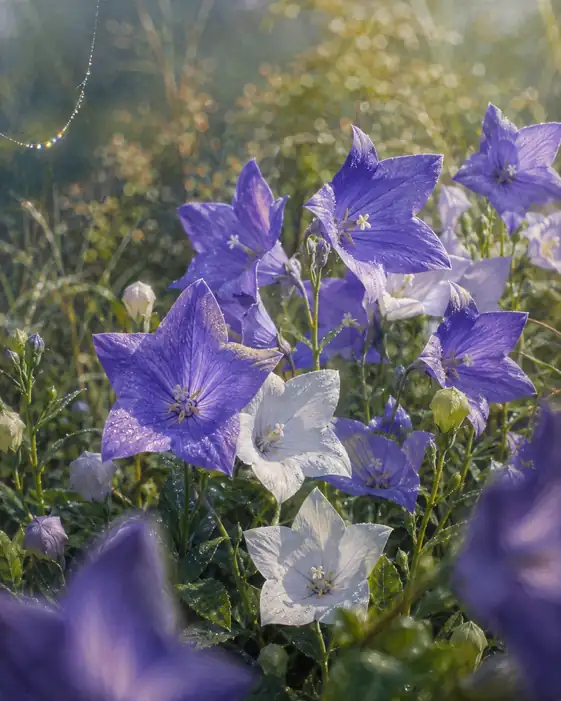 Dew-Laden Web and Purple-White Bellflowers in Morning Light