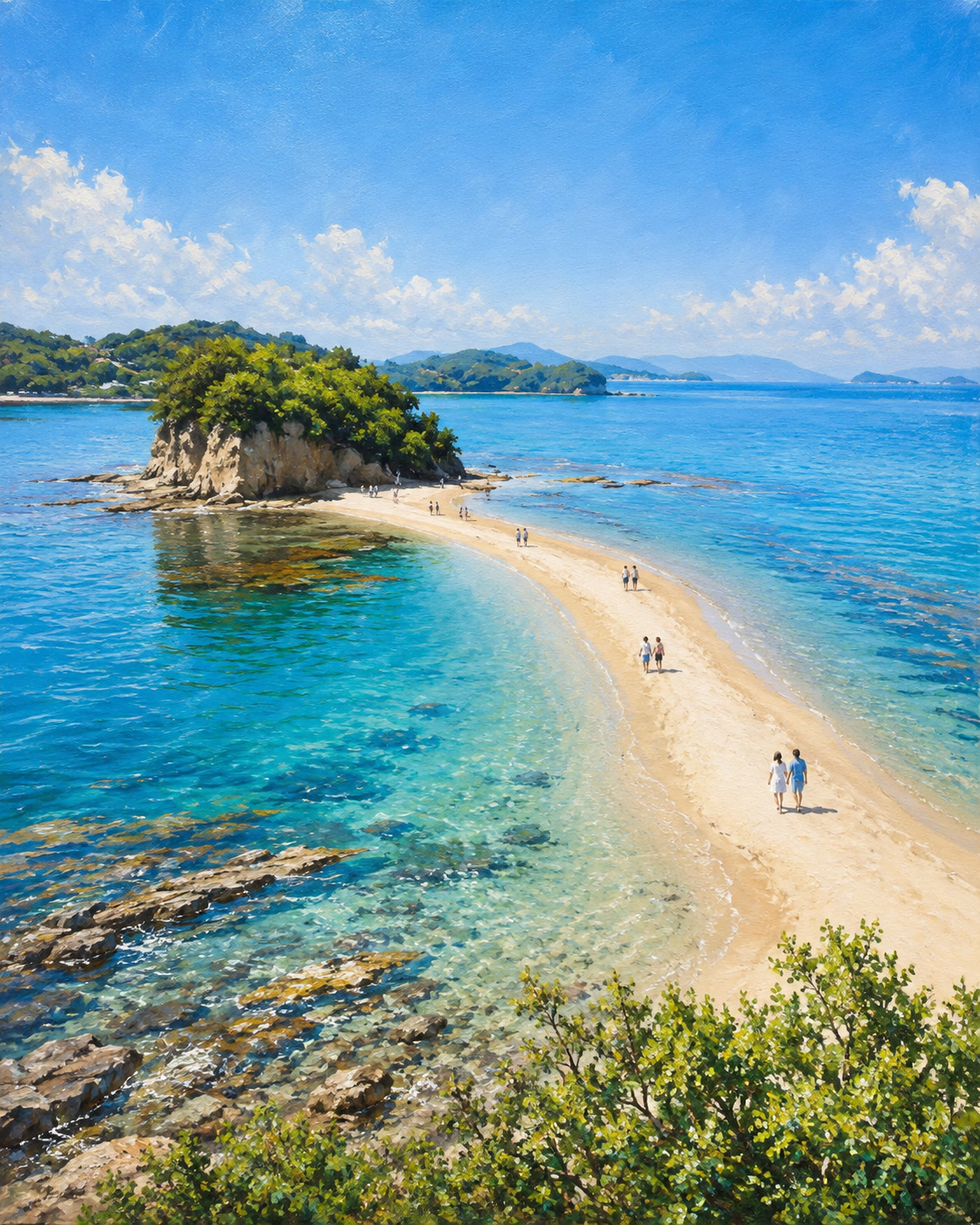
Before the Tide's Promise Unravels
Critique
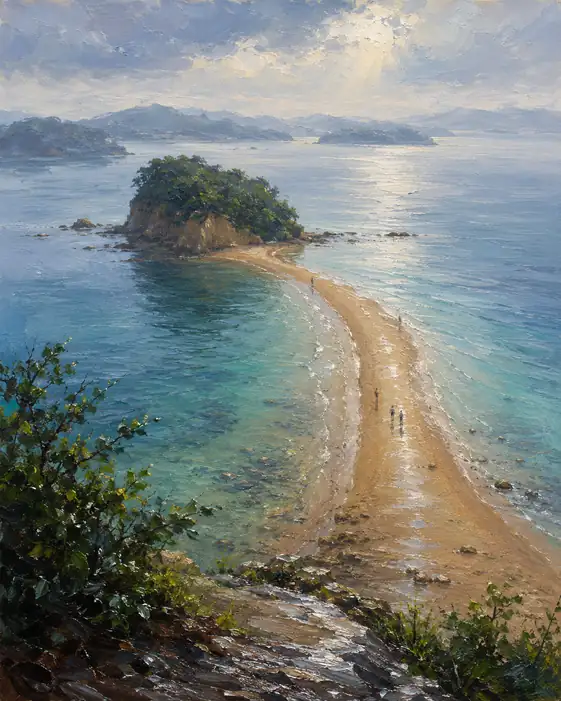
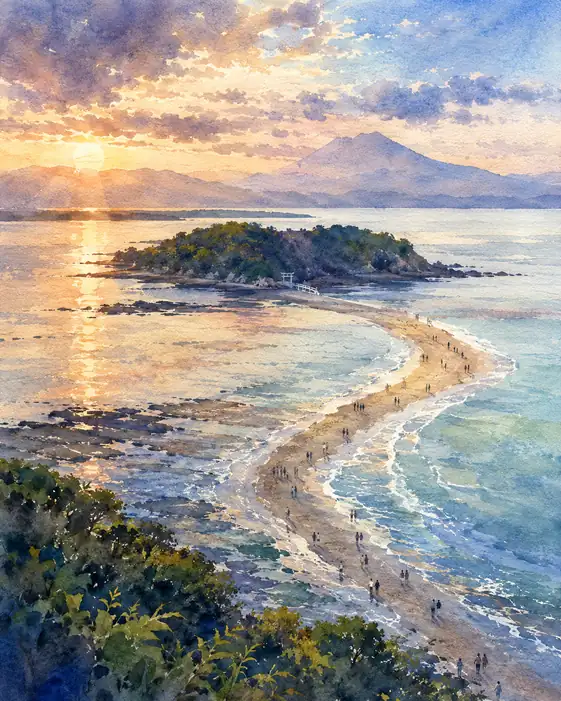
Introduction This luminous coastal panorama centers on a narrow sandbar linking the foreground shore to a small wooded island. Brilliant water and widely spaced walkers make temporary geography feel both communal and fragile. Description A pale sand path curves from the lower right toward a rocky, tree-covered islet at upper left. Couples and small groups walk at intervals along it. Transparent turquoise shallows reveal rocks and darker marine patches on both sides. Foreground shrubs frame the bottom; distant islands and blue hills spread beneath a high sky with scattered white clouds. Analysis The sandbar is a sweeping diagonal that narrows decisively into depth. Paired figures repeat along it, providing scale and measured temporal intervals. Warm cream sand stands against multiple blues, from pale aqua to cobalt, while the island supplies a compact dark-green destination. Submerged rocks create texture in the open water and prevent blue from becoming empty color. A very high horizon grants sky generous space, amplifying openness, while the foreground leaves establish the observer's elevated position. Interpretation and Evaluation The exposed path embodies conditional connection: it is walkable now but visibly surrounded by water. Couples reinforce themes of companionship and shared passage without requiring a fixed narrative. The islet appears reachable yet separate, making each walker part of a temporary procession. Saturated color and cloudless brightness idealize the coast, though visible reefs and varied water depth restore specificity. The abundance of small figures could become anecdotal, but their spacing instead strengthens the bar's rhythm and length. Conclusion Through a singular curving route, transparent depth, and repeated human scale, the work celebrates connection as a fleeting opportunity. Its openness remains compelling because the path's vulnerability is always visible.
Same Subcategory
 The Dune Keeps the Wind's Signature
Similar Artworks
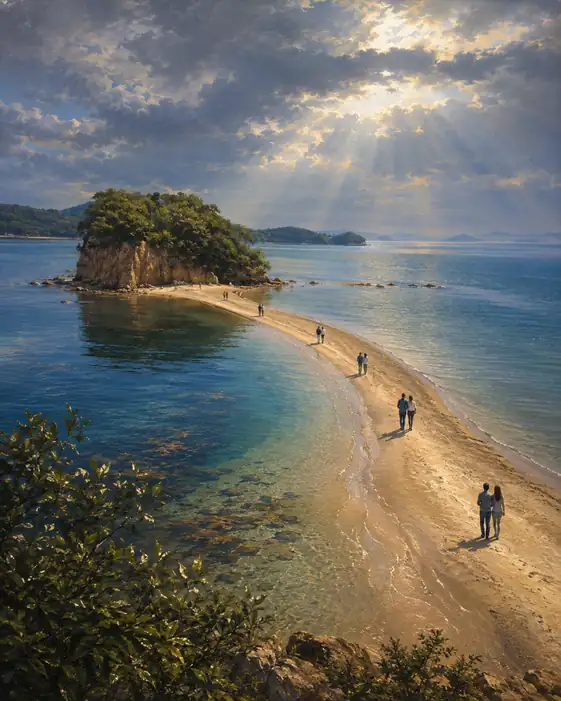 Ray of Grace on the Sand
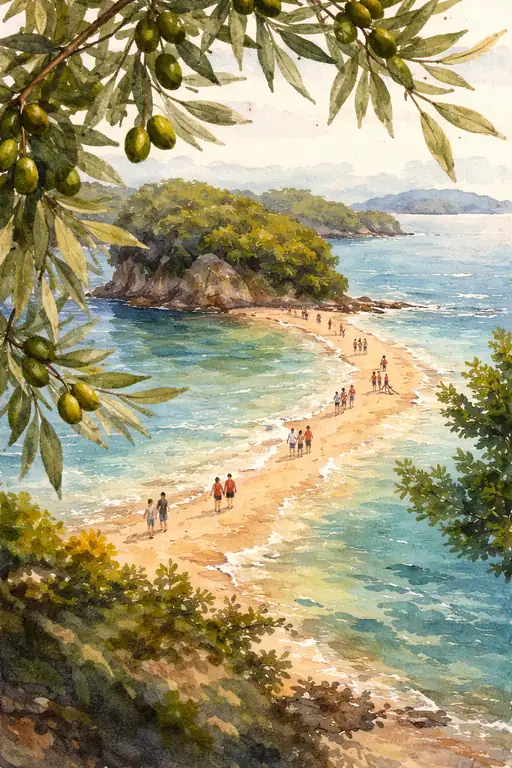 The Path That Appears with the Tide
 Golden Hour at the Crossing
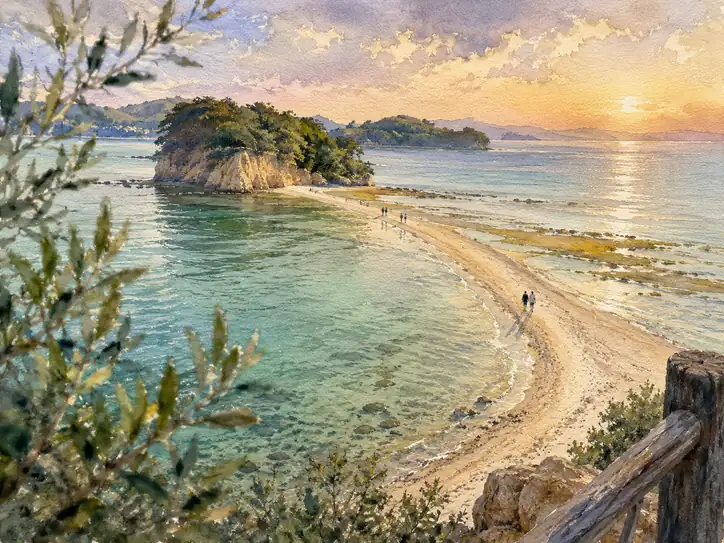 Golden Passage of the Receding Sea
 The Road the Tide Lends to Lovers
 Footsteps Along the Road of Angels
 The Sandbar Draws a Promise on the Sea
 Shadows of a Sapphire Paradise
 Until We Cross Every Color of the Sea
 The Tide Lays Down a Path to Prayer