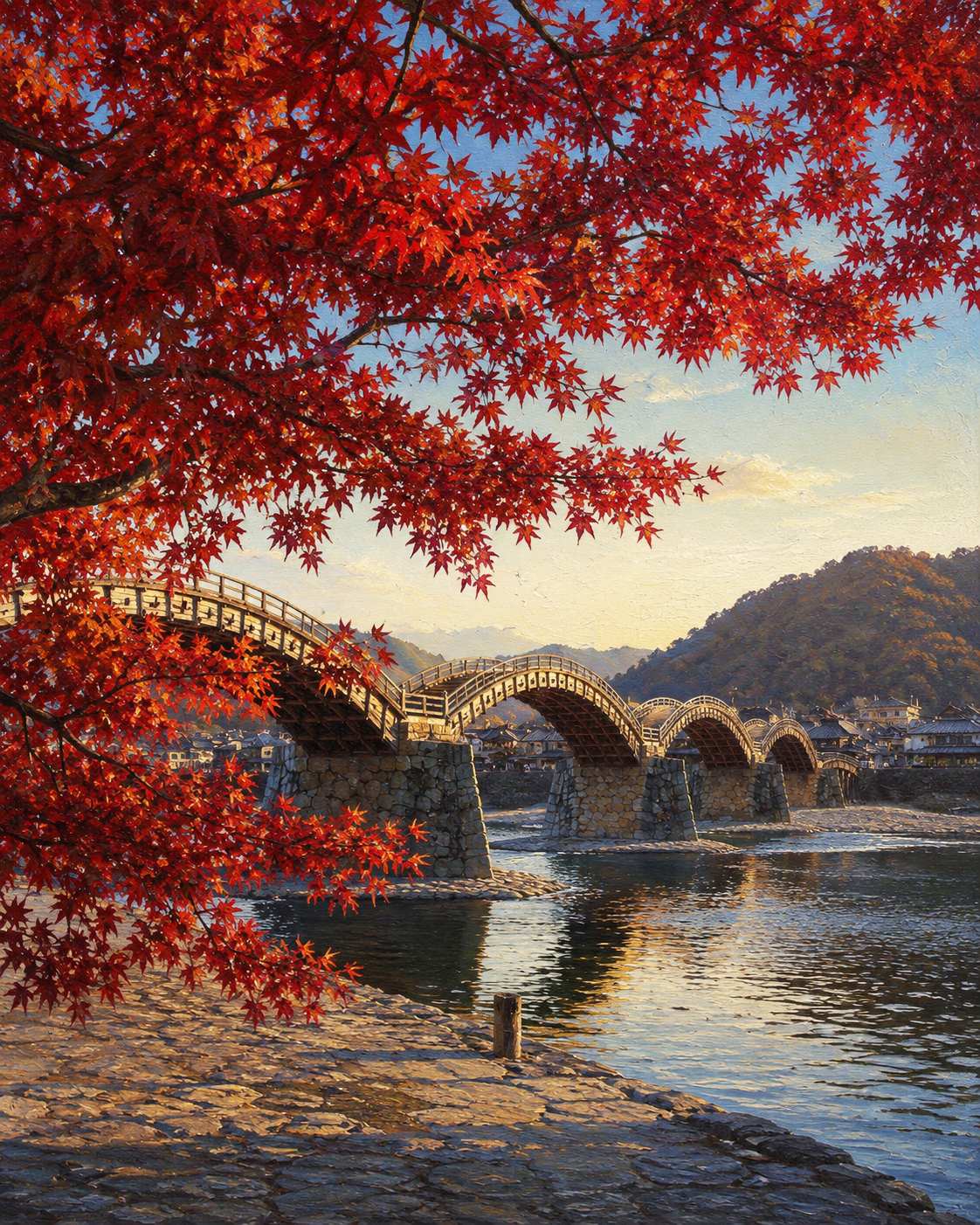
Across the Current, Time and Again
Critique
Introduction This autumn composition places the repeating bridge beneath a vast canopy of red maple leaves. The architecture appears less as a solitary monument than as one rhythm embedded within seasonal landscape and riverside life. Description Crimson branches spread across nearly the entire upper half and descend along the left. Below them, several wooden arches cross the river from left foreground toward the right distance on stone piers. Water reflects gold and dark green. A pebbled bank and solitary post occupy the bottom, while houses and a wooded mountain rise behind the bridge. Analysis The canopy forms a heavy overhead plane, compressing the bridge toward the center and making pale sky a narrow opening. Repeated leaf points create fine agitation above the larger measured arches. The spans diminish toward the right, producing lateral depth rather than a direct axial recession. Warm red and orange dominate, balanced by blue-green water and gray stone. Reflections mirror the bridge only partially, preserving river movement. The isolated post on the shore offers a simple vertical pause amid curves and branching lines. Interpretation and Evaluation The bridge and maple express different forms of repetition: engineered modules and proliferating leaves. Their coexistence suggests cultural structure living inside seasonal cycles rather than outside nature. The canopy's visual weight risks overshadowing the bridge, but this hierarchy usefully resists conventional monument worship. Houses visible through arches connect the crossing to ordinary community. The still, empty shore grants contemplative distance, while warm light prevents detachment from becoming cold. Conclusion Through an enveloping canopy, lateral rhythm, and partial reflection, the work integrates bridge and autumn rather than merely juxtaposing them. Its beauty lies in showing continuity as both built and grown.
Same Subcategory
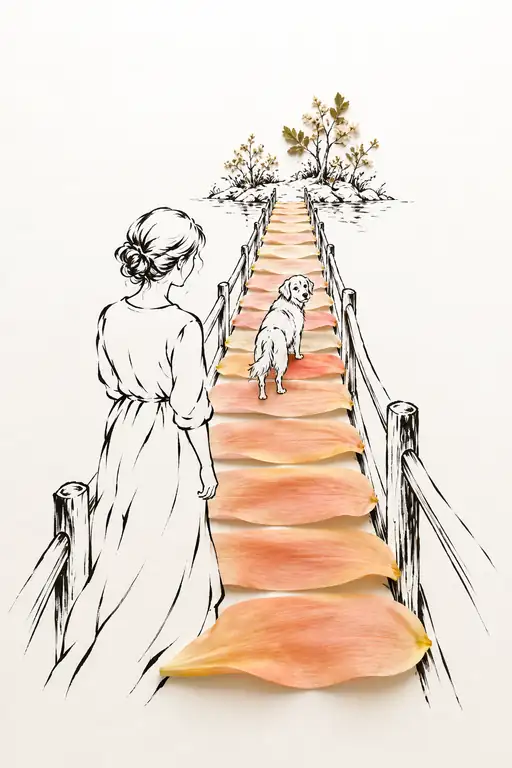 I Am Coming, Keep Looking Back
Similar Artworks
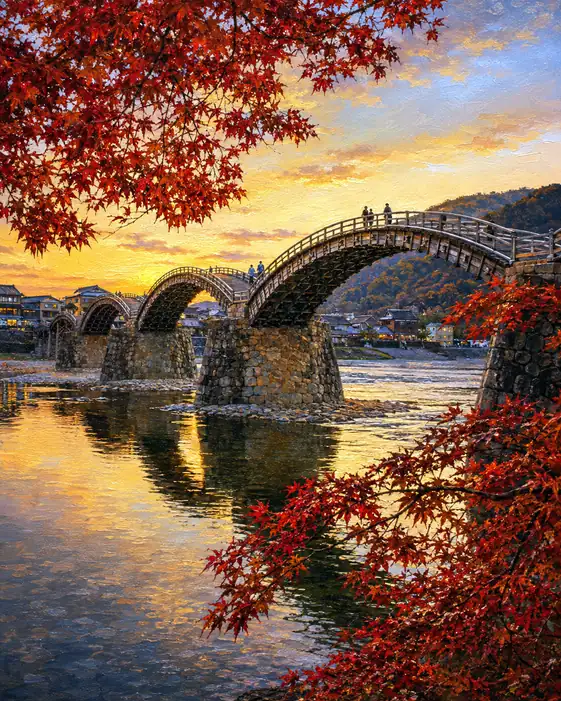 Golden Sunset and Autumn Maples at Kintai Bridge
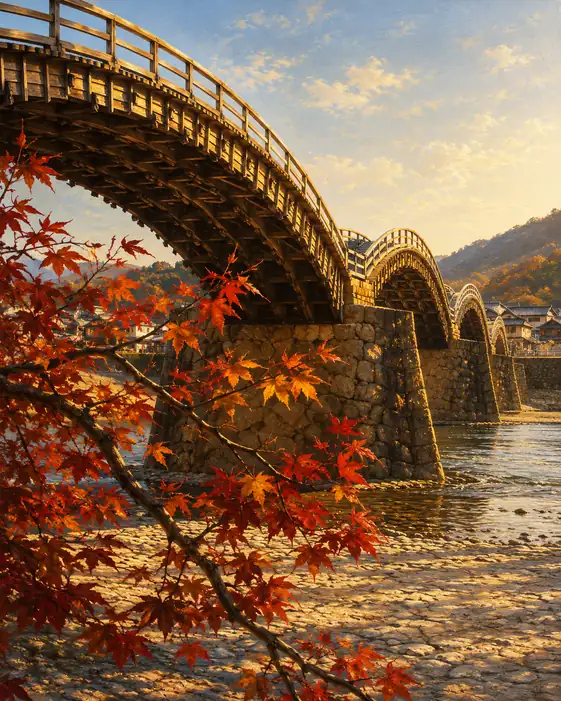 Beneath the Golden Arches
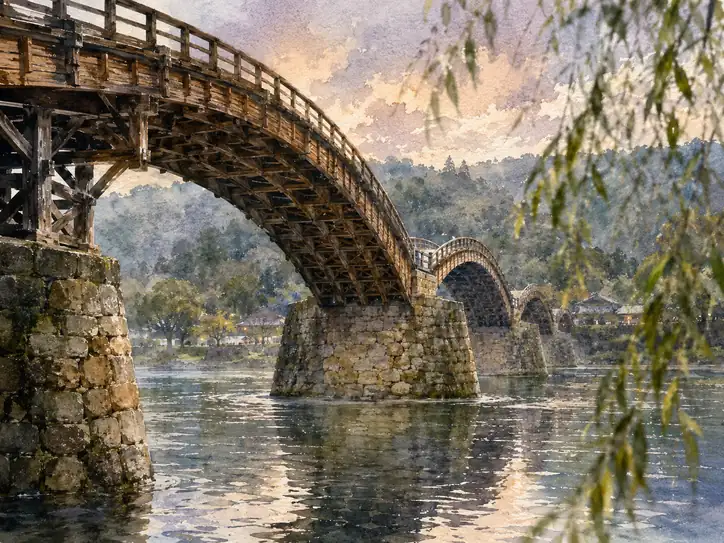 A Path Woven in Wood and Twilight
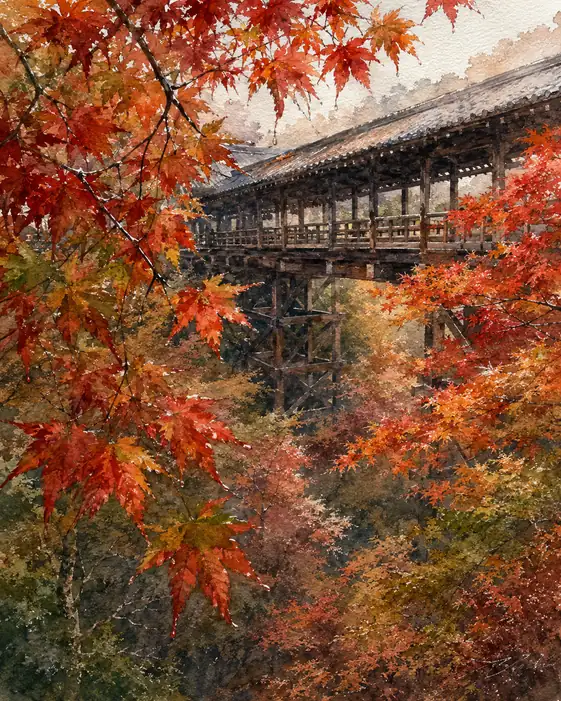 Autumn's Crimson Whisper
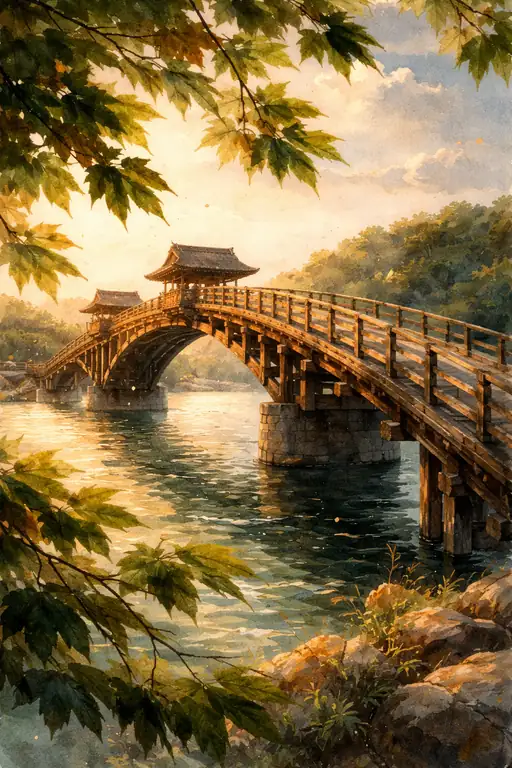 Harmony Across the Gentle Current
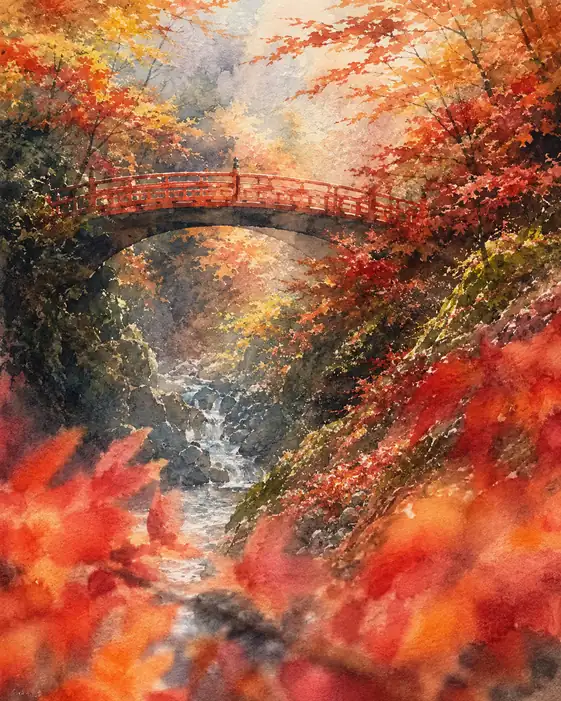 Autumn Burns Beneath the Bridge
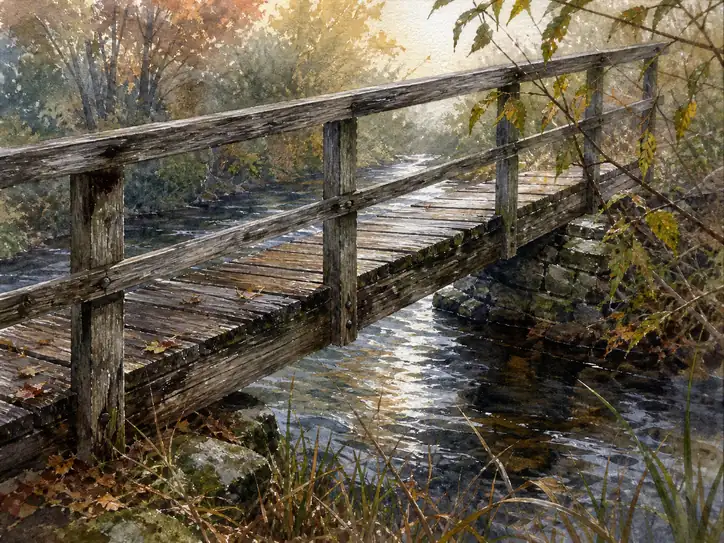 Bridge to the Heart of Autumn
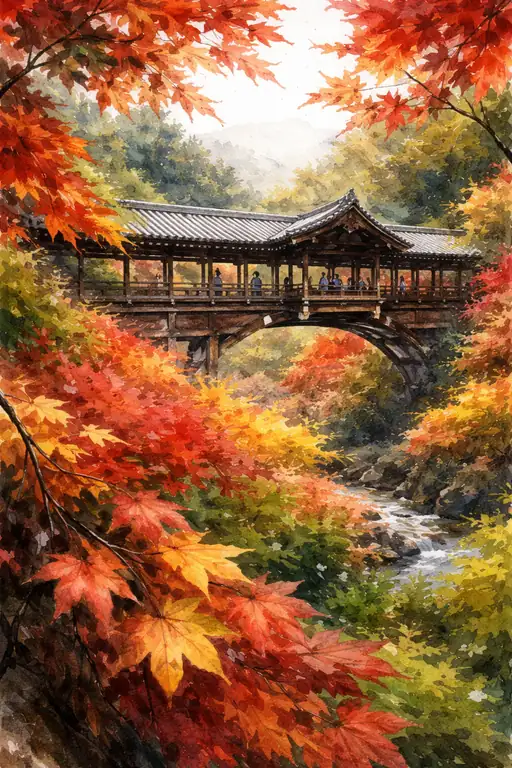 A Journey Through the Crimson Canopy
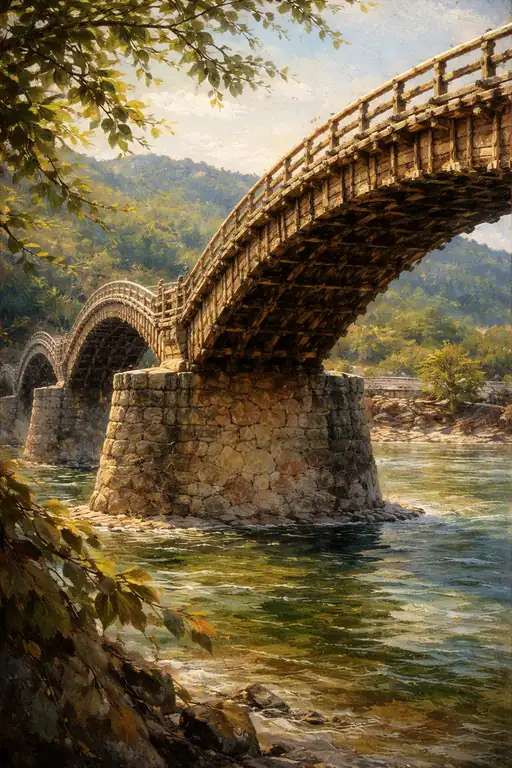 Echoes of the Wooden Arch
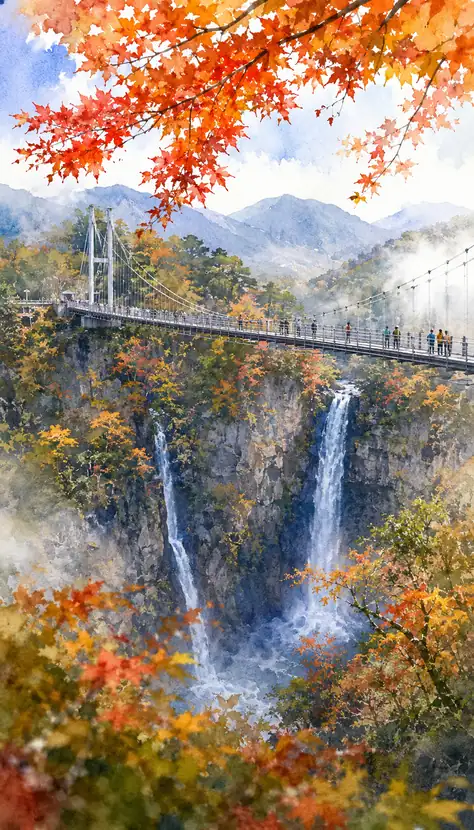 Across the Gorge, Autumn Calls