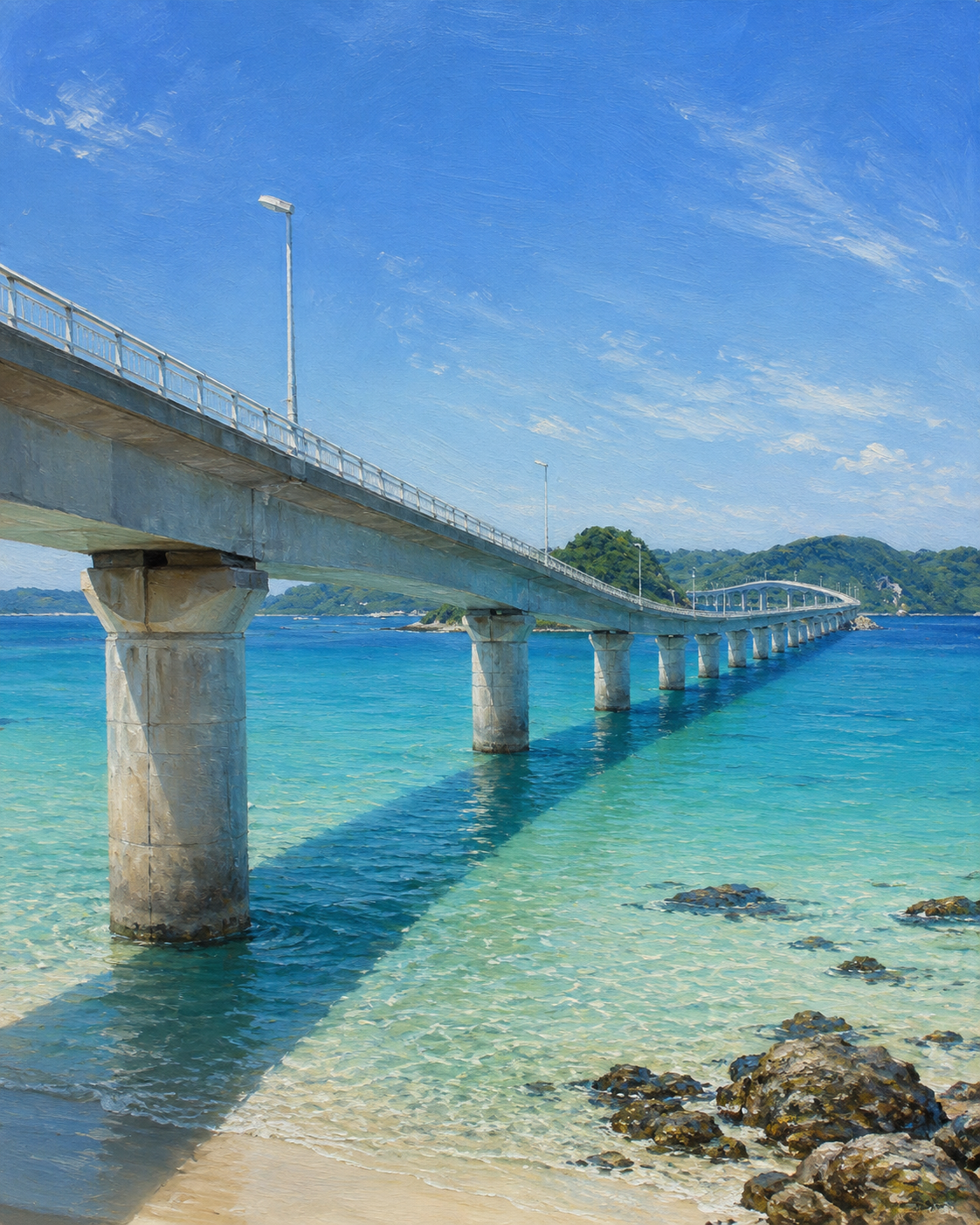
Until We Cross Every Color of the Sea
Critique
Introduction Seen from the shore, this long concrete bridge becomes a powerful diagonal across luminous tropical water. Its engineering mass is tempered by rhythmic supports, distant hills, and the changing colors of the shallows. Description The bridge enters high at left, passes overhead, and narrows toward a low arched section near the right horizon. Cylindrical piers stand at regular intervals. Their long blue shadows cross turquoise and pale green water toward a sandy foreground. Dark rocks cluster at lower right; wooded islands and wispy clouds line the distance. Analysis One commanding diagonal organizes the composition and accelerates recession. Repeated piers diminish in size, providing a clear measure of distance, while their shadows create a second darker bridge beneath the surface. The nearest support is massive and textured; farther ones become simple pale strokes. Water shifts from transparent mint over sand to saturated cyan and deep blue, revealing submerged rock and ripples. Slim lamp posts punctuate the deck's horizontal edge and echo the piers. The curving rise at the far end softens otherwise utilitarian geometry. Interpretation and Evaluation The bridge represents connection through repetition: many separate supports sustain one continuous route. From below, its practical form acquires monumentality, yet transparent water keeps the scene sensorially inviting. The long shadow records the sun's position and makes infrastructure participate in natural light rather than sit outside it. No vehicles are visible, so potential movement is stronger than actual traffic. Saturated blues idealize the coast, but varied depth and rough concrete retain physical credibility. Conclusion Through decisive perspective, rhythmic supports, and layered water color, the work turns infrastructure into a measured passage across brightness. It balances human reach with the sea's continuing visual dominance.
Same Subcategory
Similar Artworks
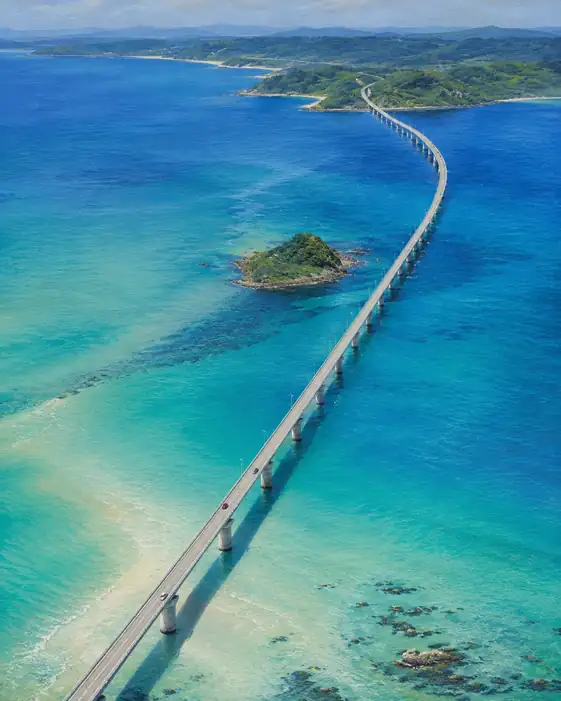 Bird's-Eye View of Tsunoshima Bridge across Azure Waters
 A Path Suspended in Blue
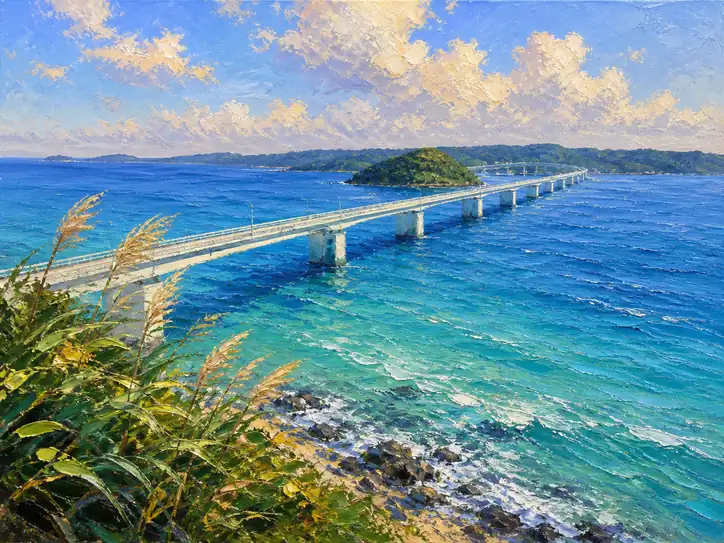 Azure Spanning of the Summer Solstice
 Bridges to the Cerulean Dream
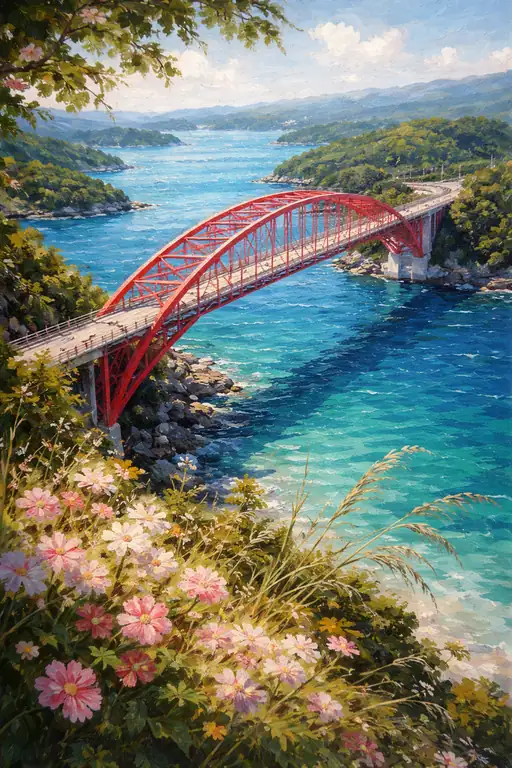 A Crimson Promise over the Azure Strait
 Where Spans and Petals Meet the Sky
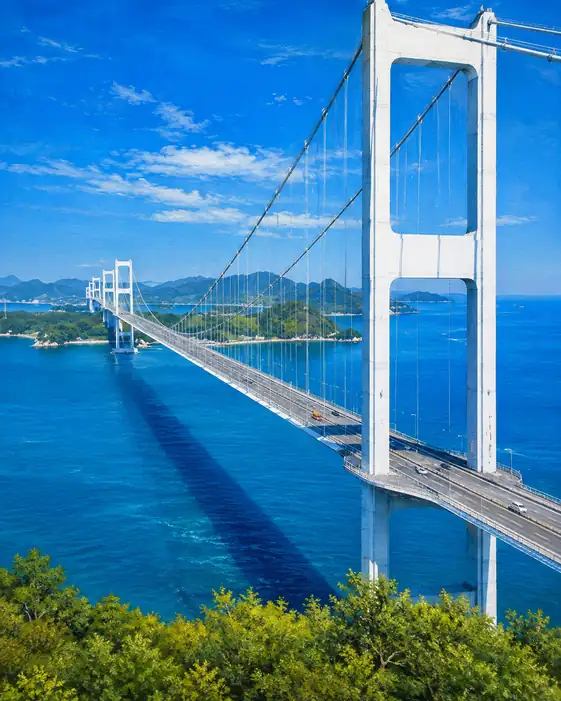 Azure Crossing and its Deep Shadow
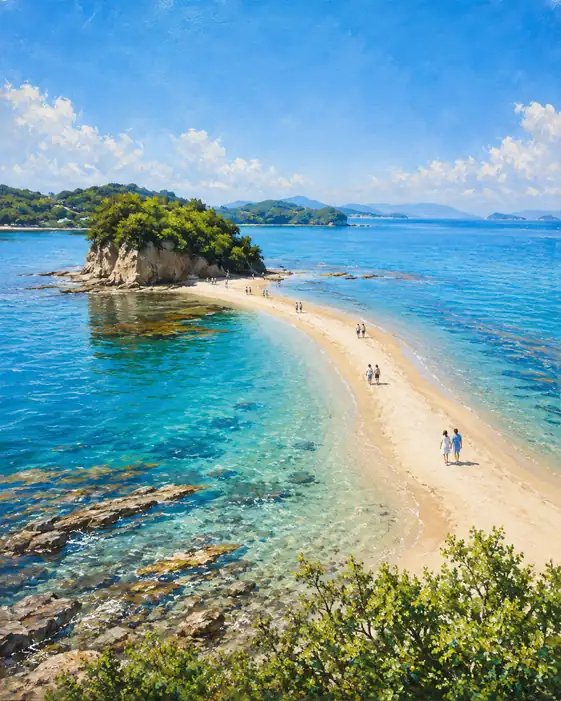 Before the Tide's Promise Unravels
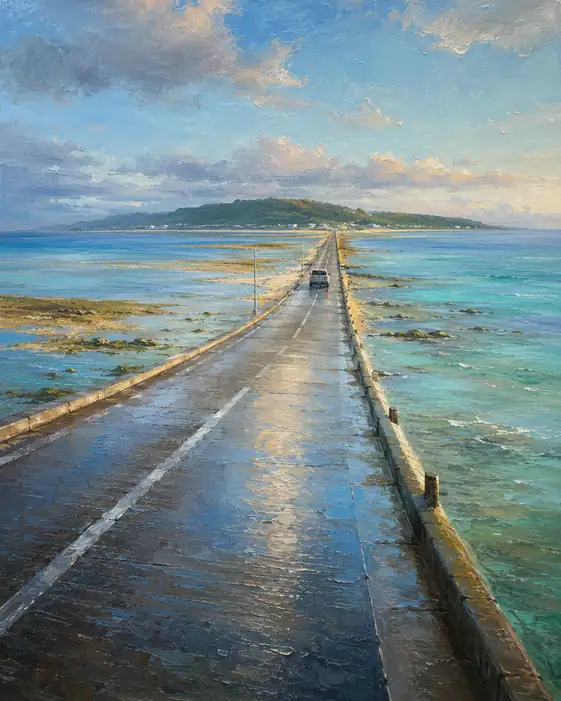 The Road That Walks into the Sea
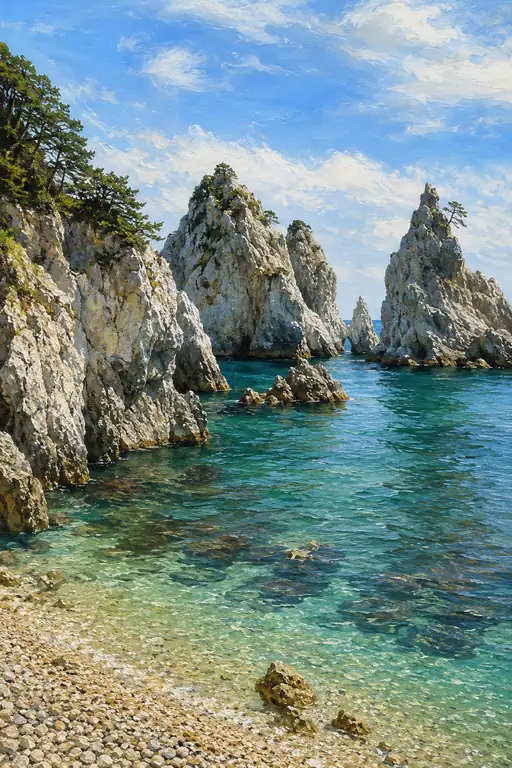 Resilience in the Azure