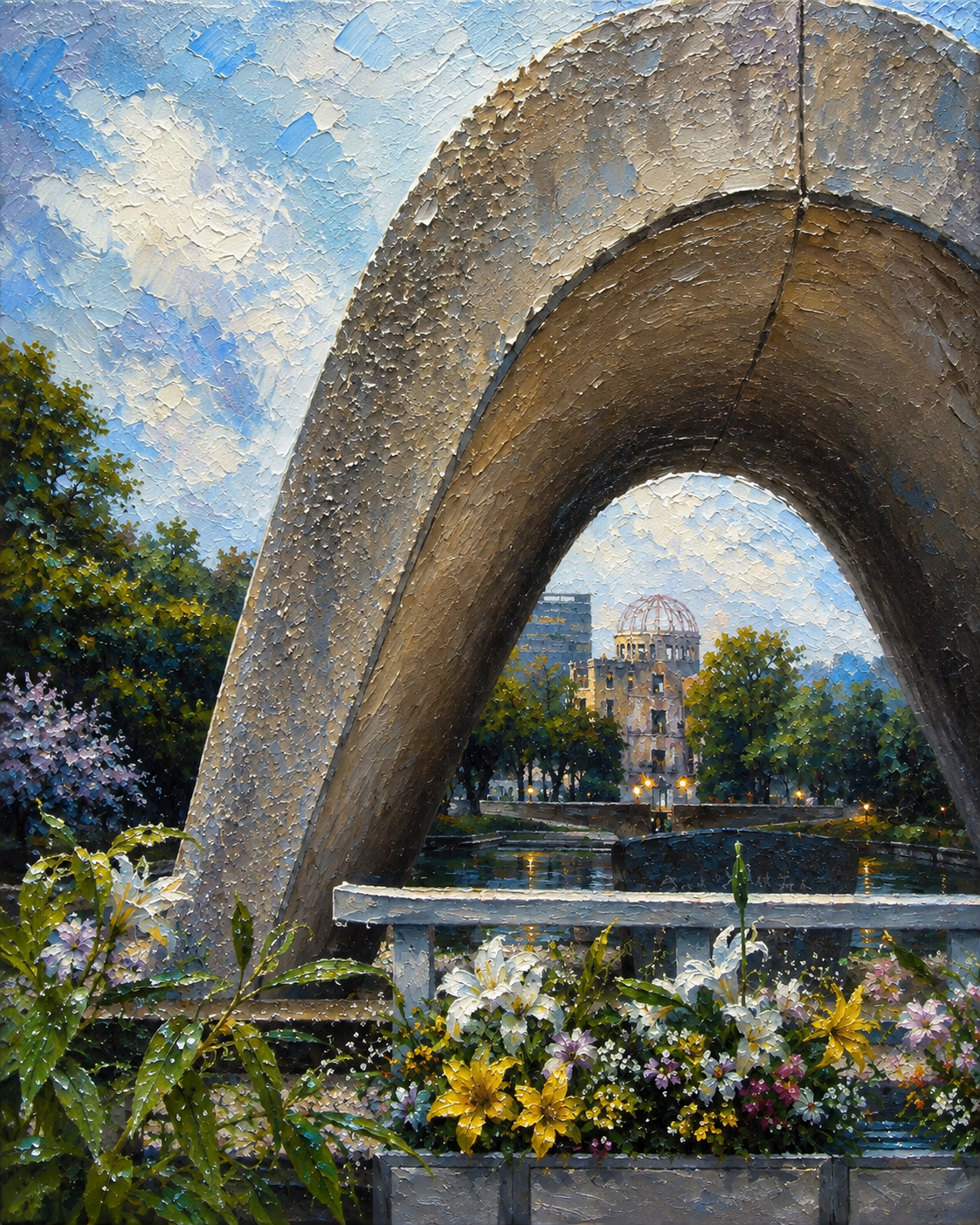
Impasto of the Peace Memorial Arch and the Dome
Critique
Introduction This heavily textured treatment of a memorial arch and distant ruin makes material surface inseparable from historical subject. Raised paint gives weathered concrete, cloud, leaf, flower, and water a shared physical urgency. Description A monumental gray-brown arch curves across the upper and left frame. Its opening centers a skeletal domed building beyond green trees and dark pools. White and yellow lilies, pink flowers, and broad leaves fill the lower foreground behind a pale rail. Blue-white clouds break across the sky, and small amber lights dot the distance. Analysis Thick palette-knife marks build every plane but vary in direction and scale. Short rough facets emphasize the arch's pitted exterior; long curved strokes deepen its underside. Blocky greens construct trees, while sharp white and yellow touches articulate flowers. The outer arch, inner opening, and dome create nested curves that organize the agitated surface. Dark brown shadow around the aperture dramatically concentrates attention on the lit ruin. Horizontal rail and water bands interrupt the upward sweep. Interpretation and Evaluation The visible accumulation of paint evokes surfaces that bear marks over time. Arch and ruin become materially related despite differing histories, each reconstructed through deposits, cuts, and edges. Texture risks aestheticizing the memorial subject, but its roughness resists polish and keeps damage palpable. The flowers do not erase severity; their equally thick paint grants present life the same physical reality. The tight framing makes the act of looking unavoidable and almost bodily. Conclusion Through nested architecture and insistent impasto, the work joins visual memory to material trace. It asks the viewer not only to recognize the monuments but to feel the resistance of their surfaces.
Same Subcategory
Similar Artworks
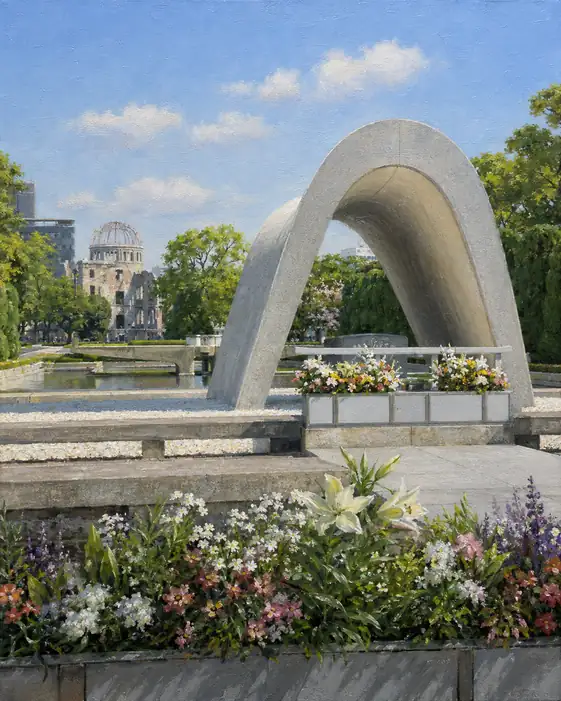 Flowers of Peace before the Memorial Cenotaph
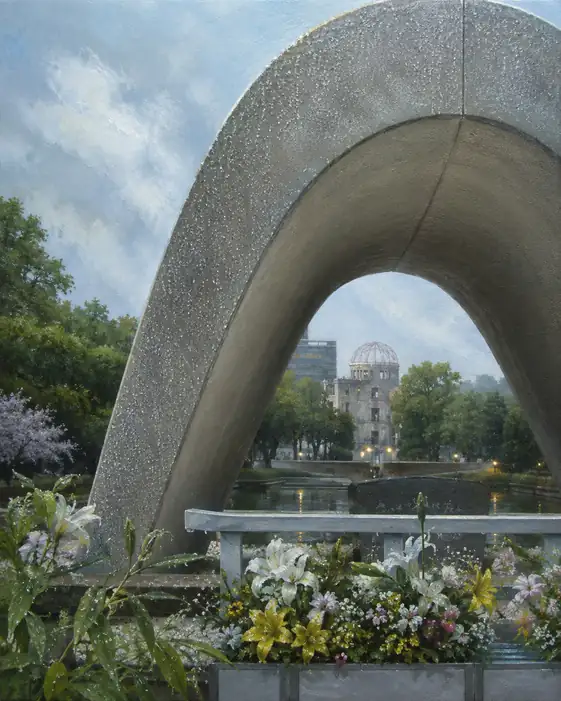 A Prayerful Gaze for Peace
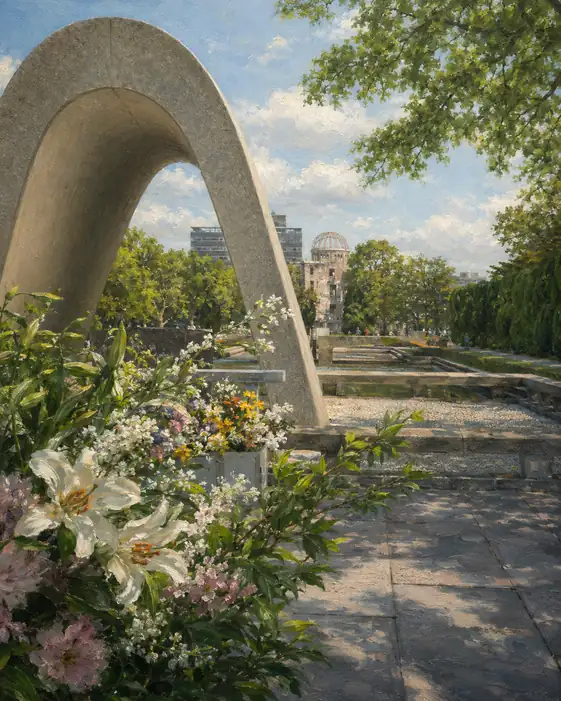 White Lilies and the Cenotaph Arch of Hiroshima
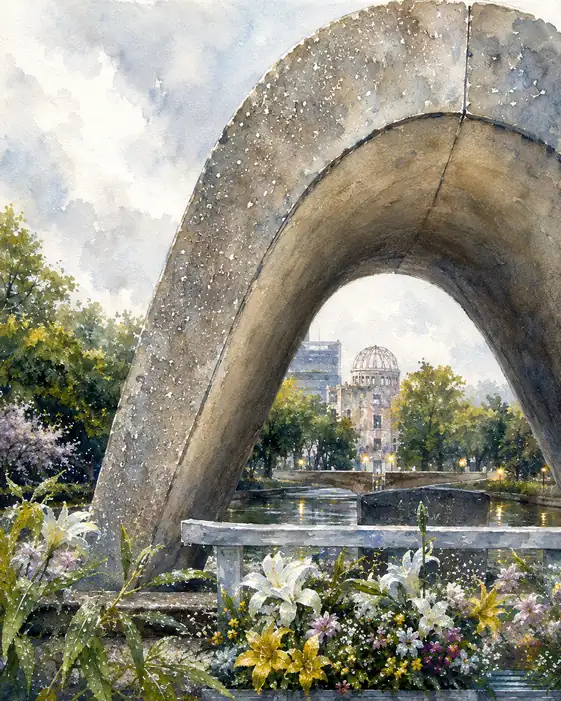 Prayers in Rain Beneath the Arch of Remembrance
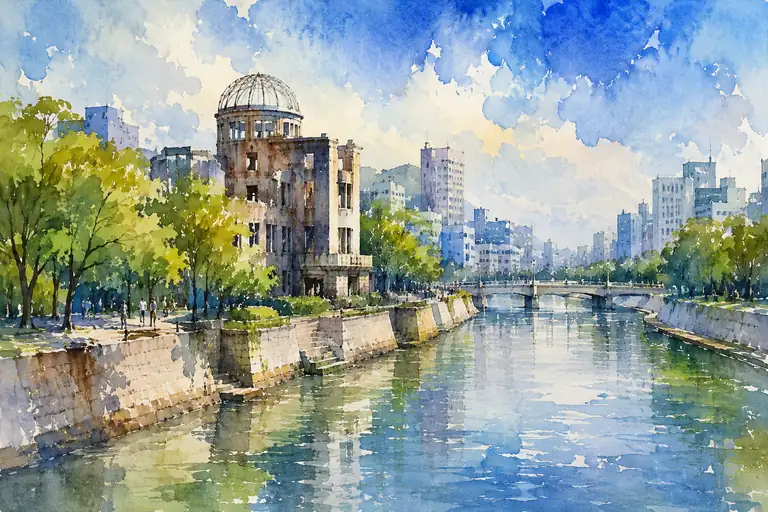 A Prayer Whispered in the Light of Today
 Whispers of the Ancient Stones
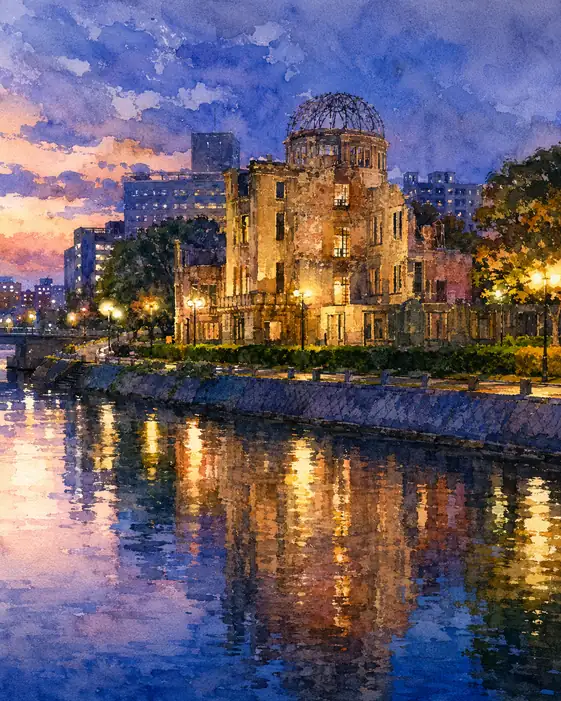 The Ruin That Still Holds the Light
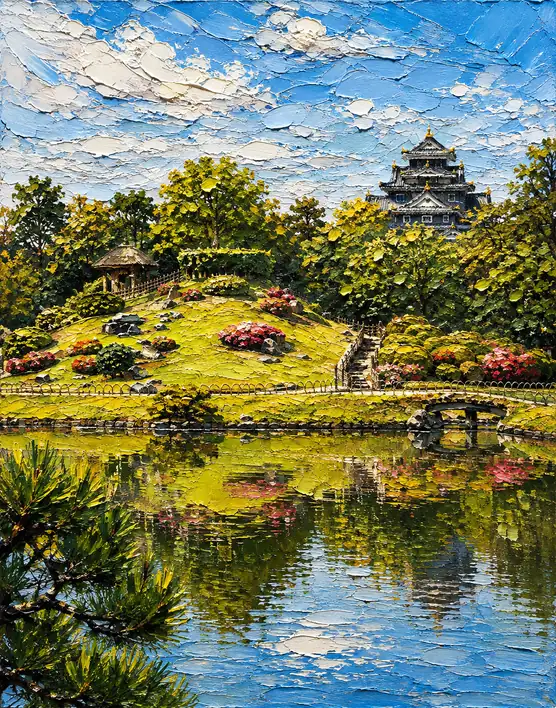 Summer Unfolds in the Water Mirror of Crow Castle
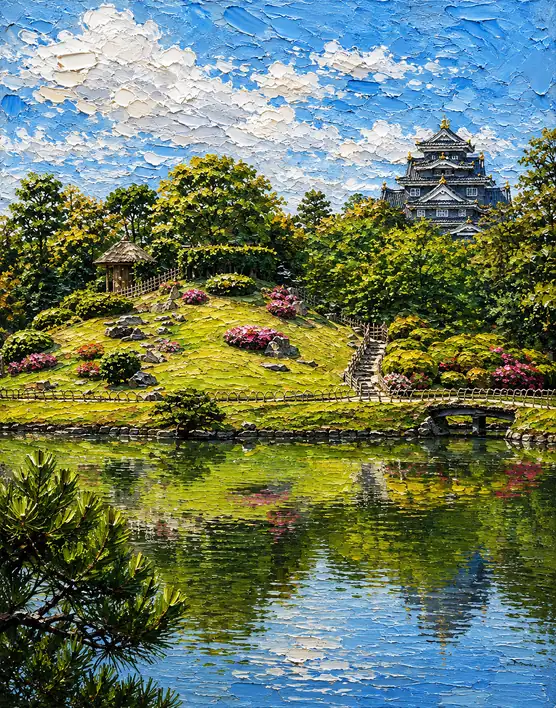 Impasto Landscape of Korakuen and Okayama Castle
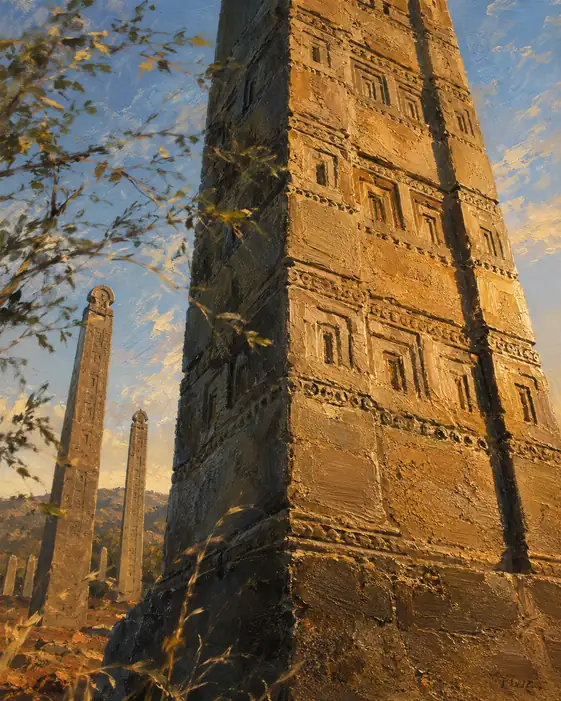 Silent Witnesses of a Lost Kingdom