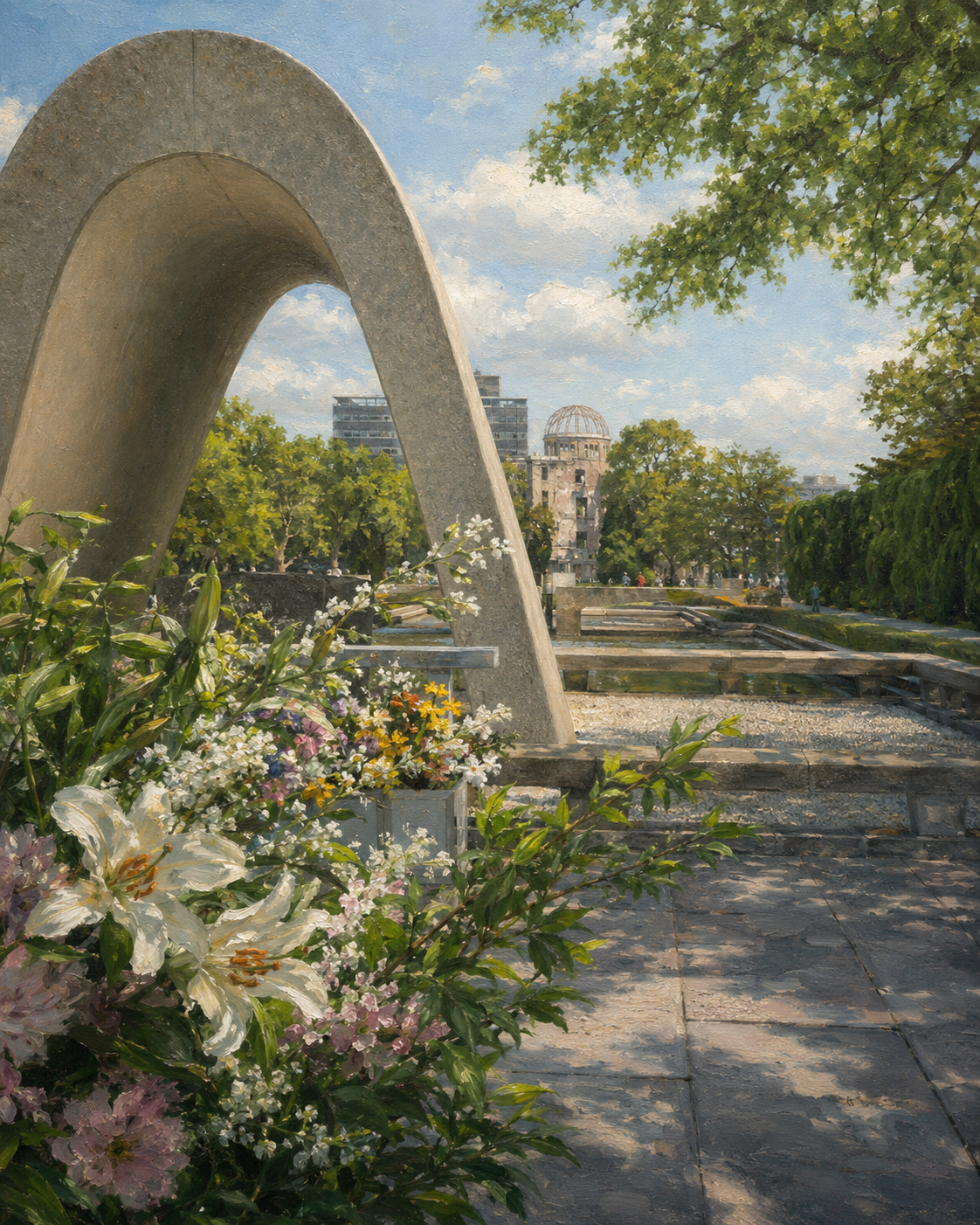
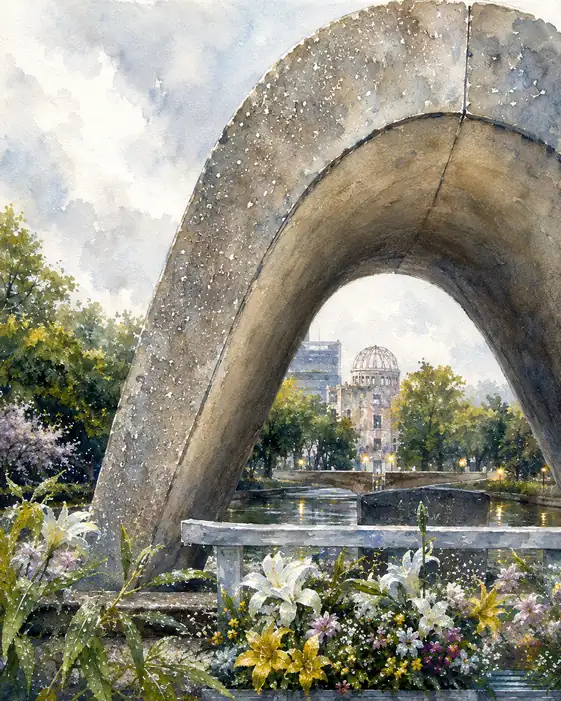
White Lilies and the Cenotaph Arch of Hiroshima
Critique
Introduction This summer park view uses a massive concrete arch to frame a damaged domed building in the distance. Flowers, trees, and patterned shade make remembrance part of an inhabited present rather than an isolated historical tableau. Description The arch rises from the left and curves across the upper center, its opening enclosing sky, trees, and the distant ruin. White lilies and mixed flowers crowd the lower left beside stone paving. Long pools and terraces recede toward the dome. A leafy canopy enters from the upper right and casts branching shadows across the path. Analysis The arch supplies the dominant sweeping curve and an internal frame. Its left support is cropped, increasing scale, while the dome sits small but precise near the opening's center. Receding pools and stone edges create horizontal perspective toward that focal point. Neutral gray masonry is surrounded by saturated greens and floral whites, yellows, and pinks. Sunlit foliage breaks the sky into irregular fragments; shadows animate the otherwise severe paving. The foreground lilies echo the dome's pale ribs in miniature. Interpretation and Evaluation The route from flowers through the arch toward the ruin connects seasonal renewal, deliberate commemoration, and preserved destruction. The arch does not hide damage; it directs sustained attention to it. Everyday summer abundance prevents memory from becoming abstract, while the ruin keeps beauty from turning carefree. The clear weather risks making the scene overly pleasant, but the long axial view and damaged silhouette retain gravity. Conclusion Through architectural framing, deep recession, and living foreground detail, the work makes remembrance spatial and active. It asks the present to look steadily through its own vitality toward what remains.
Same Subcategory
Similar Artworks
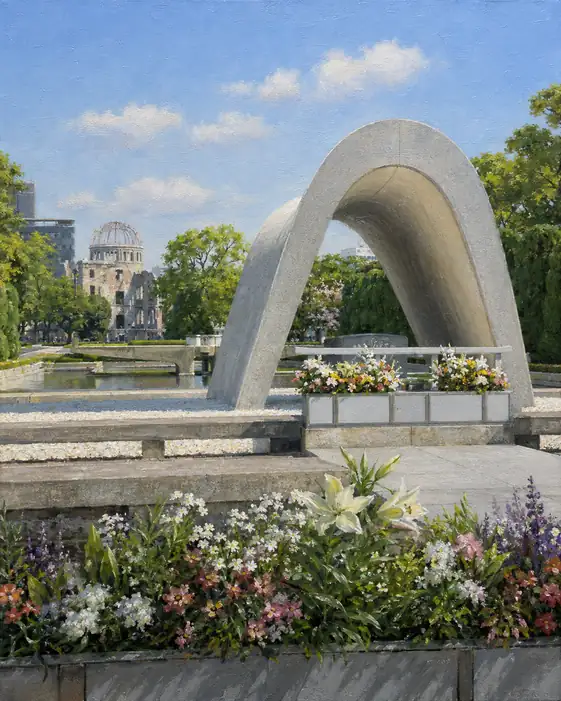 Flowers of Peace before the Memorial Cenotaph
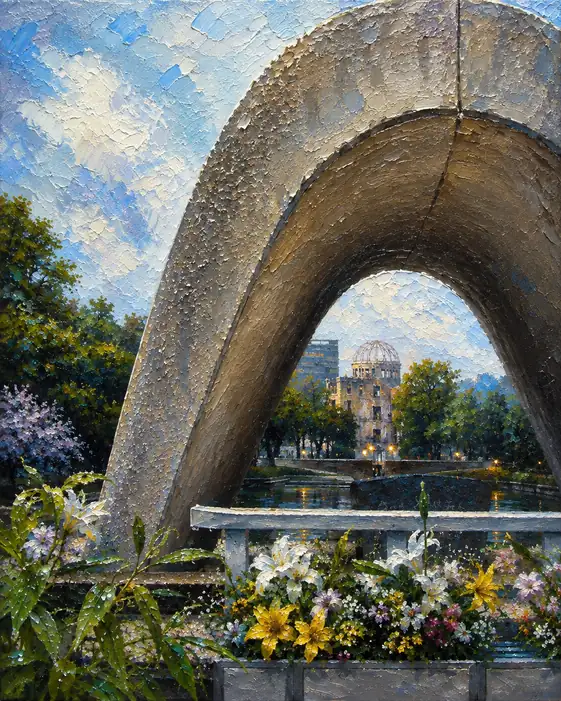 Impasto of the Peace Memorial Arch and the Dome
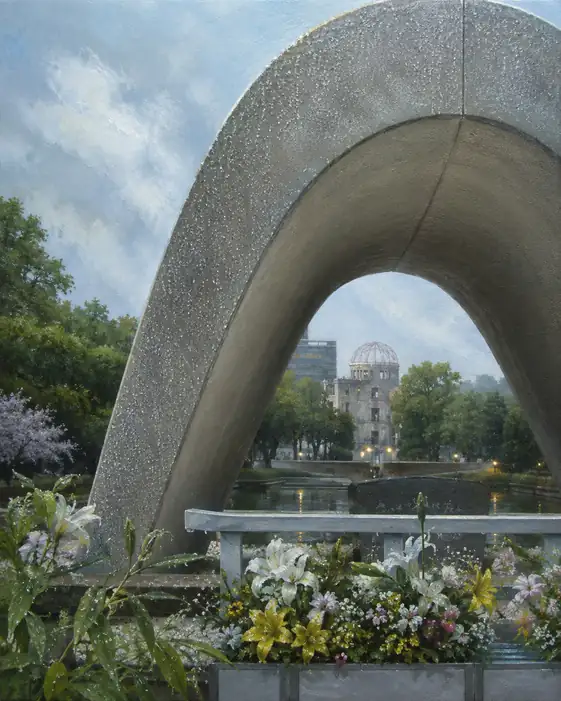 A Prayerful Gaze for Peace
 Prayers in Rain Beneath the Arch of Remembrance
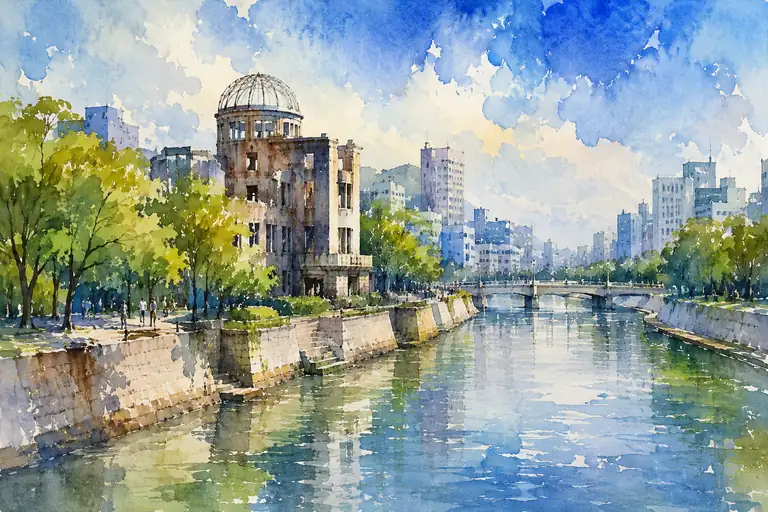 A Prayer Whispered in the Light of Today
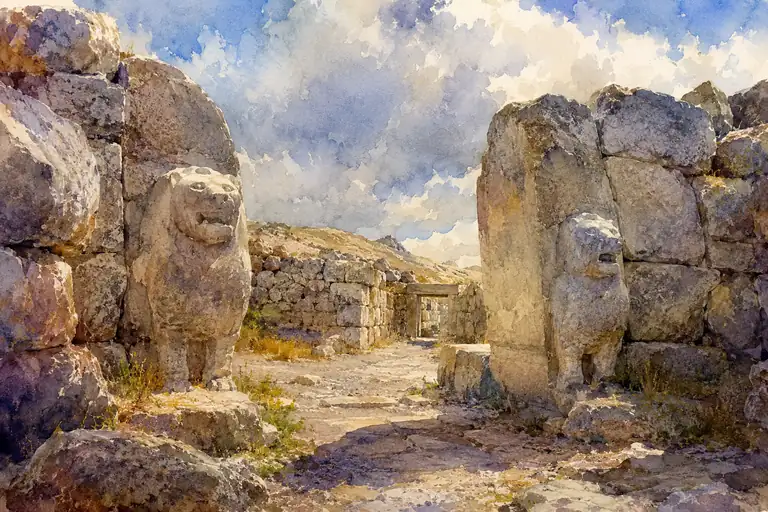 The Silent Roar of Hattusa
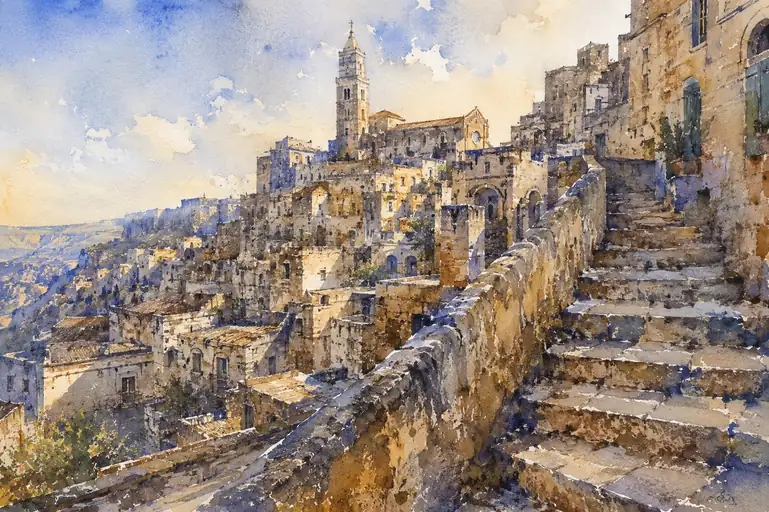 Steps Leading to the Sky of Stone
 Bustling Marketplace Beside an Old Stone Church
 Echoes of Antiquity
 The Ruin That Still Holds the Light