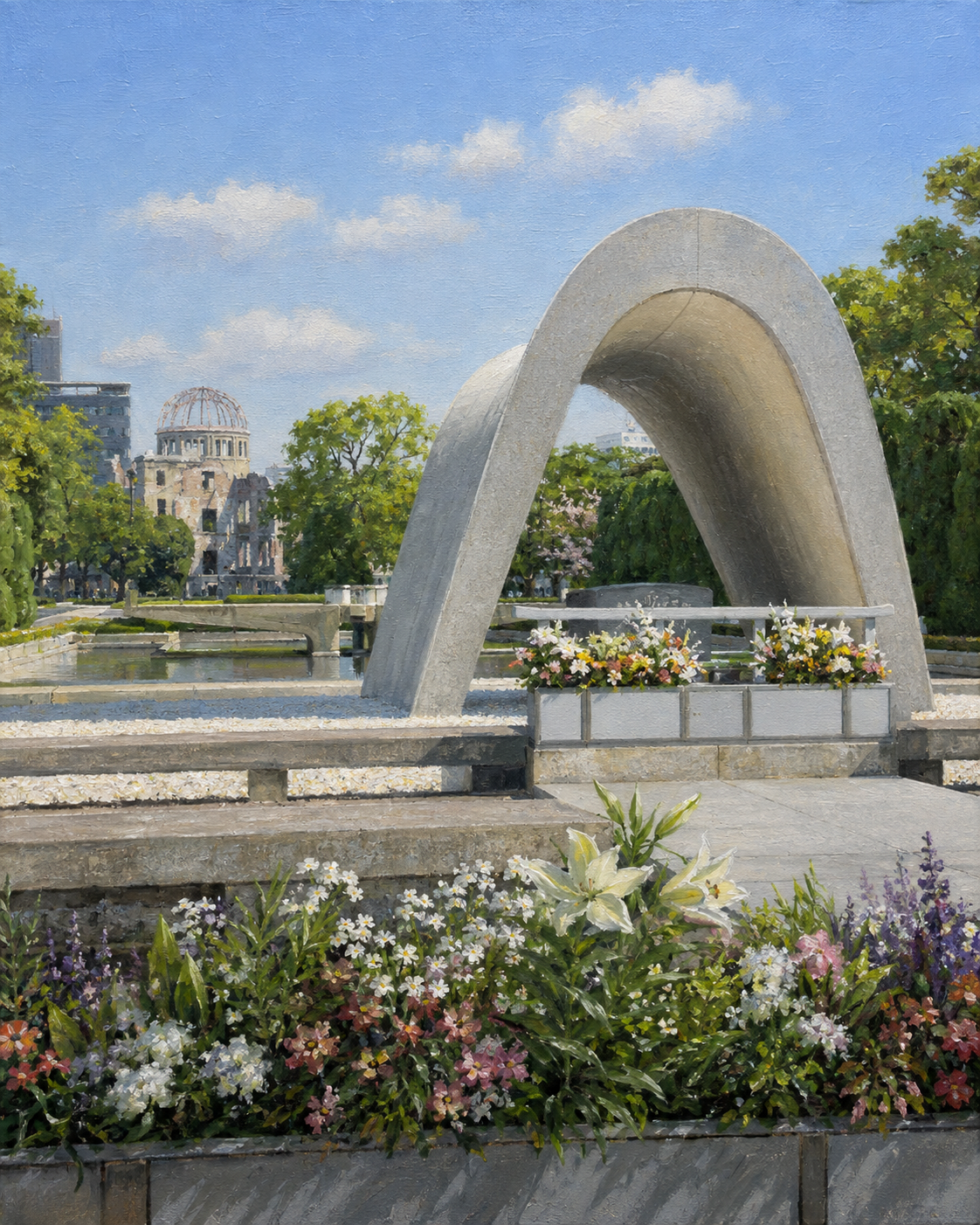
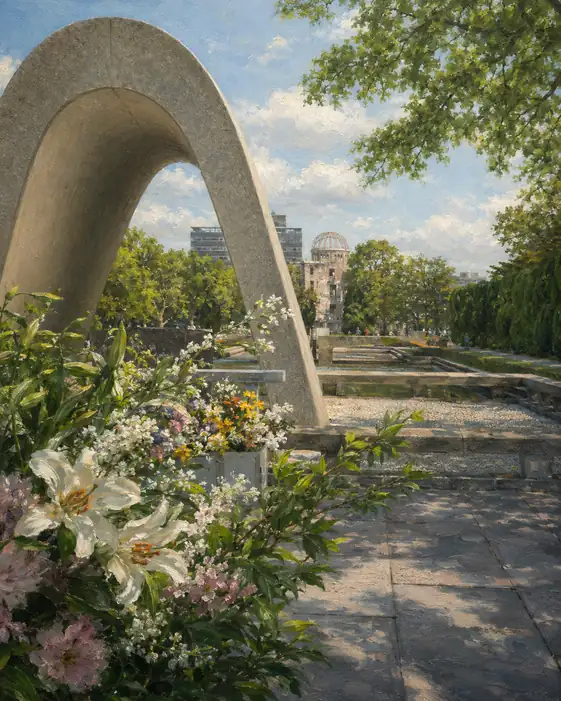
Flowers of Peace before the Memorial Cenotaph
Critique
Introduction This civic landscape places a monumental concrete arch in visual dialogue with a ruined domed building. Flowers and summer trees soften the route between them without diminishing the scene's historical gravity. Description A mixed flower bed fills the lower foreground with white lilies, small white blooms, pinks, and violet spikes. Behind low stone terraces and shallow water, a tall gray saddle-shaped arch dominates the right. Through and beyond its opening, green trees frame the skeletal dome and damaged walls of an older building at left. Blue sky holds scattered clouds. Analysis The arch's sweeping curve provides the strongest shape, rising from a broad base and opening toward the background. Its void creates an internal frame, while the distant dome supplies a smaller counter-curve. Horizontal terraces and pools stabilize these vertical monuments. Neutral concrete and weathered stone contrast with saturated greenery and floral color. The foreground bed establishes human scale and seasonal immediacy. Clear midday light reveals surfaces directly, with the arch's deep underside producing the principal shadow. The off-center pairing avoids static symmetry and encourages the eye to travel between memorial forms. Interpretation and Evaluation The composition links commemoration and survival through spatial proximity rather than spectacle. The intact modern arch and damaged dome embody different relations to memory: deliberate form and preserved rupture. Flowers do not prettify the ruins so much as mark continuing care and recurring life. The polished clarity can initially resemble a pleasant park view, yet the architectural dialogue restores seriousness. Conclusion Through framing, counter-curves, and a measured transition from flowers to ruins, the work balances present vitality with historical remembrance. Its restraint allows beauty to accompany memory without replacing it.
Same Subcategory
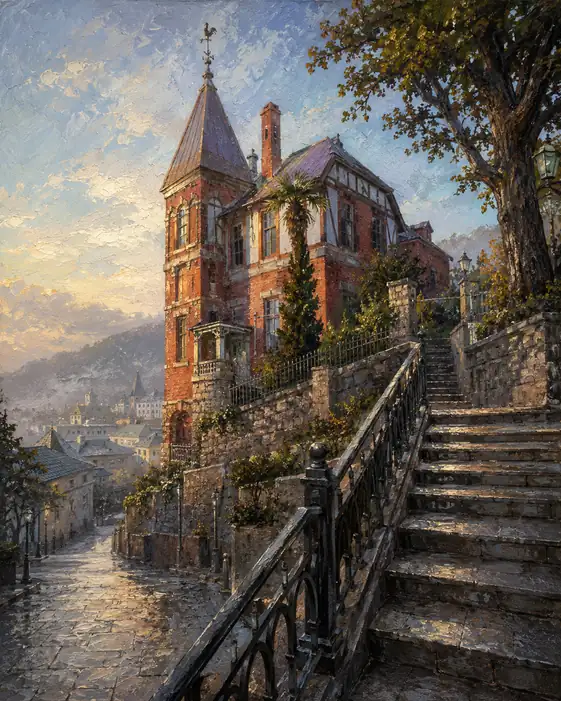 Stairs Climb Toward a Foreign Dream
Similar Artworks
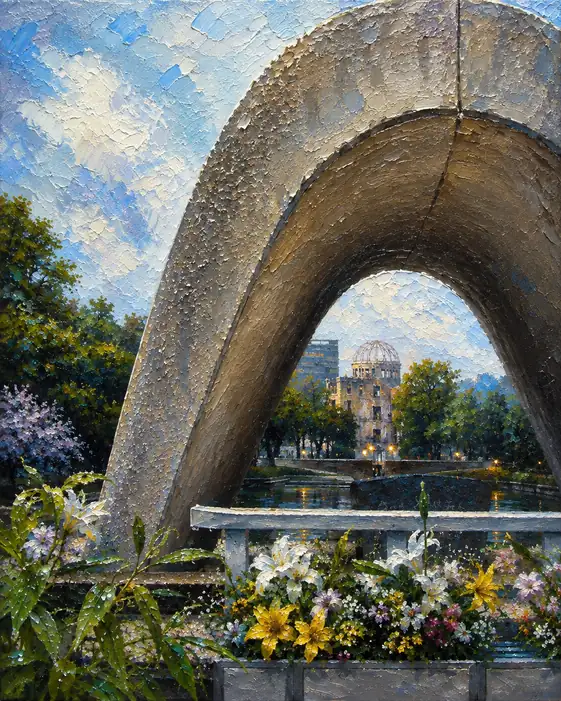 Impasto of the Peace Memorial Arch and the Dome
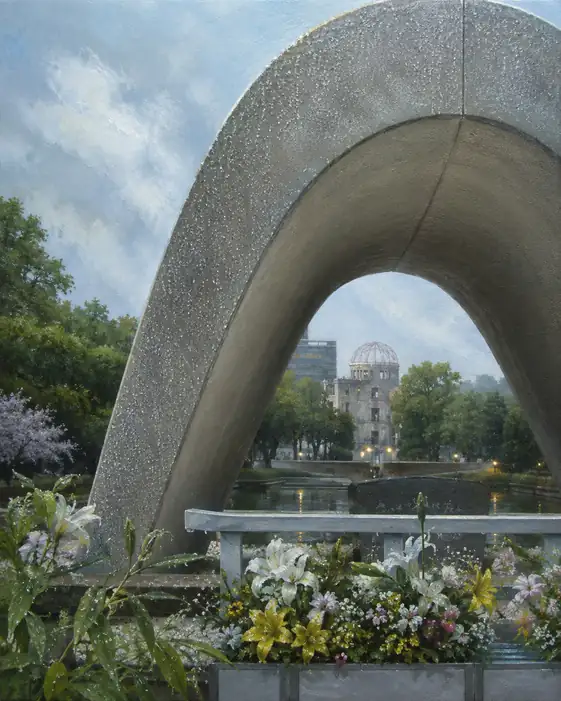 A Prayerful Gaze for Peace
 White Lilies and the Cenotaph Arch of Hiroshima
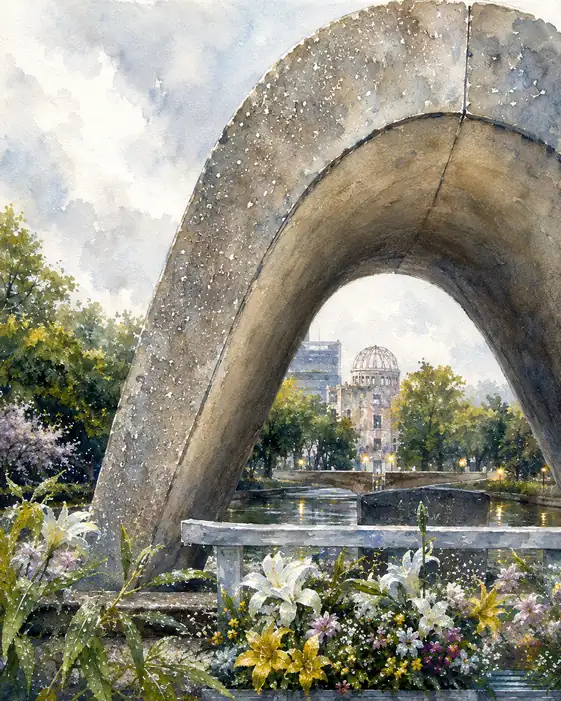 Prayers in Rain Beneath the Arch of Remembrance
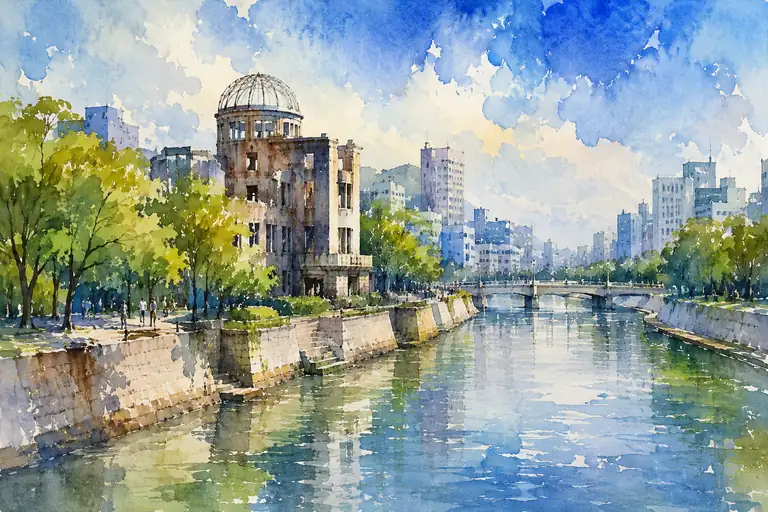 A Prayer Whispered in the Light of Today
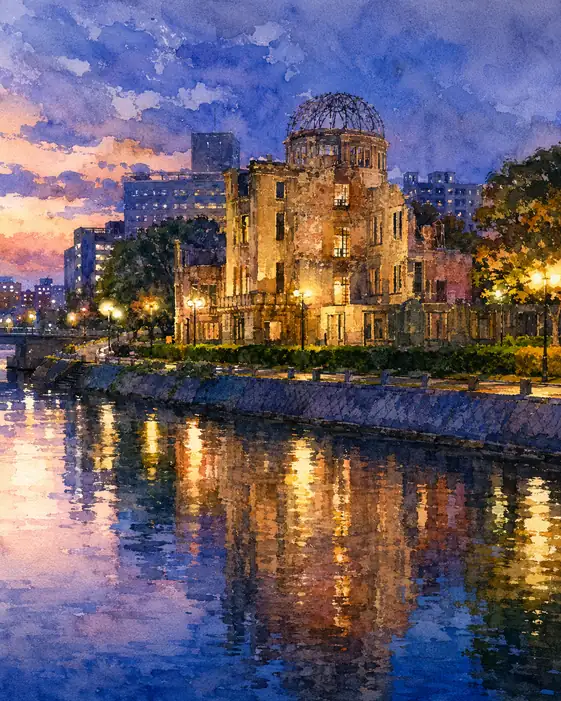 The Ruin That Still Holds the Light
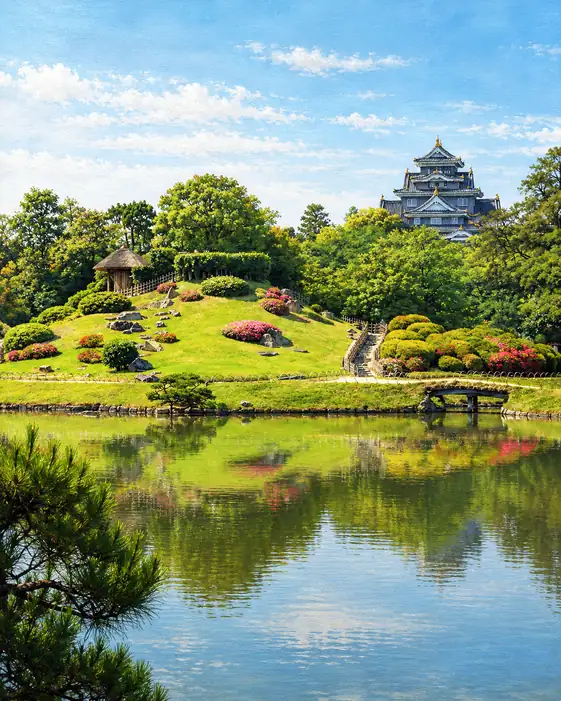 Okayama Castle over the Serene Korakuen Pond
 Whispers of the Ancient Stones
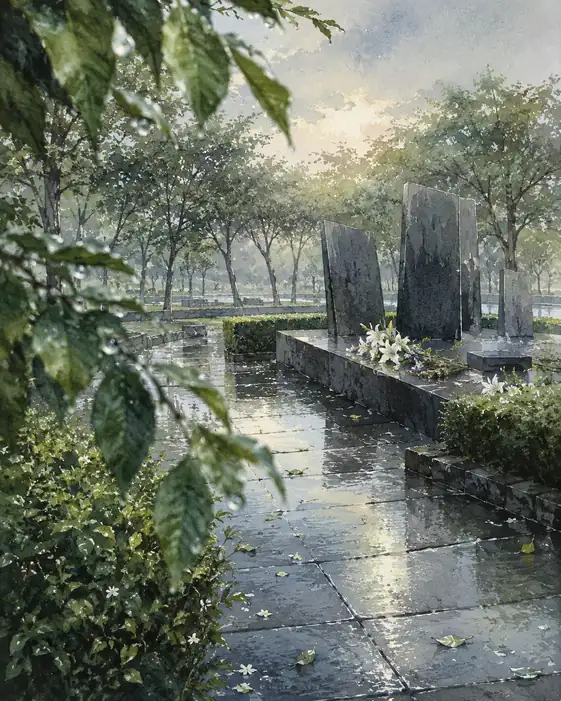 A Silent Promise After the Rain
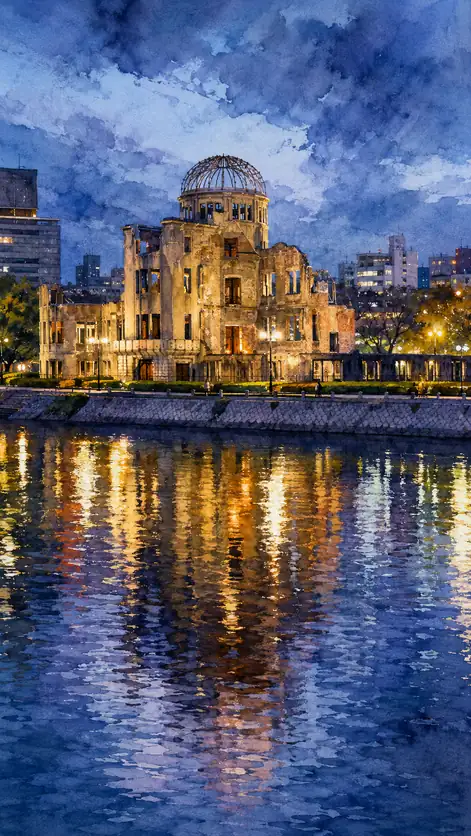 A Lantern of Memory Beside the River