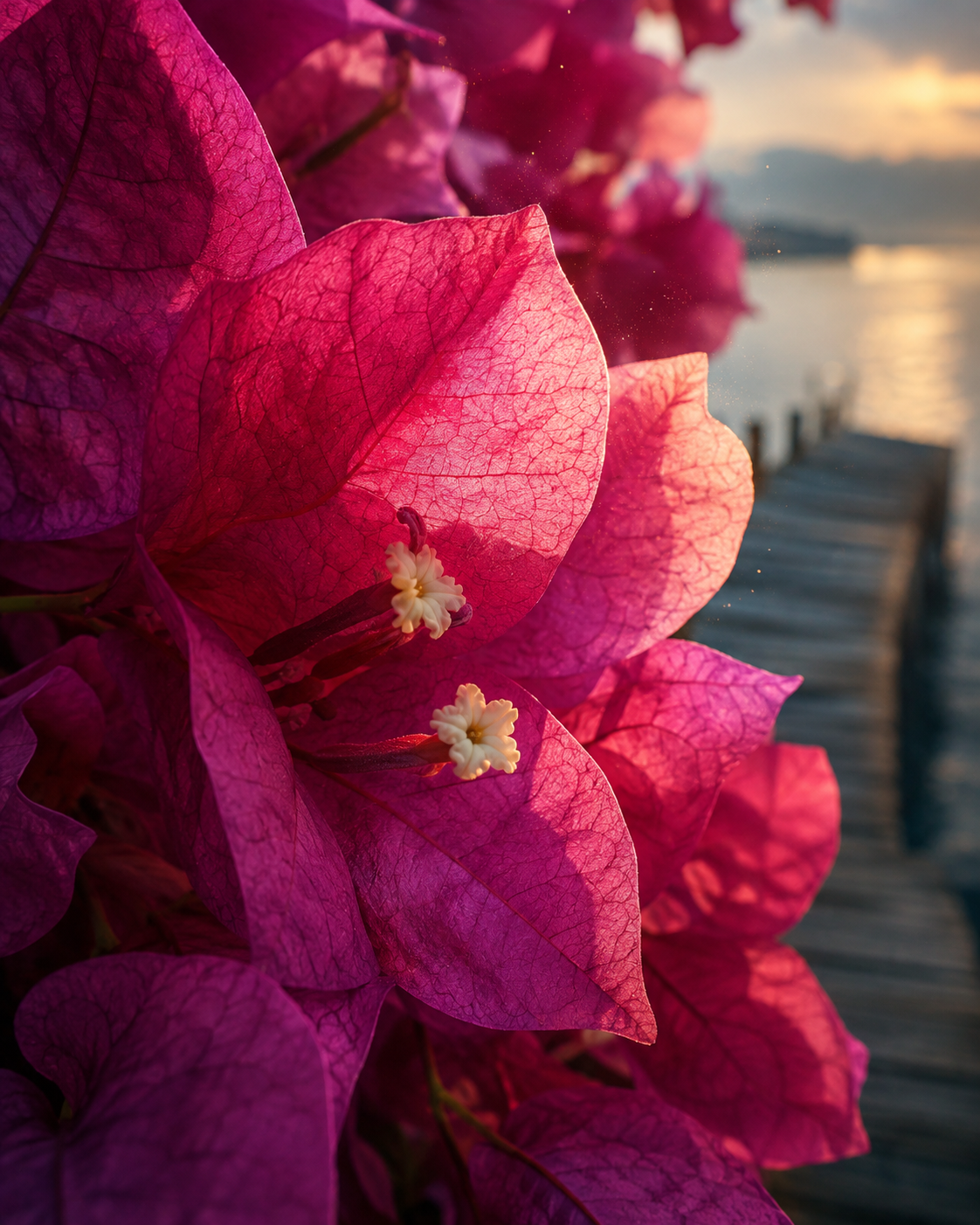
Luminous Bougainvillea and the Sunset Pier
Critique
Introduction This extreme close-up of magenta bracts uses a distant pier and sunset water as a softened counterworld. Transmitted light reveals the plant as a delicate network rather than a solid mass of color. Description Large crimson, fuchsia, and violet bracts fill most of the left and center. Dark veins branch across their translucent surfaces, surrounding tiny cream flowers on slender red tubes. Behind them, a wooden pier recedes into blurred water at right. A golden reflection and dark mountain silhouette occupy the distant sunset. Analysis The nearest bracts create overlapping angular planes, with pointed tips directing attention toward open water. Backlight shifts magenta through red to glowing coral and makes the vein systems exceptionally legible. Tiny cream blossoms supply concentrated pale accents amid saturated color. Shallow focus separates tactile foreground from the pier's simple diagonal blur. The golden water forms a vertical light band that balances the floral mass, while floating particles bridge the focal zones. Deep purple shadows prevent translucency from becoming visually weightless. Interpretation and Evaluation The work reveals hidden structure through illumination: what first appears decorative becomes an intricate record of circulation and fragility. The pier suggests departure or contemplation, yet its softness keeps it secondary to close observation. Flower and sunset share warm light but register it differently, one as colored membrane and the other as reflection. The tight crop can feel engulfing, though the open right side provides necessary release. Minute airborne specks add atmosphere without obscuring the disciplined focus. Conclusion Through radical proximity, transmitted color, and a distant geometric counterpoint, the image turns a familiar flowering plant into luminous architecture. Its beauty arises from making vulnerability visibly structural.
Same Subcategory
 Sunset Glow over Rudbeckia Meadow and the Coastal Lighthouse
Similar Artworks
 Bougainvillea Glowing against the Sunset Pier
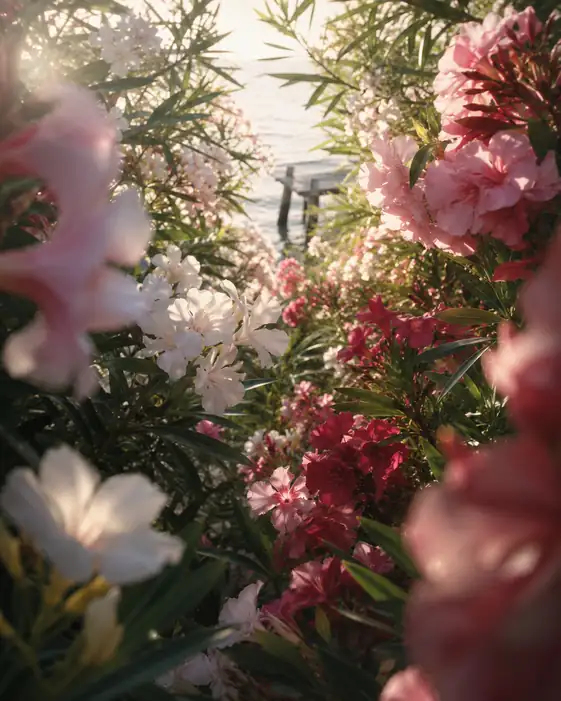 Path of Oleanders leading to the Coastal Pier
 Dewy Bougainvillea along the Misty Coastal Stairway at Dawn
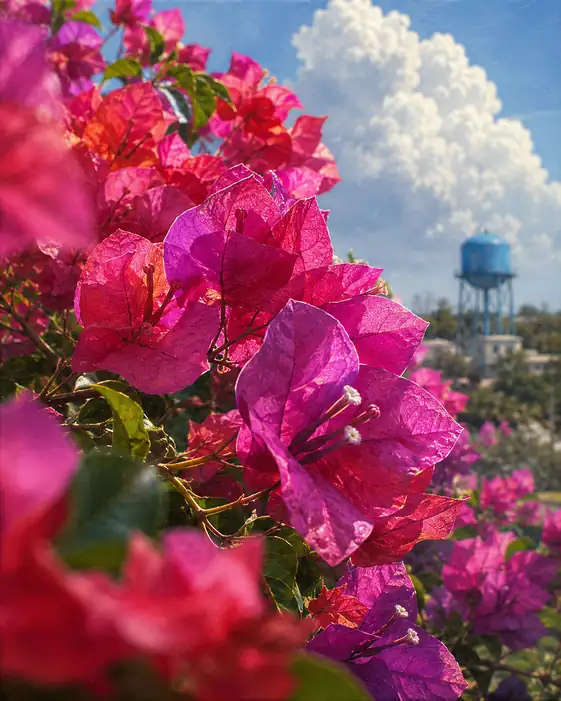 Bougainvillea beneath Summer Clouds and the Water Tower
 Petal in the Sunset Breeze along the Bougainvillea Coast
 Morning Dew upon Bougainvillea beneath Summer Clouds
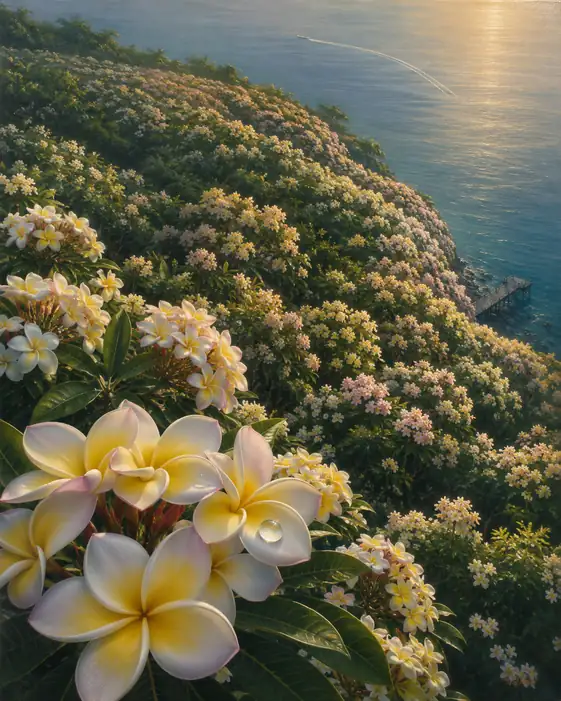 Plumeria Cliffs overlooking the Sunlit Sea
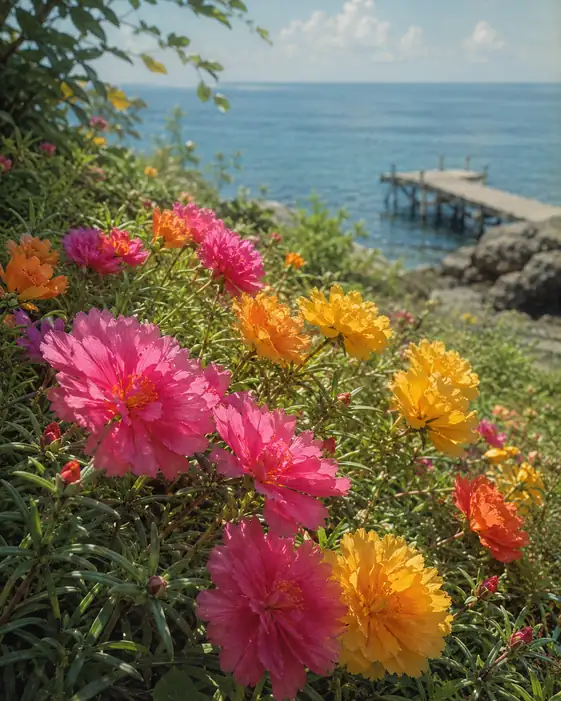 Coastal Moss Roses overlooking the Pier
 Morning Mist and Dewy Rudbeckia by the Lakeside Pier
 Sunset Glow over Coastal Moss Roses and the Distant Lighthouse