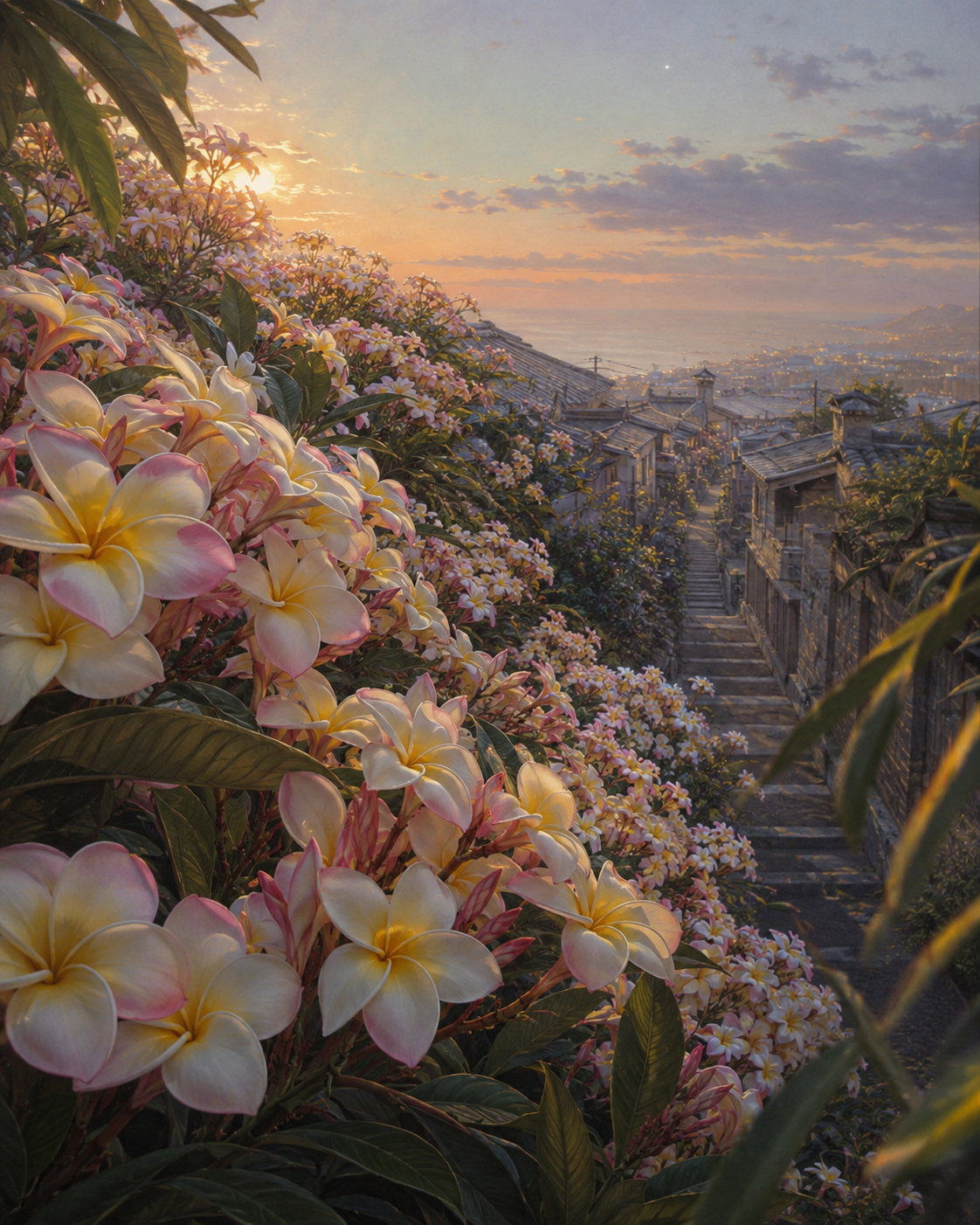
Sunset Glow over the Coastal Town and Plumeria Stairway
Critique
Introduction This hillside view lets a luxuriant flowering bank overlook a descending old settlement and the sea. The sunset unites intimate botanical richness with an expansive human geography. Description Large cream flowers with yellow centers and pink edges crowd the left foreground among dark leaves and buds. Their mass continues down the slope in smaller clusters. At right, a long stone stair passes between weathered tiled houses toward a coastal town. Sea, mountains, scattered lights, and a peach-gray sky recede beyond. Analysis The flowers form a broad diagonal wedge that parallels the stair's descent. Extreme foreground scale yields progressively to roofs, town, and horizon, creating exceptional depth. Warm ivory and pink stand against charcoal roofs and olive leaves; sunset gold repeats in flower centers and distant windows. The stair is the primary linear route, while roof ridges produce secondary zigzags. Large leaves crop the upper and right edges, placing the viewer within vegetation. Focus softens gradually toward the coast, and aerial haze joins sea and sky without eliminating the mountain silhouette. Interpretation and Evaluation The scene imagines descent from private garden abundance into shared settlement and open water. Flowers function as both threshold and witness, their seasonal life overlooking architecture marked by longer use. The empty stair invites projected movement but preserves evening stillness. Romantic abundance is pronounced, yet worn masonry and crowded roofs give the beauty social and material grounding. Distant lights imply lives continuing below, preventing the panorama from becoming merely picturesque. Conclusion Through diagonal recession, repeated warm light, and a bold shift of scale, the work binds flower, street, town, and sea into one journey. Its deepest appeal lies in making distance feel personally reachable.
Same Subcategory
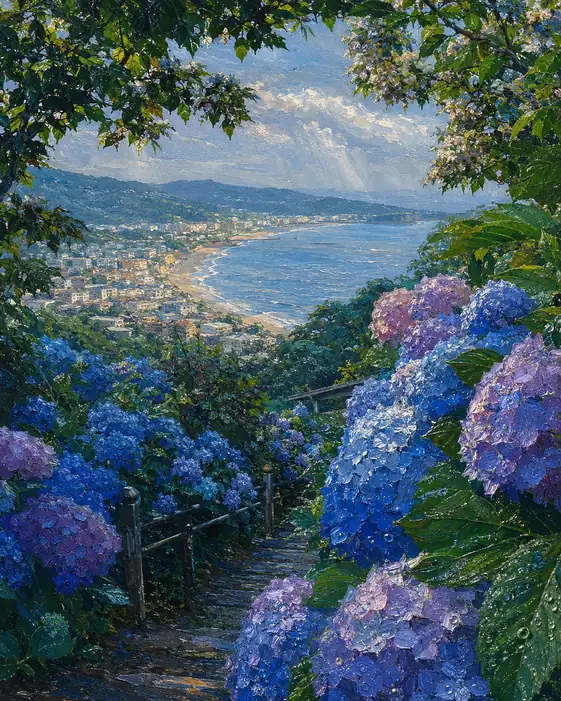 Blue Blossoms Lead Me Home
 Cliffside Village and the Gilded Shore
Similar Artworks
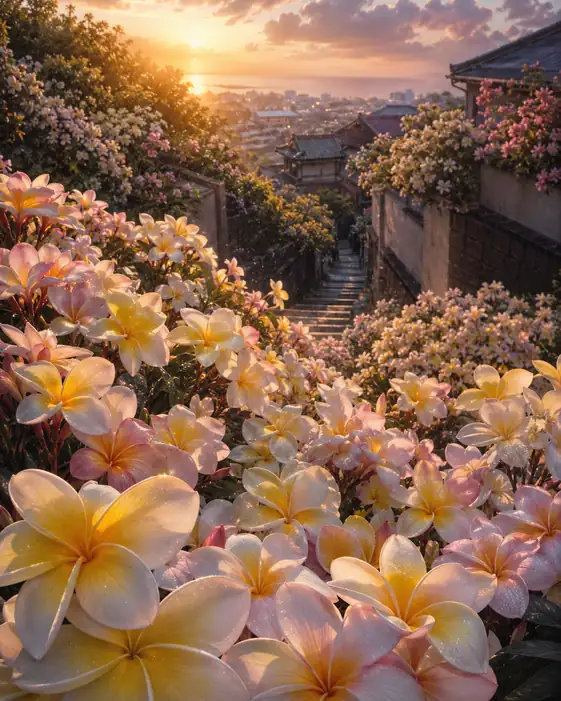 Sunset Glow over the Plumeria Hillside Stairway
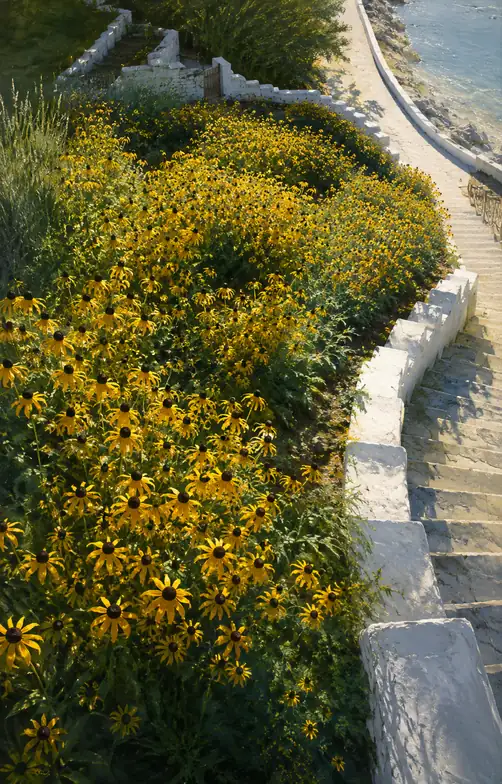 Golden Rudbeckias cascading along the White Coastal Stairway
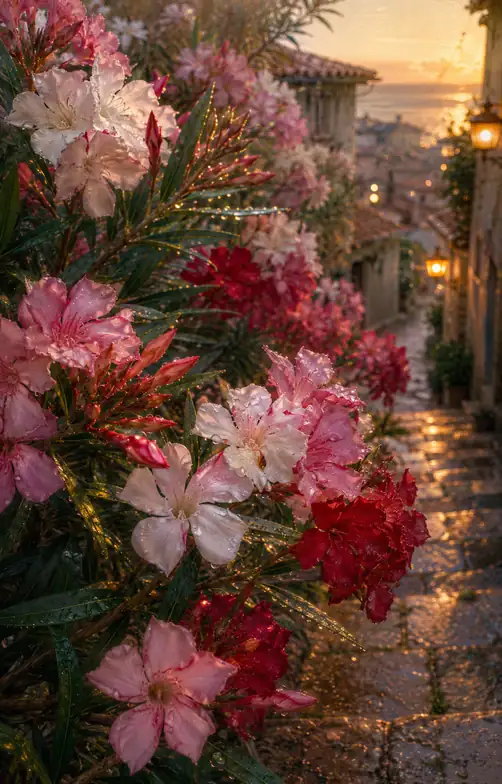 Oleanders along the Sunlit Coastal Stairway at Dusk
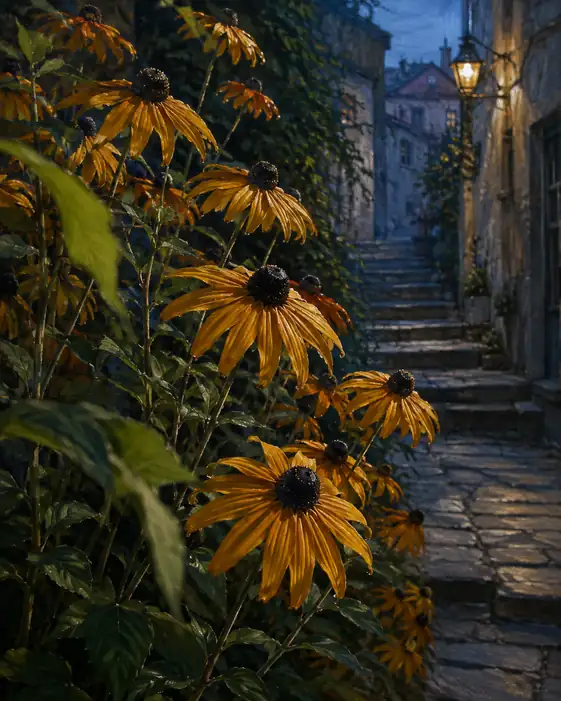 Golden Rudbeckias by the Old Stone Staircase in Lamplight
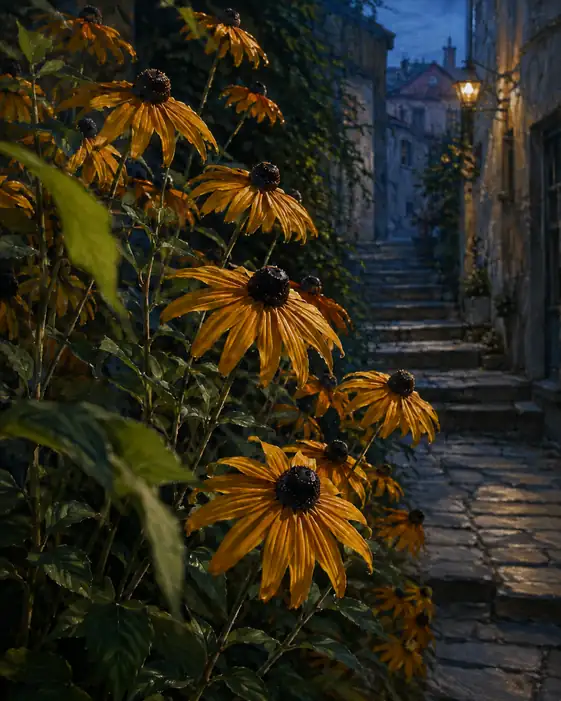 Golden Rudbeckias along the Cobblestone Alley at Dusk
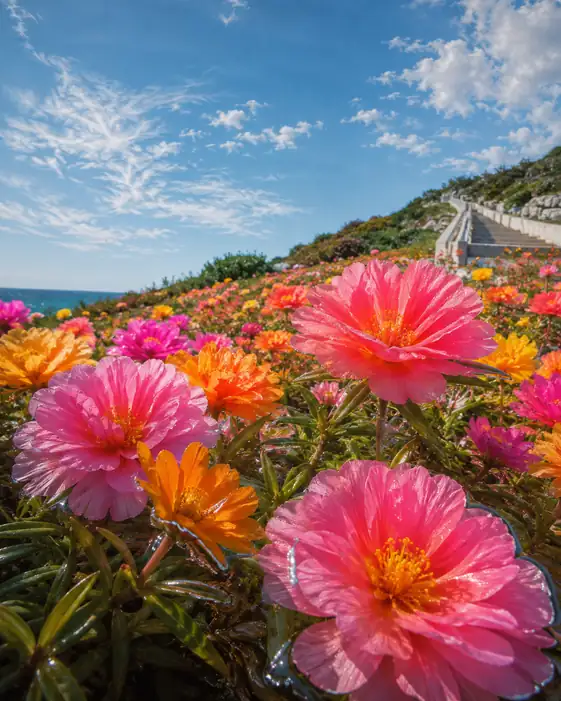 Moss Rose Hills along the Coastal Stairway
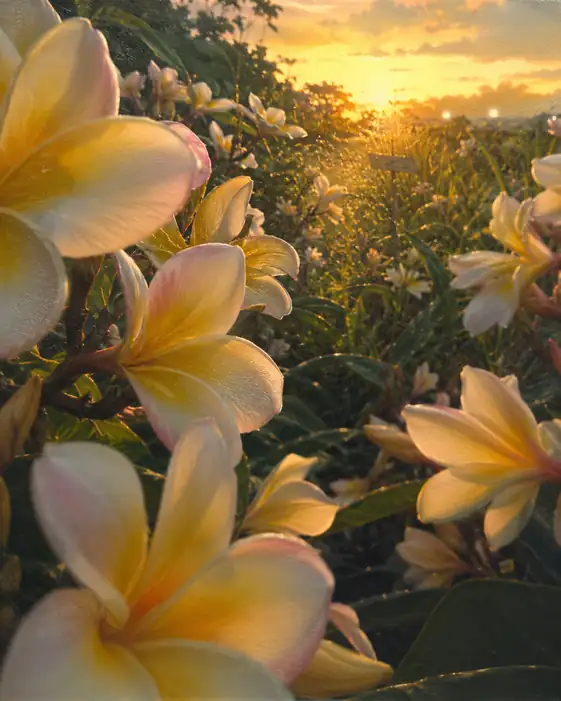 Golden Sunset Glow upon the Plumeria Garden
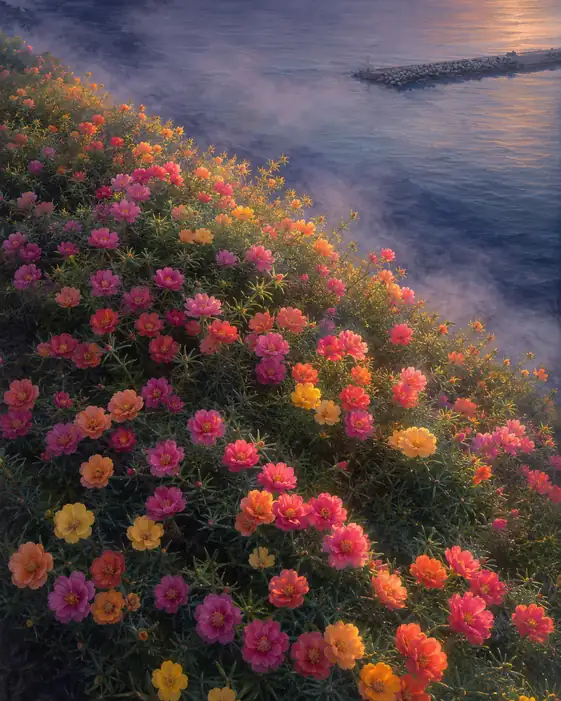 Sunset Glow over Coastal Moss Roses and the Distant Lighthouse
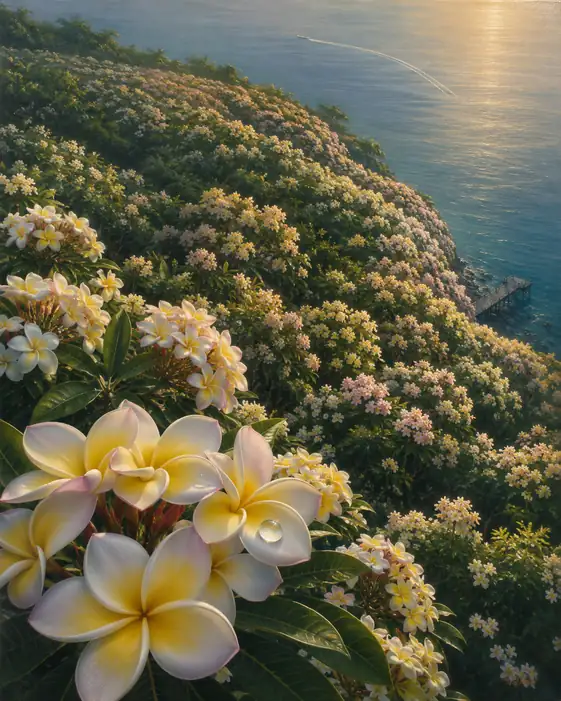 Plumeria Cliffs overlooking the Sunlit Sea
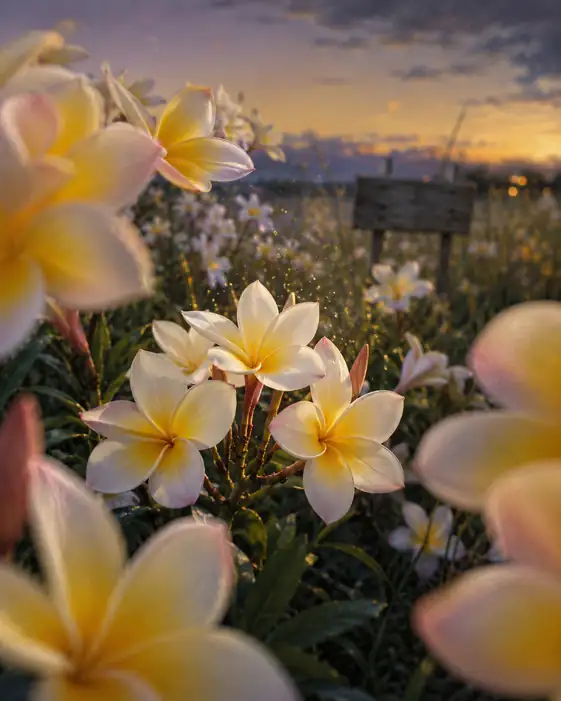 Golden Sunset Glow upon the Plumeria Meadow