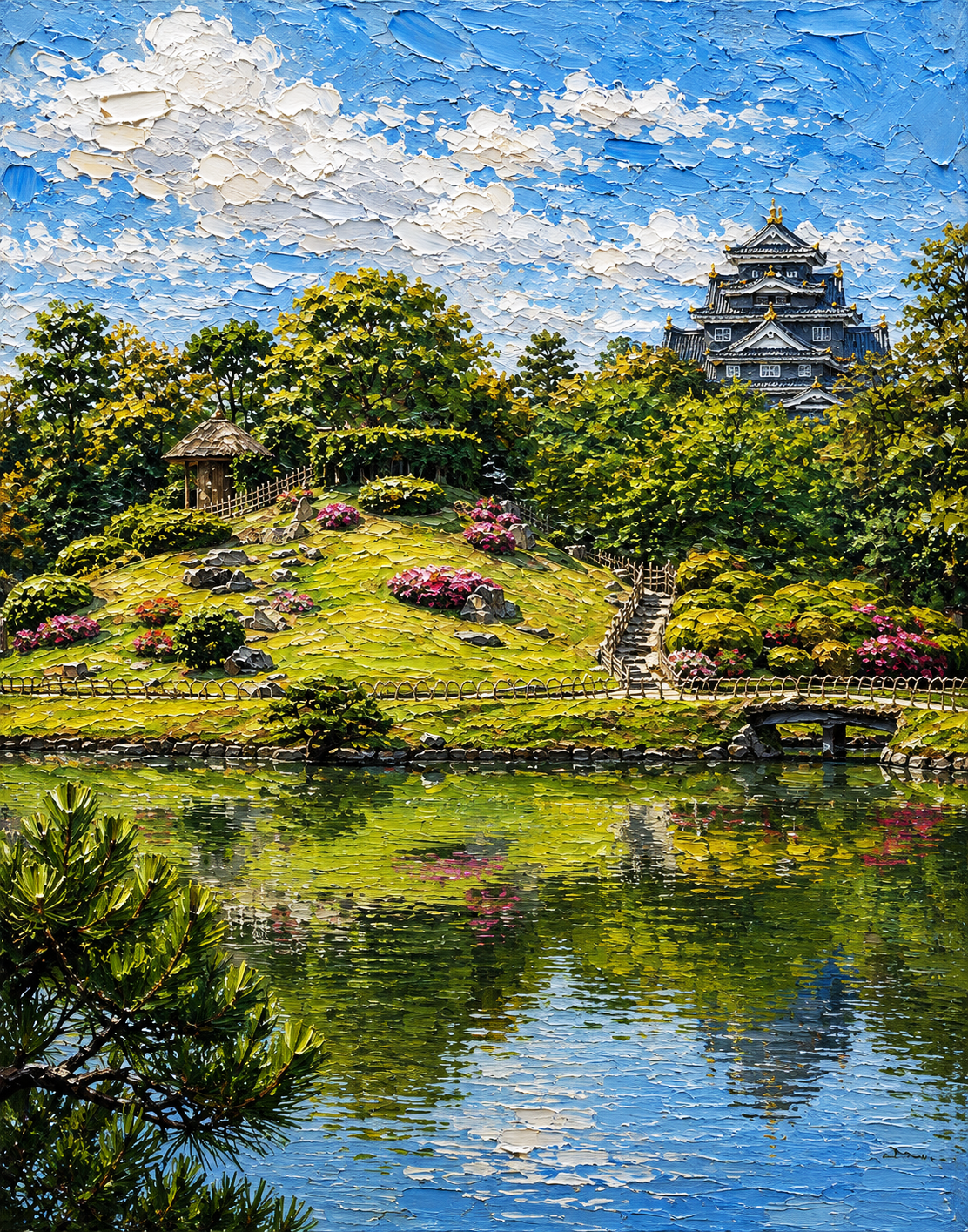
Impasto Landscape of Korakuen and Okayama Castle
Critique
Introduction This heavily textured garden scene translates a castle landscape into a mosaic of raised color. Thick paint makes sky, foliage, lawn, and reflection materially equal even as perspective organizes them into depth. Description Blue sky and broken white clouds fill the upper third. A dark tiered castle rises at upper right above dense yellow-green trees. Below, a sloping garden contains a small pavilion, stones, stairs, clipped shrubs, and pink flowers. A bridge crosses at right, while a pond reflects green, blue, white, and dark architectural shapes. Analysis Impasto is the dominant formal device. Broad palette-knife facets build clouds and water; smaller angular marks articulate leaves, grass, and roof tiles. This shared texture prevents illusionistic distance from becoming seamless. The castle's stacked dark triangles counter the rounded vegetation and bright cloud fragments. A shoreline horizontal stabilizes the composition, while the central stair and right bridge direct movement. Saturated blue and yellow-green create vigorous complementarity, interrupted by pink and gold. Reflection is not smooth duplication but a broken field of short marks, making water visibly active. Interpretation and Evaluation The surface insists that the scene is both place and paint. Historical architecture loses some literal weight when reconstructed from the same material strokes as cloud and pond, suggesting that all parts belong to one perceptual event. Some subtleties of atmosphere are sacrificed; in return, the viewer gains a strong tactile awareness of looking. The castle remains legible without dominating the garden's energetic surface. Conclusion By making texture the common substance of architecture and nature, the work renews a familiar scenic arrangement. Its vigorous materiality converts reflection and foliage into active construction rather than passive description.
Same Subcategory
Similar Artworks
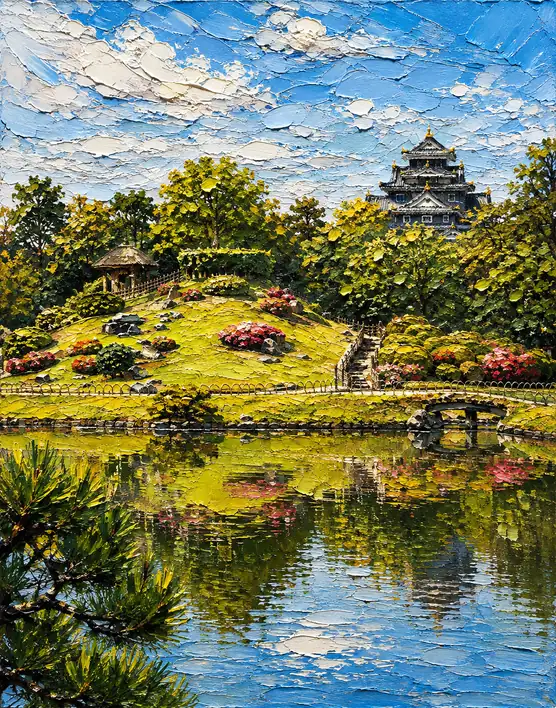 Summer Unfolds in the Water Mirror of Crow Castle
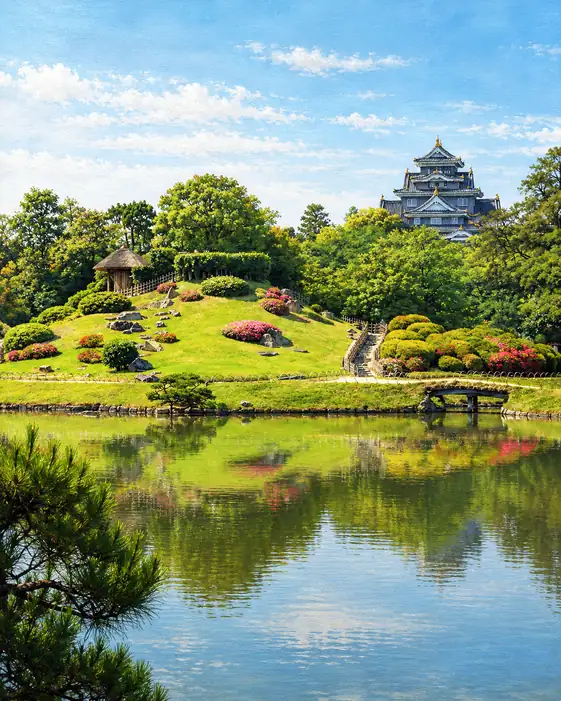 Okayama Castle over the Serene Korakuen Pond
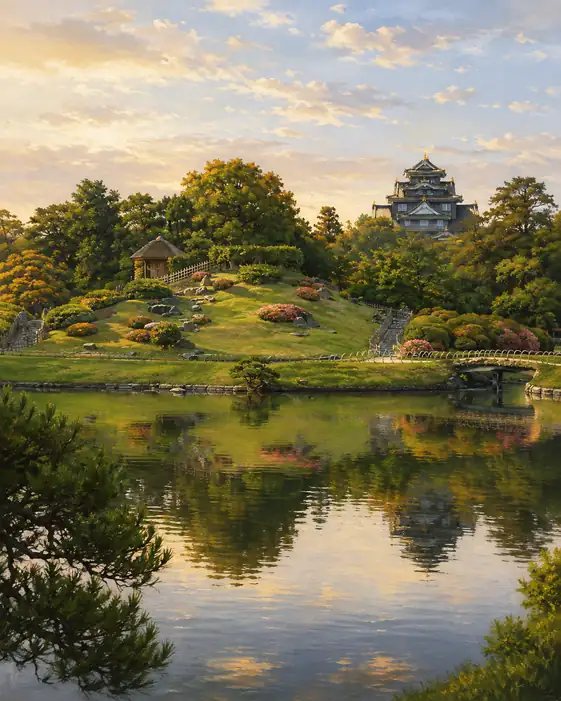 Golden Sunset over Korakuen and Okayama Castle
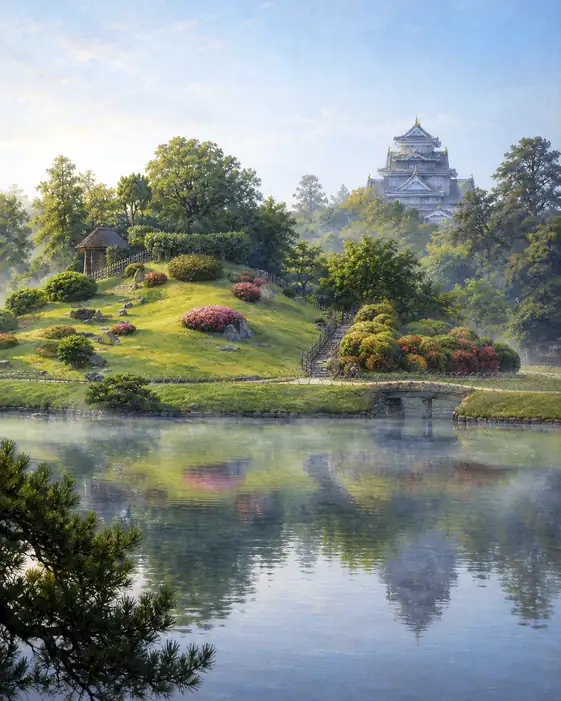 Morning Mist over Korakuen and Okayama Castle
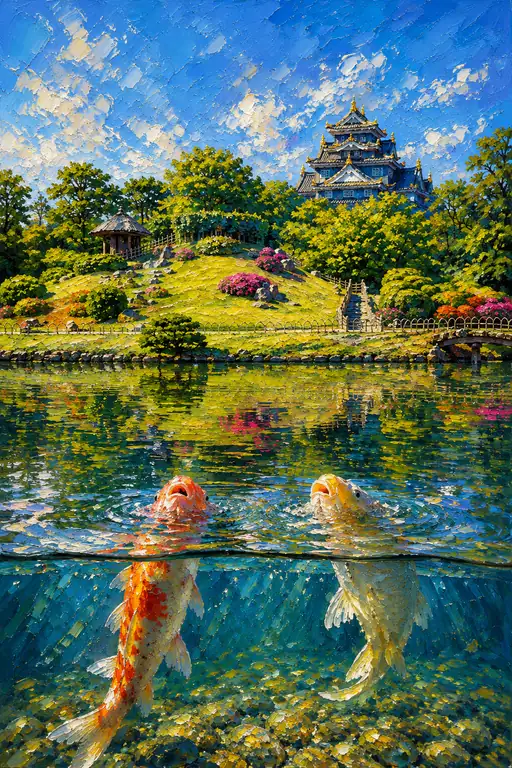 Golden Dreams Adrift in Emerald Water
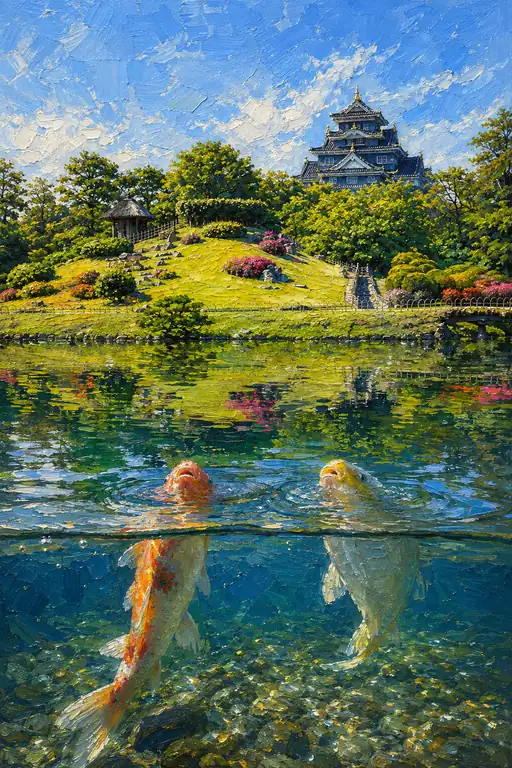 Gazing at the Castle from Sunlit Depths
 Eternity Reflected in the Garden Pond
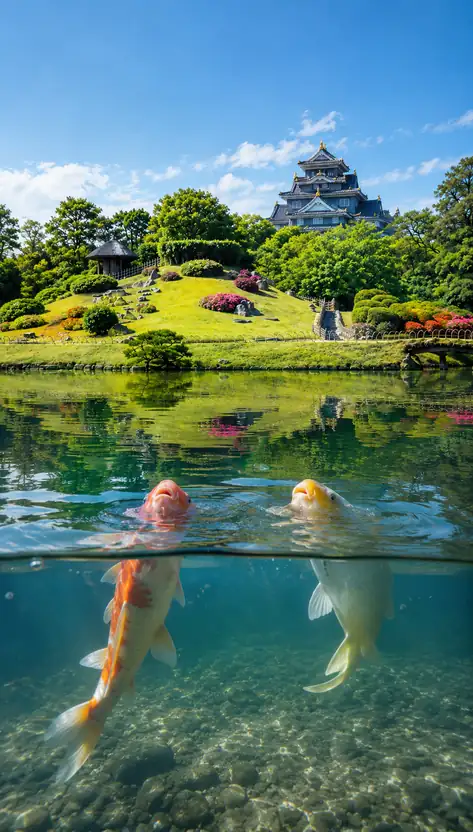 Nishikigoi in the Clear Pond, Castle Garden Vista
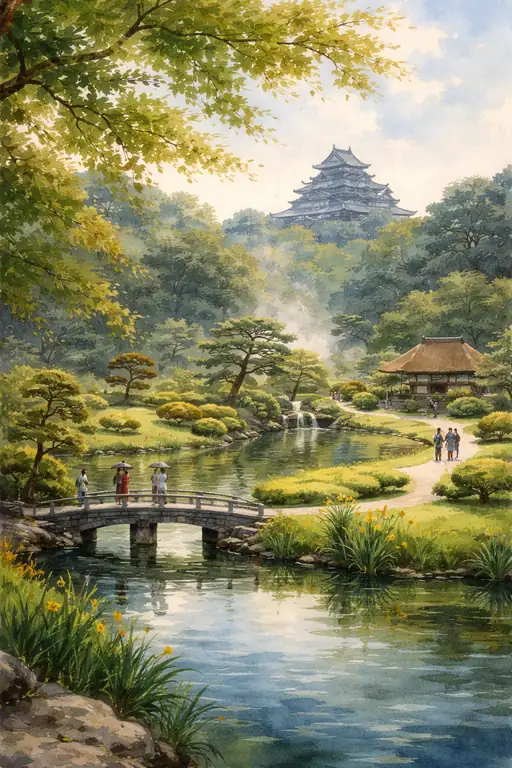 Serenity Under the Castle's Watch
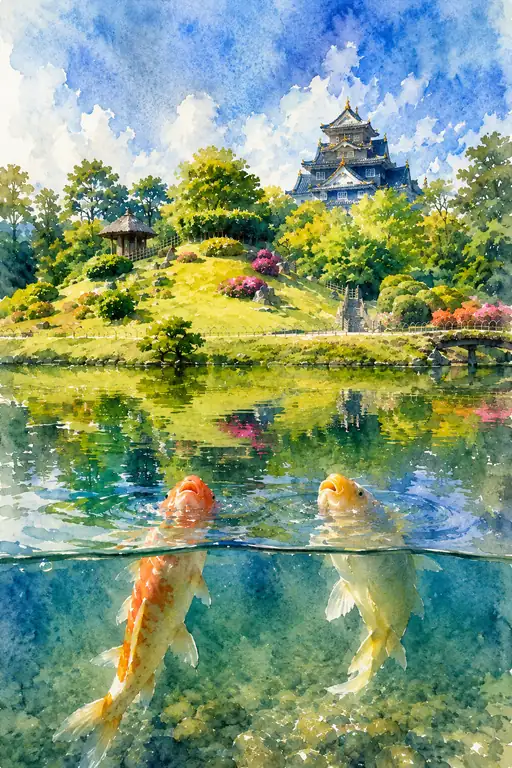 Looking Up at Ujo Castle in Summer with Korakuen's Koi