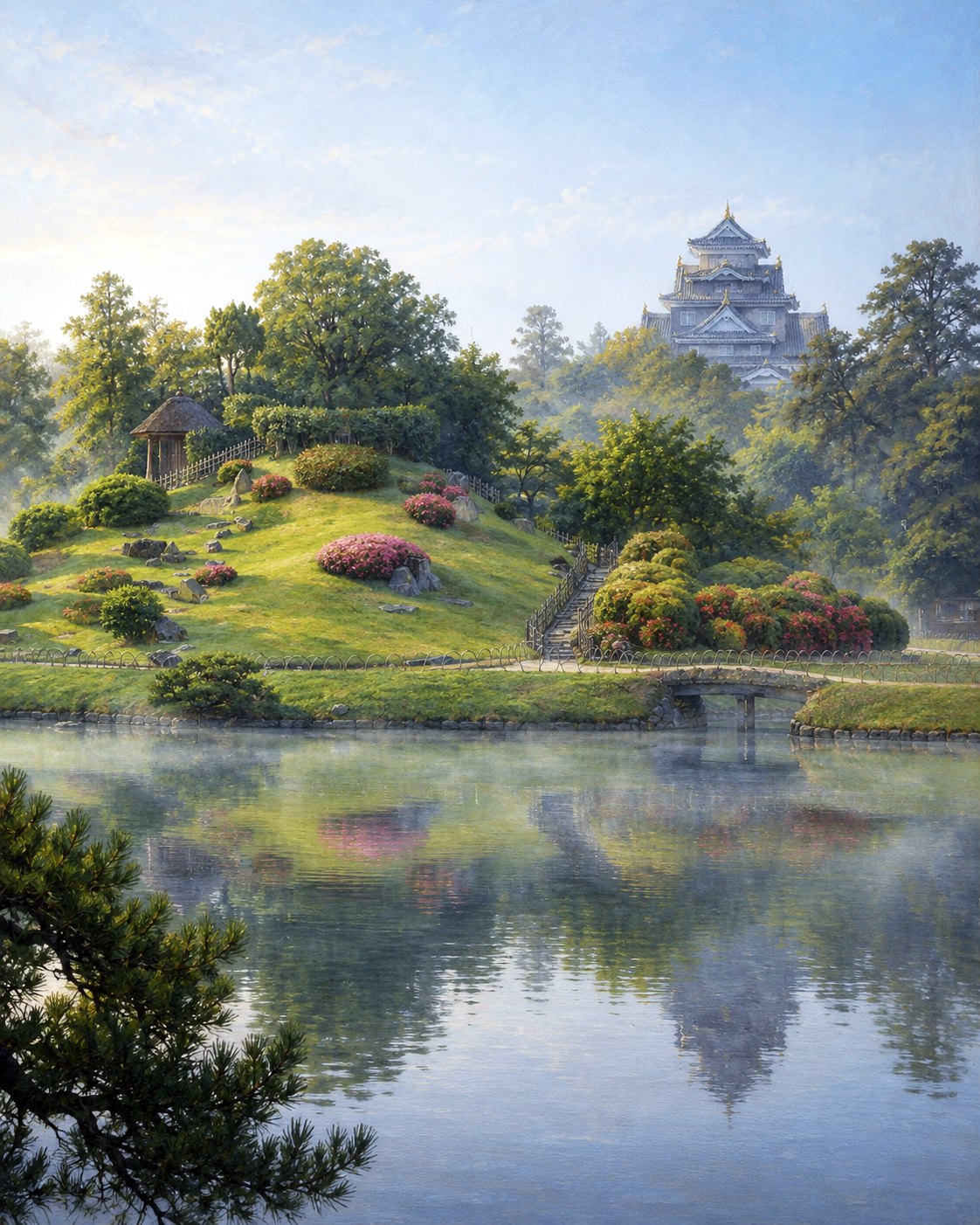
Morning Mist over Korakuen and Okayama Castle
Critique
Introduction This mist-softened garden view places a distant tiered castle above a reflective pond. Morning atmosphere reduces spectacle and makes architecture, planting, and water appear as stages within one slowly brightening landscape. Description The pond occupies the lower half, carrying pale blue, green, and pink reflections. Across it, a grassy hill holds clipped shrubs, flowering mounds, scattered stones, a thatched pavilion, and a central stair. A small bridge crosses at right. The castle rises through trees in the upper right, partly veiled by haze. Analysis Horizontal water establishes calm breadth, while the hill, stair, and castle build a stepped ascent. The castle is balanced by the pavilion and broad tree mass on the left. A near pine branch enters at lower left, adding a dark foreground layer. Soft blue-gray mist circulates between trees and weakens distant contrast, whereas sunlit lawn forms the clearest middle plane. Pink shrubs punctuate greens without breaking tonal restraint. Reflections elongate the castle and foliage, but ripples loosen their geometry. Interpretation and Evaluation The haze makes the castle seem discovered rather than displayed. Historical authority is present, but living vegetation and moisture continually interrupt its outlines. The empty paths suggest access while preserving contemplation. Compared with a fully sunlit panorama, this subdued light offers greater temporal specificity: the garden appears to be waking. Some distant forms verge on vagueness, yet that softness appropriately distinguishes atmosphere from tactile foreground. The pond is not merely a mirror; it transforms solidity into unstable color. Conclusion Through layered recession, cool mist, and softened reflection, the work balances monumentality with quiet emergence. It presents the garden as a threshold where built history becomes visible through, not apart from, living nature.
Same Subcategory
 Symmetric Elegance in the Floral Garden
Similar Artworks
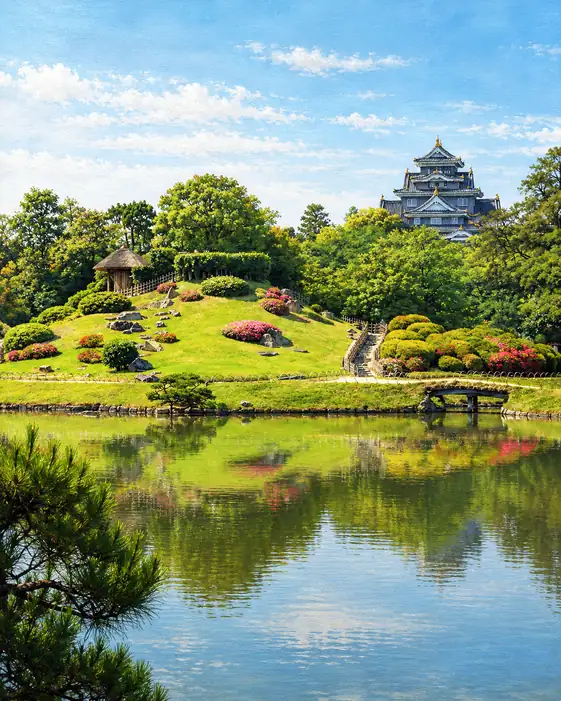 Okayama Castle over the Serene Korakuen Pond
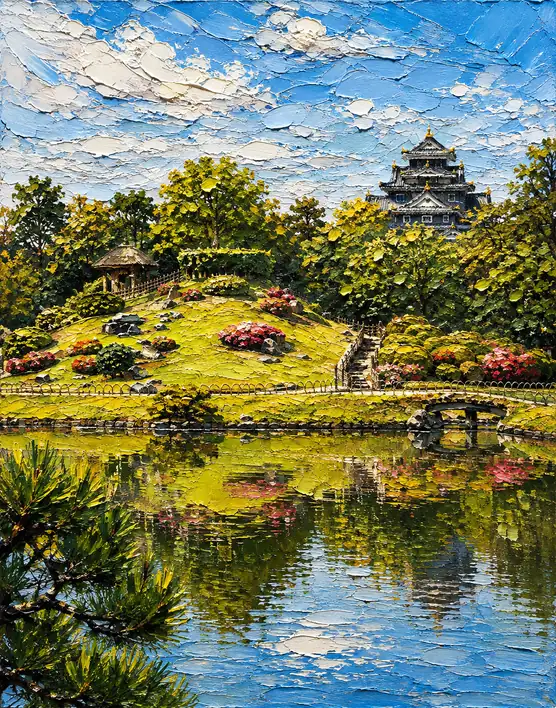 Summer Unfolds in the Water Mirror of Crow Castle
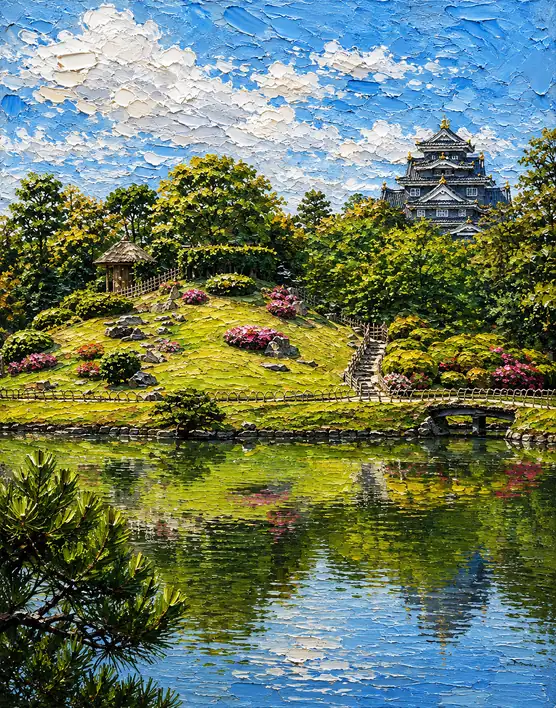 Impasto Landscape of Korakuen and Okayama Castle
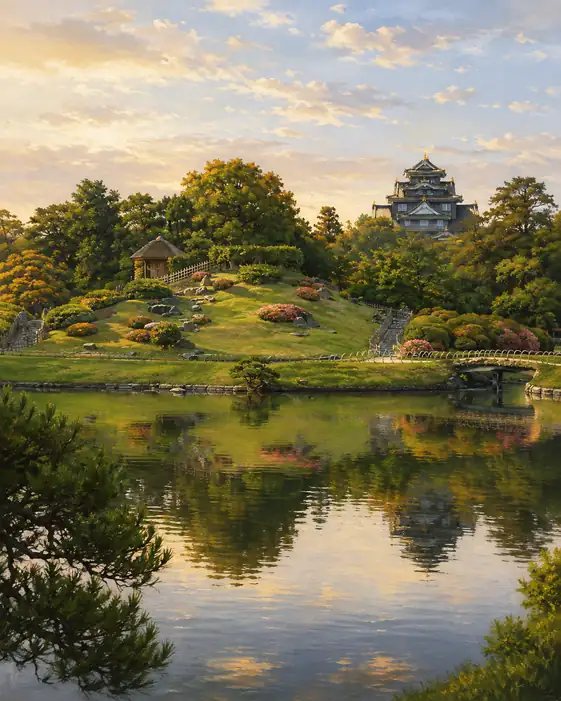 Golden Sunset over Korakuen and Okayama Castle
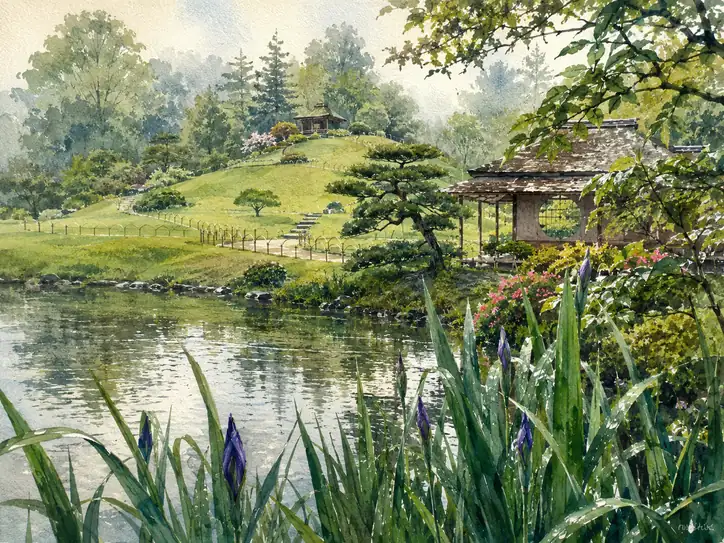 The Garden's Silent Breath
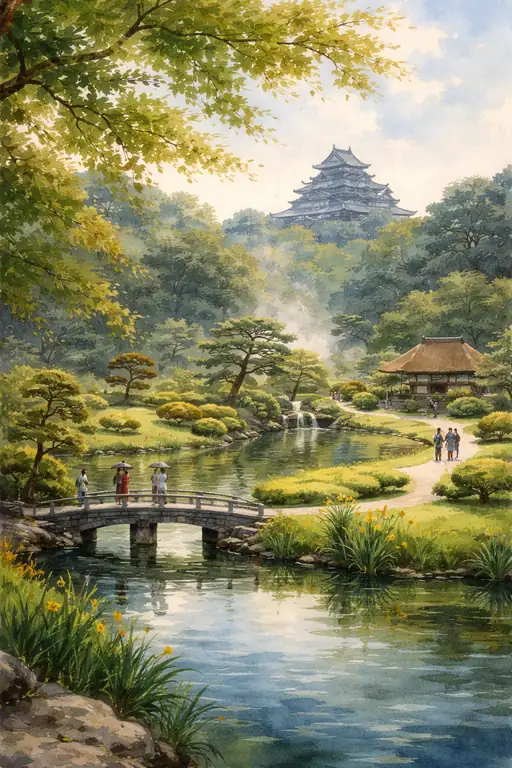 Serenity Under the Castle's Watch
 Eternity Reflected in the Garden Pond
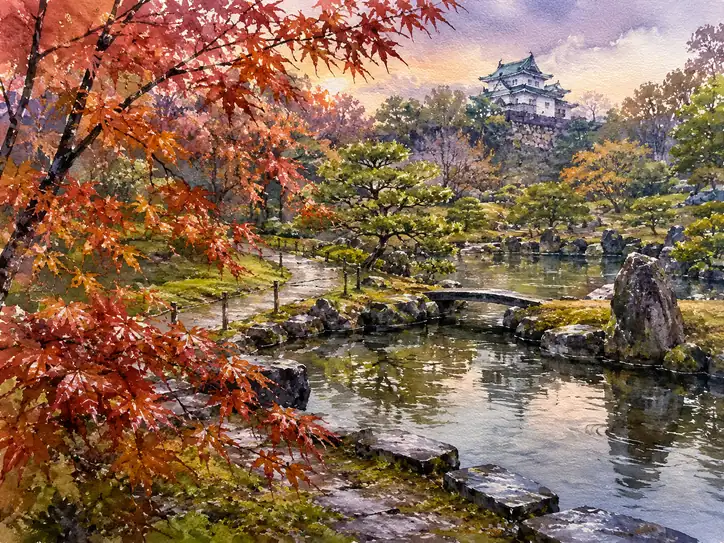 Ephemeral Fire of the Autumn Court
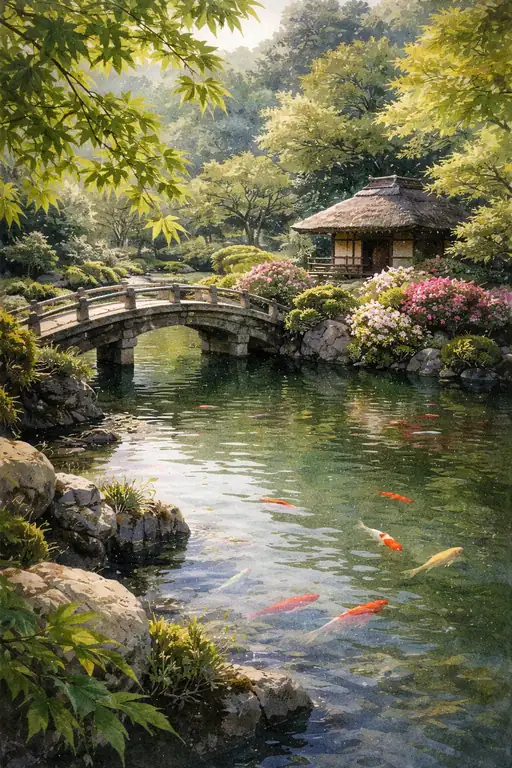 Harmony in the Sunlit Ripples
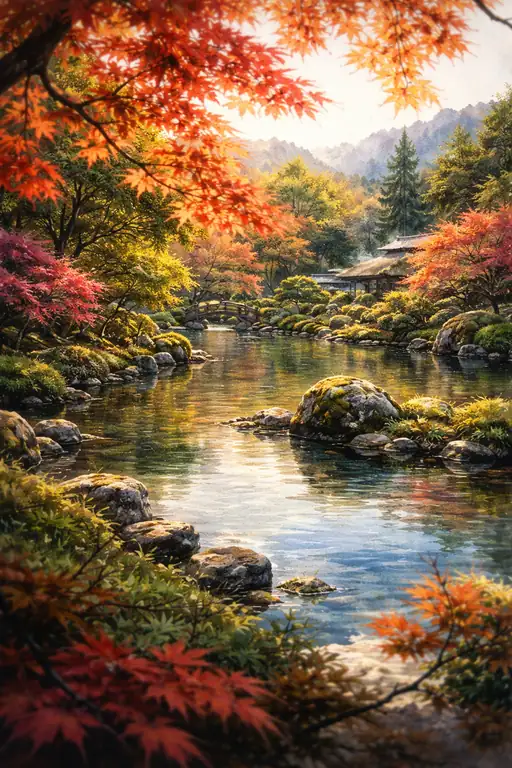 Autumn's Embrace at the Still Water