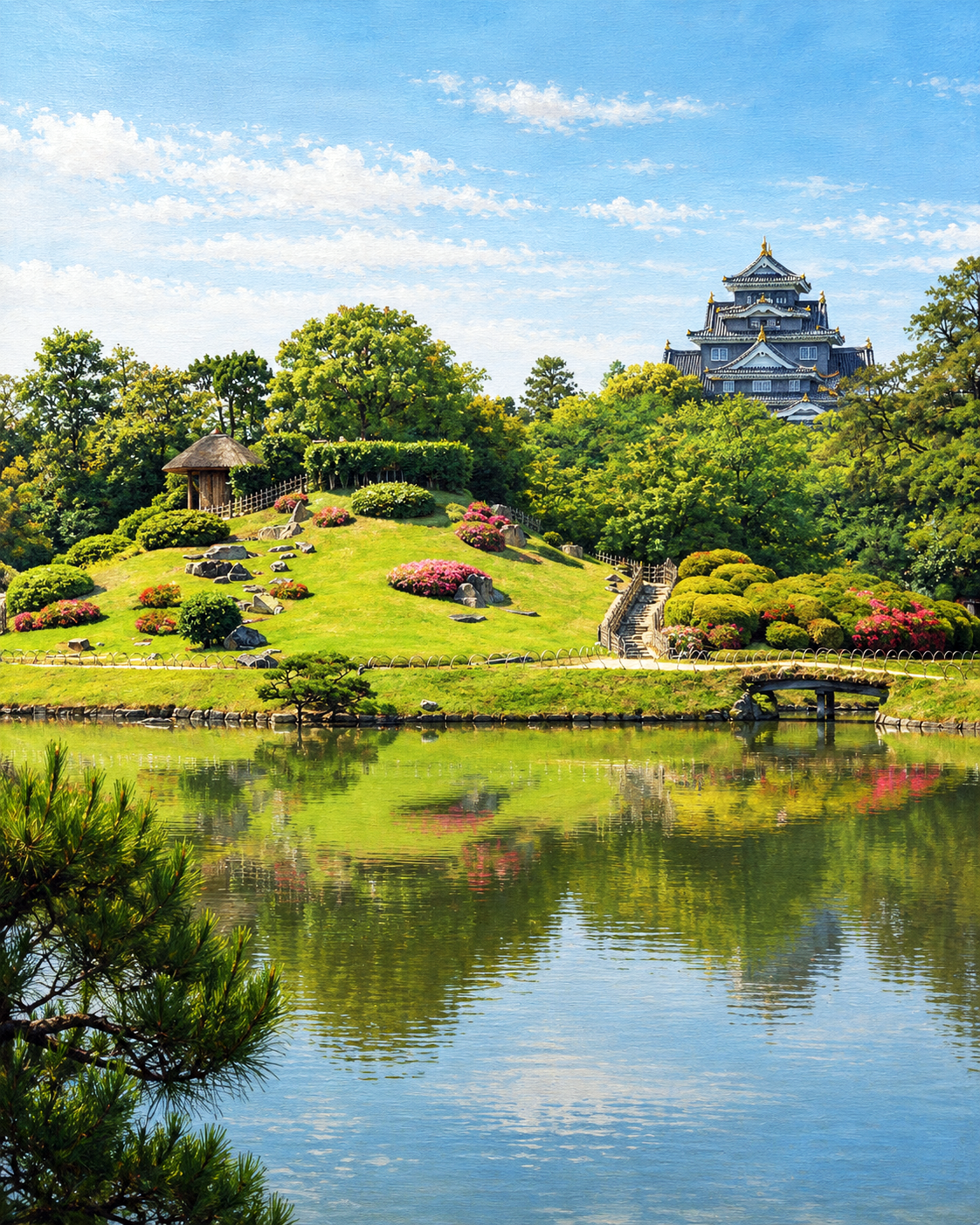
Okayama Castle over the Serene Korakuen Pond
Critique
Introduction This bright garden panorama balances a formal landscape, reflective pond, and tiered castle. Its clarity and saturated spring greens present cultivated nature and monumental architecture as mutually framing achievements. Description A broad pond fills the lower half, reflecting blue sky, trees, and pink flowering shrubs. Across the water, a manicured lawn rises among clipped bushes, stones, paths, and a small thatched pavilion. A low arched bridge appears at right. Above dense trees, a dark-roofed white castle rises in the upper-right distance. Analysis The horizontal shoreline divides reflection from garden, while the sloping lawn and central stair carry the eye upward. The castle is offset right rather than centered, balanced by the pavilion and large tree at left. Repeated rounded shrubs contrast with angular roof tiers and scattered rocks. Bright green dominates, punctuated by pink, red, dark blue, and white. The pond supplies a calmer, vertically mirrored version of the busy garden and reserves breathing space in the foreground. Crisp daylight minimizes mystery but maximizes spatial legibility. Interpretation and Evaluation The scene presents landscape design as controlled variation rather than rigid symmetry. Mown lawn, shaped shrubs, placed stones, and architecture each retain distinct character while participating in a larger order. The castle's elevation suggests authority and historical duration, yet abundant foliage partially screens it, integrating rather than isolating the building. High saturation risks postcard prettiness, but the asymmetric distribution of paths, rocks, and plant masses gives the view visual intelligence. Reflections also soften the garden's precision. Conclusion Through asymmetrical balance, clear spatial tiers, and the mediating pond, the image unites garden intimacy with architectural grandeur. It offers an optimistic vision of culture situated within, and continually moderated by, living growth.
Same Subcategory
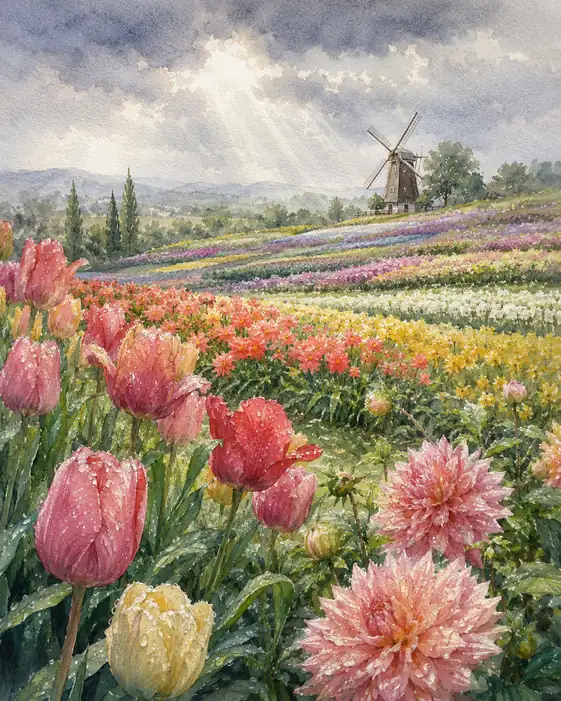 Rain Jewels for the Windmill
Similar Artworks
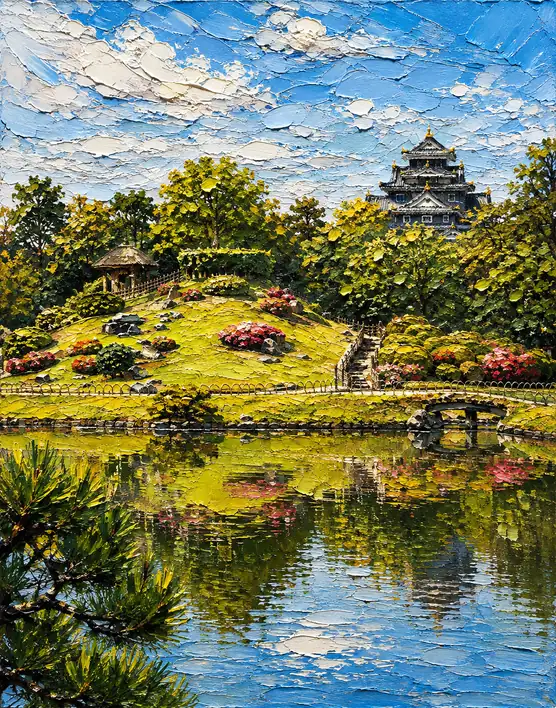 Summer Unfolds in the Water Mirror of Crow Castle
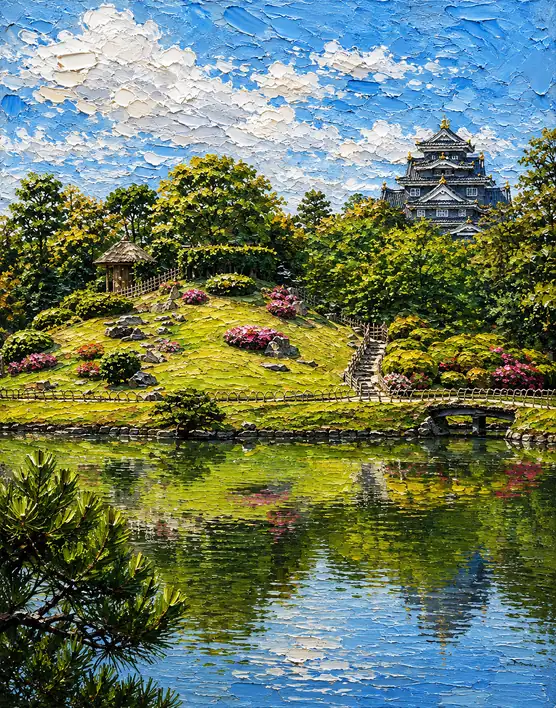 Impasto Landscape of Korakuen and Okayama Castle
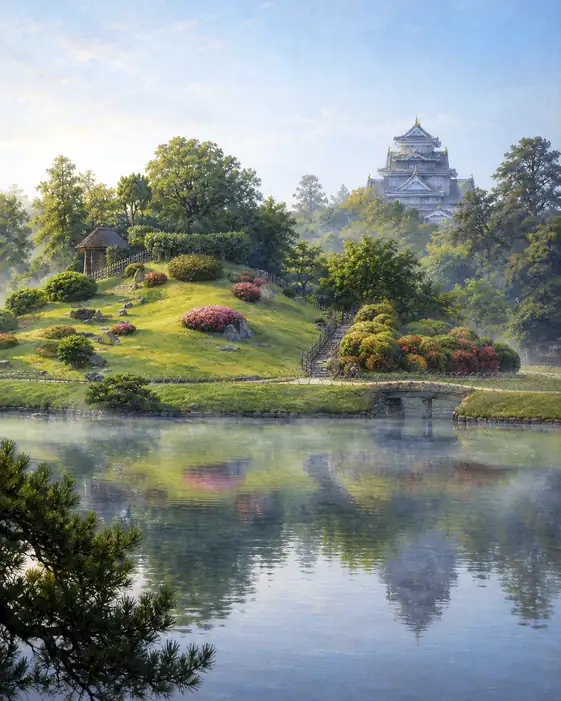 Morning Mist over Korakuen and Okayama Castle
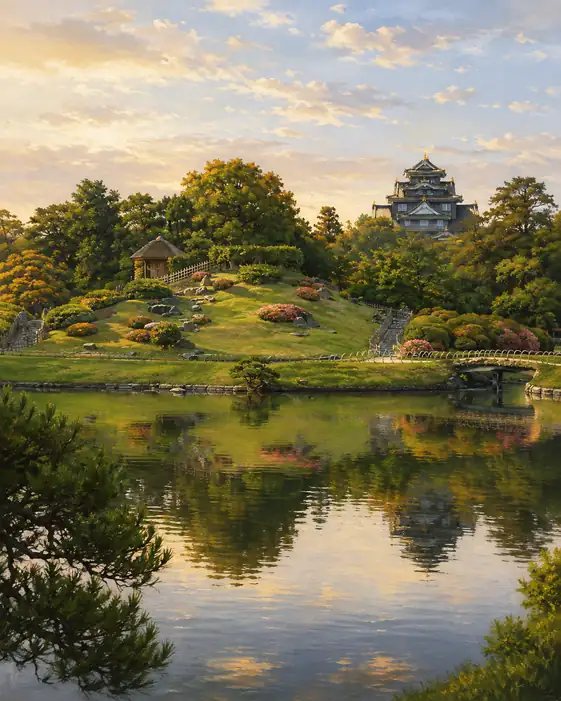 Golden Sunset over Korakuen and Okayama Castle
 Eternity Reflected in the Garden Pond
 Symmetry of a Summer Dream
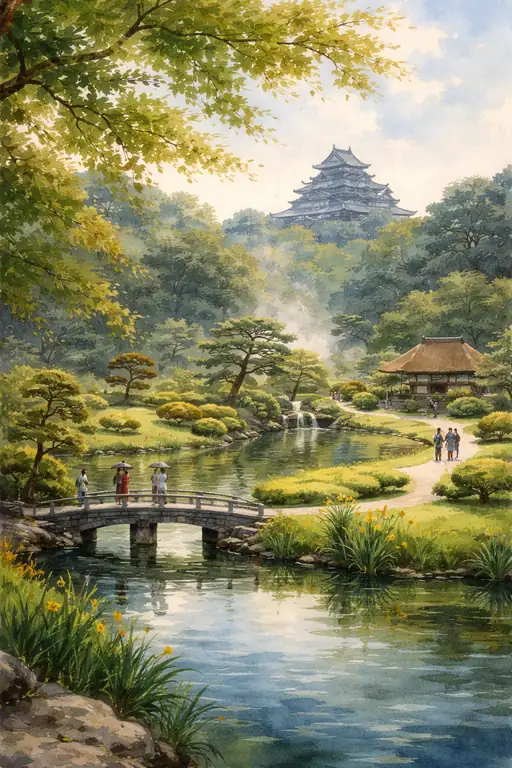 Serenity Under the Castle's Watch
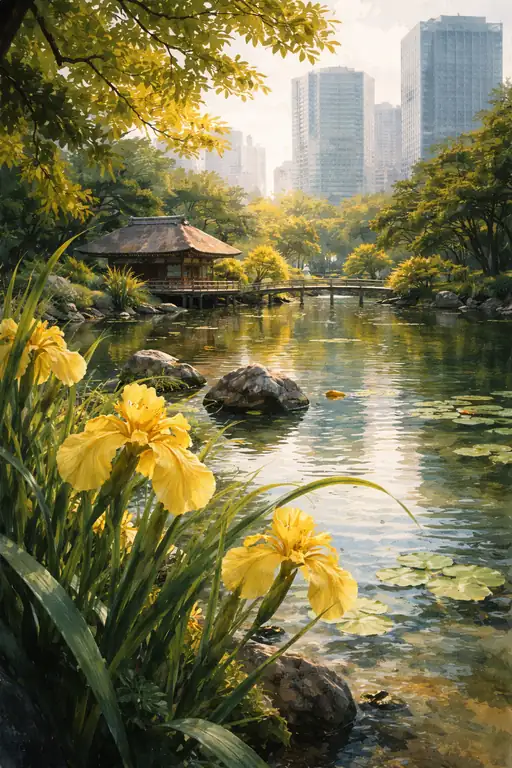 A Harmonious Encounter of Nature and Urbanity
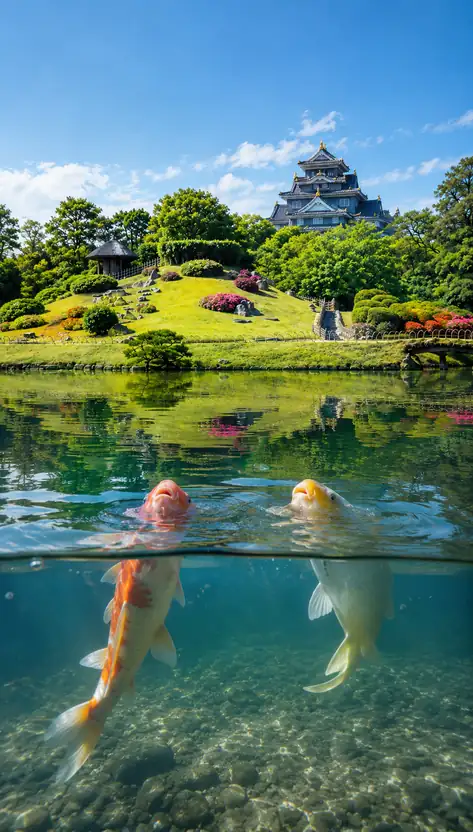 Nishikigoi in the Clear Pond, Castle Garden Vista
 Symphony of Silent Order