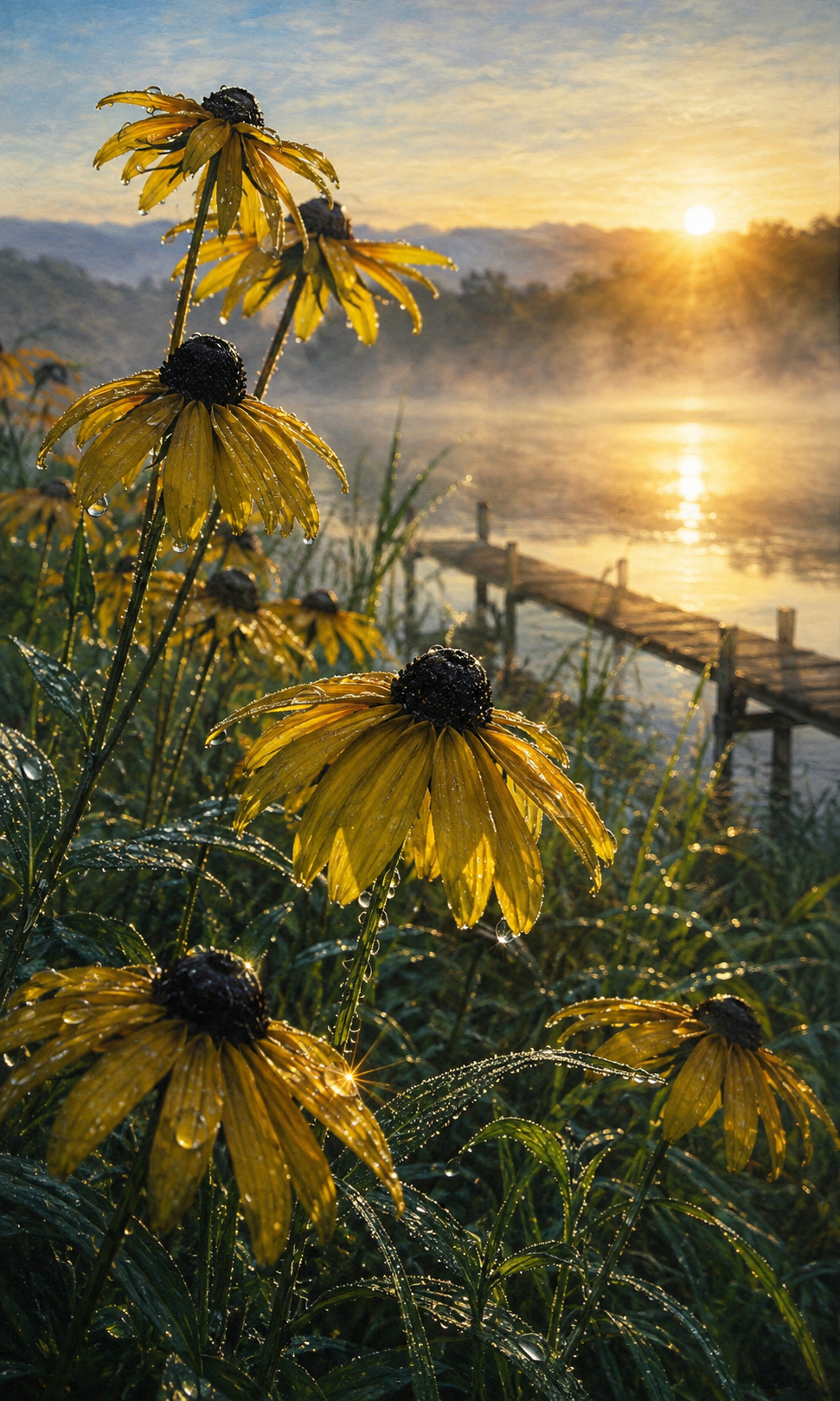
Morning Mist and Dewy Rudbeckia by the Lakeside Pier
Critique
Introduction This lakeside sunrise joins rain-heavy golden flowers with mist, mountains, and a small wooden pier. Description Several yellow, dark-centered flowers rise across the left and lower foreground, their petals drooping beneath large beads of water. A narrow pier projects diagonally from the right toward the misty lake. The sun hangs above a wooded ridge, casting a vertical gold reflection across calm water. Analysis Foreground blooms establish a sequence of large circular centers that steps downward through the frame. Their stems provide strong verticals, while the pier supplies a stabilizing diagonal into depth. Warm yellow and gold concentrate in petals, sun, and reflection; blue-green shadows and pale gray mist moderate their intensity. Backlighting renders some petals translucent and turns droplets into tiny lenses. The largest central flower forms the main anchor, yet the solar disk and its reflection create an equally persuasive distant focus. Mist erases hard transitions between water, trees, and mountains, whereas the wet foreground remains richly articulated. Interpretation and Evaluation The scene suggests recovery after rain: flowers bend under accumulated water while new light begins to dry and illuminate them. The pier introduces possible human movement but remains empty, preserving the morning's solitude. It also measures the scale between intimate plant life and the broad lake. The accumulation of sparkles risks idealization, though varied droplet sizes and the heavy posture of the petals retain physical credibility. Particularly effective is the double descent of sunlight, first through haze and then as reflection. Conclusion Through a firm foreground-to-distance structure and a disciplined gold-blue palette, the work makes moisture the carrier of light. Its flowers embody both burden and radiance, giving the serene lake view an emotional note of resilience.
Same Subcategory
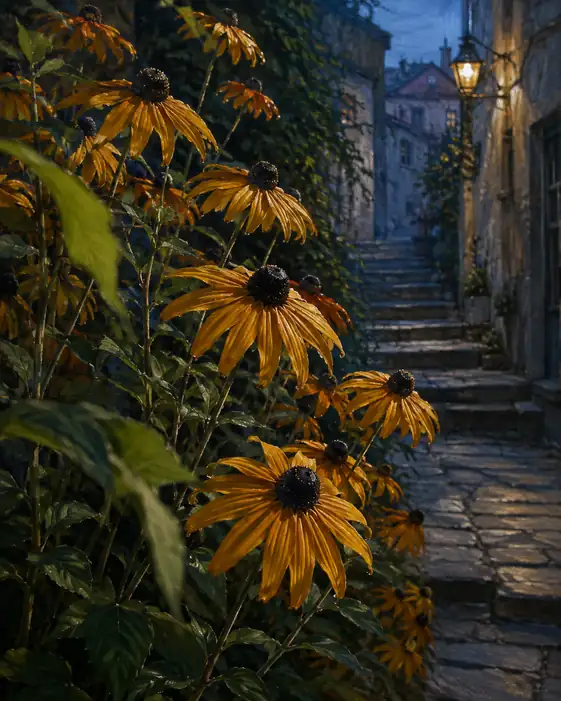 Golden Rudbeckias by the Old Stone Staircase in Lamplight
Similar Artworks
 Morning Dew and the Misty Pier
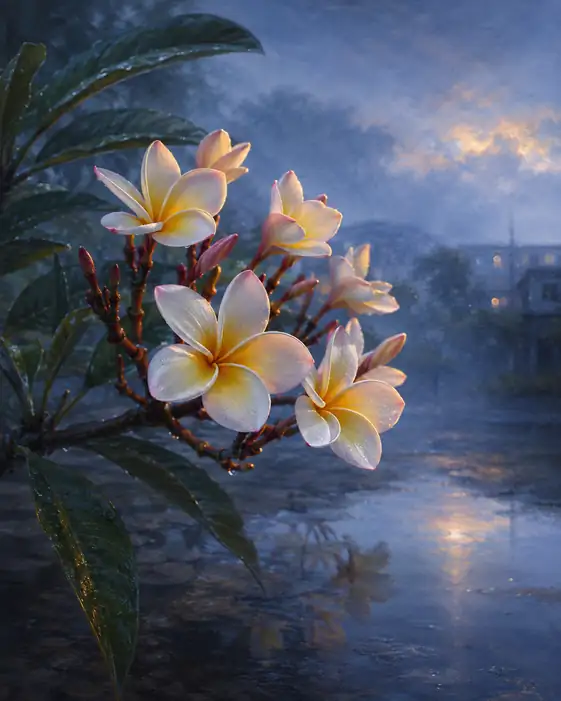 Plumeria Blossoms reflected on the Wet Pavement at Dusk
 Dewy Bougainvillea along the Misty Coastal Stairway at Dawn
 Sunset Glow over Rudbeckia Meadow and the Coastal Lighthouse
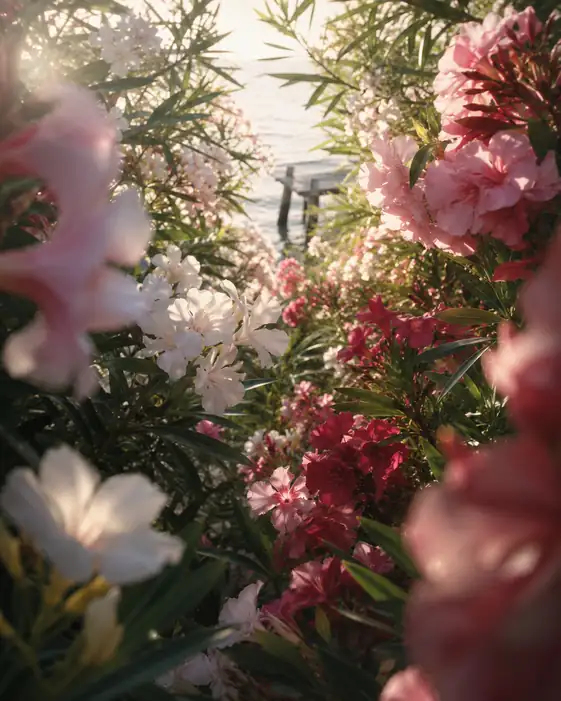 Path of Oleanders leading to the Coastal Pier
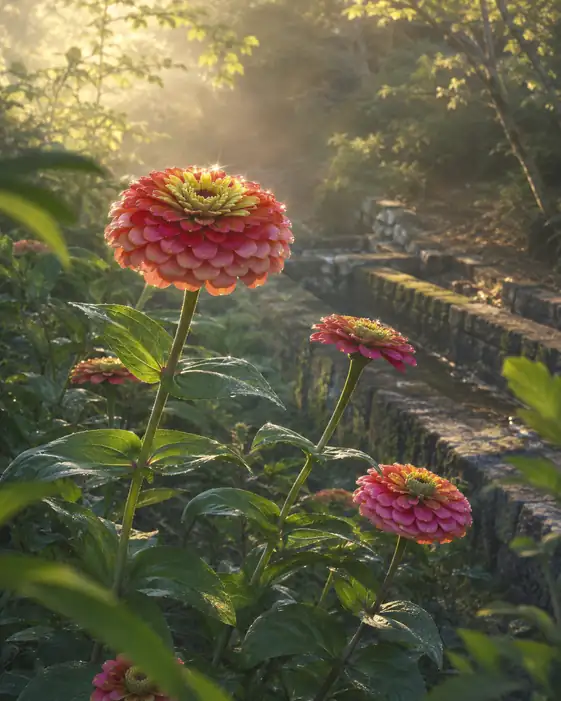 Sunlit Zinnias beside the Mossy Stone Channel
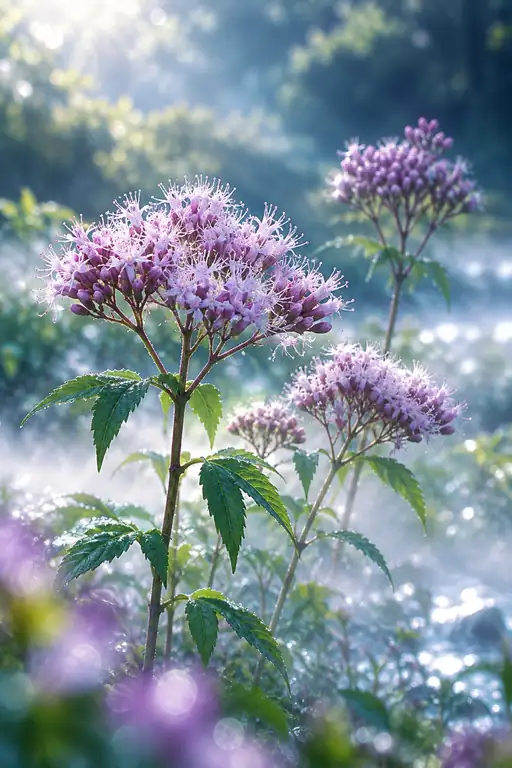 Where the Morning Mist Has Threads
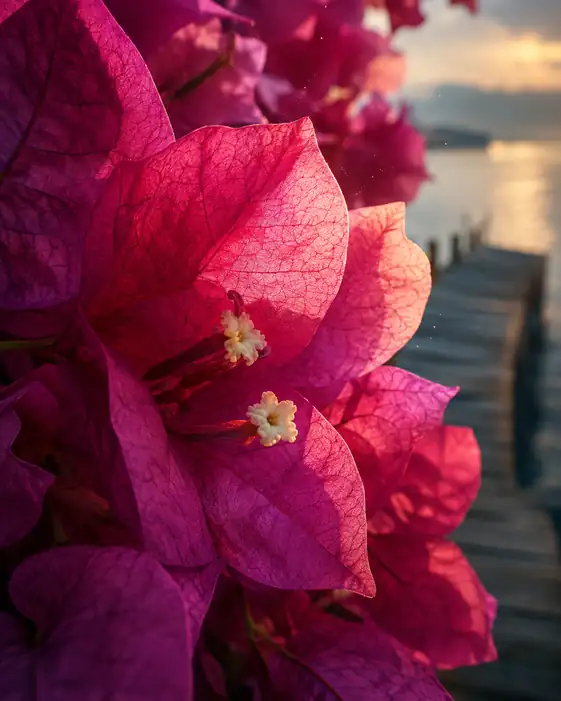 Luminous Bougainvillea and the Sunset Pier
 Golden Rudbeckias cascading along the White Coastal Stairway
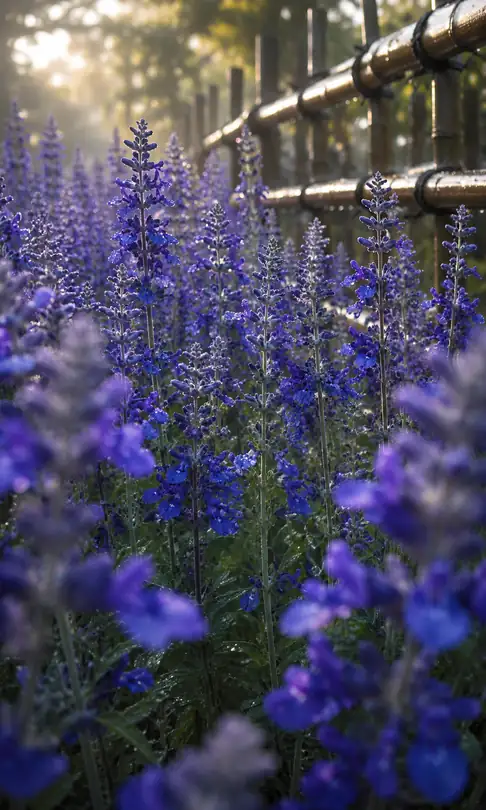 Blue Salvia along the Dewy Bamboo Fence in Morning Light