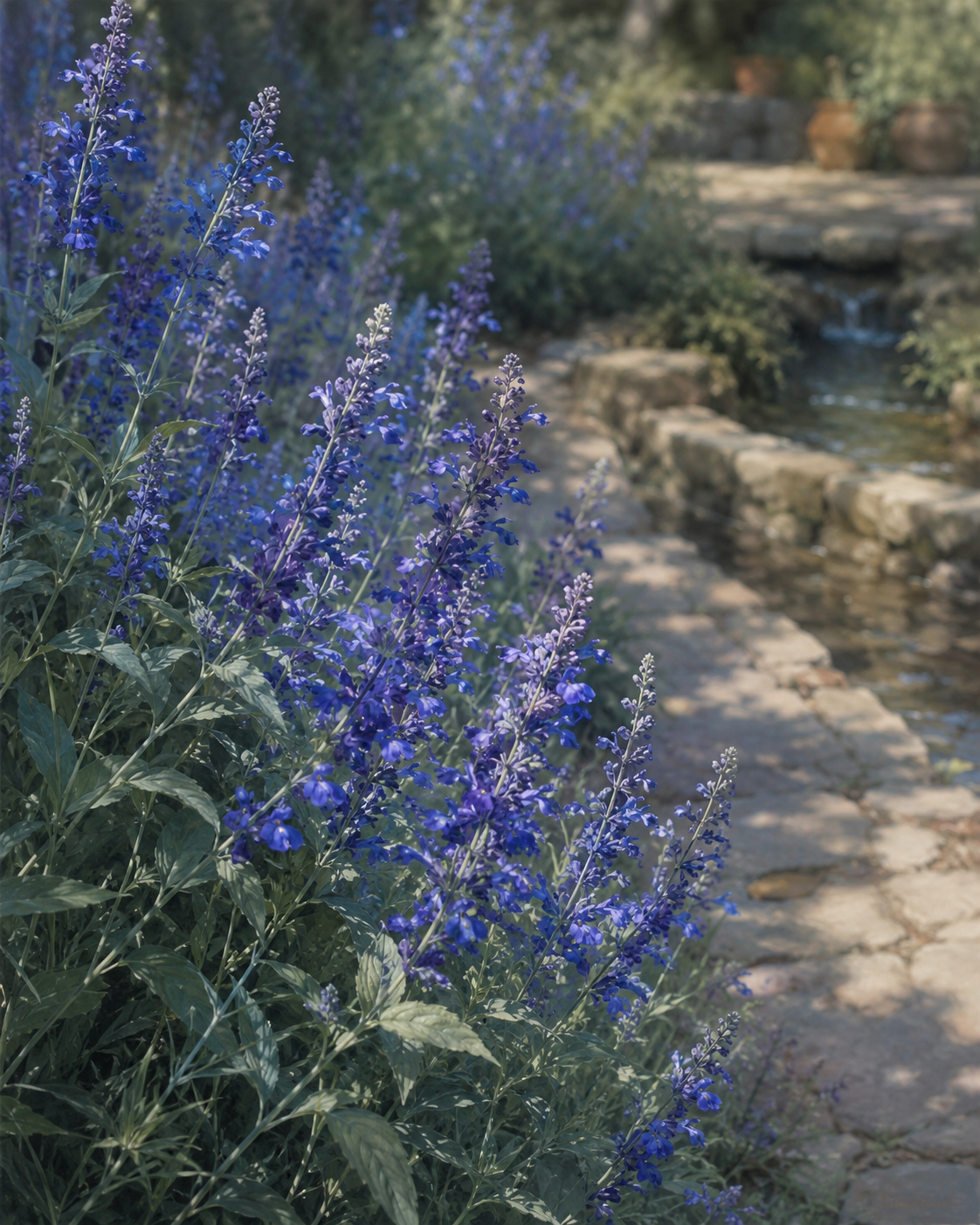
Blue Salvia along the Stone Path and Garden Stream
Critique
Introduction This garden view uses blue flowers to introduce a winding stone watercourse. It invites the eye from dense vegetation toward a shaded source. Description Flowering stems crowd the left foreground above gray-green leaves. A narrow path curves from the lower center into the distance. Rough stones contain shallow water and a small fall. Blurred shrubs and warm clay vessels occupy the background. Analysis The composition is divided asymmetrically between the substantial floral mass and the lighter corridor of path and stream. Repeated stems lean toward that corridor, acting like directional markers. Cool blues and desaturated greens dominate the foreground; beige stone and small terracotta notes warm the receding half. Moderate focus on the nearest blossoms yields gradually to atmospheric softness, strengthening depth without an abrupt optical effect. Dappled light breaks the path into alternating patches, while the stream supplies subdued horizontal reflections. The zigzag of stone edges creates a measured route through the image and counterbalances the flowers' vertical energy. Interpretation and Evaluation The work presents the cultivated garden as a place where abundance and order cooperate. Flowers spill freely, yet masonry directs water and movement; neither principle overwhelms the other. The absent visitor is assigned the path, turning contemplation into an imagined journey. Its quietness is persuasive, particularly in the small cascade, which provides an acoustic suggestion without becoming a focal spectacle. Conclusion Through asymmetrical balance, curved recession, and a cool-to-warm spatial progression, the image makes a modest garden passage feel restorative. Its strongest achievement is the seamless guidance of attention: flowers attract the eye, stones carry it onward, and water completes the sense of calm movement.
Same Subcategory
Similar Artworks
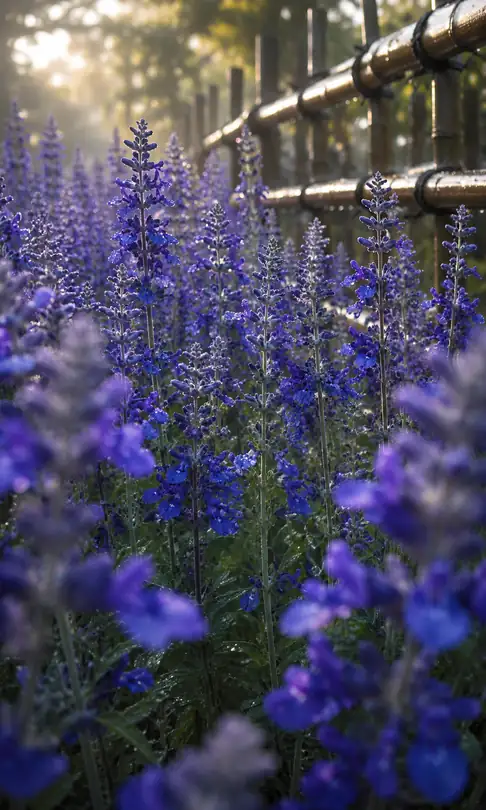 Blue Salvia along the Dewy Bamboo Fence in Morning Light
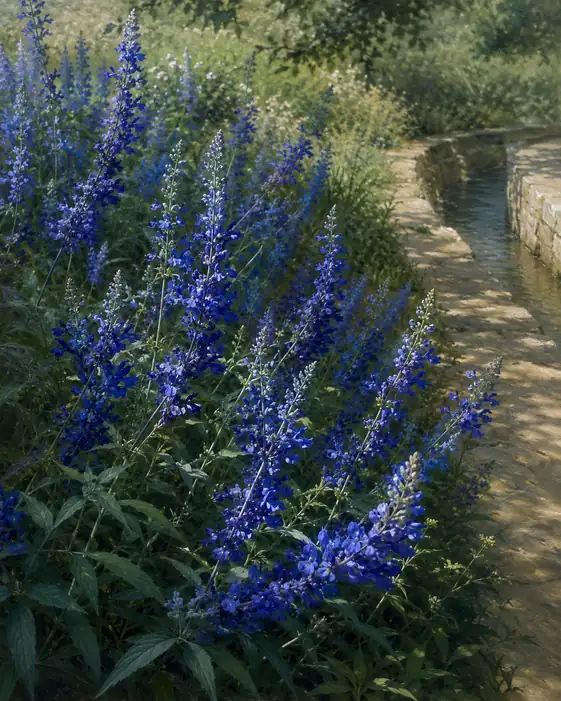 Azure Rhythms by the Curving Brook
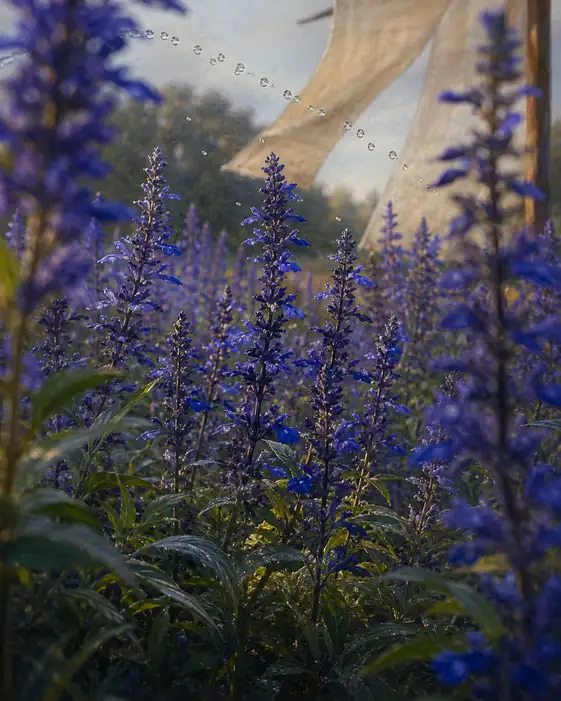 Water Drops and Blue Salvia beneath Fluttering Linen
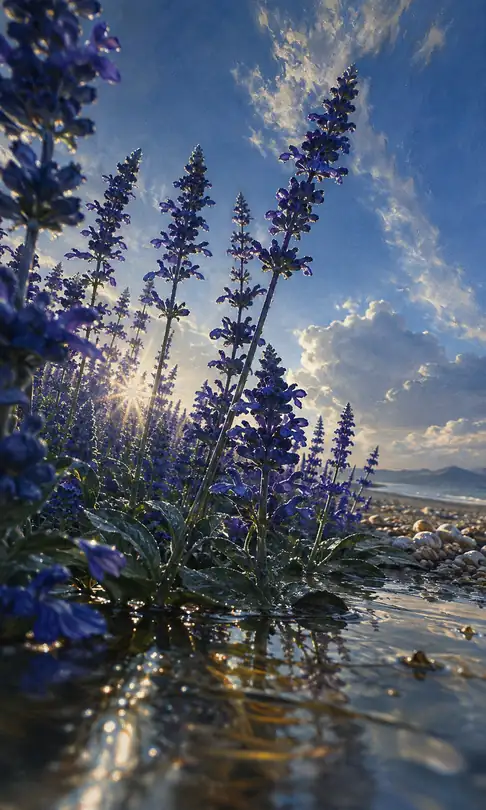 Low Angle of Blue Salvia and Sunburst by the Shore
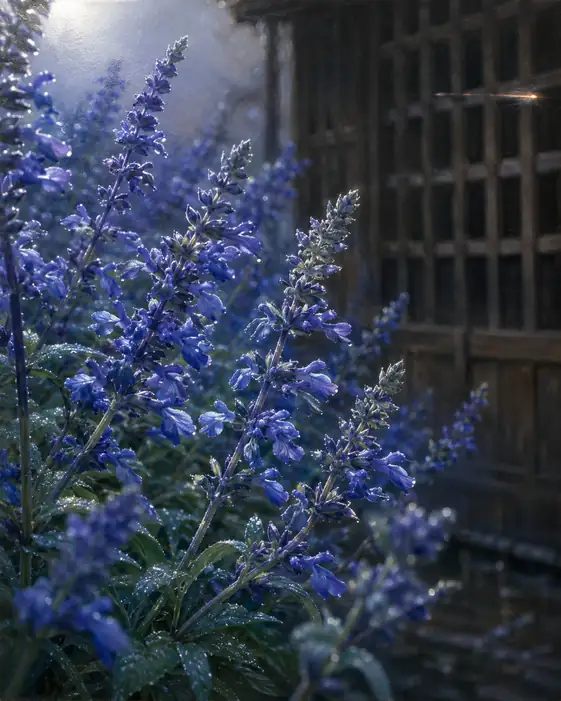 Moonlight and Blue Salvia by the Latticed Wall
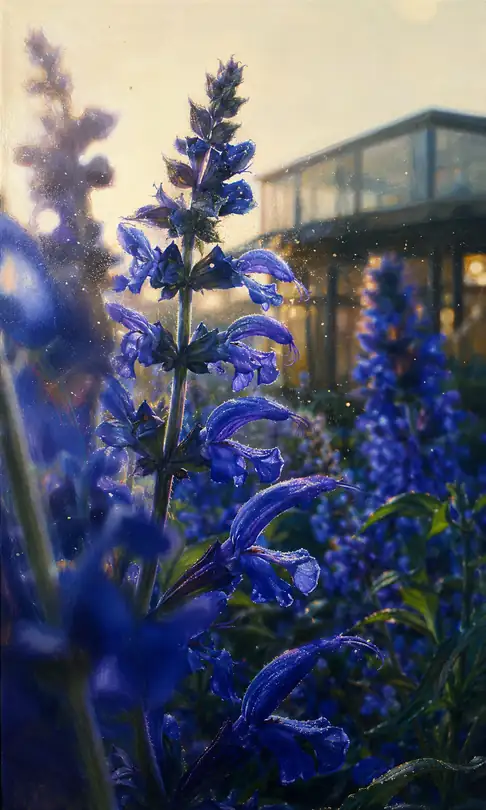 Blue Salvia in the Sunset Greenhouse Garden
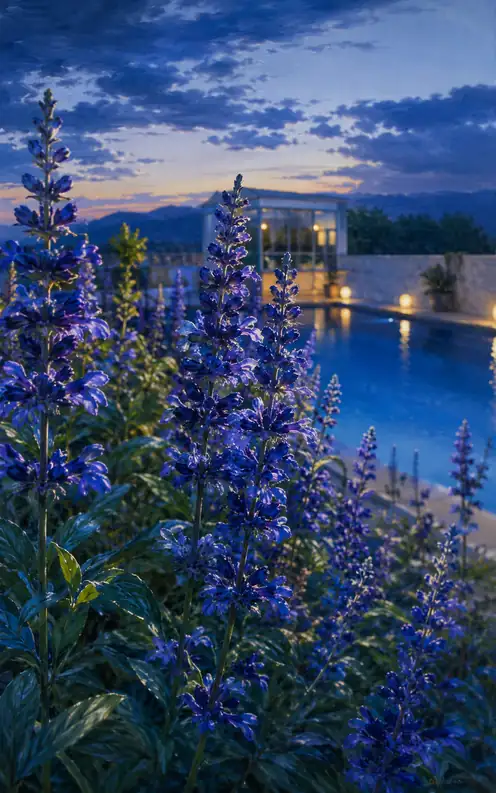 Blue Salvia by the Twilight Poolside
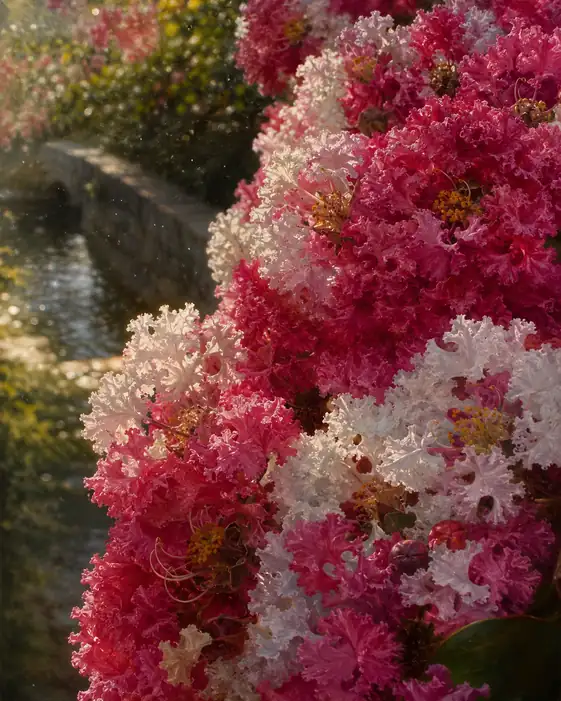 Crape Myrtle Blossoms by the Stone Bridge
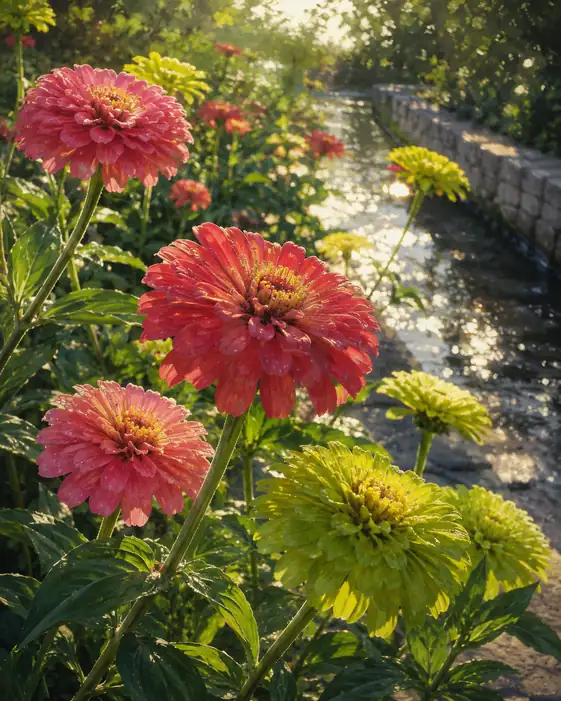 Zinnias by the Sunlit Stone Canal
 Ripples of Indigo Along the Brook