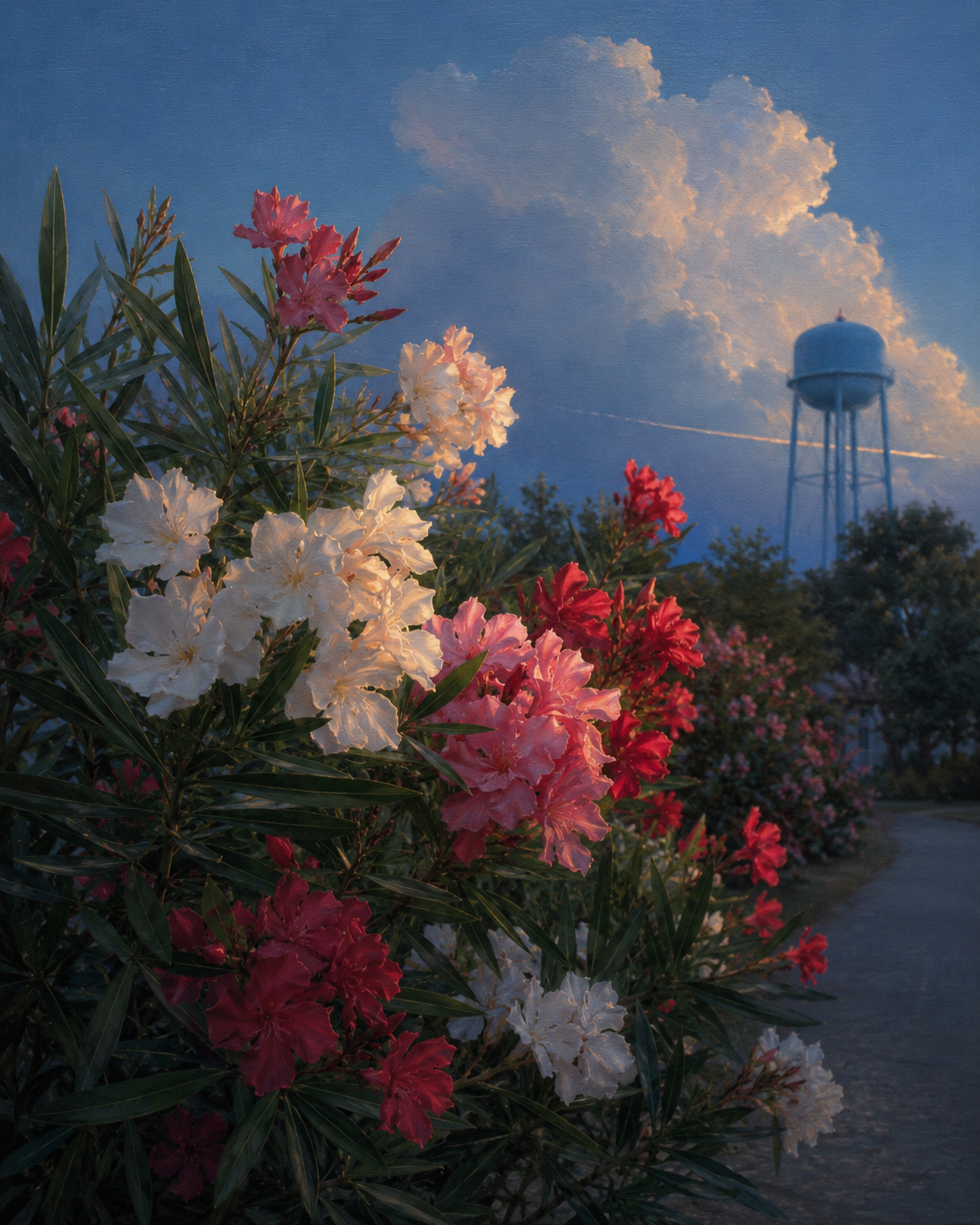
Oleanders beneath the Sunset Cloud and Water Tower
Critique
Introduction This twilight scene brings oleander, water tower, cloud, and sky trace into a layered landscape. Natural and engineered forms share the last light. Description White, pink, and red oleander clusters fill the left and lower foreground among dense spear-shaped leaves. A path runs along the right edge toward shadowed shrubs. In the distance, a tall blue cylindrical tank stands on slender legs. Behind it, a massive cream cloud rises through the cool blue sky, illuminated along its right side. A fine pale-orange line crosses horizontally behind the tower. Warm light selects several flowers while other foliage sinks into dusk. Analysis Depth is organized through three vertical masses: foreground flower stems, the tower, and the cloud. Their scales increase and recede, creating visual continuity from garden to atmosphere. White flowers echo the lit cloud, while red clusters provide concentrated warmth against blue. The sky trace cuts across the tower's legs and counters the dominant verticals. The right-hand path supplies a quiet diagonal route, and selective illumination prevents the dense plant mass from flattening. Soft texture joins cloud, painted sky, and distant structure without erasing their material differences. Interpretation and Evaluation The scene aligns ways of holding water and time. Oleander retains moisture, the tower stores water through infrastructure, and the cloud suspends it as weather. The sky line adds movement against these reservoirs. Flowers remain tactile, engineering provides civic scale, and atmosphere exceeds both. The path implies ordinary access. This balance makes interdependence emotional while preserving fading light's melancholy. White flowers effectively connect local growth to distant weather. Conclusion Layered verticals, warm accents, and traversed sky link garden, utility, and atmosphere. Twilight reveals dependence before darkness merges distinctions.
Same Subcategory
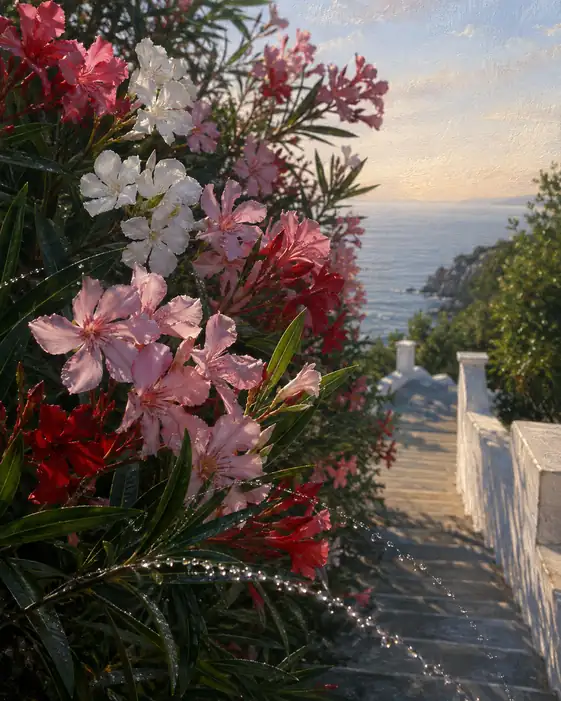 Water Splashes and Oleanders along the White Steps
Similar Artworks
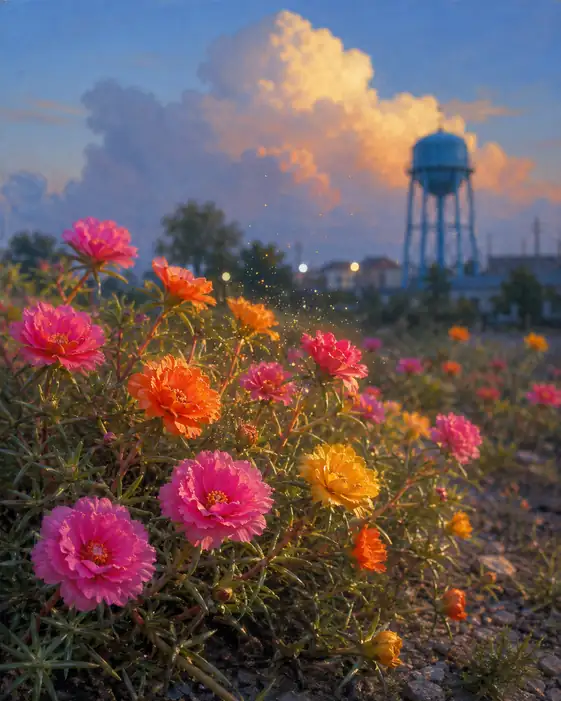 Sunset Cumulonimbus and Moss Roses by the Water Tower
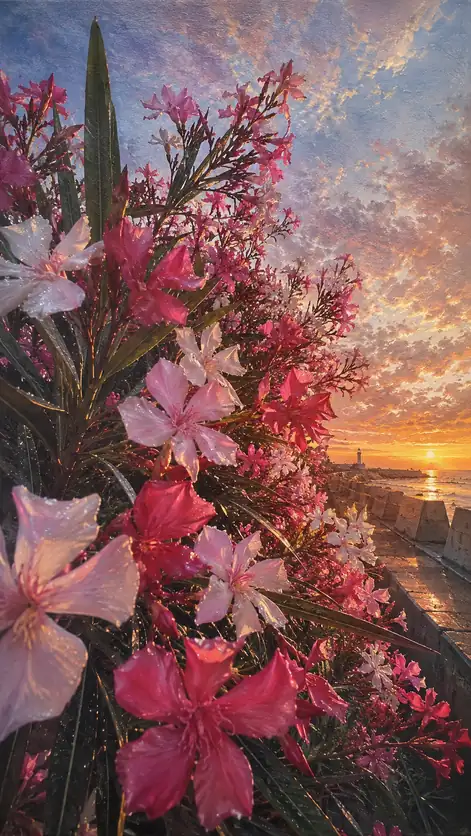 Coastal Oleanders and the Lighthouse under Sunset Clouds
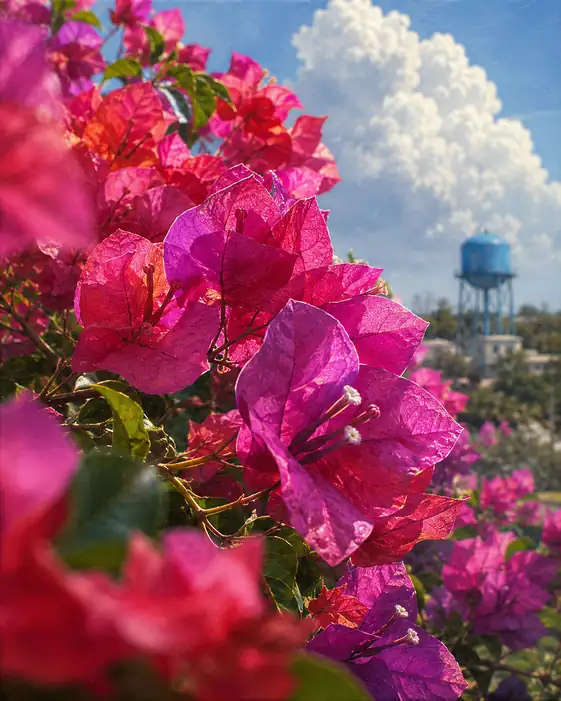 Bougainvillea beneath Summer Clouds and the Water Tower
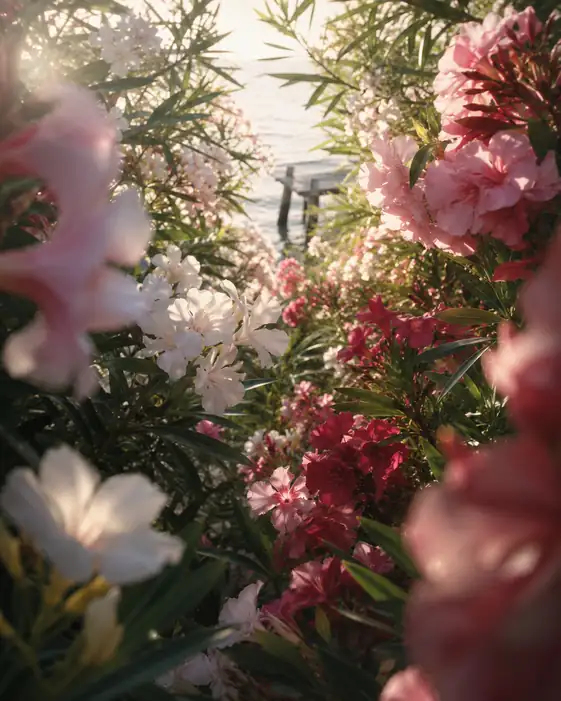 Path of Oleanders leading to the Coastal Pier
 Morning Dew upon Bougainvillea beneath Summer Clouds
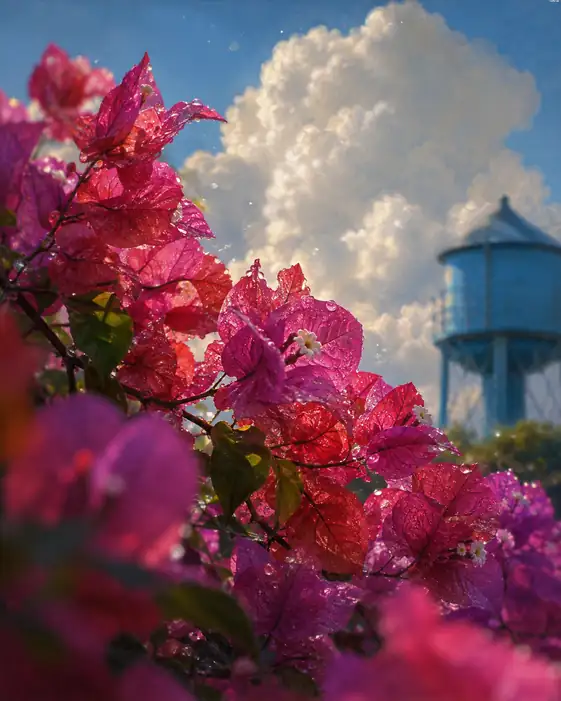 Bougainvillea beneath the Summer Cumulonimbus
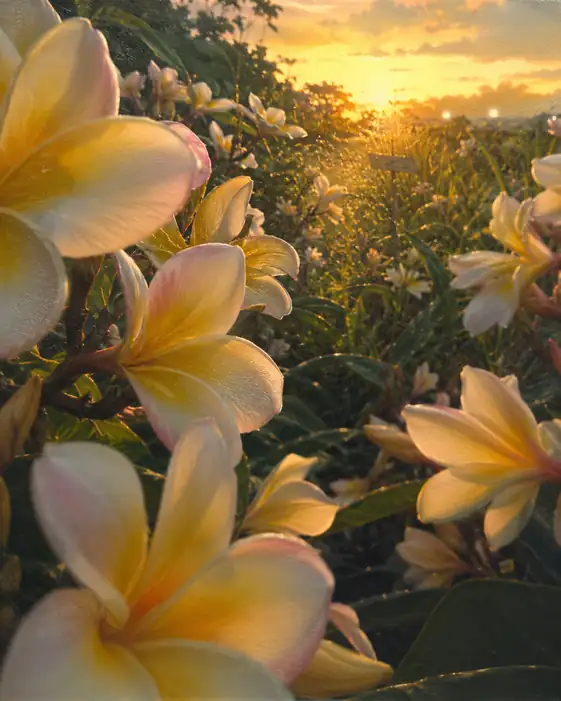 Golden Sunset Glow upon the Plumeria Garden
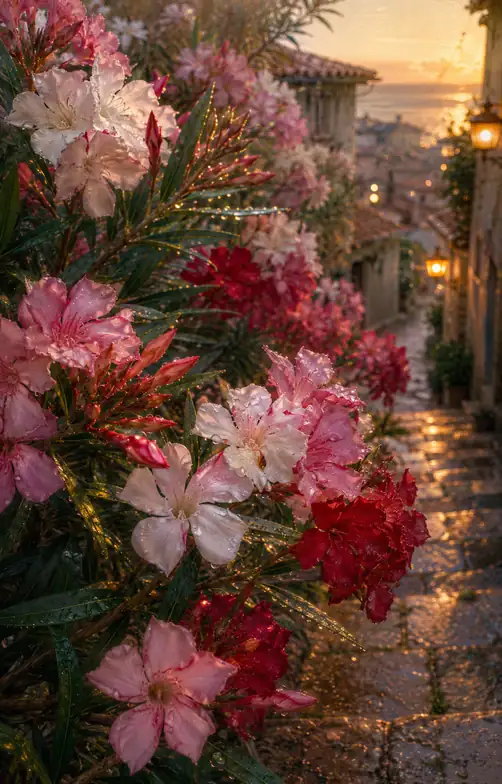 Oleanders along the Sunlit Coastal Stairway at Dusk
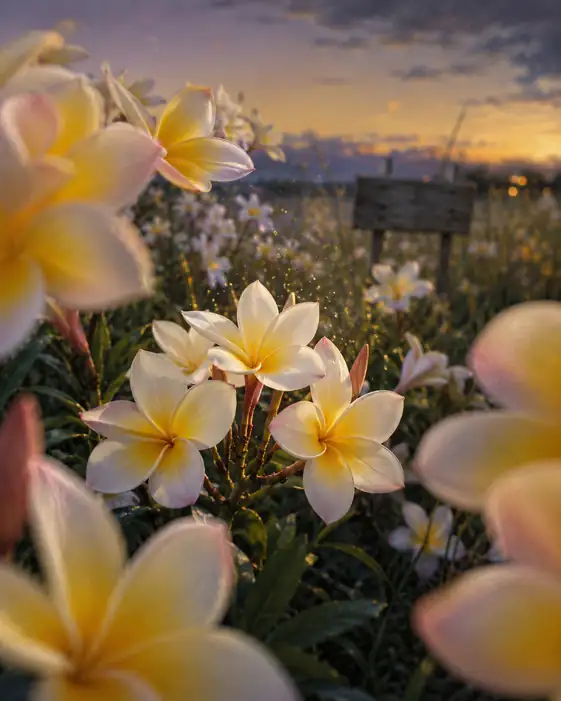 Golden Sunset Glow upon the Plumeria Meadow
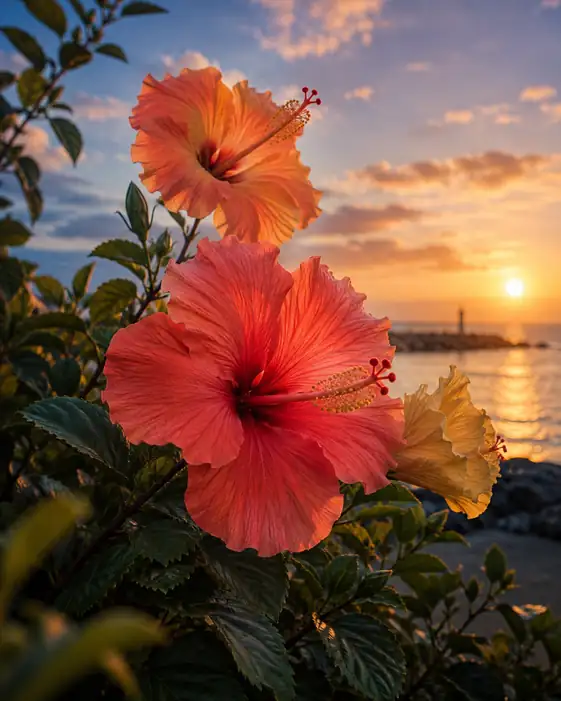 Hibiscus Glowing against the Sunset Harbor