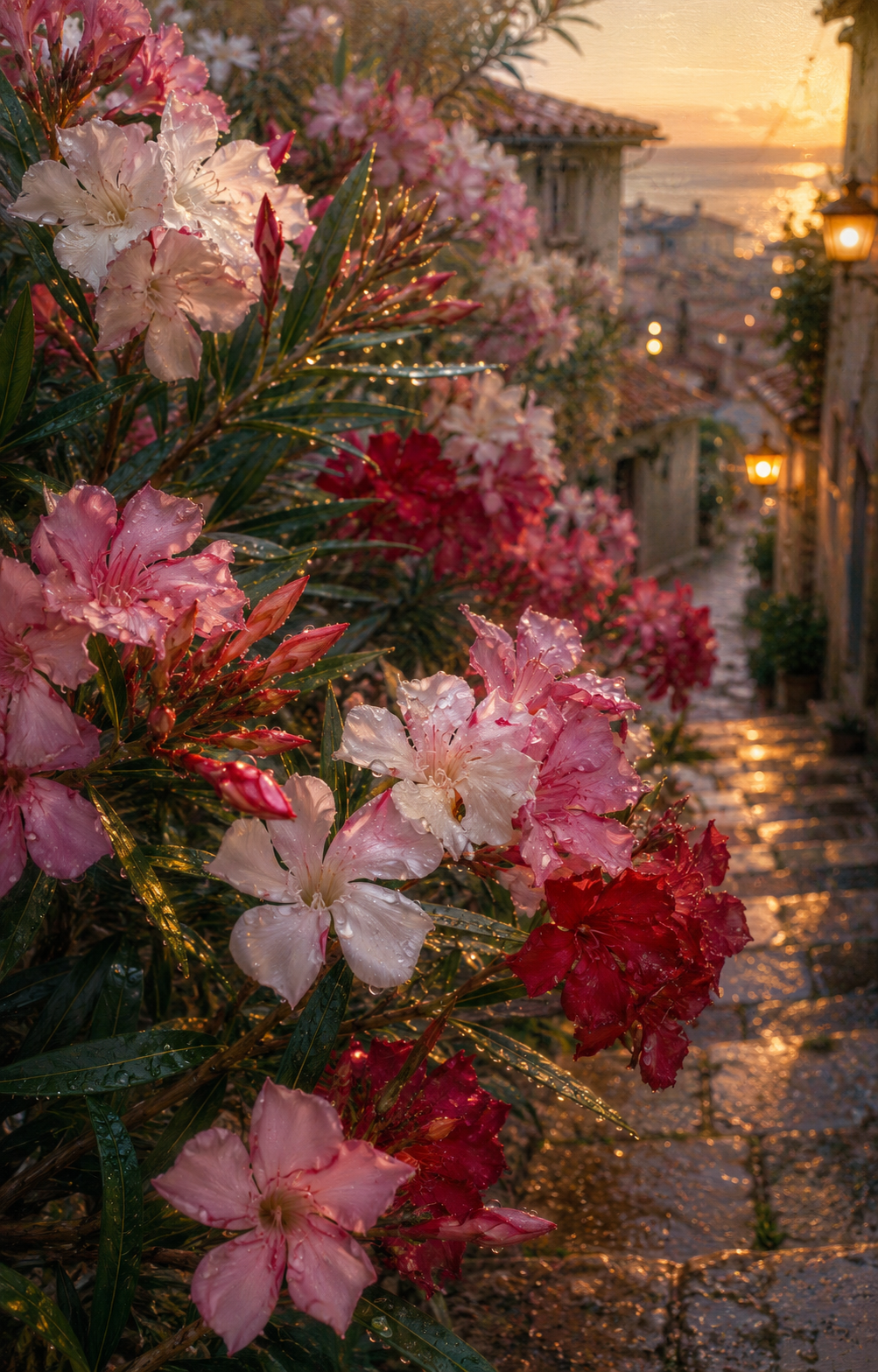
Oleanders along the Sunlit Coastal Stairway at Dusk
Critique
Introduction This rain-wet village descent places oleander in sharp foreground against a softly glowing route toward the sea. Flowers, stone, and lamplight make arrival feel gradual and sensorially layered. Description White, pale pink, and deep red oleander blossoms fill the left foreground among narrow glossy leaves, unopened buds, and many droplets. Behind them, a narrow stone lane descends between weathered walls and tiled roofs toward clustered buildings and a distant bay. Warm lamps glow along the right wall and farther down the path. The low sun burns gold at the upper right horizon, catching wet paving stones and turning background lights into soft circles. Analysis Selective focus divides tactile garden detail from atmospheric settlement. Sharp petals and beads of water occupy nearly half the frame, while the lane forms a narrow diagonal corridor into blur. White blossoms bridge cool moisture and warm sunset, whereas red flowers deepen the foreground. Repeated lamps continue the sun's color downward through the village. Wet stone reflects broken gold and guides vision despite its softness. The close floral mass and right wall compress space, making the distant sea appear as a precious opening. Interpretation and Evaluation The coastal town appears through approach rather than panorama. Oleander slows entry and makes weather present before architecture. Rain and sunset overlap, joining disturbance to returning light. Lamps show care continuing as daylight fades, while stone and tile register longer habitation. The partly hidden sea remains imagined rather than possessed. Beauty emerges through wet surfaces, plants, and communal space, not instant access to the horizon. Conclusion Close flowers, reflective paving, and descending light turn the lane into a threshold toward sea and evening. Warmth emerges through moisture and revelation.
Same Subcategory
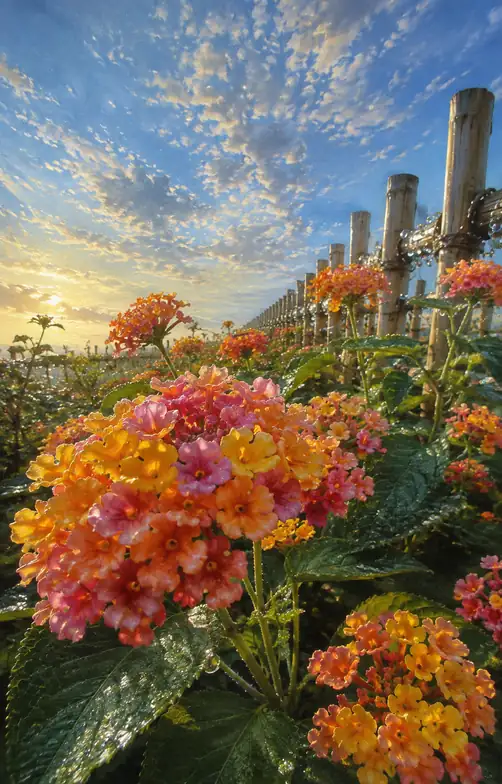 Lantana Blossoms along the Bamboo Fence under Morning Clouds
Similar Artworks
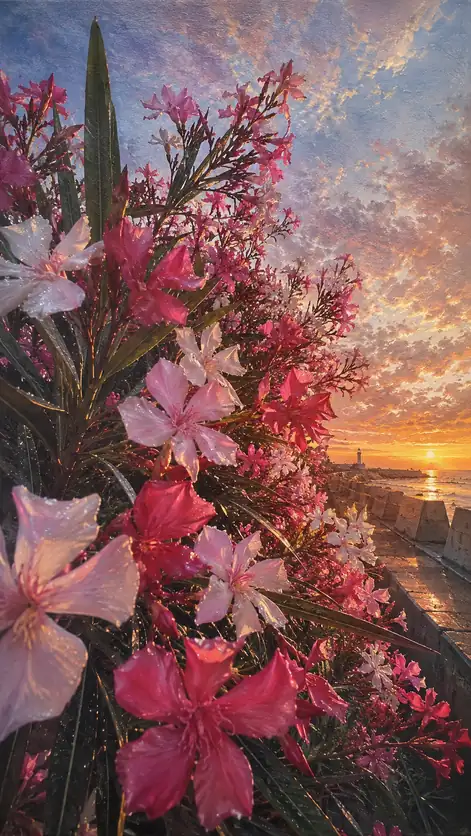 Coastal Oleanders and the Lighthouse under Sunset Clouds
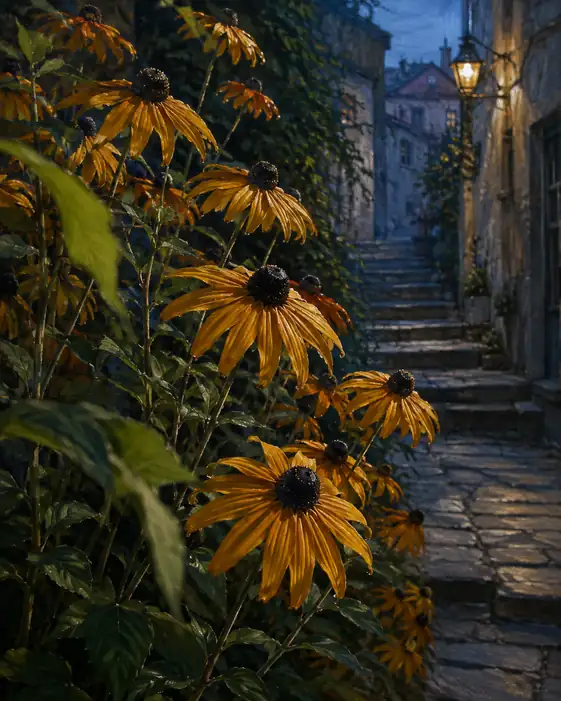 Golden Rudbeckias by the Old Stone Staircase in Lamplight
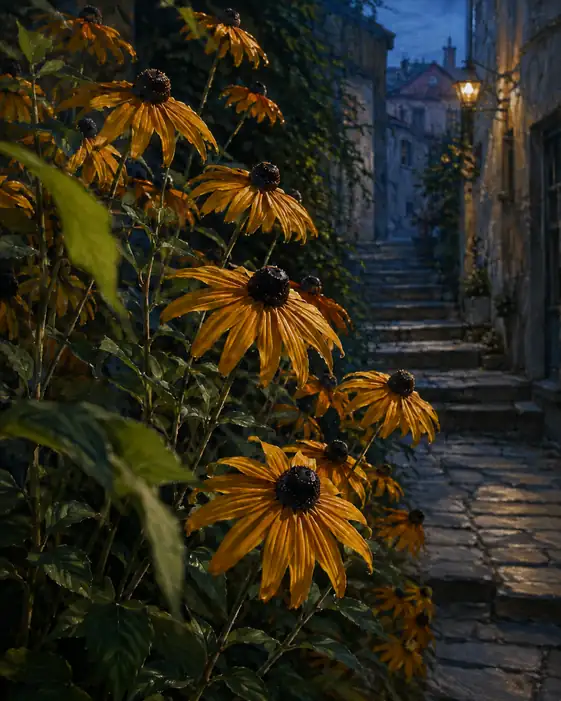 Golden Rudbeckias along the Cobblestone Alley at Dusk
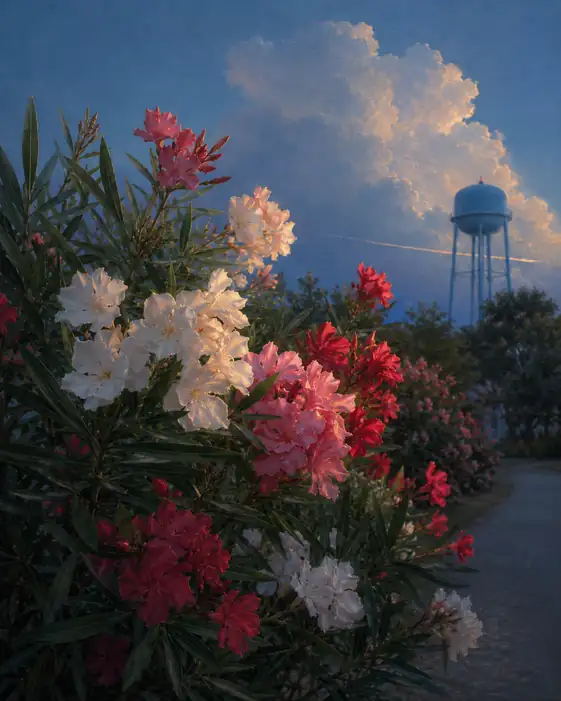 Oleanders beneath the Sunset Cloud and Water Tower
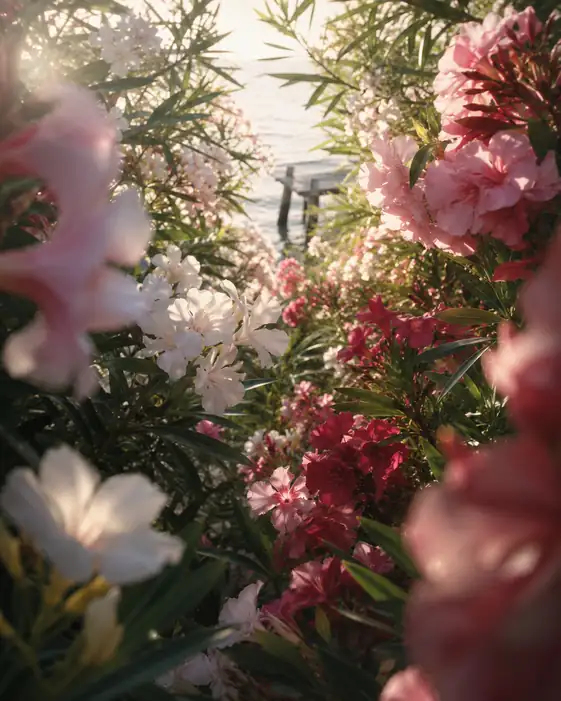 Path of Oleanders leading to the Coastal Pier
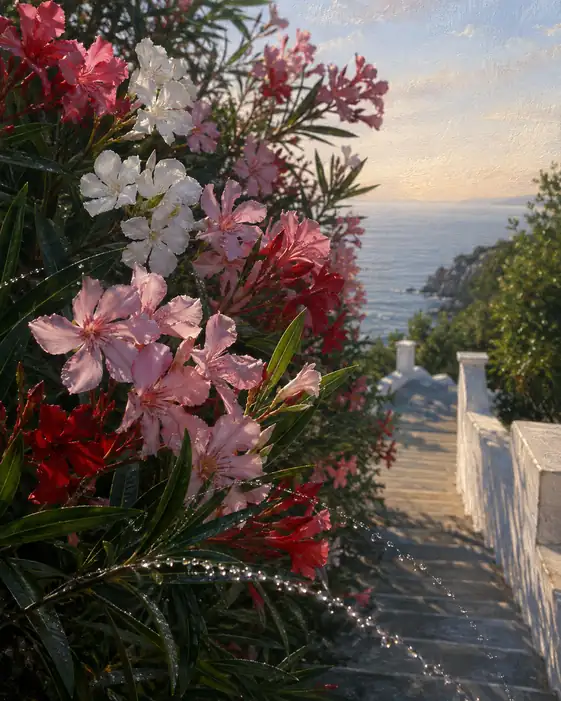 Water Splashes and Oleanders along the White Steps
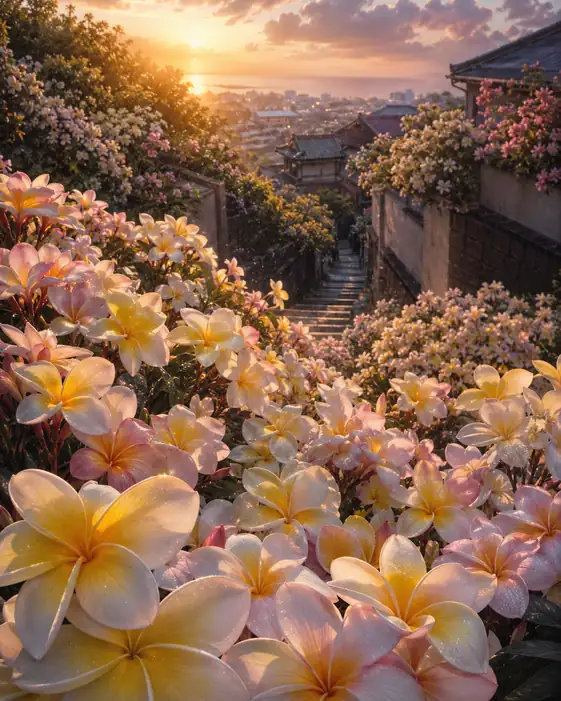 Sunset Glow over the Plumeria Hillside Stairway
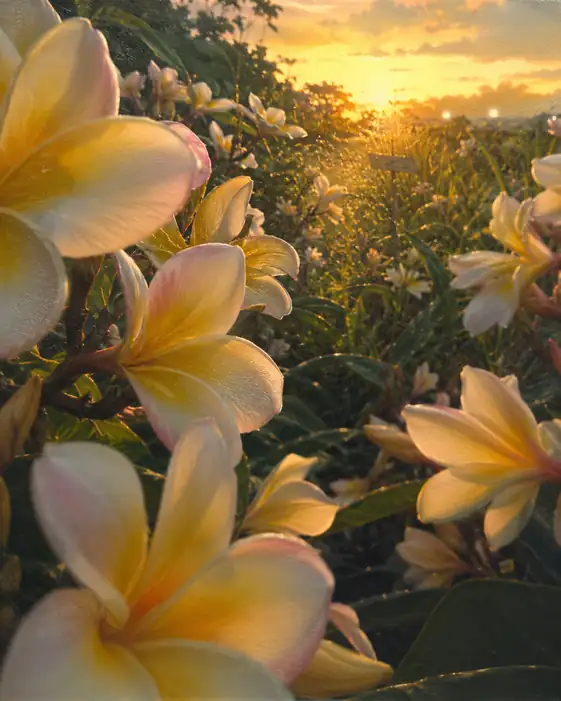 Golden Sunset Glow upon the Plumeria Garden
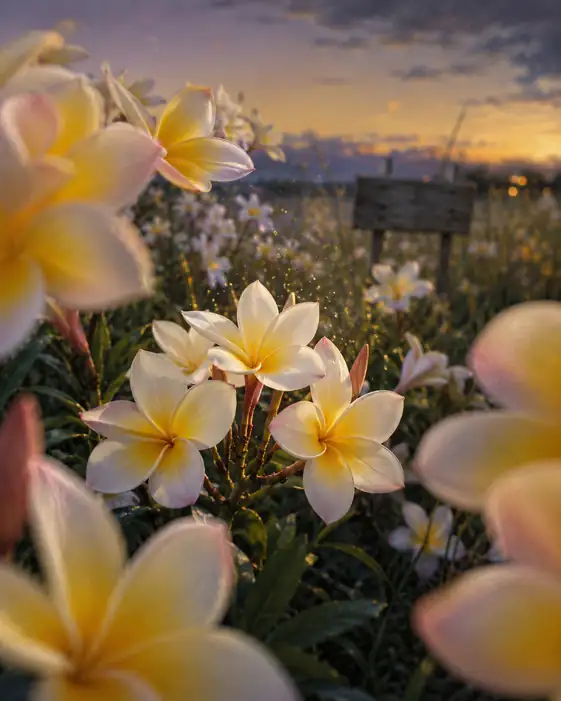 Golden Sunset Glow upon the Plumeria Meadow
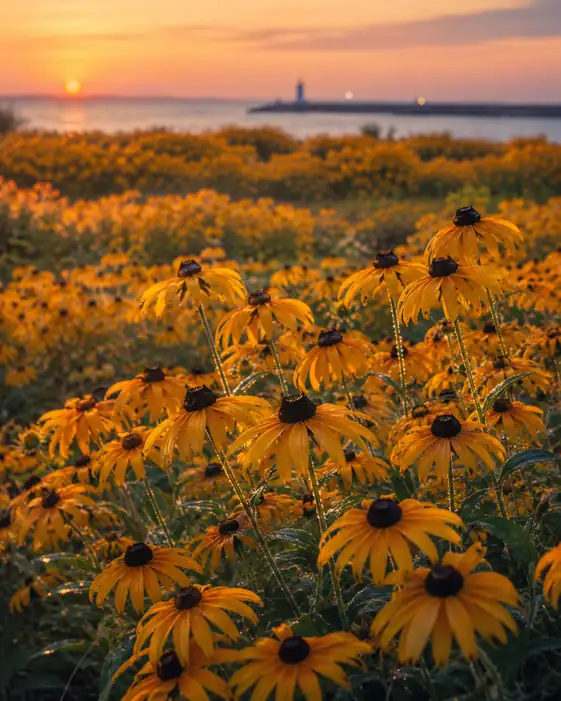 Sunset Glow over Rudbeckia Meadow and the Coastal Lighthouse