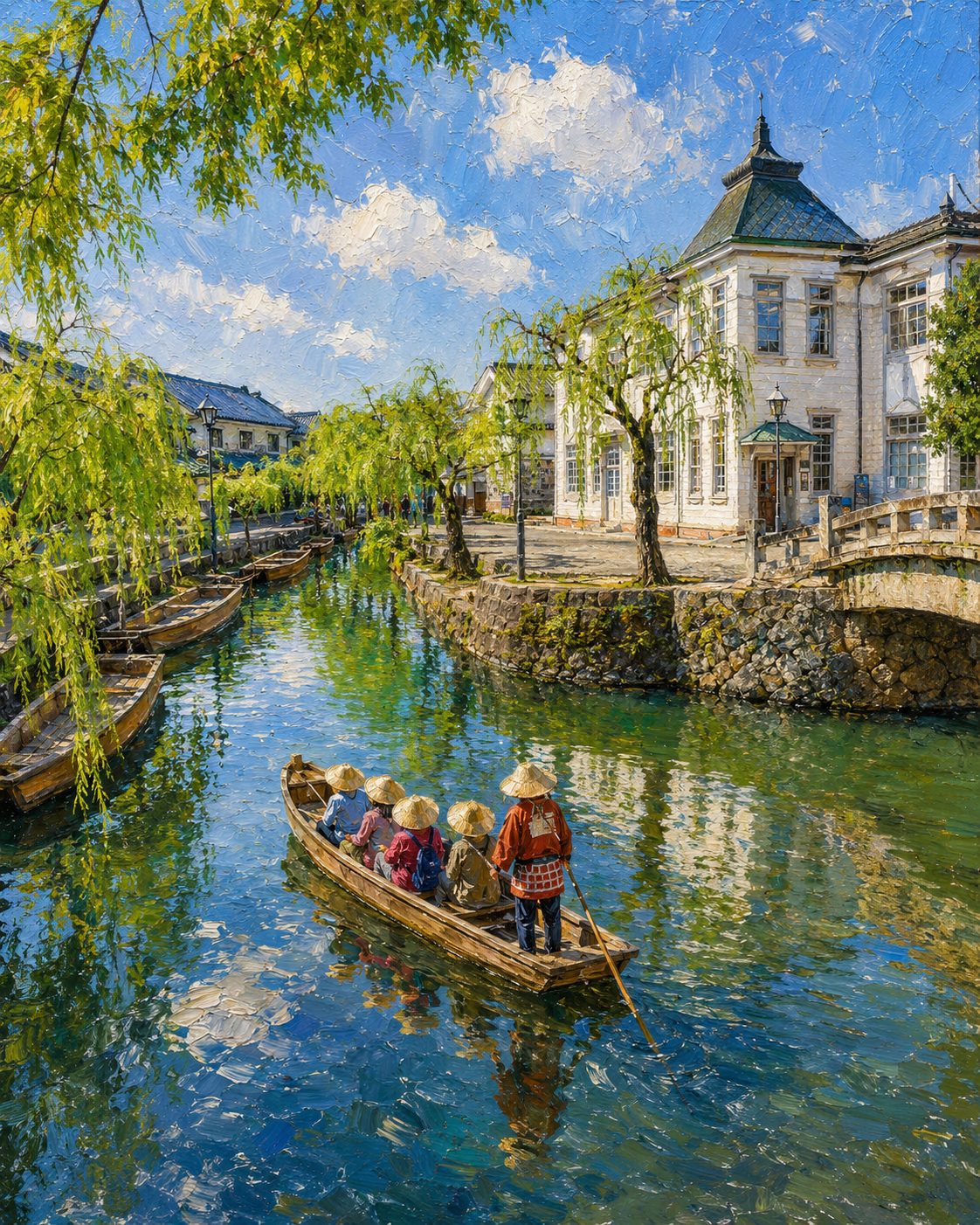
By Boat Between Willows and White Walls
Critique
Introduction This close passenger-boat view makes collective travel the foreground subject of the historic canal. Architecture and willows remain prominent, but the group aboard gives preservation a social, bodily scale. Description A long wooden boat crosses the lower center, carrying five seated passengers in conical hats and a standing boatman in red at the stern. His pole enters the water diagonally to the right. The canal bends toward the left distance, where empty boats line a willow-shaded bank. A large white Western-style building with a dark tower roof occupies the right above a curved stone embankment and pale bridge. Blue-green water reflects sky, trees, walls, and the boat. Analysis The large vessel forms a warm diagonal across the cool reflective foreground. Repeated hats organize the passengers as a rhythmic group, while the boatman's vertical stance and long pole clarify direction and propulsion. The curved right bank echoes the hull and channels vision toward the distance. White architecture balances dense green foliage, and both break into wavering reflection below. Because the craft lies across rather than along the central axis, it momentarily interrupts the canal's recession and makes passage tangible. Interpretation and Evaluation Heritage becomes a shared journey. Passengers face different directions, suggesting individual attention within collective transport, while similar hats create temporary community. The boatman's distinct labor enables leisurely encounter and prevents tourism from seeming self-sustaining. Empty boats, embankments, and civic building locate the scene within broader systems of work and governance. Close framing makes historical space inhabited through posture, balance, and motion rather than consumed as scenery. Conclusion Grouped figures, movement, and reflection join communal experience to urban continuity. History remains active because bodies still travel and work here.
Same Subcategory
 Waterway of Drifting Petals
Similar Artworks
 Azure Reflections on the Willow Canal of Kurashiki
 Summer Sky upon the Historic Canal of Kurashiki
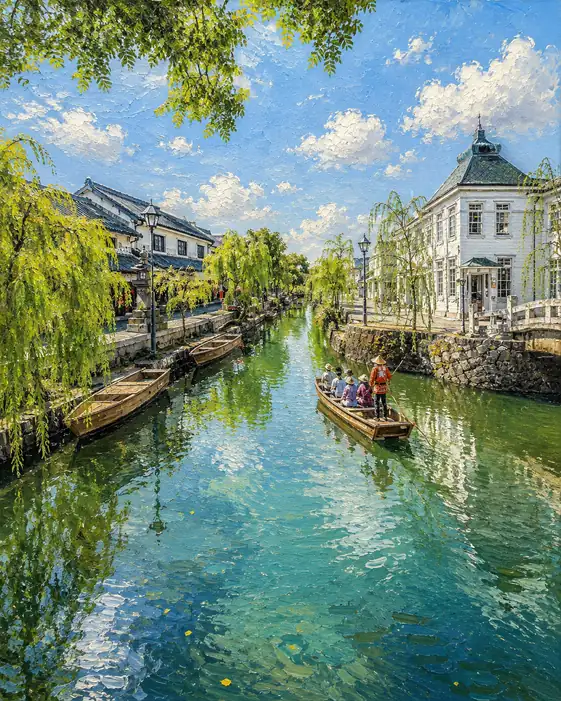 Punting along the Willow Canal of Kurashiki
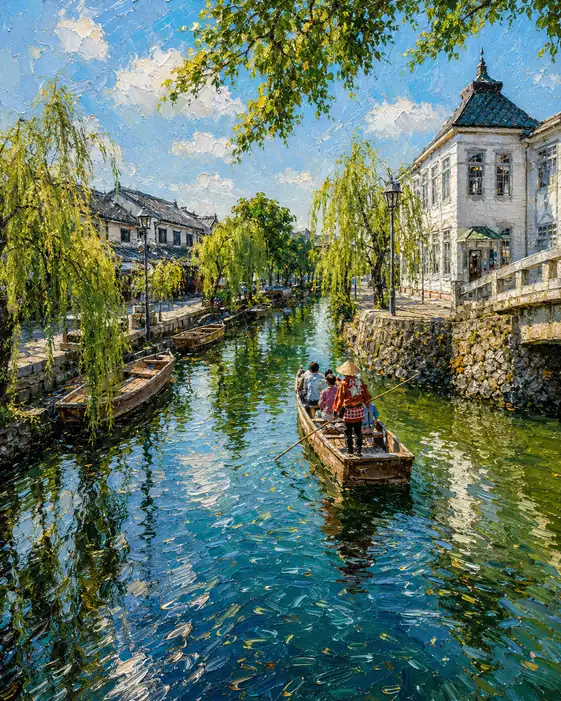 Shimmering Canal and the River Boat of Kurashiki
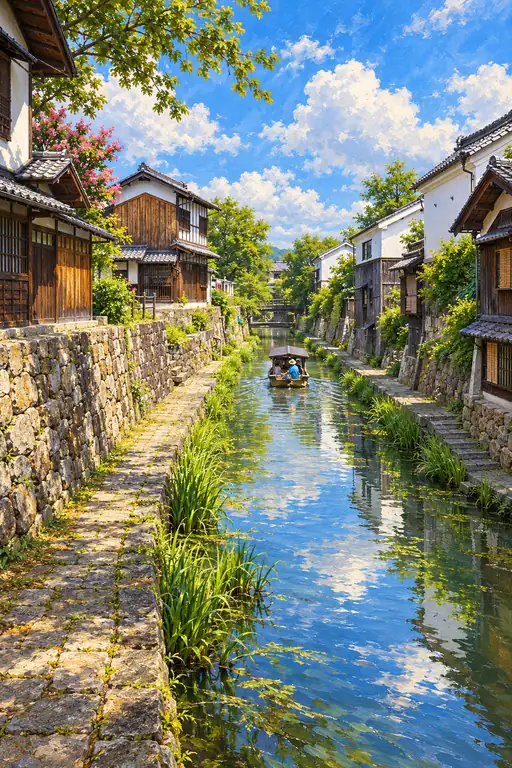 There Is Still Time to Wander
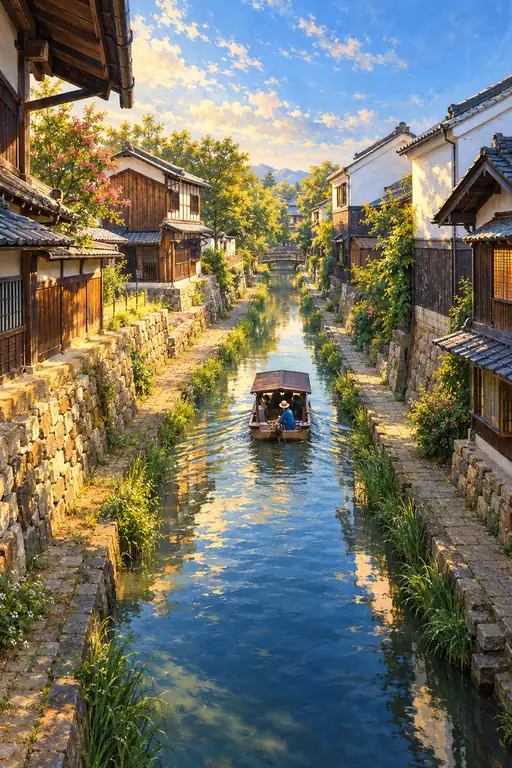 An Afternoon Carried by Water
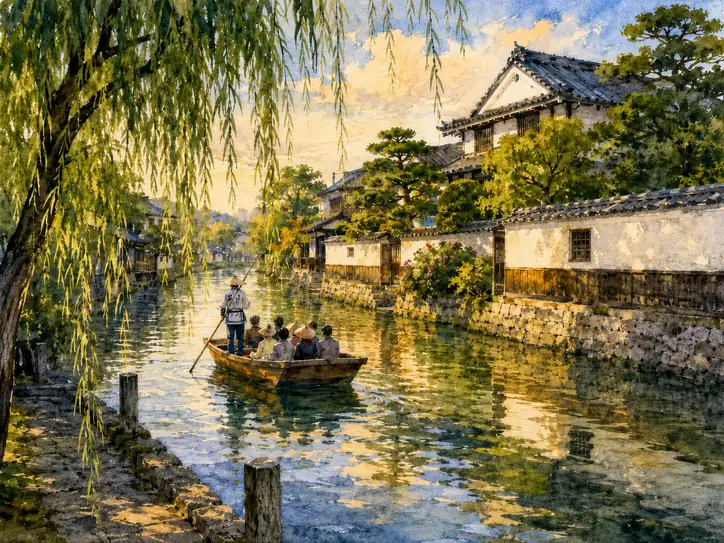 Golden Ripples of Yesterday
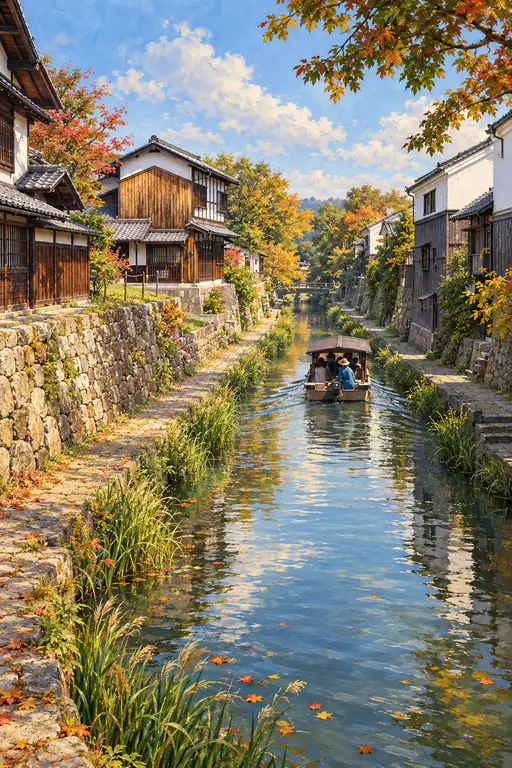 Autumn Travels Beside Us
 Opening of the Sunlit Waterway
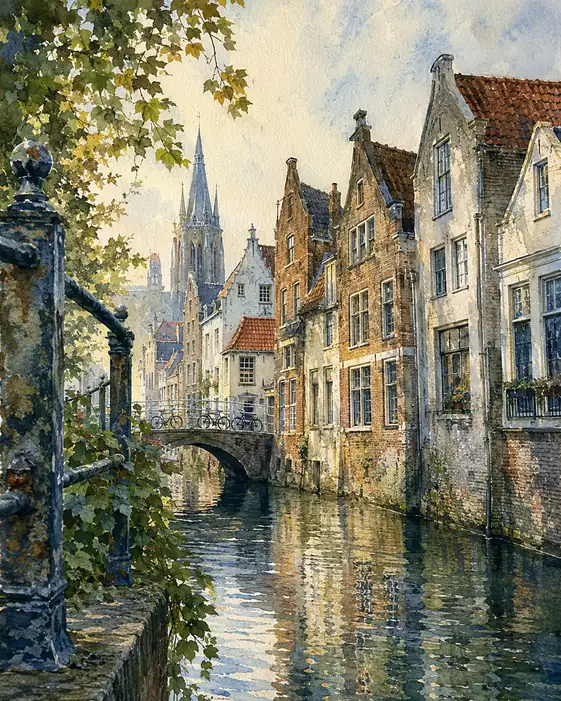 Where Time Stands Still