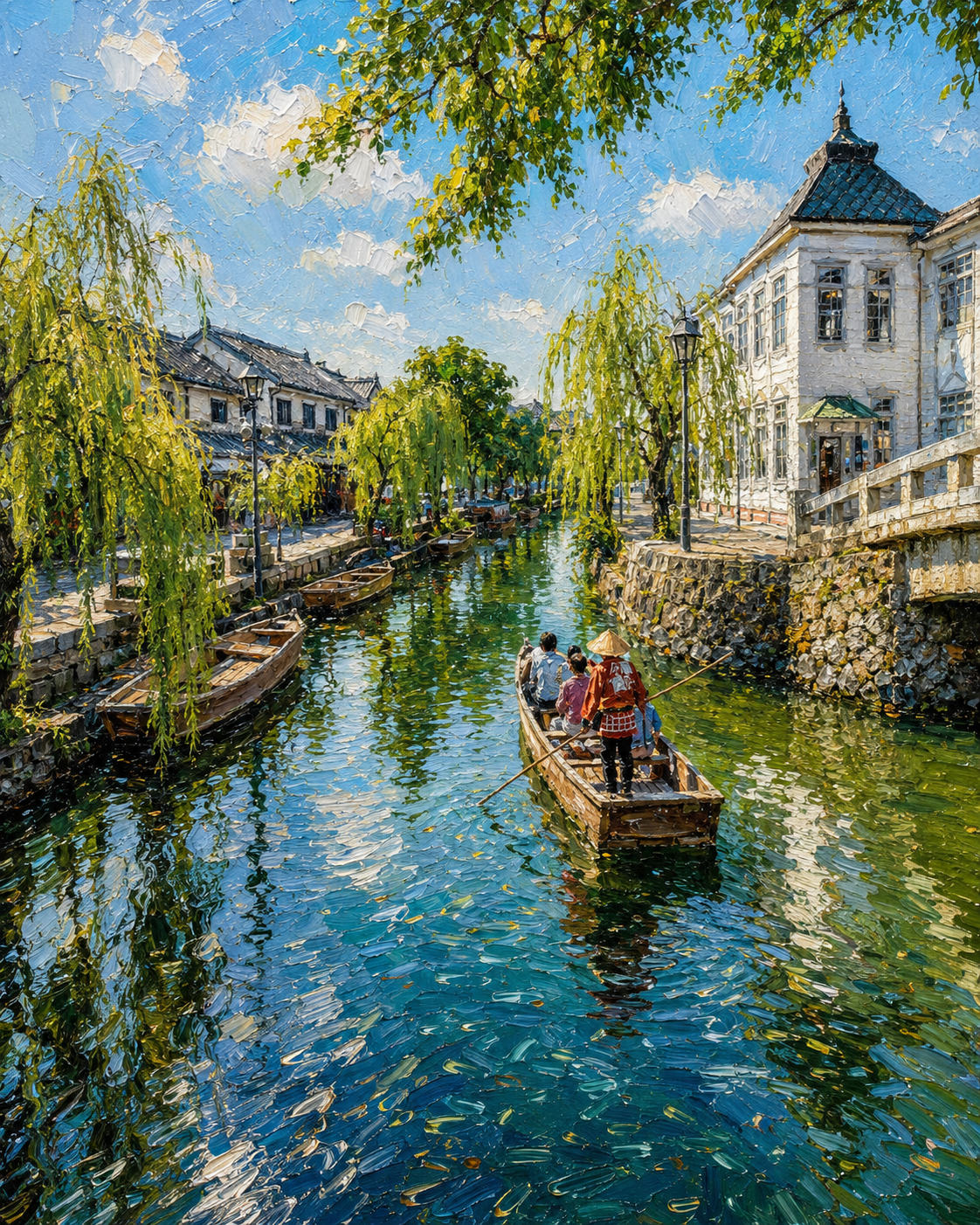
Shimmering Canal and the River Boat of Kurashiki
Critique
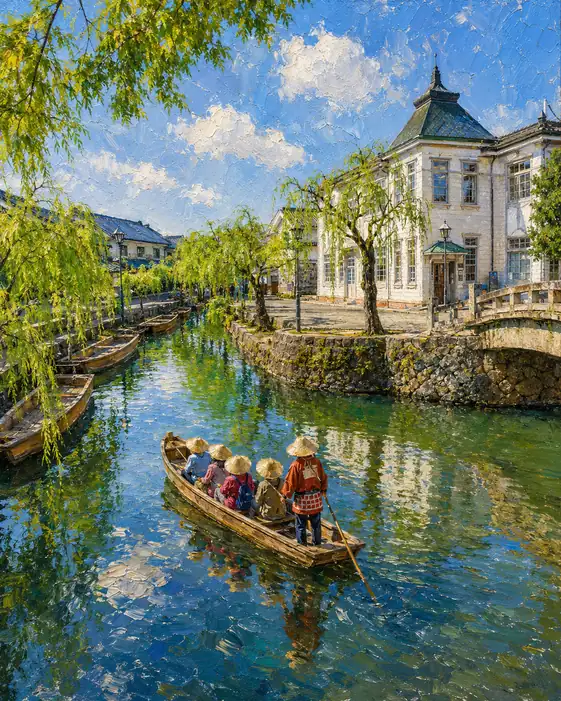
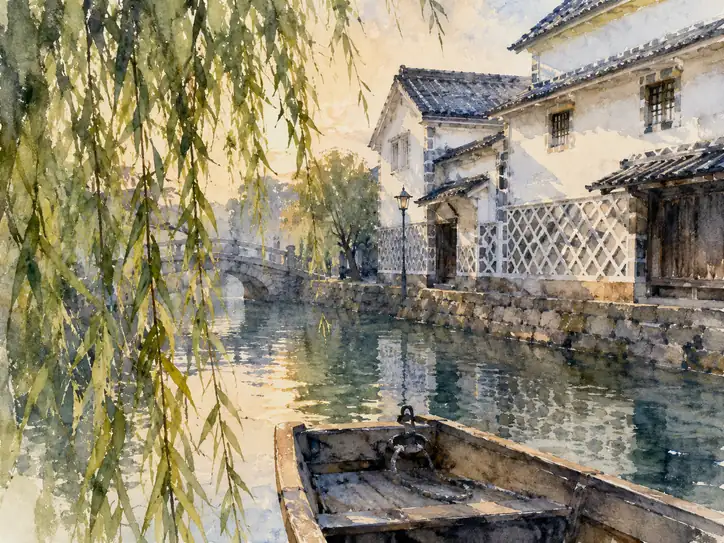
Introduction This canal view places a passenger boat in the foreground beneath leaves. Its approach makes the streetscape immediate, inhabited, and oriented around movement. Description A green-blue canal narrows from the broad lower frame toward a shaded center. A wooden boat at lower right carries several seated passengers and a standing boatman in red with a conical hat. Empty boats line the left stone bank beneath willows and white plaster buildings with tiled roofs. At right, a large white Western-style building rises beside a pale bridge and dark stone embankment. Overhead branches frame a bright clouded sky, while building and foliage reflections scatter across the water. Analysis The near boat provides a strong diagonal wedge entering the central perspective corridor. Its warm wood and red figure advance against cool water, while smaller moored boats create a repeated sequence into depth. The white building's vertical mass balances dense willow foliage on the left. Overhead leaves complete an arch that contains the open sky and canal. Reflections fragment straight walls and bridge rails into mobile strokes, allowing architecture to participate in water's movement. The pole extends laterally, making propulsion visibly dependent on the canal bed. Interpretation and Evaluation Heritage becomes an encounter in progress. Passengers are not outside observers; their boat carries them through a working center. The boatman's stance embodies local knowledge and labor, preventing mere scenery. Empty craft suggest repeated journeys before and after this one. Architectural contrast indicates layered history, while trees keep civic space seasonal. Foreground proximity invites viewers to join the route rather than survey it from a distance. Conclusion Boat, foliage, and reflections turn the canal into public space. Preservation gains meaning through passage and attention.
Same Subcategory
Similar Artworks
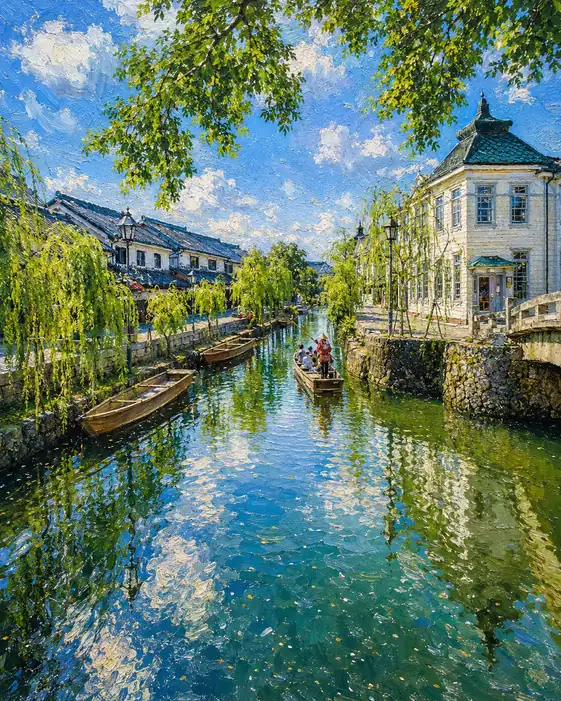 Summer Sky upon the Historic Canal of Kurashiki
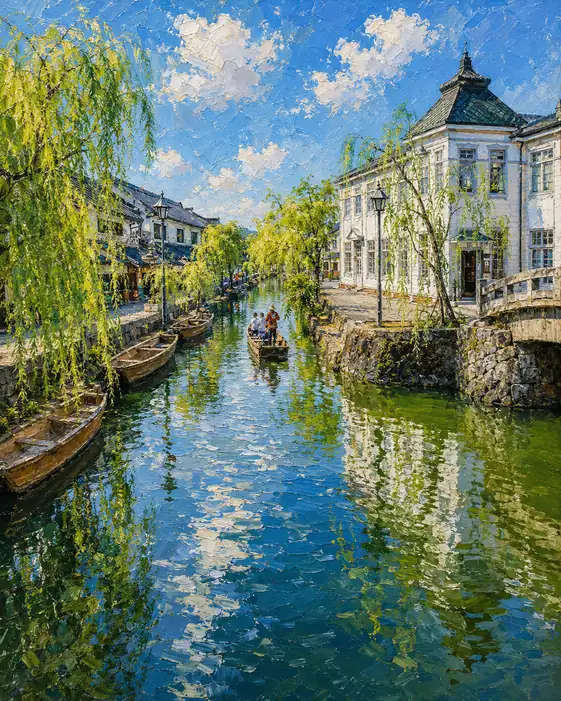 Azure Reflections on the Willow Canal of Kurashiki
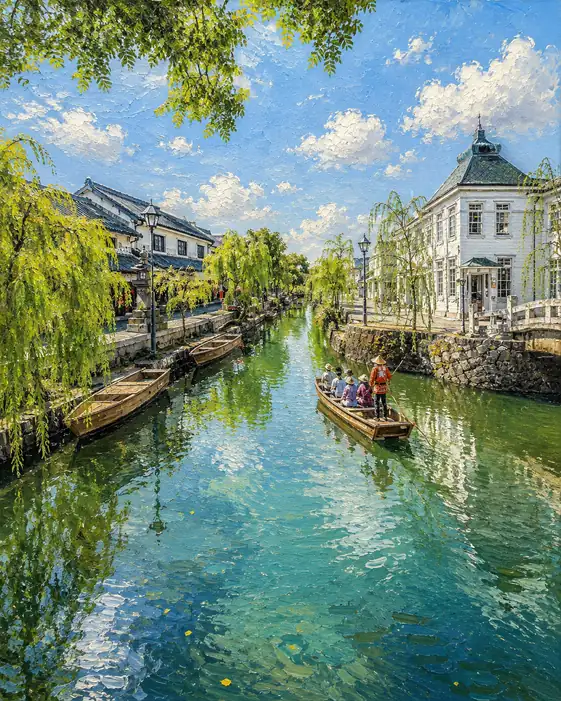 Punting along the Willow Canal of Kurashiki
 By Boat Between Willows and White Walls
 There Is Still Time to Wander
 An Afternoon Carried by Water
 Autumn Travels Beside Us
 Ripples of Forgotten Time
 Opening of the Sunlit Waterway
 Gondola through the Bougainvillea Canal