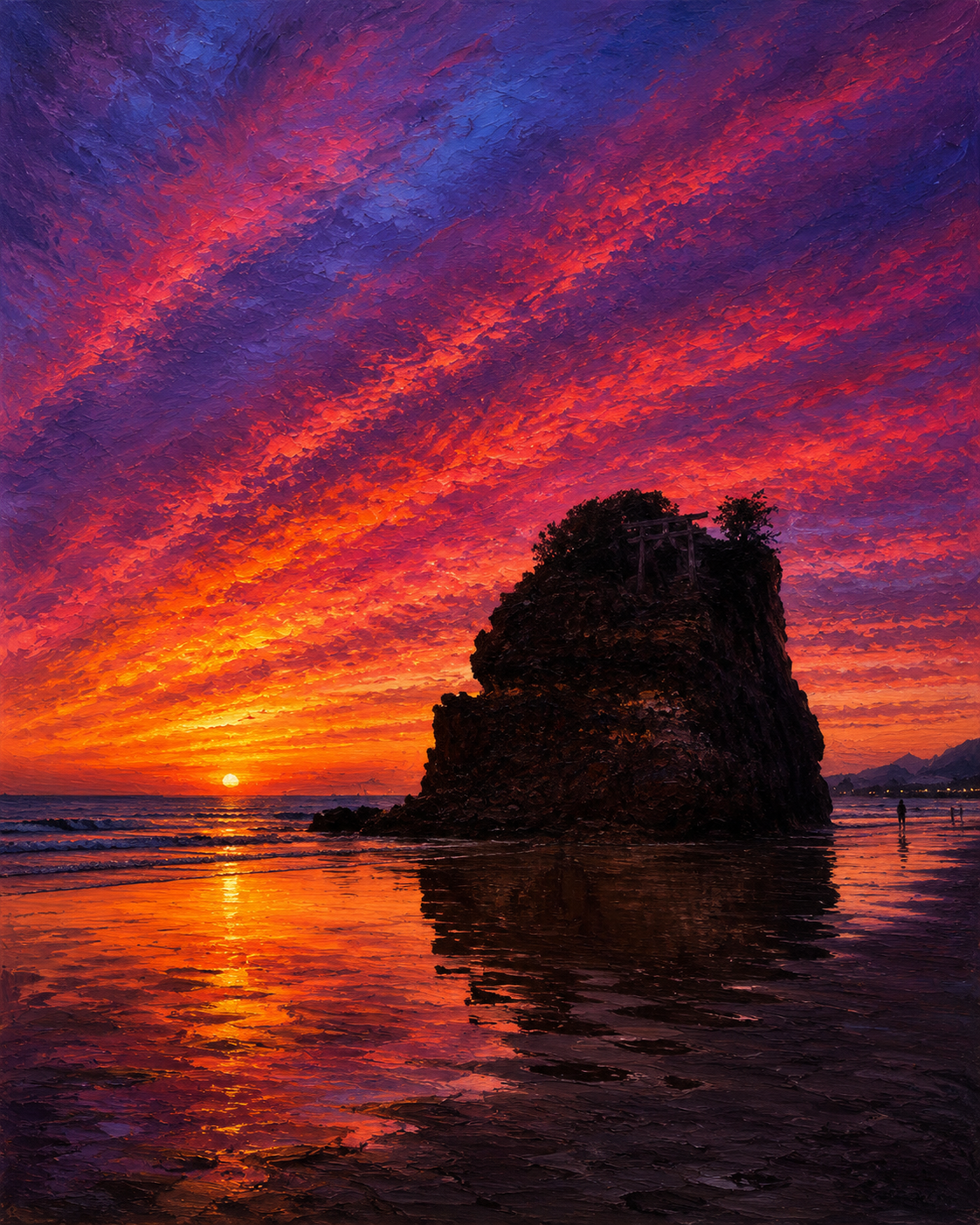
Burning Sunset over Inasa Beach and Benten-jima
Critique
Introduction This fiery sunset seascape silhouettes a shrine-crowned rock against sweeping red and violet clouds. The low sun, wet beach, and small human figures expand the sacred landmark into a shared coastal experience. Description An immense dark sea stack occupies center-right, with vegetation and a barely lit torii at its summit. The sun touches the left horizon, casting a long orange reflection across shallow water and wet sand. Waves form parallel bands behind the rock. The sky blazes with diagonal masses of scarlet, crimson, violet, and blue. At far right, two small figures stand near the water, backed by mountain silhouettes and a thin line of coastal lights. Analysis The rock's heavy vertical mass counters the cloud field's sweeping diagonals. Its reflection extends downward, creating a second dark form that divides the luminous foreground. Sun and rock establish opposing centers: one small and brilliant, the other large and nearly black. Orange reflection leads from the lower left toward the horizon, while purple shadows stabilize the right. Thick surface texture unifies cloud, water, and stone, but value contrast preserves their roles. The tiny figures provide scale without disrupting the monumental arrangement. Interpretation and Evaluation The scene frames sacred landscape as publicly witnessed. Figures do not approach the torii; they share tide and sunset below, suggesting reverence through co-presence. The sinking sun makes transformation unavoidable, while the rock endures but trembles in reflection. Coastal lights introduce ordinary settlement beyond the dramatic sky. Spectacle and habitation coexist. Intense color risks excess, yet central darkness gives gravity and prevents decorative exhilaration. Conclusion A black shrine rock between sky and shore turns sunset into a measure of endurance and change. Human scale remains amid spectacle.
Same Subcategory
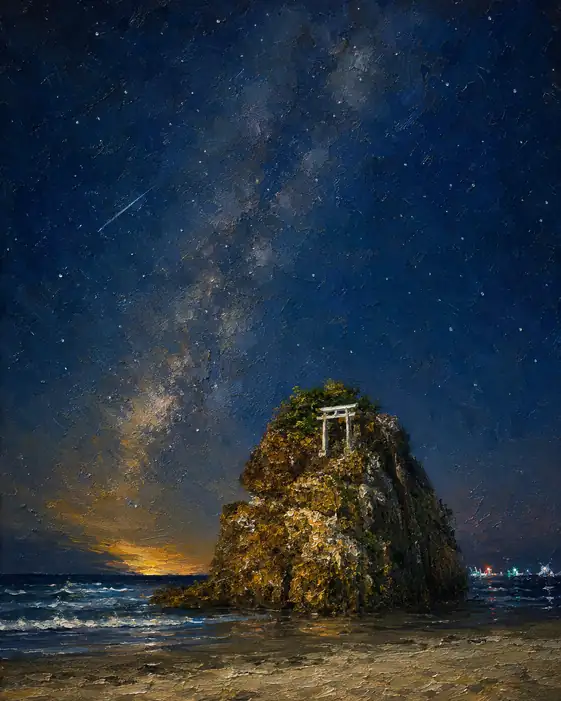 Impasto Nocturne of Benten-jima and the Milky Way
Similar Artworks
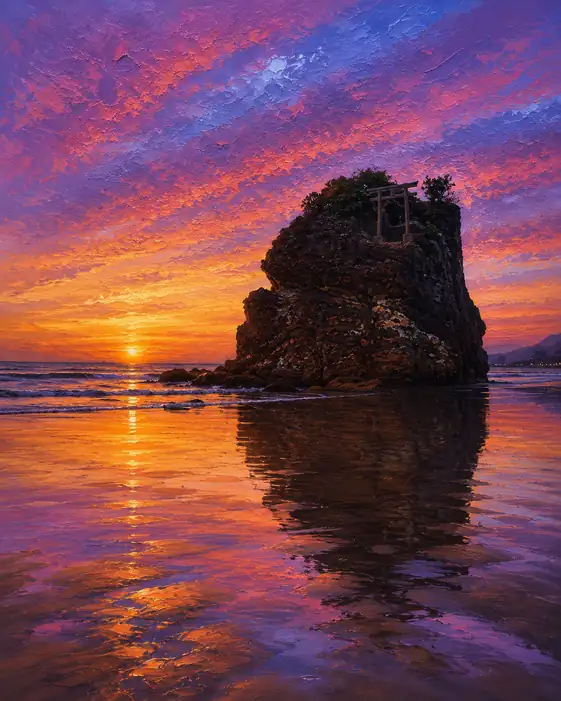 Sunset Glow and the Silhouette of Benten-jima
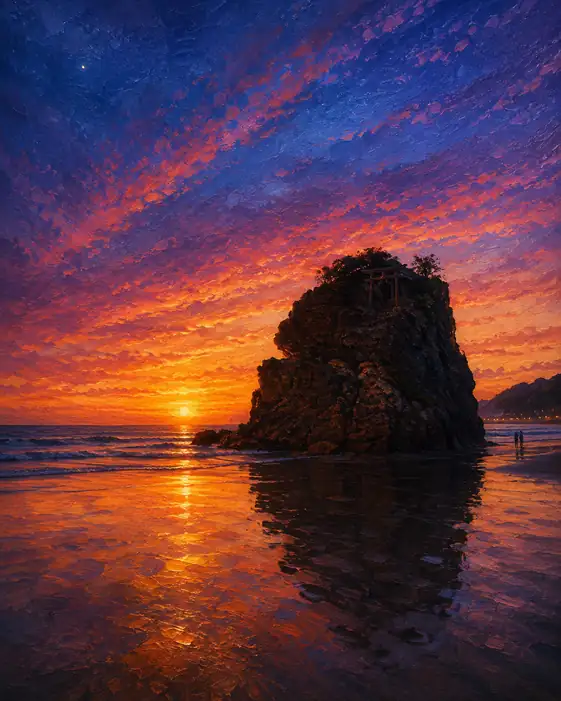 The Sunset Shore Awaits the Gods
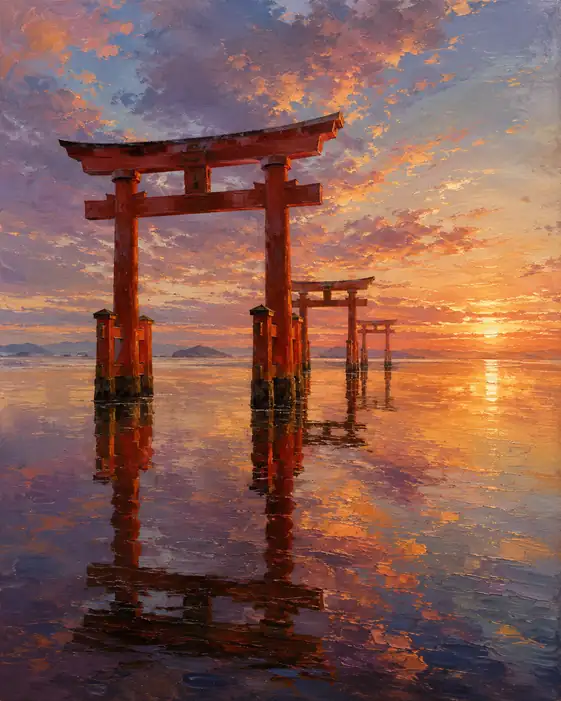 Sunset Passes Through Sacred Gates
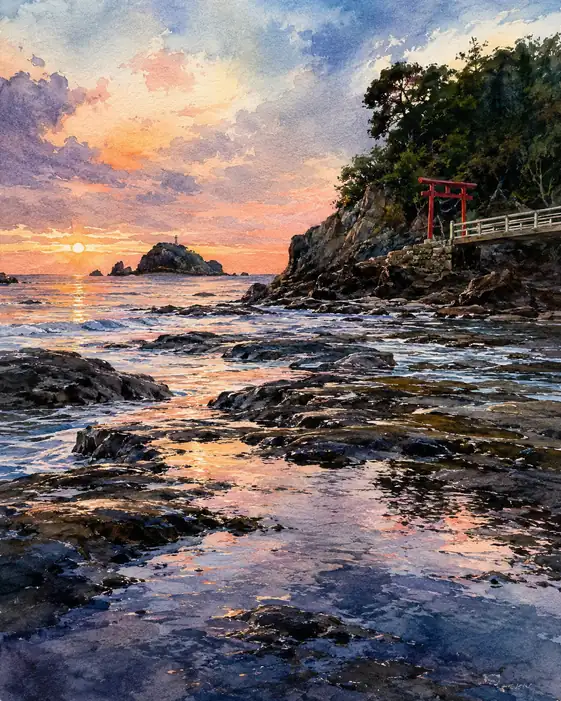 The Vermilion Gate at Evening's Edge
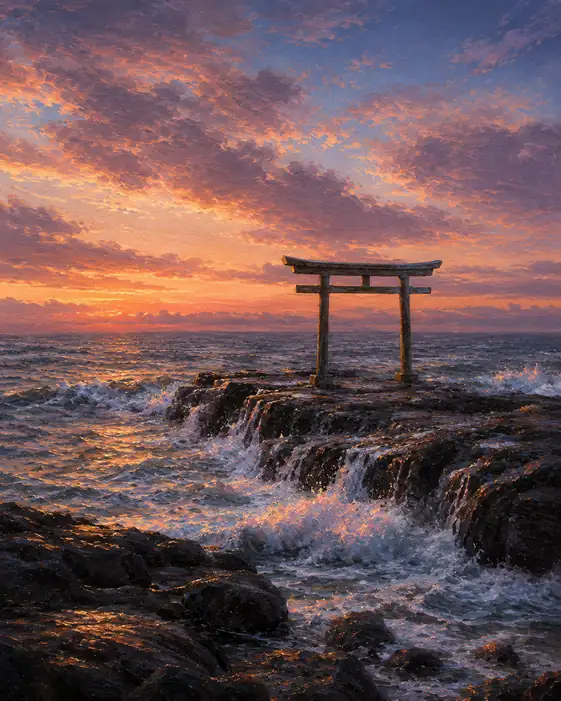 The Sea Spills Sunset at the Gate
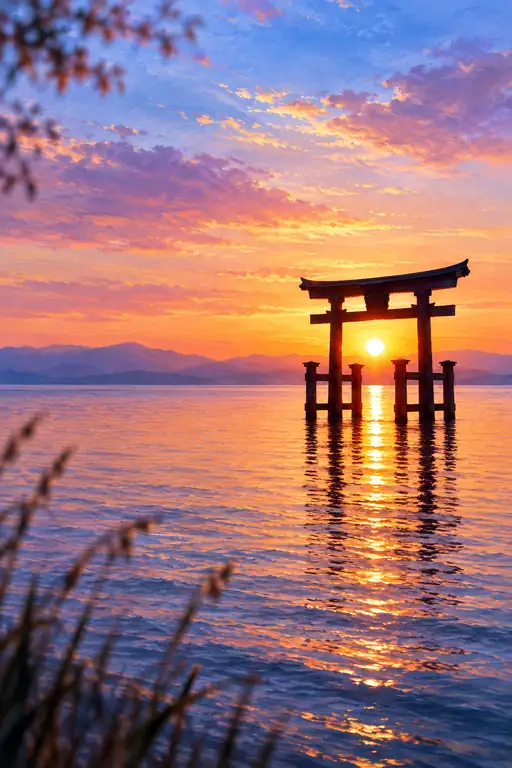 The Light Through Which I Pray
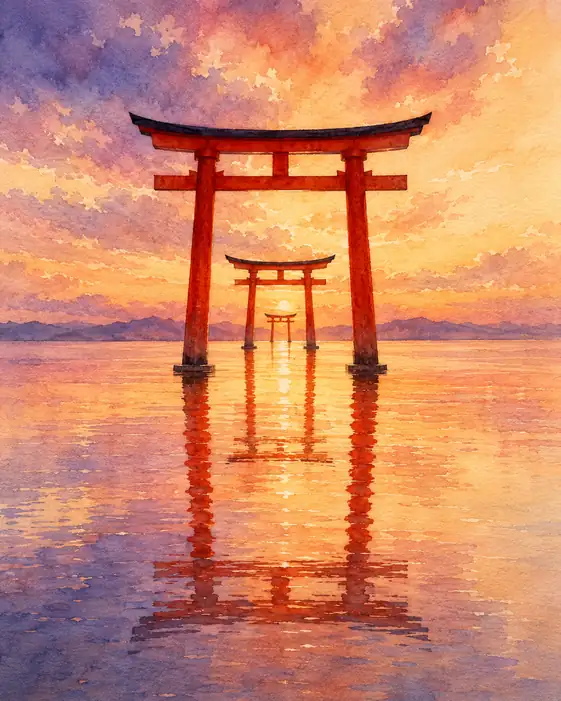 Gates to the Sunken Sun
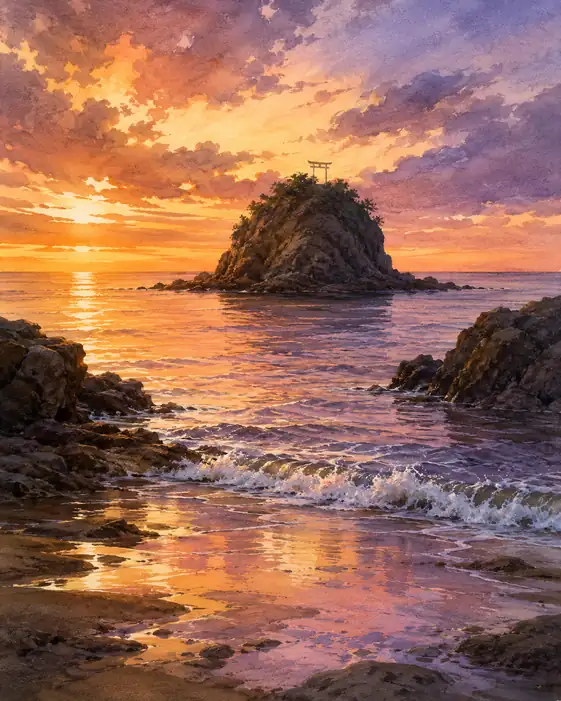 A Prayer Above the Burning Sea
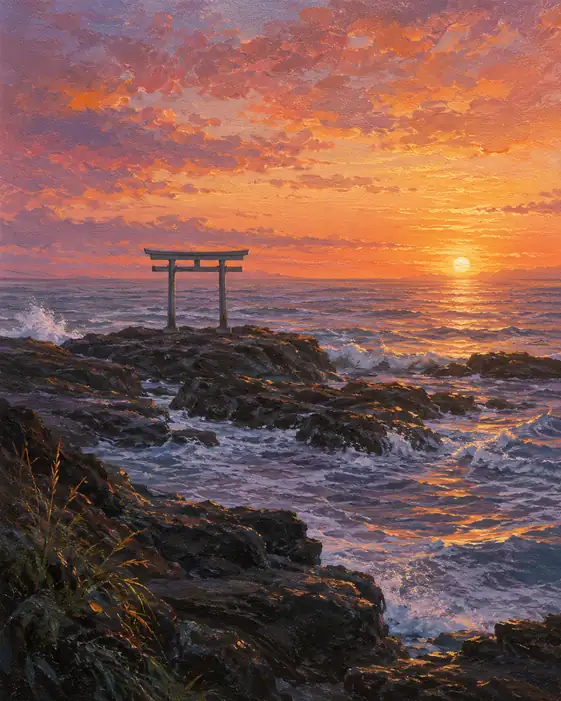 Dawn Opens a Channel Through Stone
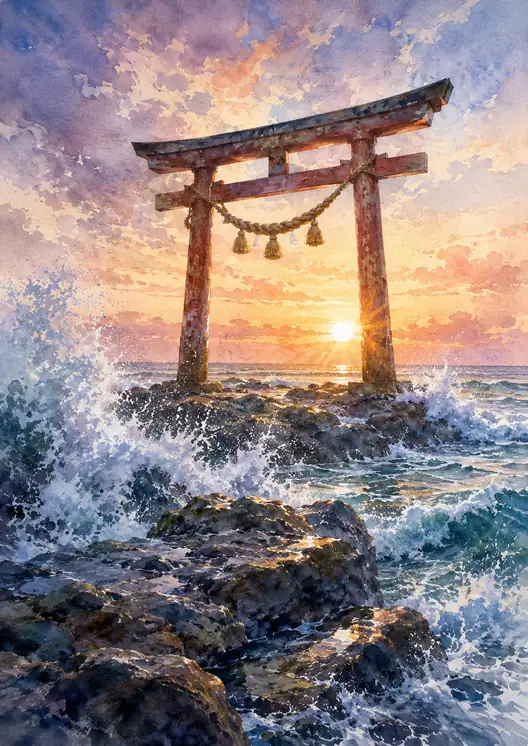 Dawn, When the Sea Tests Our Prayers