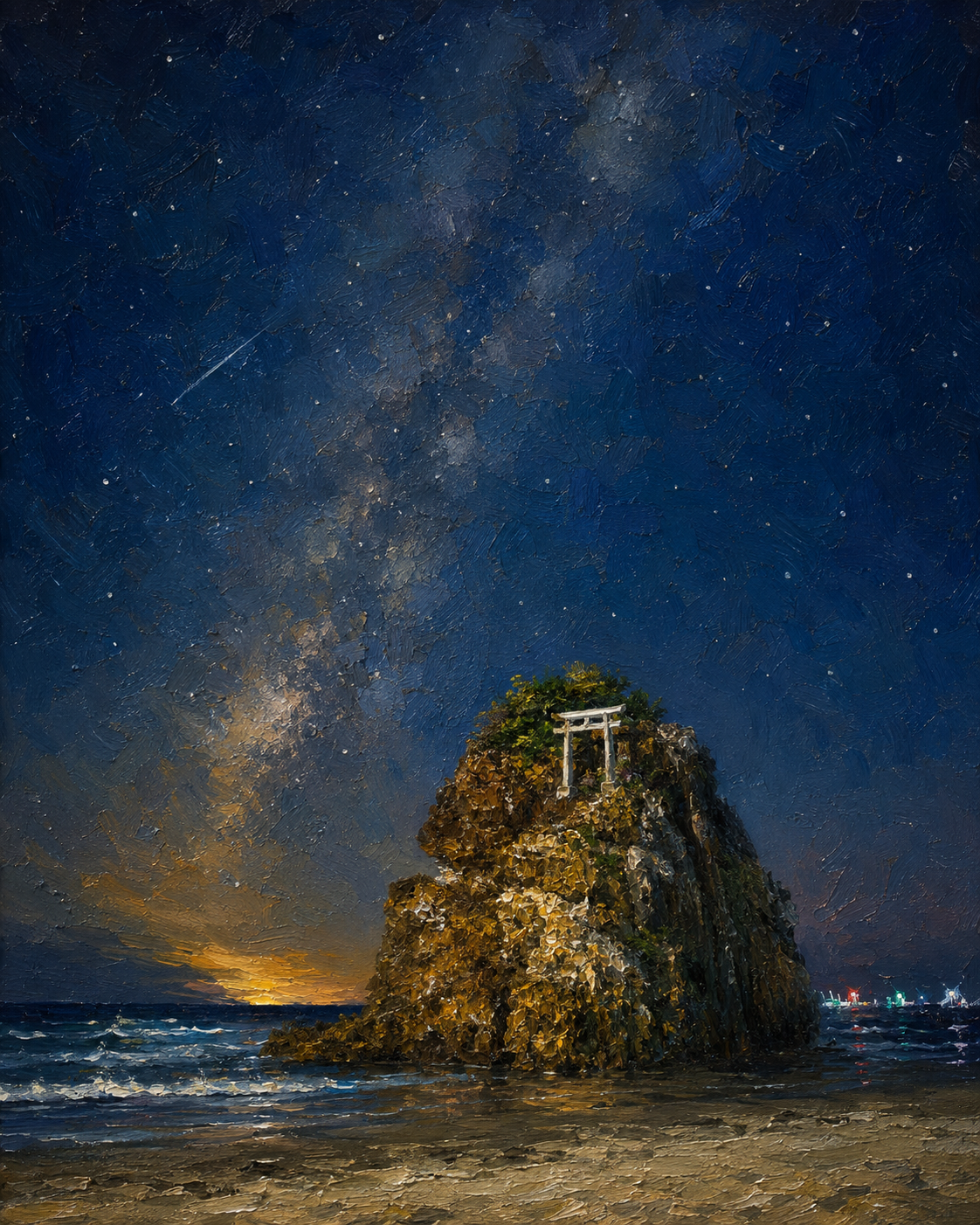
Impasto Nocturne of Benten-jima and the Milky Way
Critique
Introduction This restrained night version of the shrine rock scene emphasizes thick painterly surface and a sparsely articulated galaxy. The illuminated outcrop becomes a concentrated vessel of light within a deep blue field. Description A broad, craggy rock rises from shallow surf at center-right, its front planes modeled in amber, ocher, and black. Shrubs and a pale torii crown the summit. Dark sand and a thin wash of water span the foreground; small white waves enter from the left. The sky occupies most of the frame in layered ultramarine brushwork, with scattered stars, a muted vertical Milky Way, and one short streak at upper left. Colored harbor lights sit low at far right. Analysis The composition reduces celestial detail so the rock's material texture can dominate. Its triangular mass rises into the softer galactic column, while the torii provides a crisp rectilinear pause between irregular stone and sky. Warm illumination gathers on the rock and repeats in a low horizon glow at left. Blue links sea and atmosphere, whereas pale surf establishes a narrow horizontal rhythm. Visible strokes move in different directions across sky, stone, and water, making each substance distinct within one continuous painted surface. Interpretation and Evaluation Sacred presence appears through concentration rather than spectacle. The small torii gathers attention where rock meets sky. The subdued galaxy prevents equating shrine with cosmic center; reverence remains rooted in a weathered local object. Artificial light reveals selected facets, acknowledging that sight cannot fully possess the place. Harbor signals place contemporary navigation beside ritual orientation. Restraint works because darkness becomes active depth, not missing information. Conclusion Texture and alignment make the shrine rock a focus in sea and sky. Mystery endures.
Same Subcategory
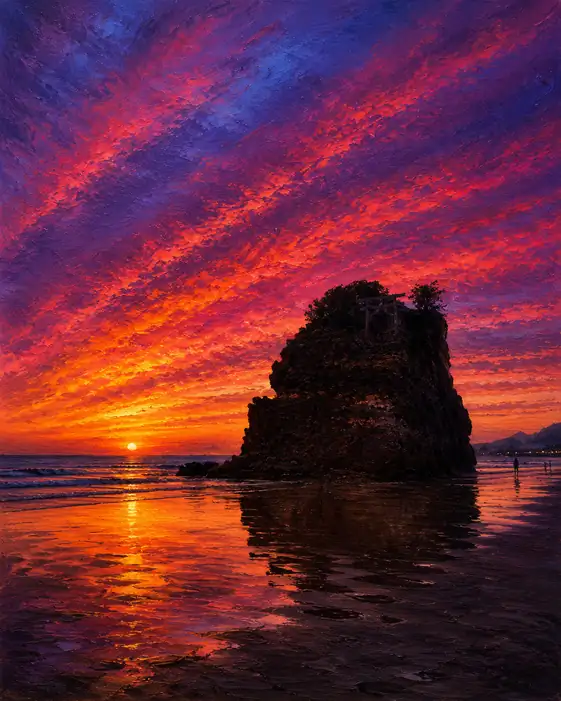 Burning Sunset over Inasa Beach and Benten-jima
Similar Artworks
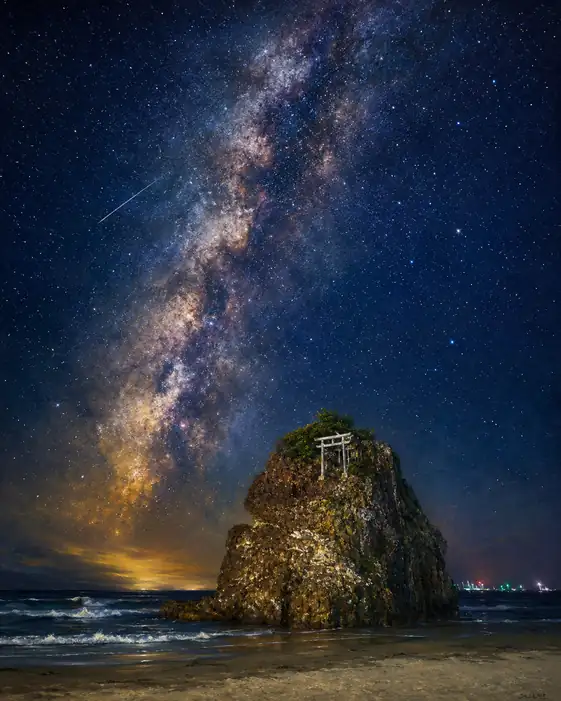 Shooting Star over the Sacred Coastal Torii
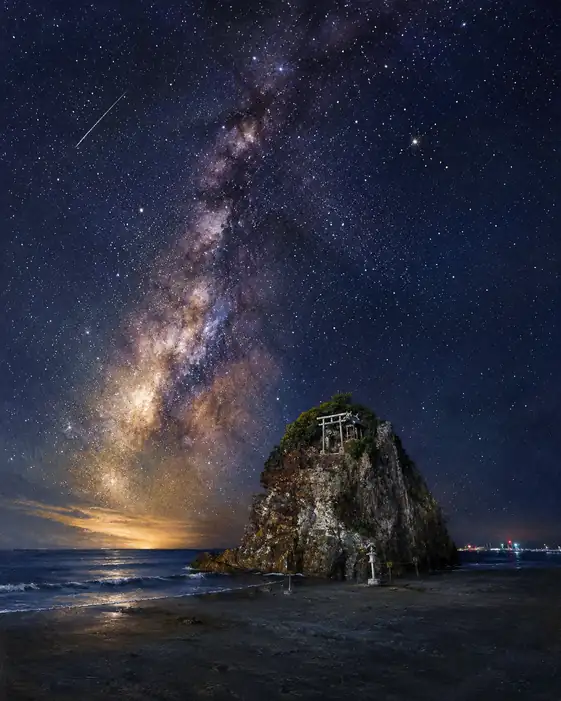 Celestial River above the Ancient Coastal Isle
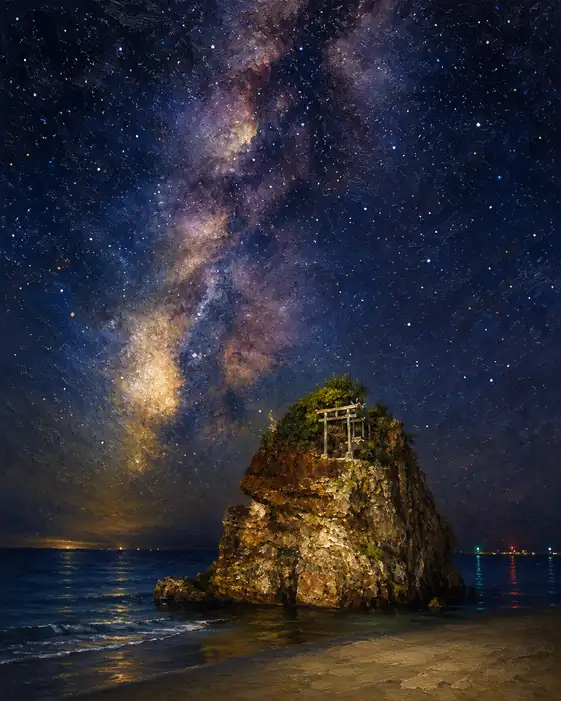 Torii of the Sacred Isle beneath the Milky Way
 Where the Sunset Meets the Roaring Tide
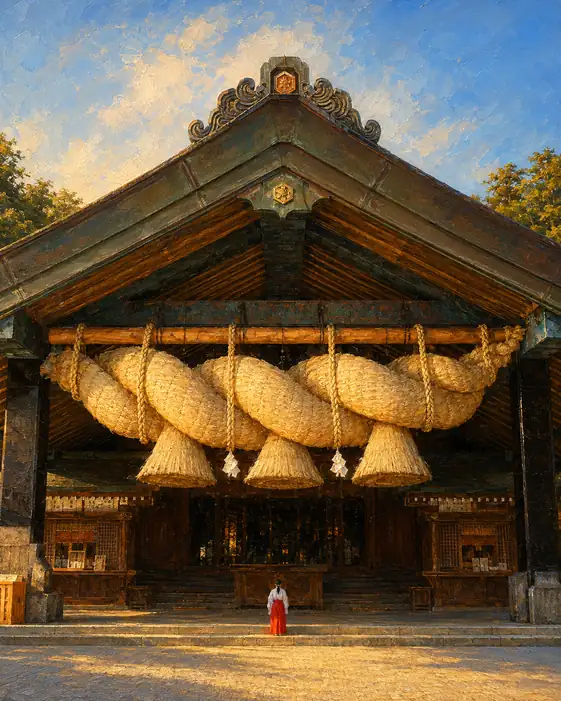 Golden Radiance on the Great Shimenawa
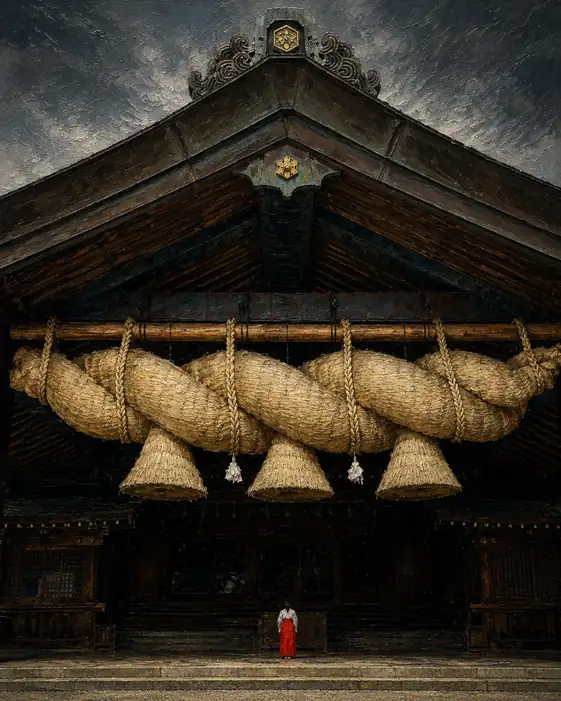 Solemn Gables and the Great Shimenawa
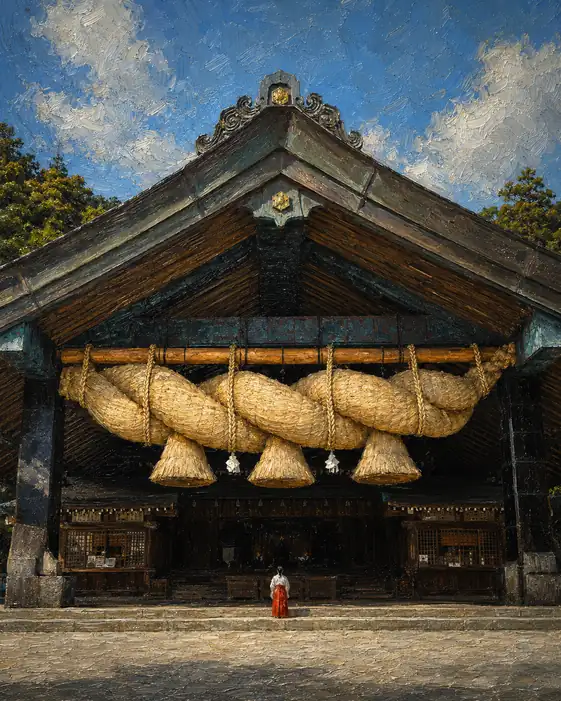 Maiden before the Sacred Shimenawa
 Sunset Horizon Sealed in the Traveler's Lantern
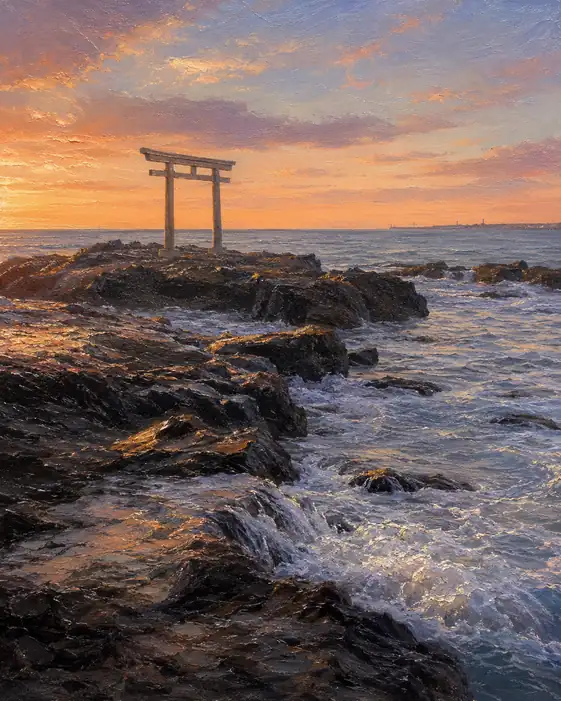 The Shore Teaches the Gate to Belong
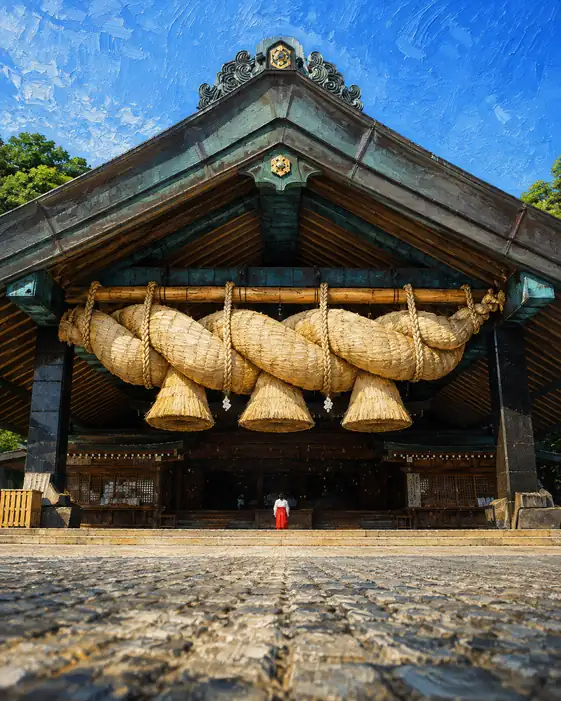 Izumo, a Prayer Binding the Sacred Realm