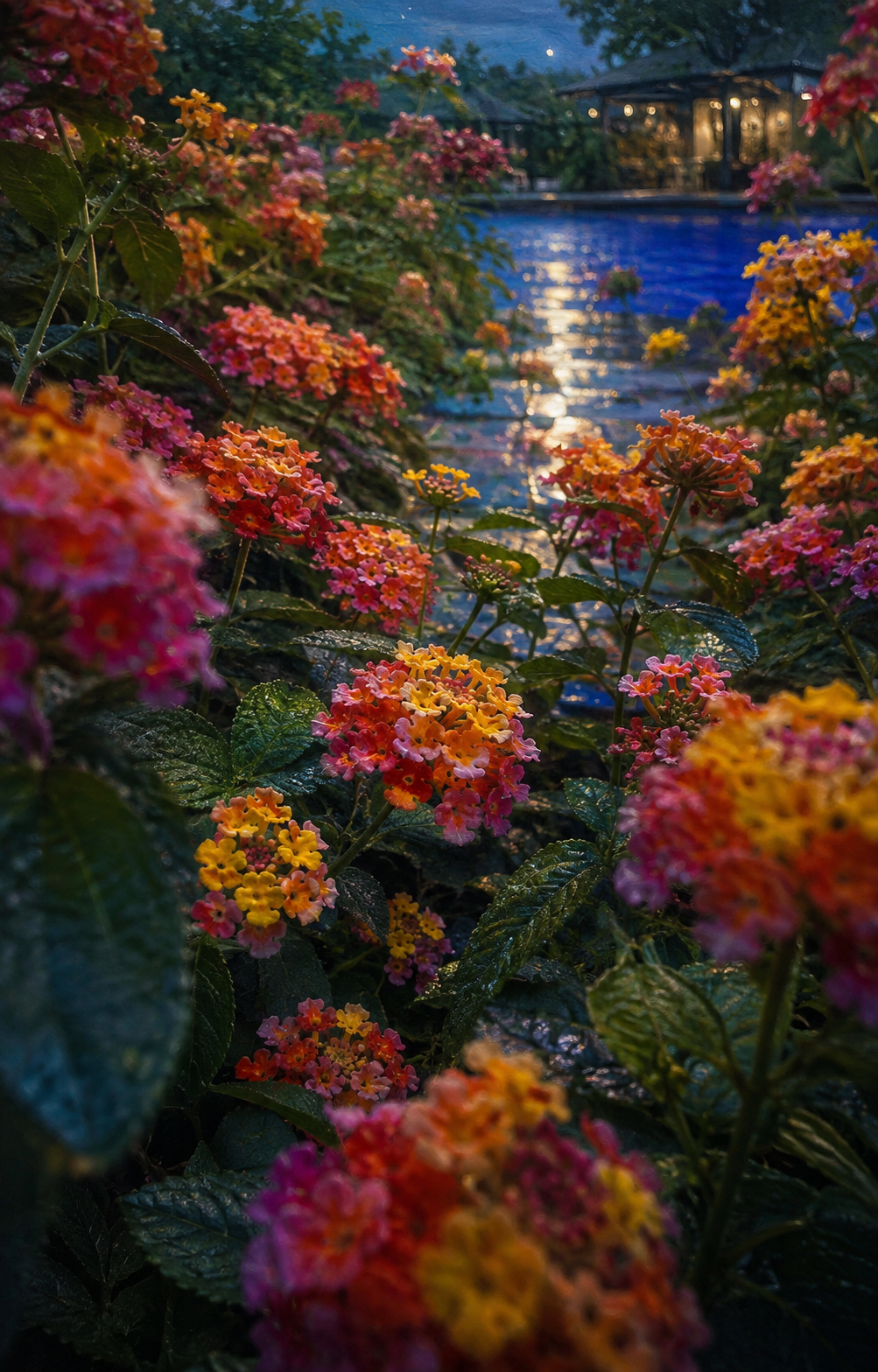
Lantana Blossoms by the Twilight Poolside
Critique
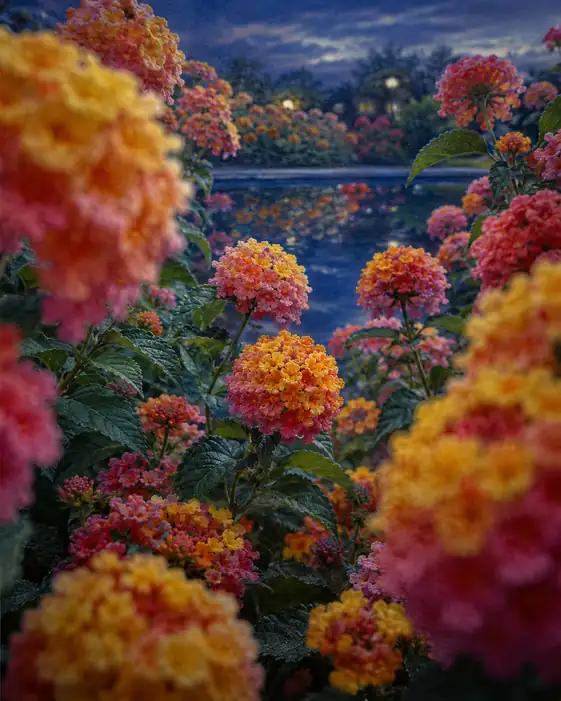
Introduction This twilight poolside view surrounds blue water and a warmly lit pavilion with dense lantana. The garden becomes an immersive threshold where floral color mediates between evening darkness and inhabited light. Description Clusters of orange, yellow, coral, and pink lantana fill the foreground and both sides, emerging from broad wet leaves. Several nearest blooms are softly blurred, while middle clusters and droplets appear sharper. A pool occupies the central distance in saturated blue, crossed by a vertical trail of gold reflection. Beyond it, a low pavilion or house glows through windows beneath dark trees. One pale moon or bright point hangs in the dusky sky. Analysis Layered focus creates a tunnel through vegetation toward architecture. Warm flower clusters repeat the pavilion lamps at multiple scales, while the blue pool supplies the principal cool interval. The gold reflection forms a vertical axis connecting water to the central light, countered by stems leaning inward from both banks. Wet leaves carry small blue and white highlights that keep the shadowed foreground active. Softness at the lower and side edges gives bodily proximity, whereas the sharper middle plane preserves a navigable route. Interpretation and Evaluation Hospitality is approached through living density rather than displayed. The pavilion promises shelter, but flowers and water make arrival gradual. Saturated colors persist after daylight, suggesting a garden reanimated by artificial illumination. Human light travels beyond architecture across water and vegetation. Moisture, darkness, and growth absorb the built glow, preventing a simple contrast between nature and luxury. This reciprocity gives warmth without losing nocturnal mystery. Conclusion Floral enclosure, complementary color, and a luminous path make the poolside garden inviting. Evening light is shared by dwelling, reflection, and leaves.
Same Subcategory
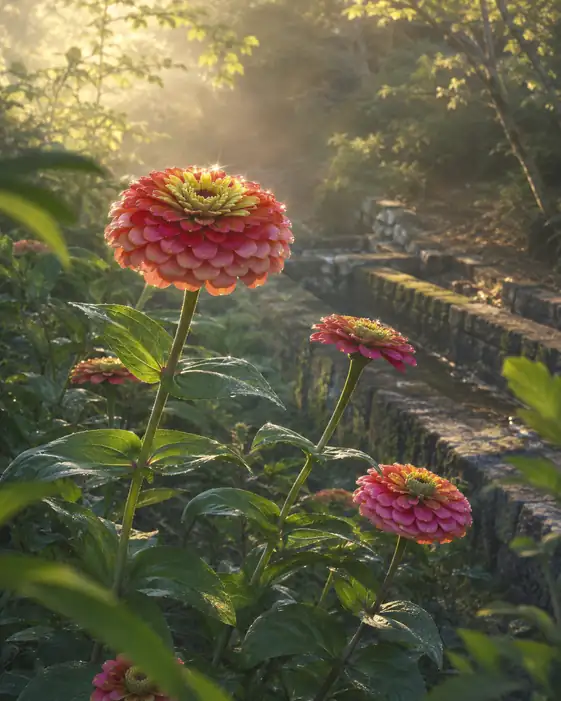 Sunlit Zinnias beside the Mossy Stone Channel
Similar Artworks
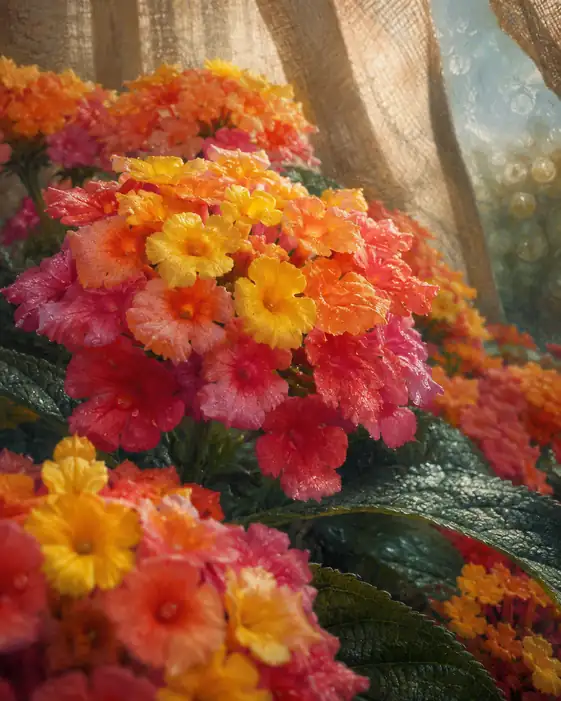 Morning Mist upon Lantana Clusters in the Greenhouse
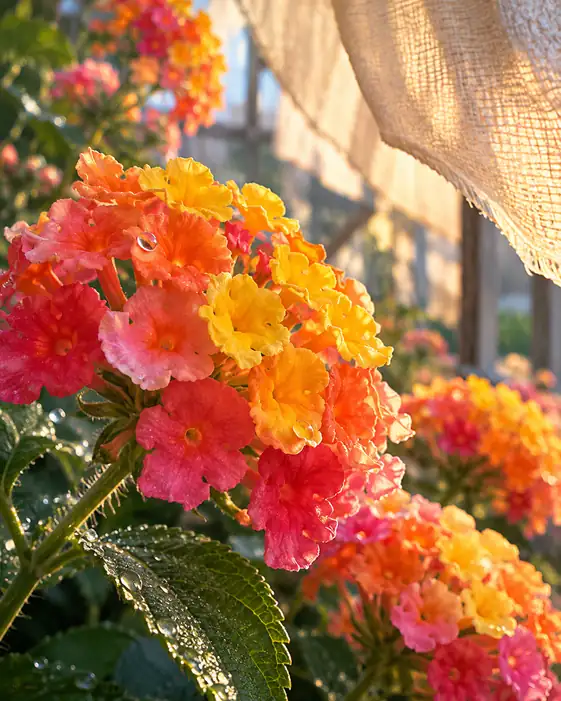 Dewy Lantana Blossoms in the Morning Conservatory
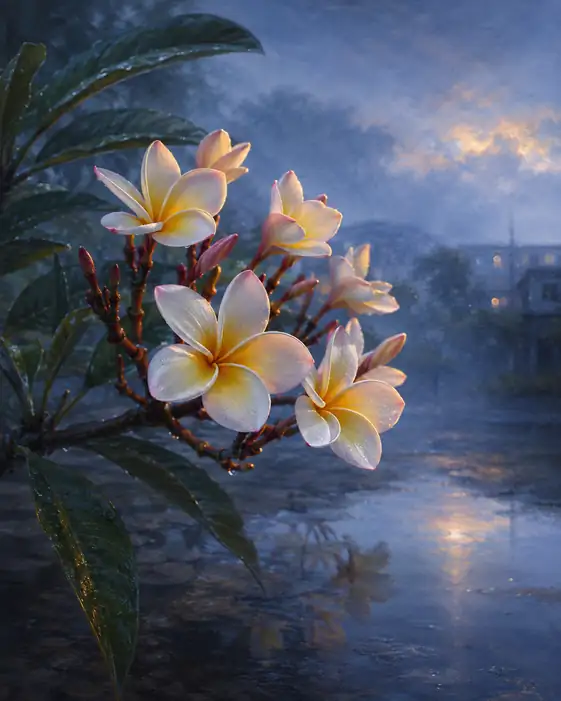 Plumeria Blossoms reflected on the Wet Pavement at Dusk
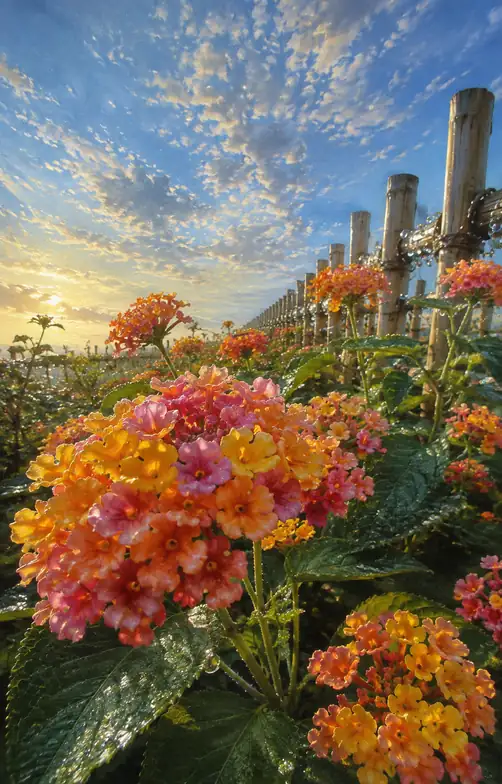 Lantana Blossoms along the Bamboo Fence under Morning Clouds
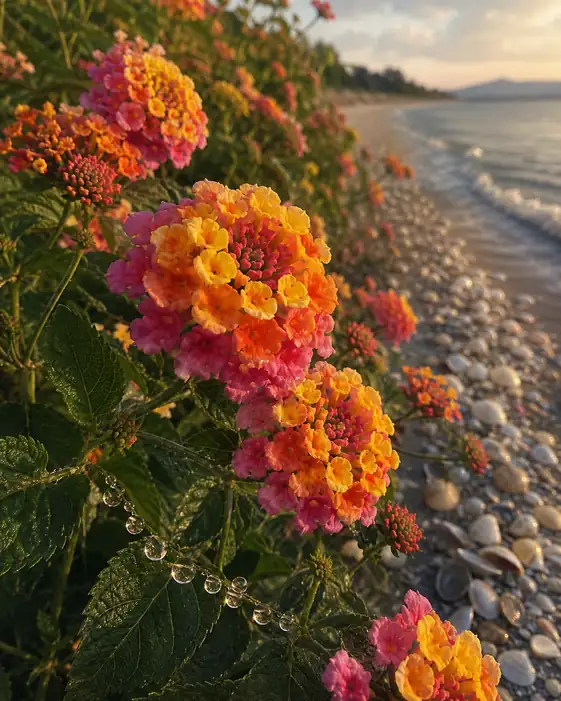 Lantana and Dewdrops on the Shell-Strewn Beach at Sunset
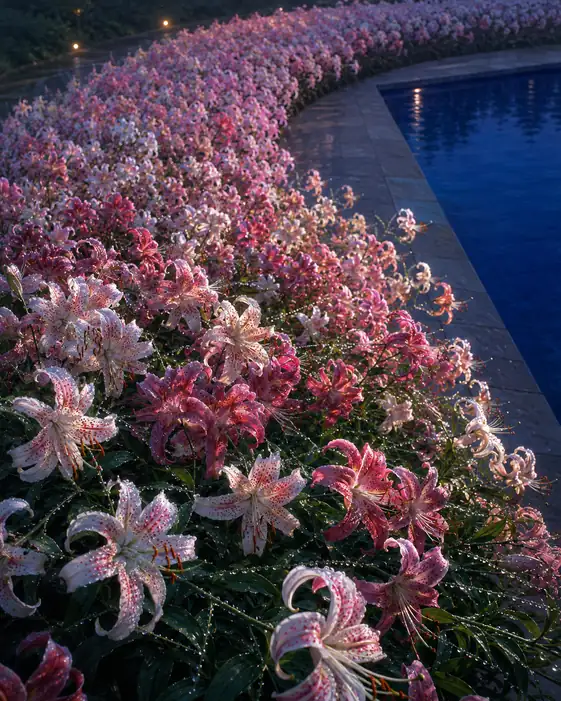 Arching Showy Lilies along the Poolside
 Lanterns of the Evening Shore
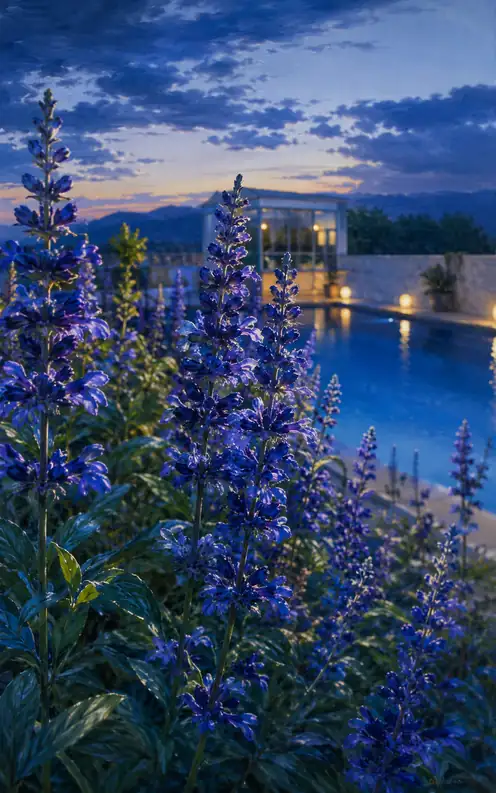 Blue Salvia by the Twilight Poolside
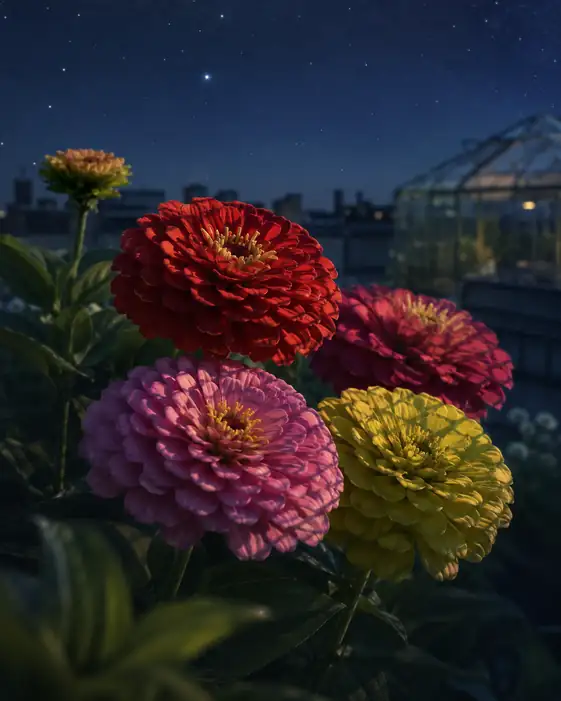 Zinnias beneath the Starlit Sky and Greenhouse
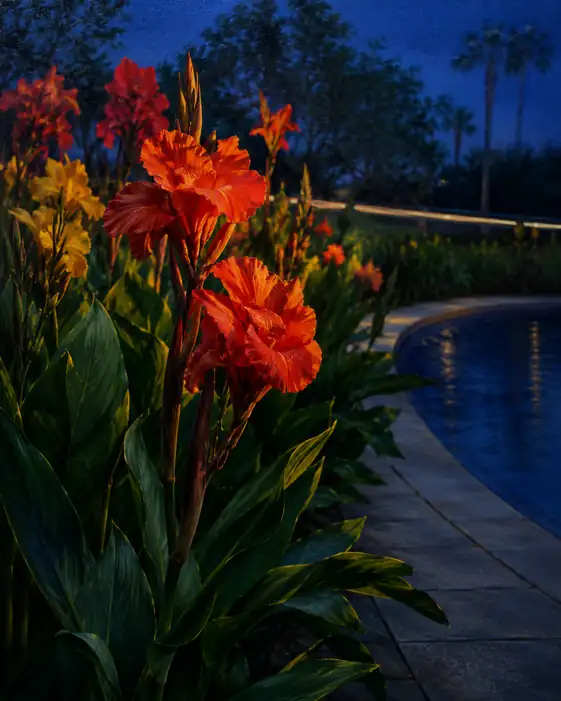 Glowing Canna Lilies in the Twilight Garden