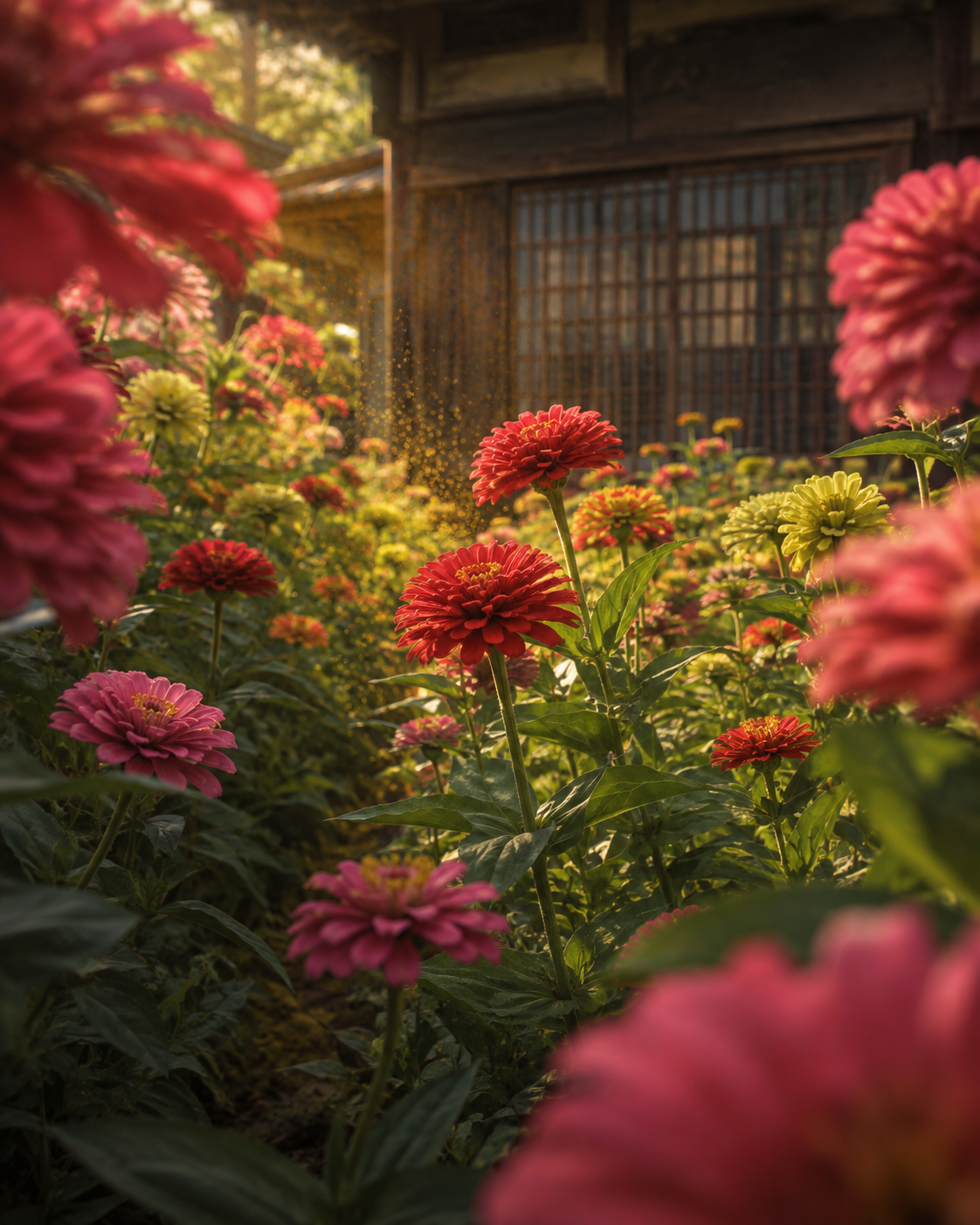
Zinnias by the Traditional Latticed House in Evening Light
Critique
Introduction This low garden view frames a sunlit stand of zinnias with blurred blossoms and an old wooden house. A cloud of golden particles makes still cultivation feel animated by invisible air. Description Red zinnias on tall stems occupy the sharp center, accompanied by pink and pale yellow flowers at different heights. Large out-of-focus blooms press in from the left, right, and lower edge. Golden specks hover above the central plants. Behind them, a dark timber façade with gridded sliding doors spans the upper frame, while a woven screen at left catches sunlight. Leaves create a dense green floor beneath the flowers. Analysis The blurred perimeter forms a floral aperture through which the central stems are discovered. Vertical plants answer the wooden door lattice, but their irregular spacing softens architectural order. Red flowers advance against deep brown, while yellow-green blooms and sunlit particles create a luminous middle zone. The low viewpoint grants the stems bodily height, and selective focus separates multiple depths within a crowded bed. Golden specks connect hard sunlight near the screen to the shaded façade, rendering the air itself visible. Interpretation and Evaluation The garden becomes a threshold of habitation. Screens, lattice, and shade regulate how flowers are perceived rather than merely backdropping nature. Airborne particles may be pollen, insects, dust, or spray; ambiguity conveys exchange better than identification. Foreground blur places the viewer inside the planting. From this embodied position, cultivated order remains evident while growth interrupts and reframes straight architecture. Conclusion Layered focus, vertical correspondence, and illuminated air link flower bed to dwelling. Garden and house become mutually shaping shelters.
Same Subcategory
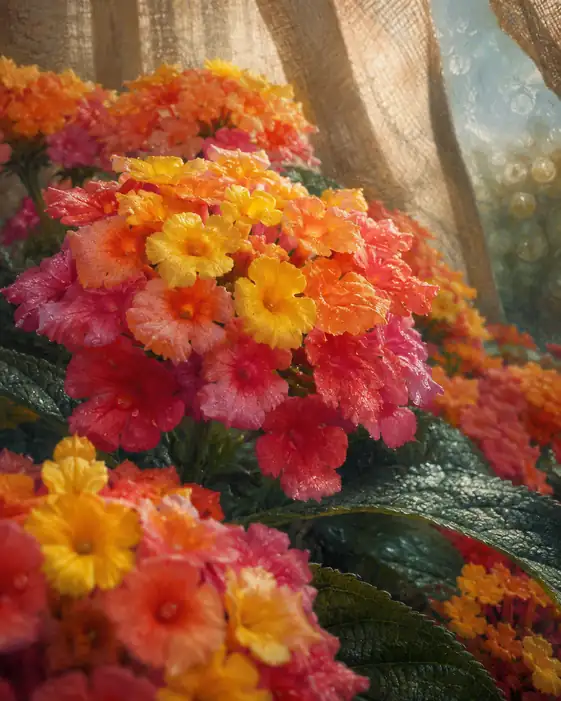 Morning Mist upon Lantana Clusters in the Greenhouse
Similar Artworks
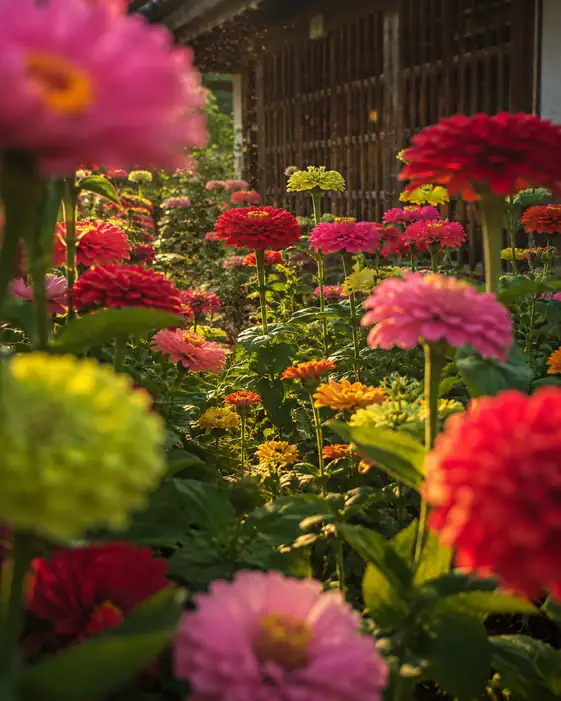 Zinnias before the Lattice Doors at Sunset
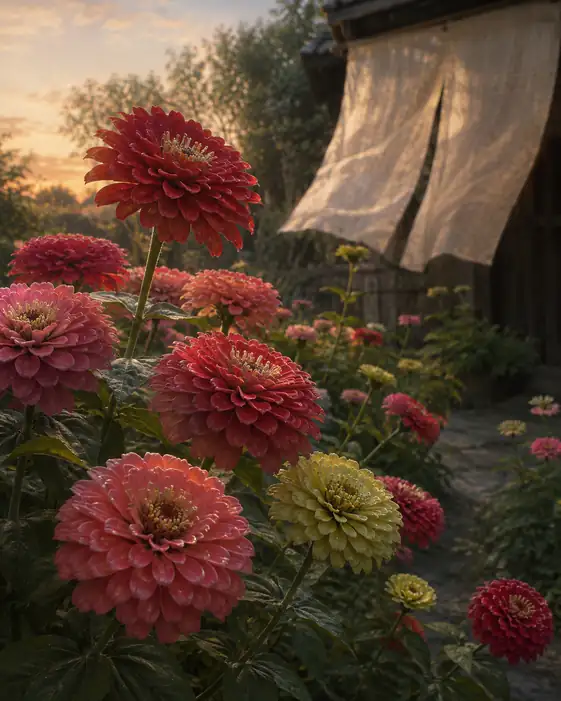 Zinnias beneath the Wind-Blown Noren Curtain
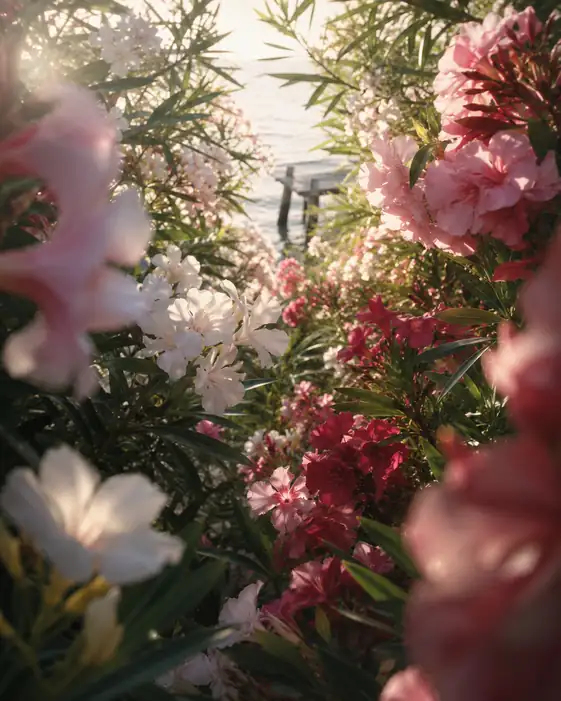 Path of Oleanders leading to the Coastal Pier
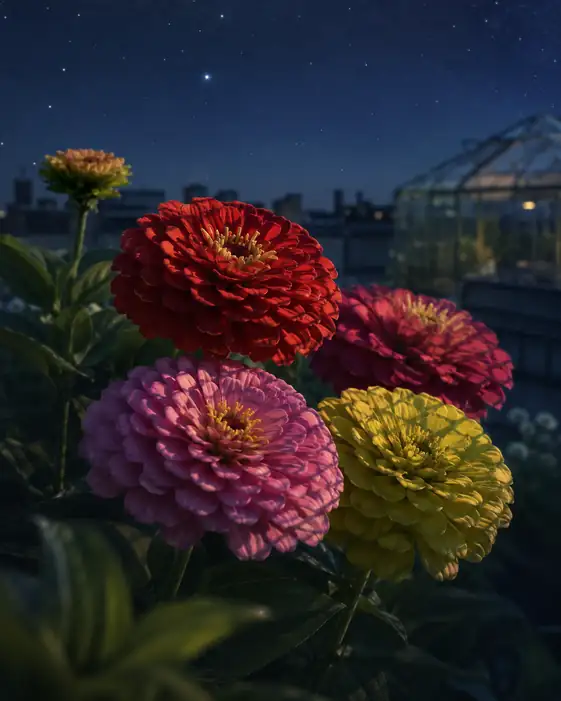 Zinnias beneath the Starlit Sky and Greenhouse
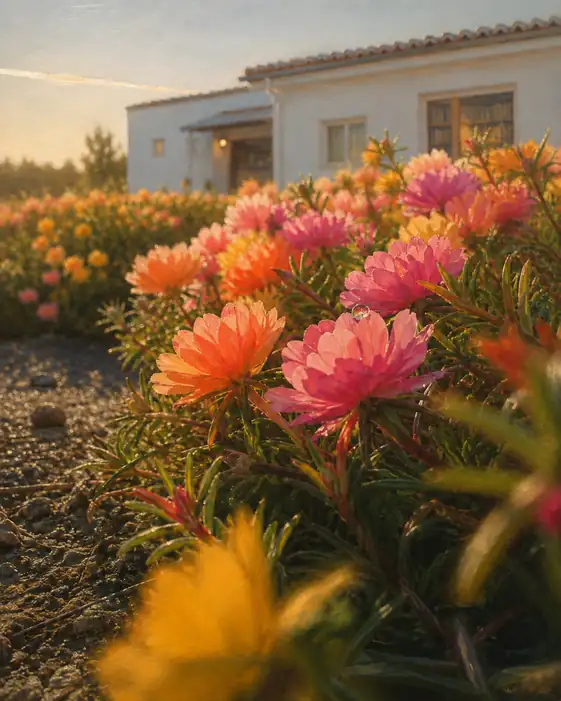 Moss Roses before the Sunlit Cottage at Dusk
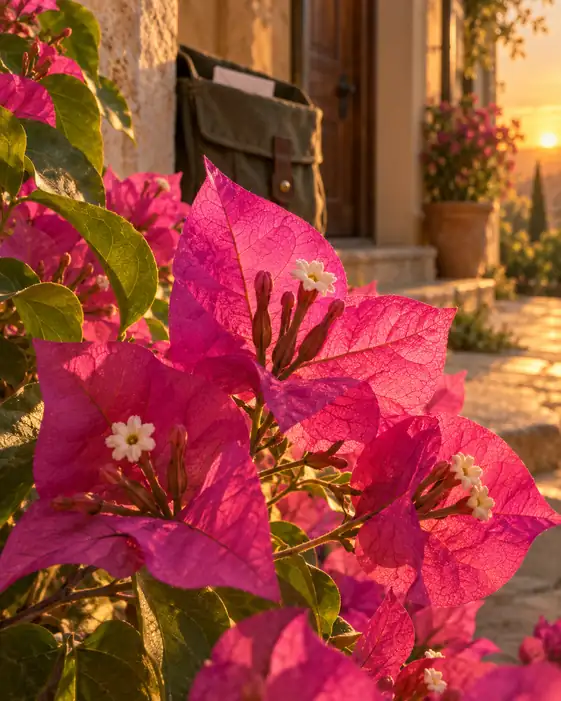 Evening's Letter, Still Unopened
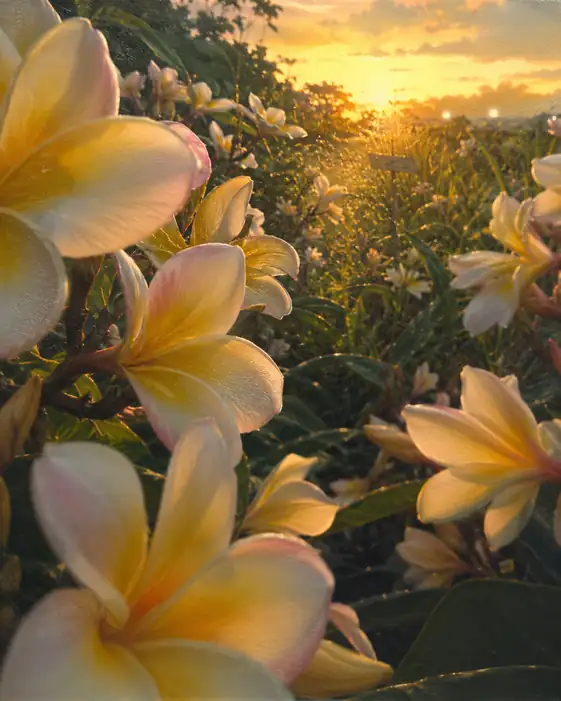 Golden Sunset Glow upon the Plumeria Garden
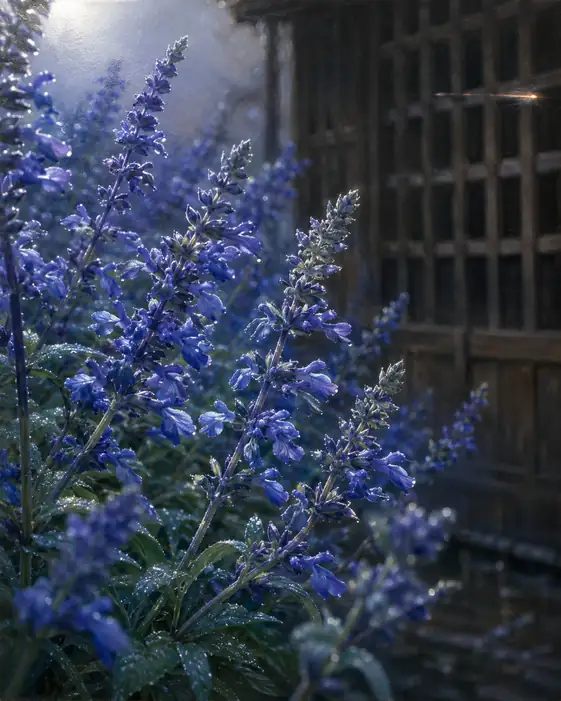 Moonlight and Blue Salvia by the Latticed Wall
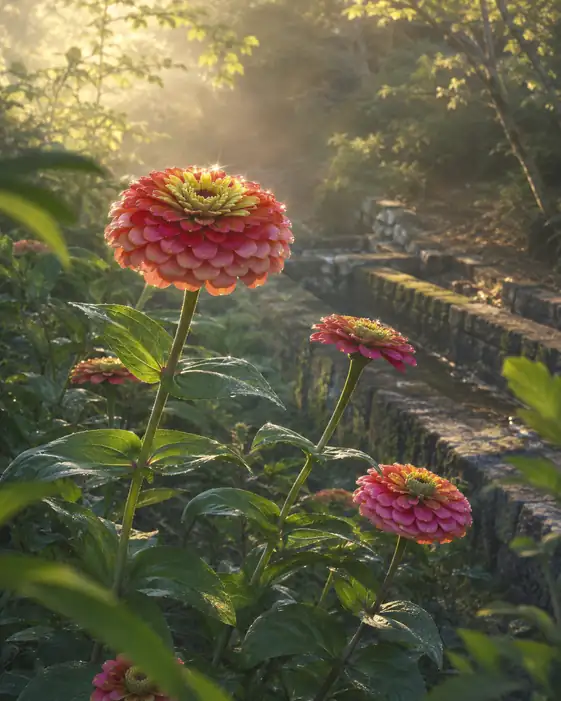 Sunlit Zinnias beside the Mossy Stone Channel
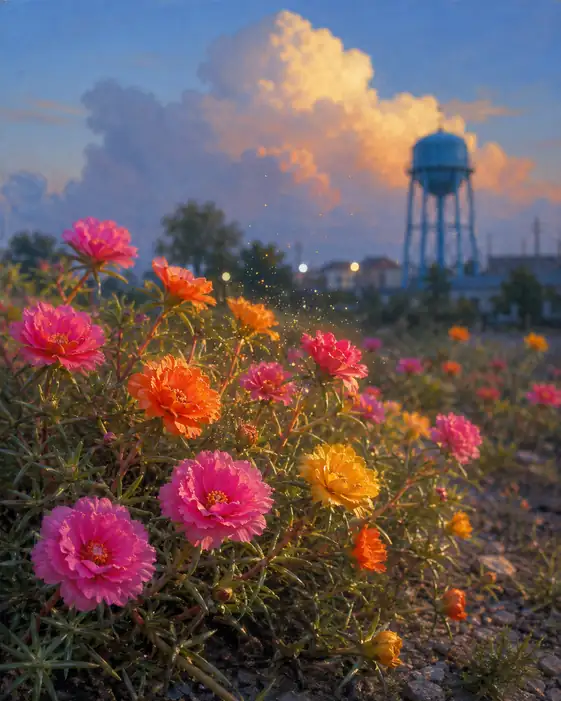 Sunset Cumulonimbus and Moss Roses by the Water Tower