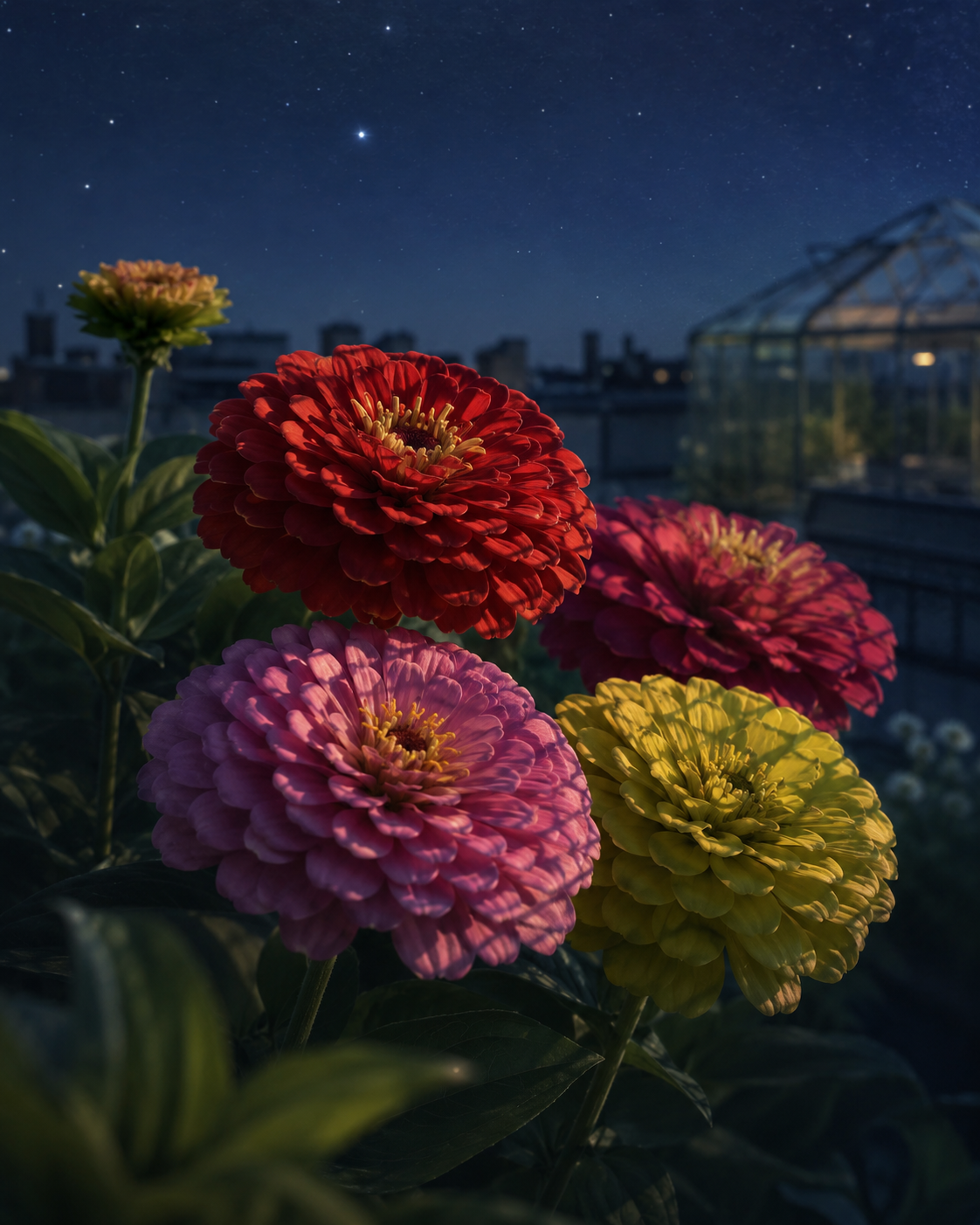
Zinnias beneath the Starlit Sky and Greenhouse
Critique
Introduction This nocturnal garden portrait places four richly layered zinnias beneath a star-filled sky and beside a dim greenhouse. The flowers acquire an improbable celestial dignity without losing their physical weight. Description A large red bloom dominates the upper foreground, with pink, yellow-green, and darker magenta blossoms grouped below and behind it. Their concentric petals and pale stamens catch narrow bands of warm light. Broad leaves and stems sink into deep green shadow. At right, a glass greenhouse recedes softly with one interior lamp. Low urban silhouettes cross the horizon, while numerous stars and one brighter point fill the blue-black sky. Analysis Selective illumination models each flower as a rounded volume rather than a flat disk. Red occupies the visual apex, while pink and yellow establish a triangular base. Shallow depth separates this compact cluster from softened architecture, and the greenhouse's angular grid contrasts with radial petals. Warm highlights travel across flowers in irregular strips, suggesting filtered artificial light. The high horizon leaves generous sky above, allowing scattered stars to echo stamens at a vastly different scale. Dark leaves provide a continuous terrestrial foundation. Interpretation and Evaluation The picture links cultivation with astronomy. The greenhouse protects growth, but here it recedes while exposed blossoms command night. Their concentric forms resemble earthly constellations, though tactile petals keep the analogy concrete. Limited light suggests selective care; parts of every flower remain unknown. The urban horizon situates wonder within habitation rather than wilderness. Bloom and star gain quiet equality as concentrated light within darkness. Conclusion Sculptural light, radial form, and sky connect the cultivated bed to the cosmos. Night preserves intimacy and scale.
Same Subcategory
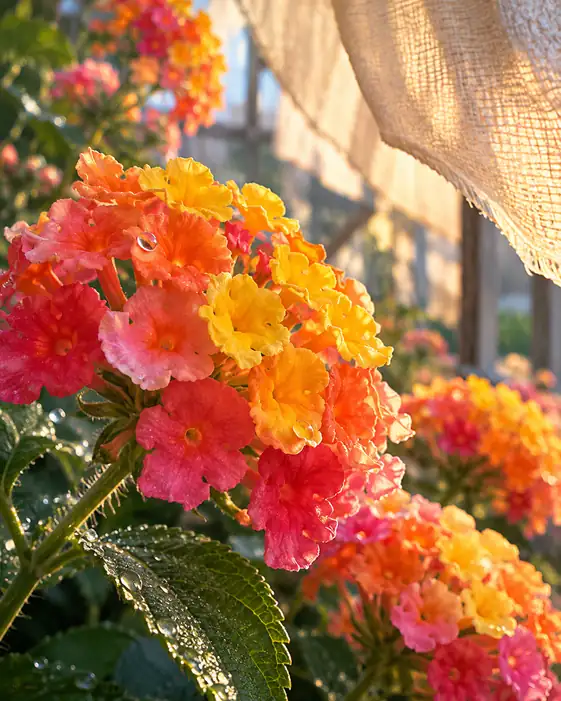 Dewy Lantana Blossoms in the Morning Conservatory
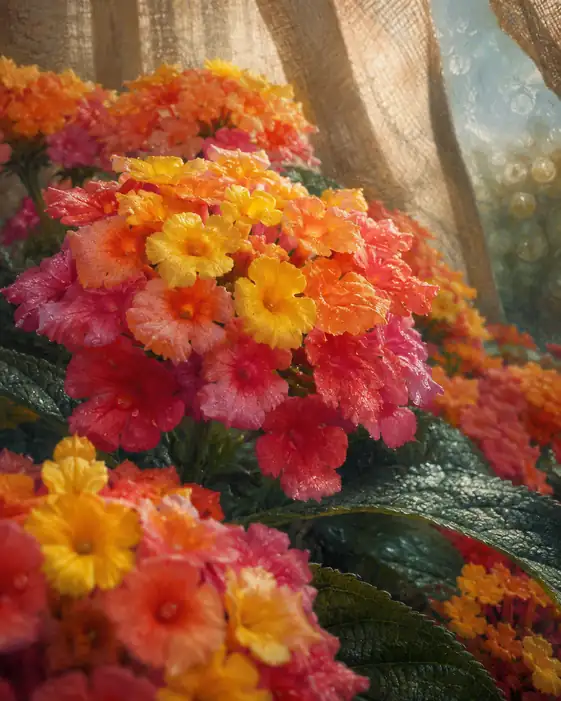 Morning Mist upon Lantana Clusters in the Greenhouse
Similar Artworks
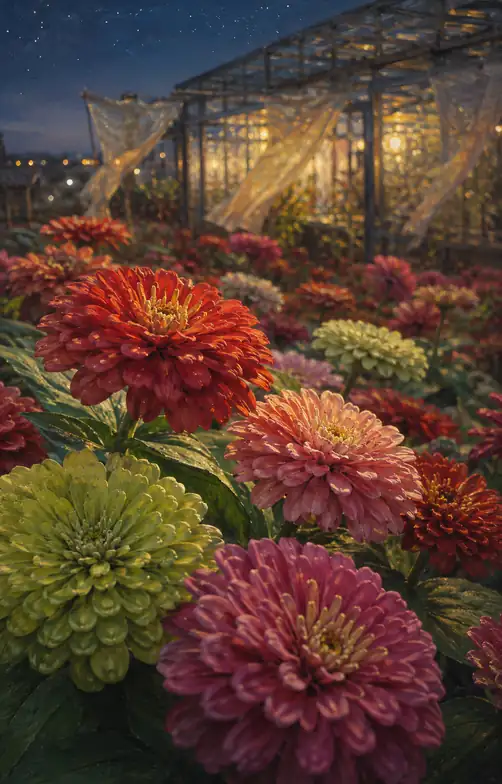 Zinnias in the Greenhouse Twilight
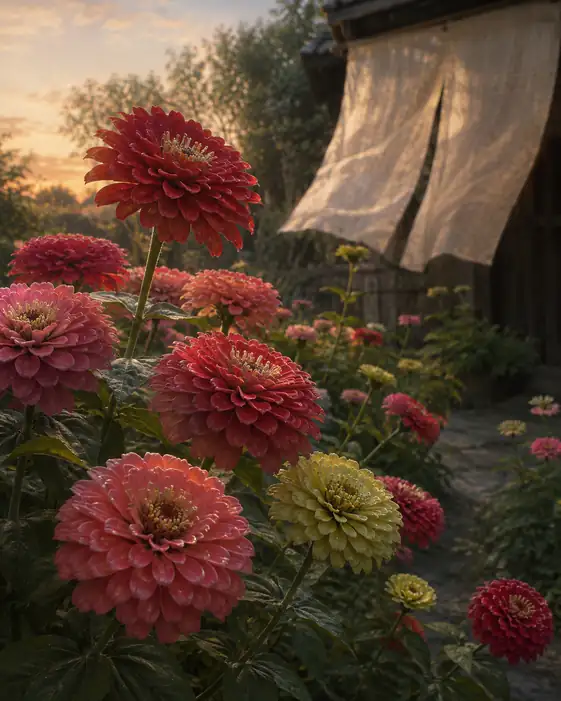 Zinnias beneath the Wind-Blown Noren Curtain
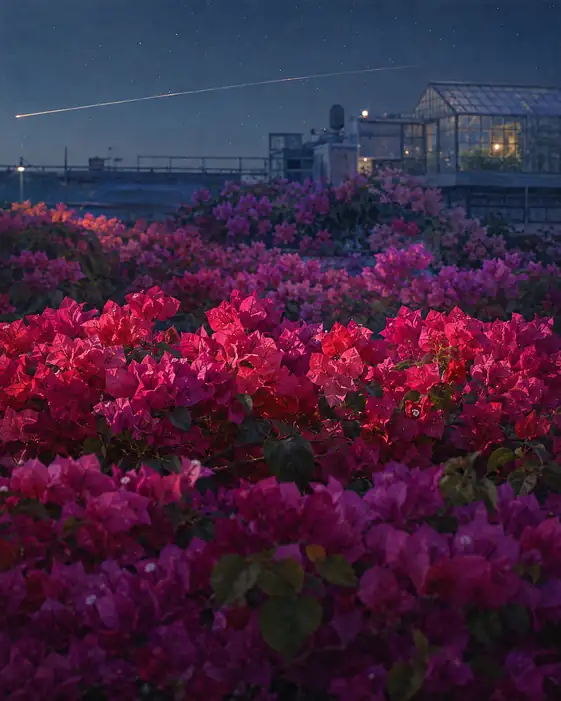 Starlit Bougainvillea Garden and the Illuminated Greenhouse
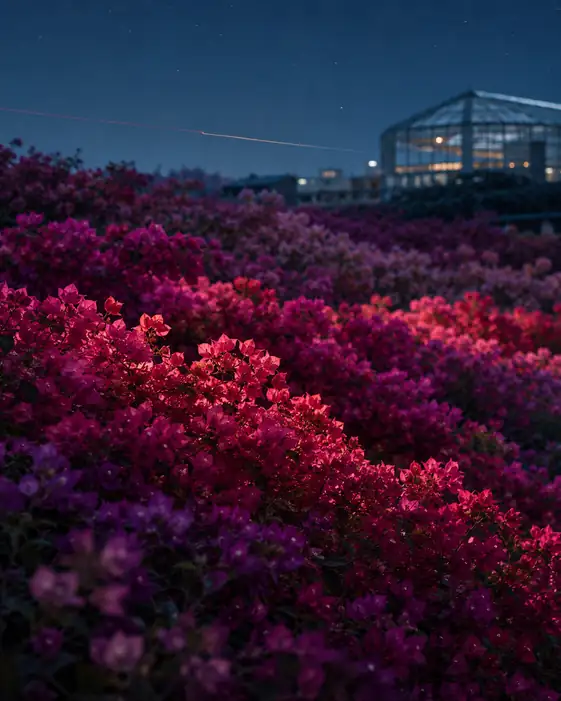 Nocturnal Bougainvillea Hills and the Glowing Greenhouse
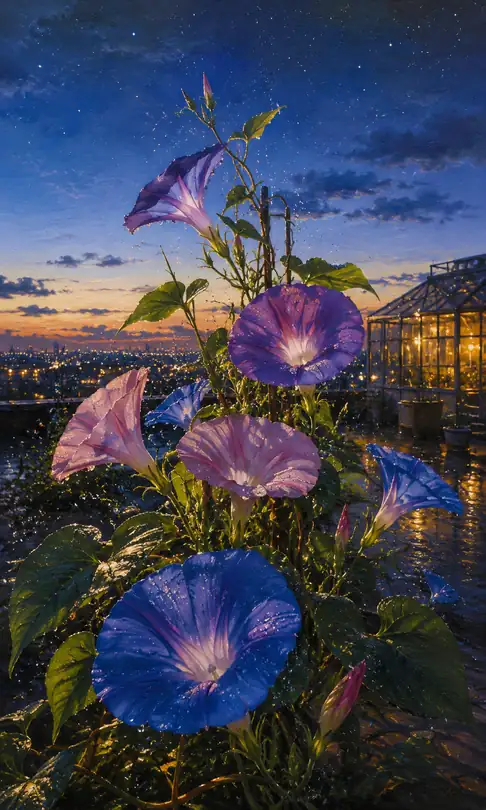 Blooms of the Rooftop Cosmos
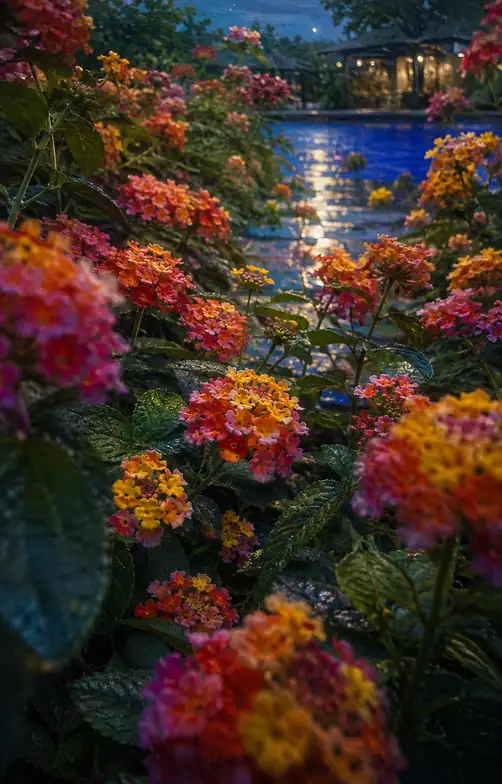 Lantana Blossoms by the Twilight Poolside
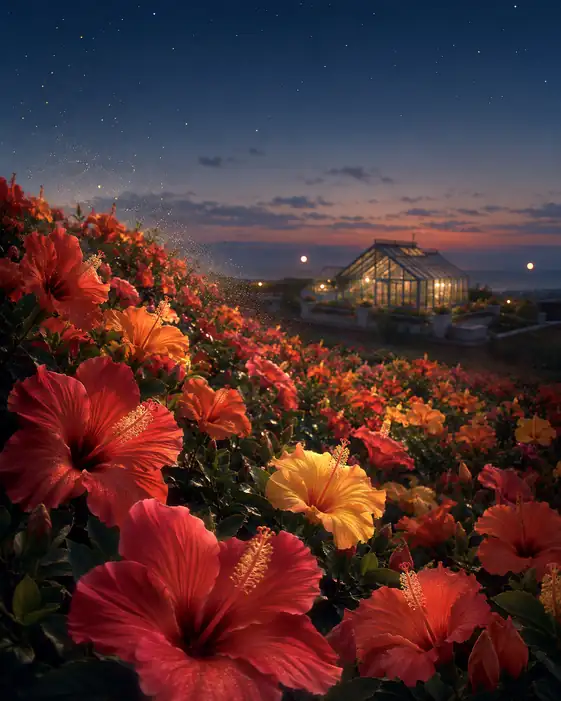 Hibiscus Hill beneath the Twilight Stars
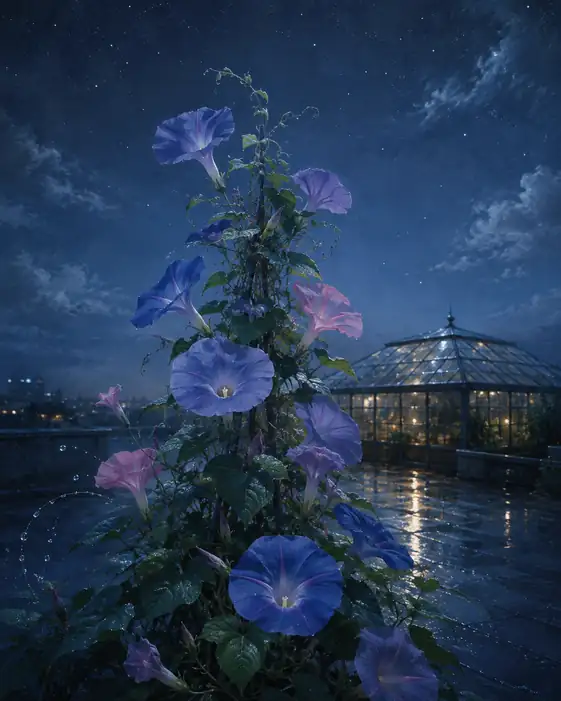 Morning Glory Spire Beneath the Starlit Sky
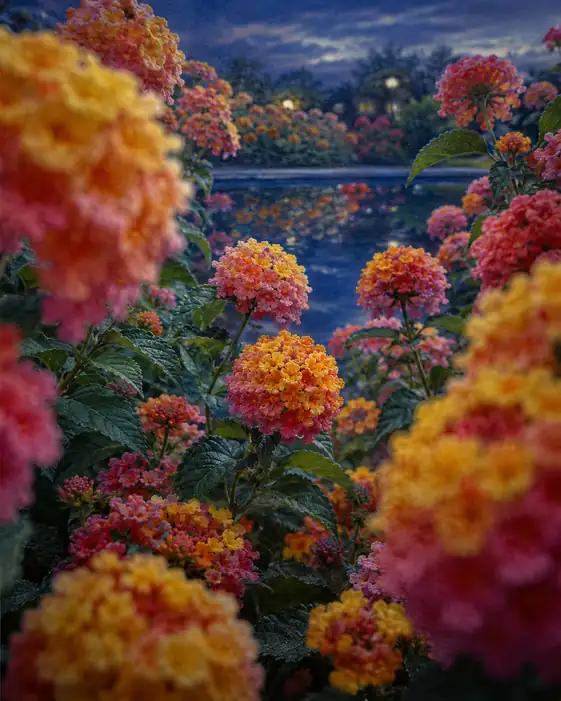 Lanterns of the Evening Shore
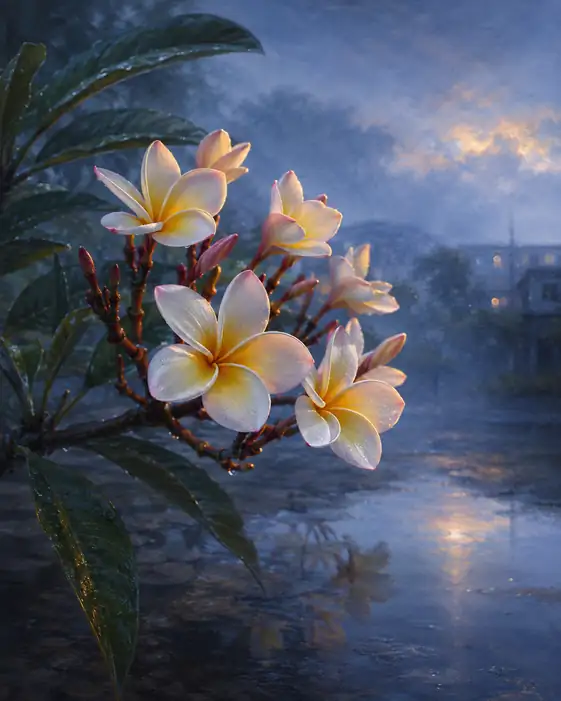 Plumeria Blossoms reflected on the Wet Pavement at Dusk