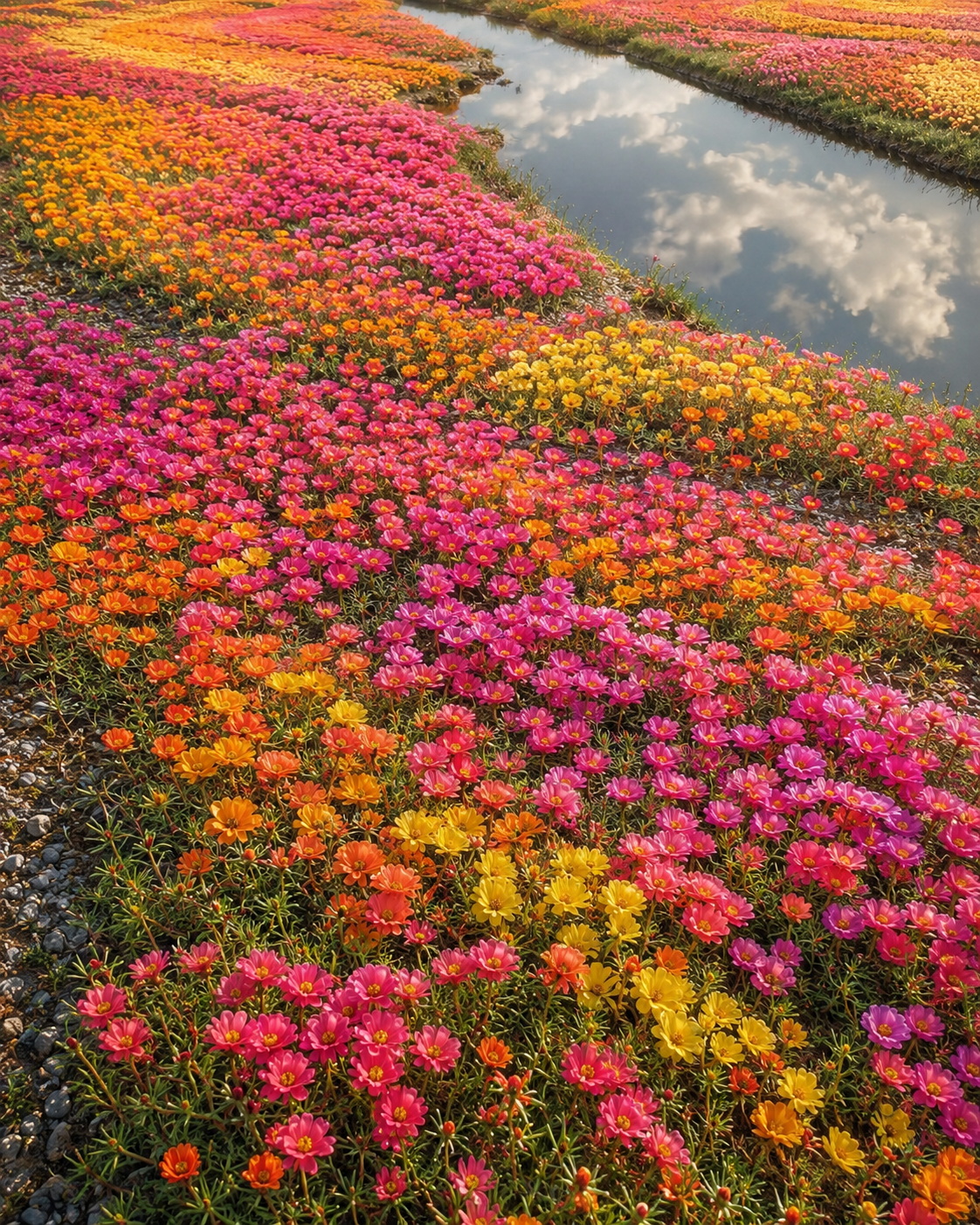
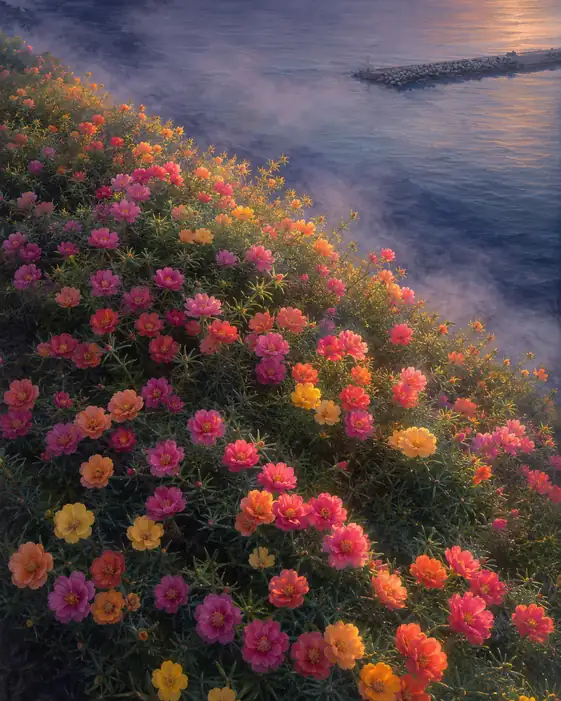
Rainbow Carpet of Moss Roses along the Canal
Critique
Introduction This elevated view transforms broad portulaca beds and a narrow irrigation channel into a tapestry divided by reflected sky. Cultivated color and atmospheric openness alternate across the land. Description Thousands of small pink, magenta, orange, and yellow flowers form irregular bands over gently rolling beds. Dark soil and fine green foliage appear between the dense patches. A narrow water channel enters from the top center, bends slightly, and widens toward the right middle. Its calm gray-blue surface reflects white clouds. Similar flower beds continue beyond the channel, making water an internal interval rather than an outer boundary. Analysis Color fields dominate the composition, but their edges reveal topography and maintenance paths. Pink occupies the largest areas, while orange and yellow form rhythmic islands that advance visually. The channel cuts a cool, smooth shape through granular warmth. Because it reflects clouds rather than adjacent flowers, it introduces a vertical world into the downward view. Curving banks oppose the flowers' innumerable small circles, and alternating patches prevent uniformity. The high viewpoint compresses depth, yet reflection opens an implied distance upward. Interpretation and Evaluation The waterway is practical infrastructure and conceptual hinge. It sustains planting while interrupting abundance, showing that flourishing needs space and circulation. Reflected clouds bring weather into the cultivated surface without a horizon, joining labor below to conditions above. Organized bands disclose planning and repeated care. Refusing to hide soil, edges, and gaps makes the color credible. Beauty emerges as a managed relationship among water, earth, light, and repetition. Conclusion Saturated floral bands around a cloud-bearing channel balance density with pause. Overhead perspective makes irrigation both lifeline and window.
Same Subcategory
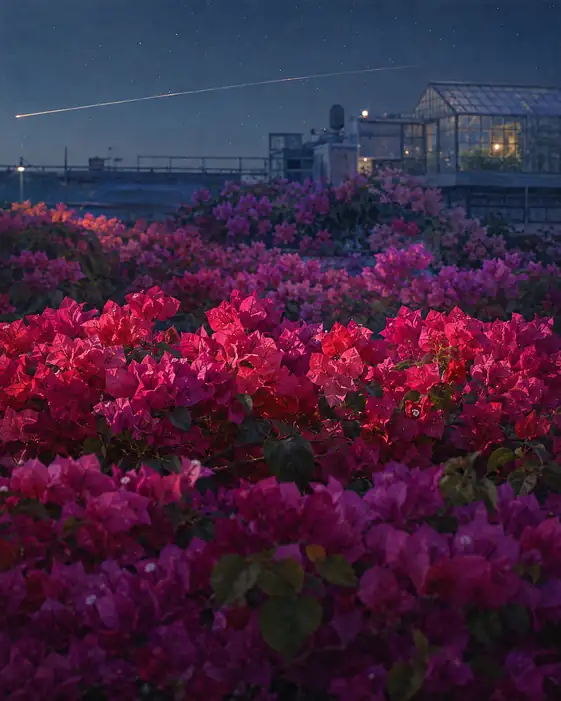 Starlit Bougainvillea Garden and the Illuminated Greenhouse
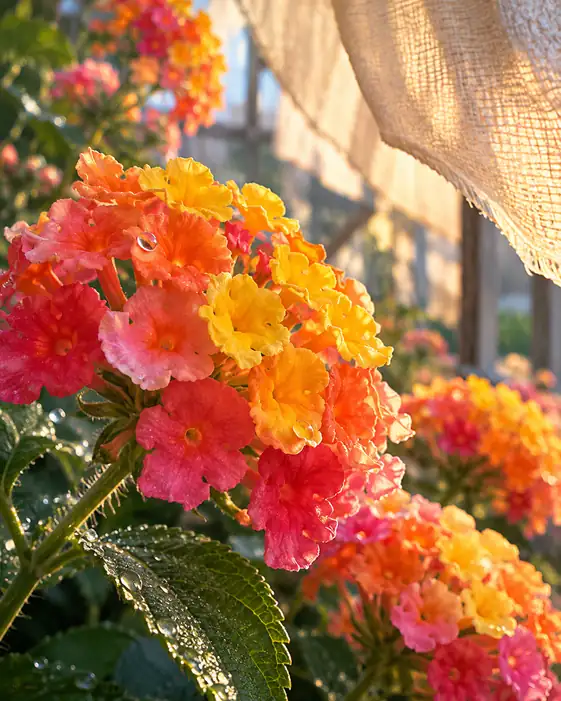 Dewy Lantana Blossoms in the Morning Conservatory
Similar Artworks
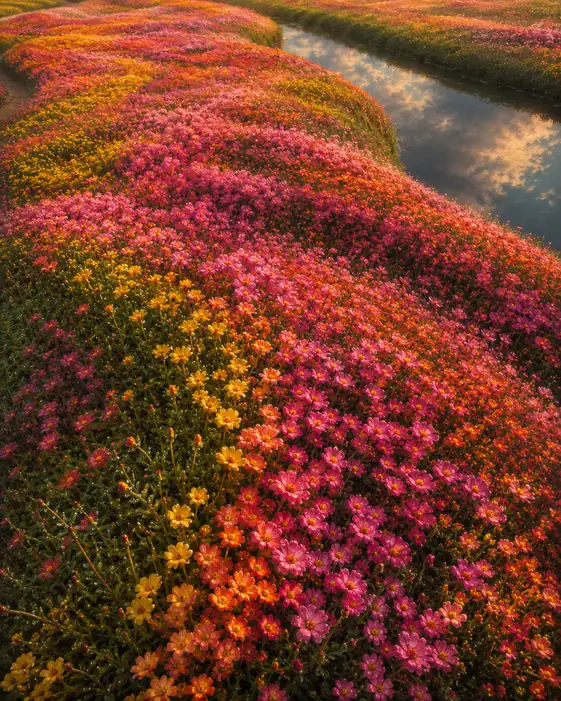 Woven Petals along the Sunset Stream
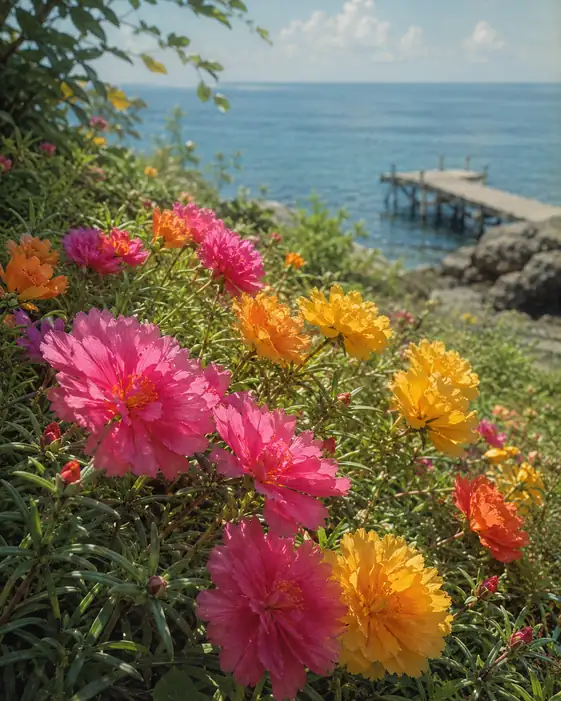 Coastal Moss Roses overlooking the Pier
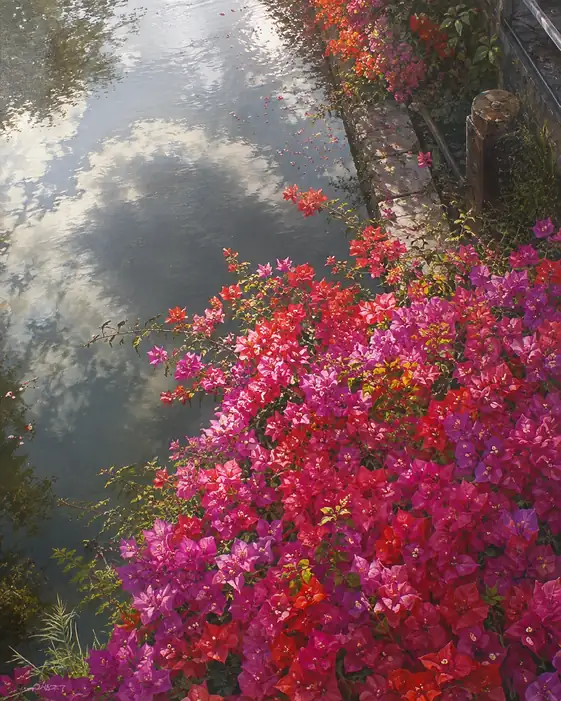 Cascading Bougainvillea over the Sky-Reflecting Canal
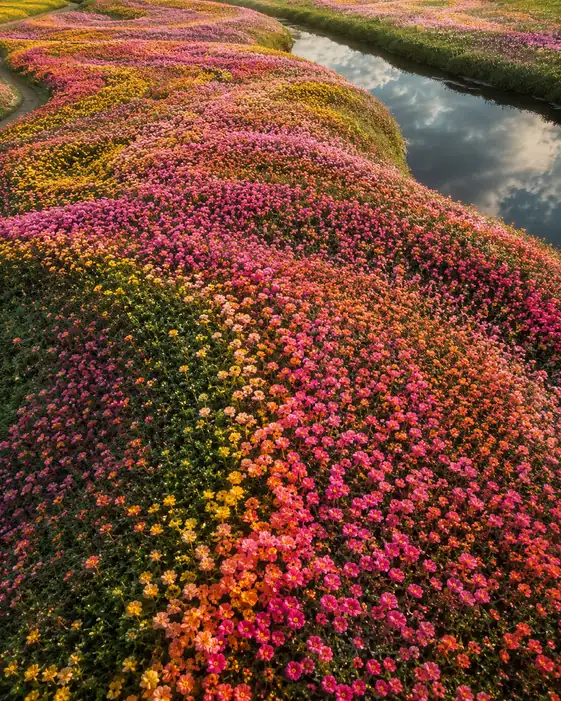 Sunset Waves of Portulaca Blooms
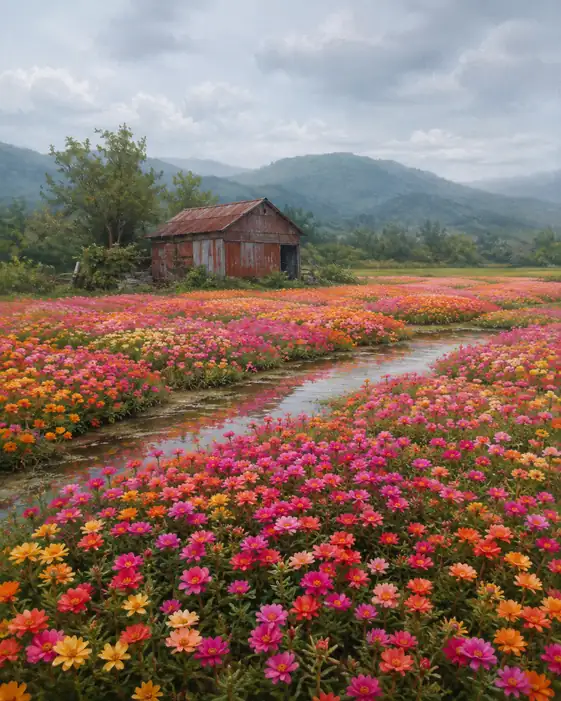 Stream through the Portulaca Meadow
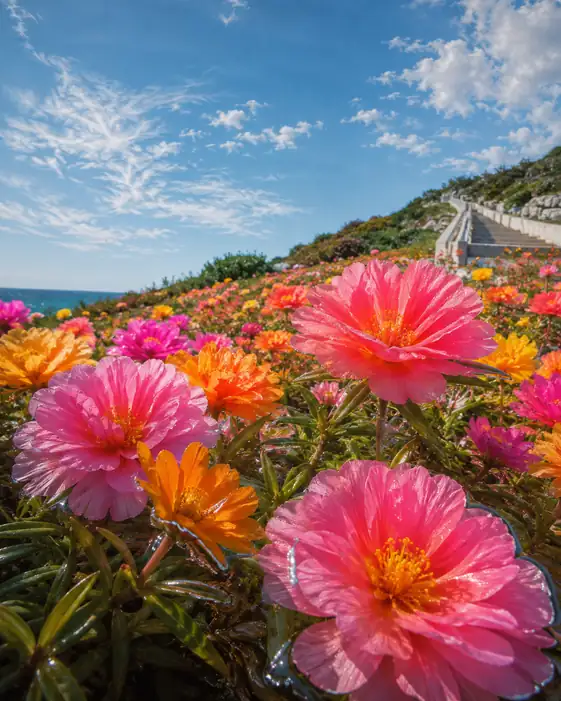 Moss Rose Hills along the Coastal Stairway
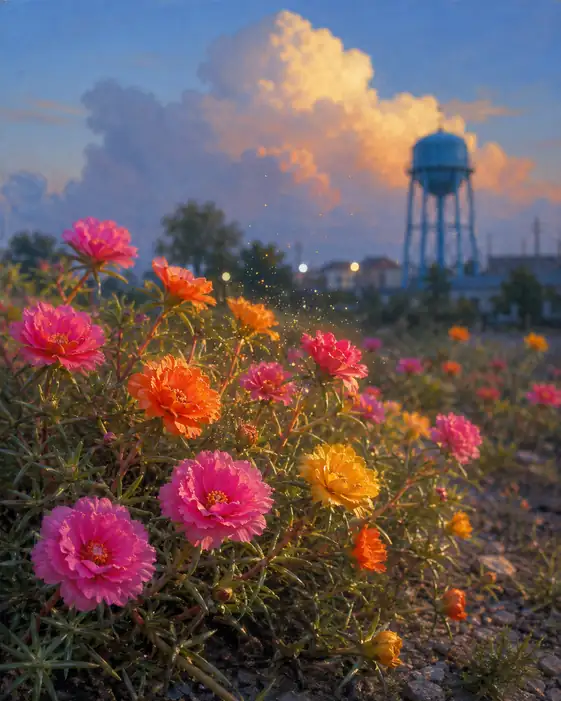 Sunset Cumulonimbus and Moss Roses by the Water Tower
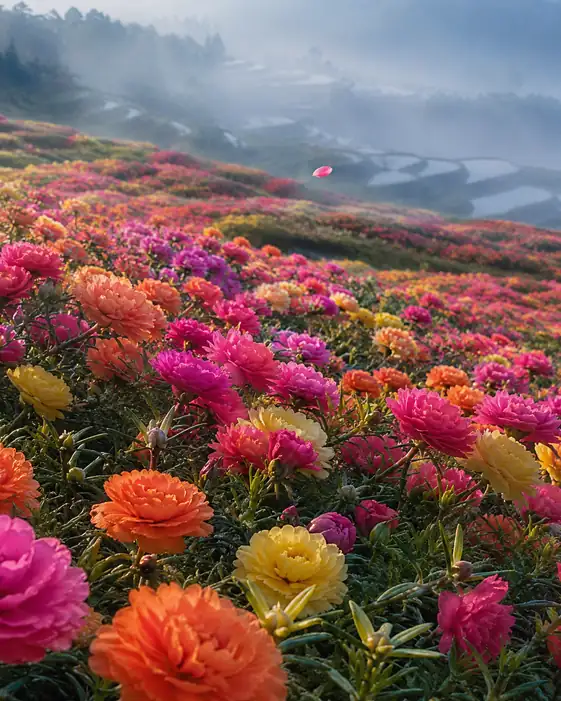 Moss Rose Meadow above the Misty Rice Terraces
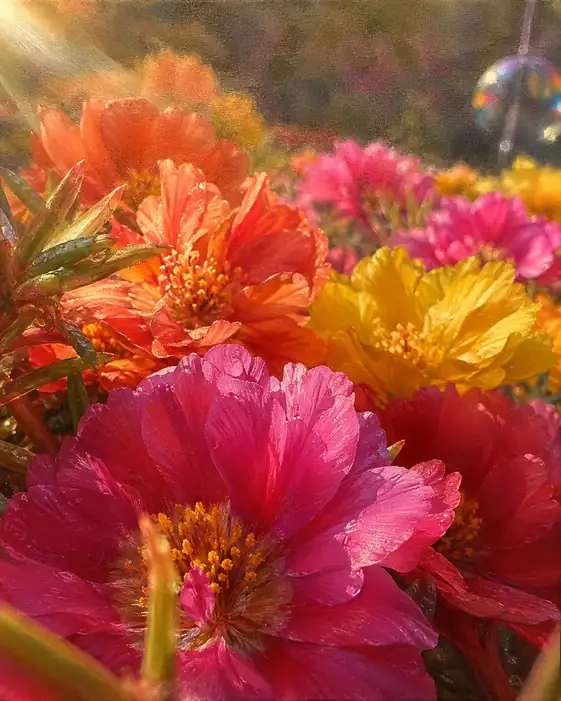 Sunlit Portulaca Blossoms and Rainbow Light
 Sunset Glow over Coastal Moss Roses and the Distant Lighthouse