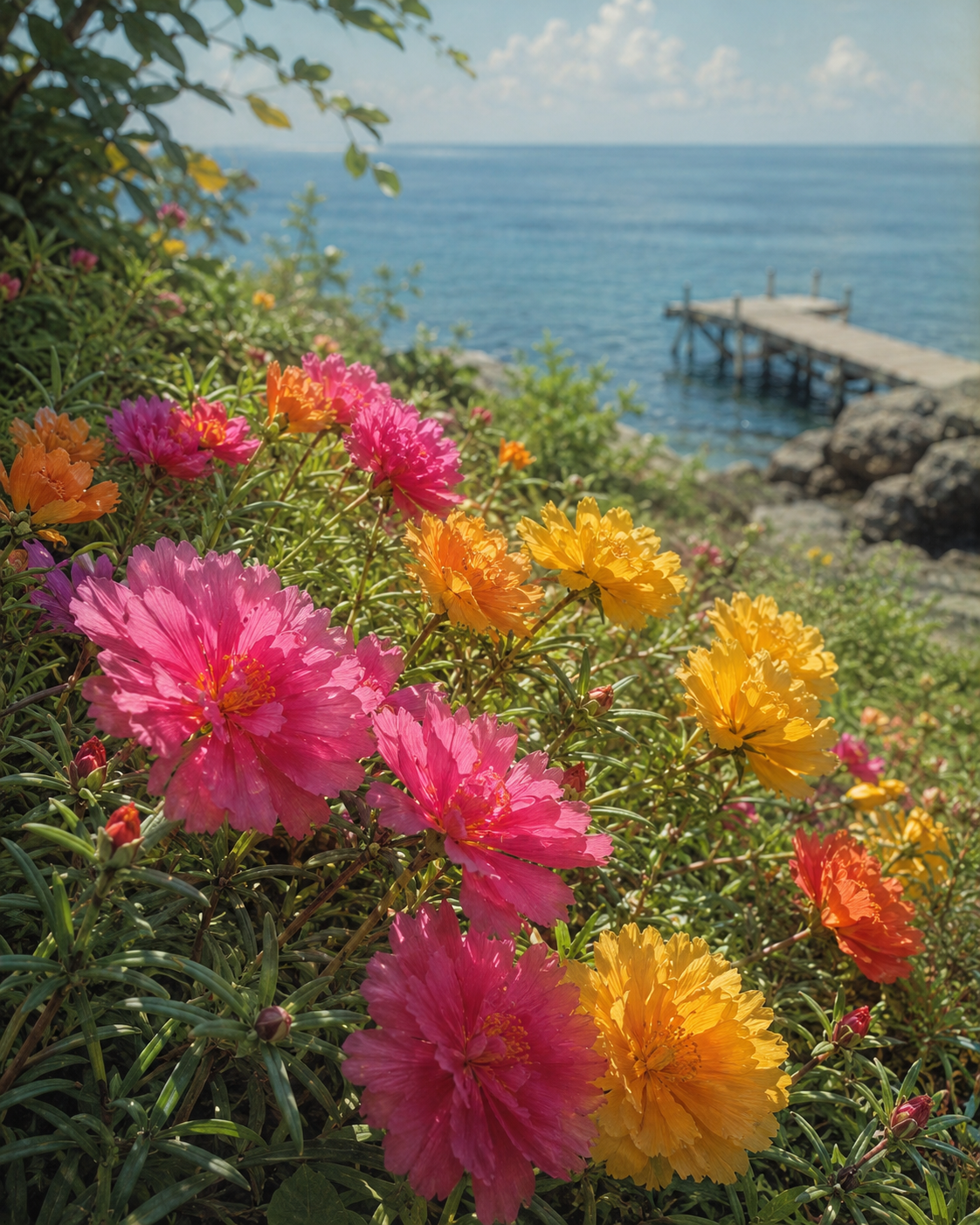
Coastal Moss Roses overlooking the Pier
Critique
Introduction This coastal garden view places brilliant portulaca against an expansive sea and a modest wooden pier. The close flowers and softened horizon make intimacy and departure coexist within a single sunlit scene. Description Large pink, orange, and yellow blossoms fill the lower and left foreground among narrow green leaves and unopened buds. Their layered petals catch strong midday light. Beyond the sloping vegetation, a blue sea occupies most of the upper half. At right, a pale wooden pier projects over dark rocks and water, but remains softly out of focus. Overhanging leaves frame the upper left, and diffuse clouds gather near the high horizon. Analysis Selective focus divides the image into a tactile foreground and an atmospheric destination. The largest pink blooms establish a diagonal rhythm from lower left toward center, while yellow and orange accents prevent the warm field from becoming uniform. The pier repeats that diagonal at a distance, translating organic movement into geometry. Its pale surface contrasts with the saturated flowers, yet its blur reduces structural hardness. Dark foliage above and rocks at right loosely enclose the bright sea, producing depth through overlapping frames rather than strict perspective. Interpretation and Evaluation The flowers embody presence: petals, stamens, and stems invite attention. The pier suggests outward movement but cannot be entered because focus withholds detail. This tension turns coastal planting into a meditation on staying and leaving. Cultivation occupies the edge between land and sea, while the structure extends human intention across it. Refusing to choose between botanical portrait and seascape, the composition lets each give scale and resonance to the other. Conclusion Color and shallow focus balance abundance with possibility. The coast becomes garden and threshold.
Same Subcategory
 Bougainvillea along the Coastal Steps in Morning Mist
 Petal in the Sunset Breeze along the Bougainvillea Coast
Similar Artworks
 Moss Rose Hills along the Coastal Stairway
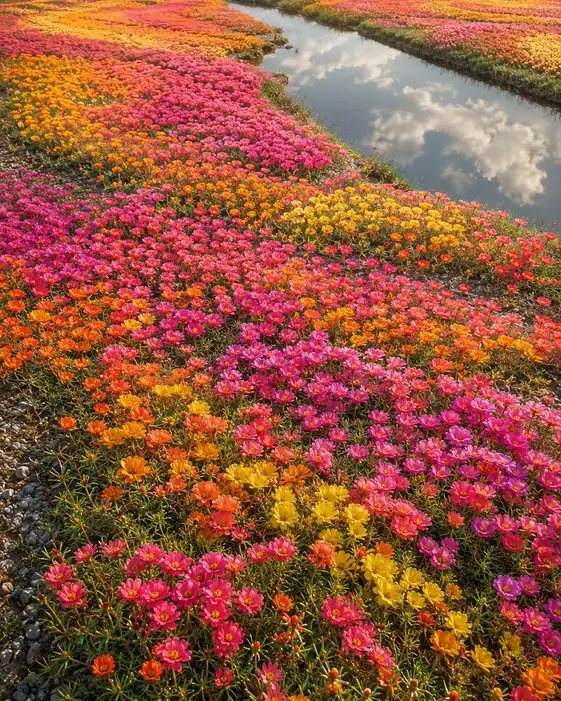 Rainbow Carpet of Moss Roses along the Canal
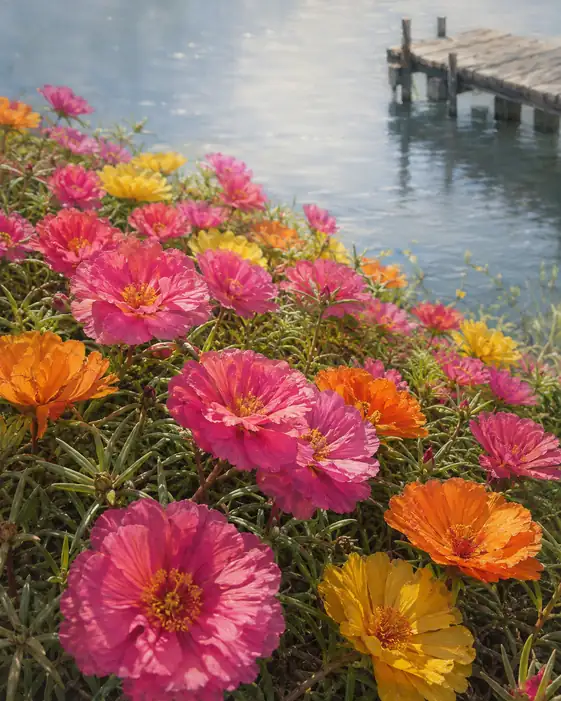 Portulaca Blooms by the Quiet Pier
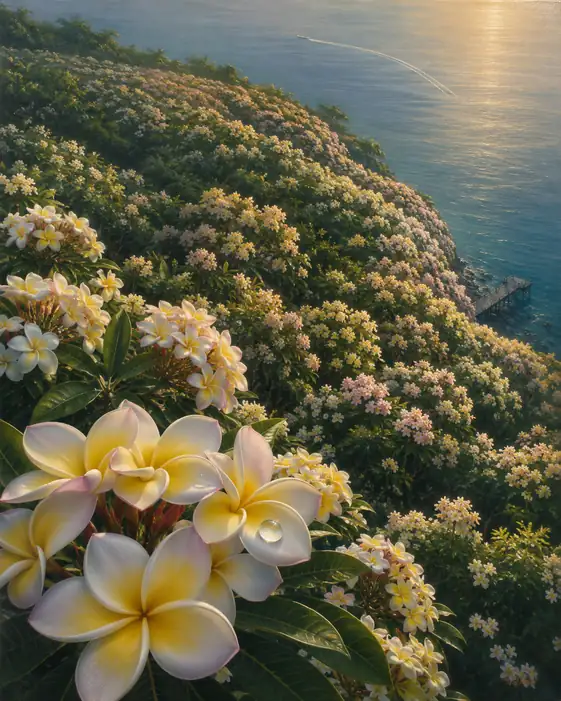 Plumeria Cliffs overlooking the Sunlit Sea
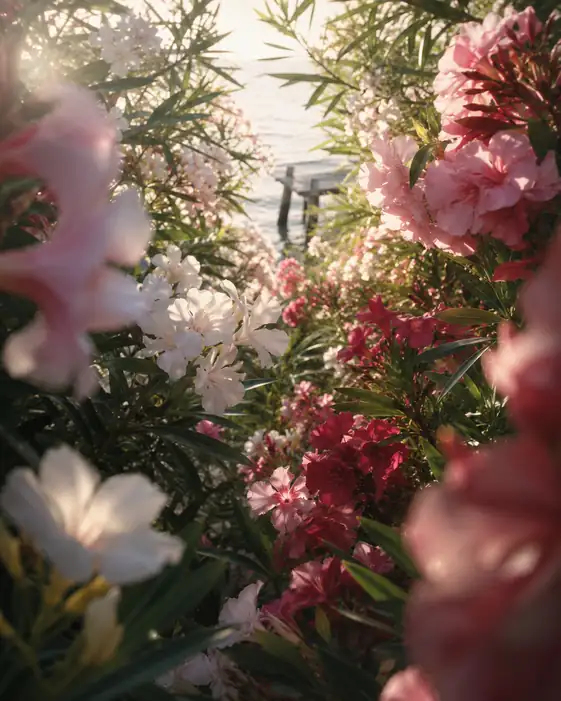 Path of Oleanders leading to the Coastal Pier
 Sunset Glow over Coastal Moss Roses and the Distant Lighthouse
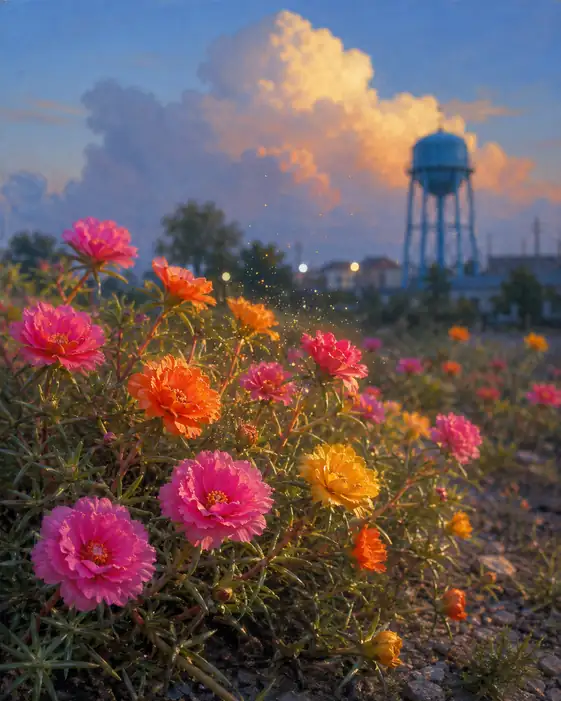 Sunset Cumulonimbus and Moss Roses by the Water Tower
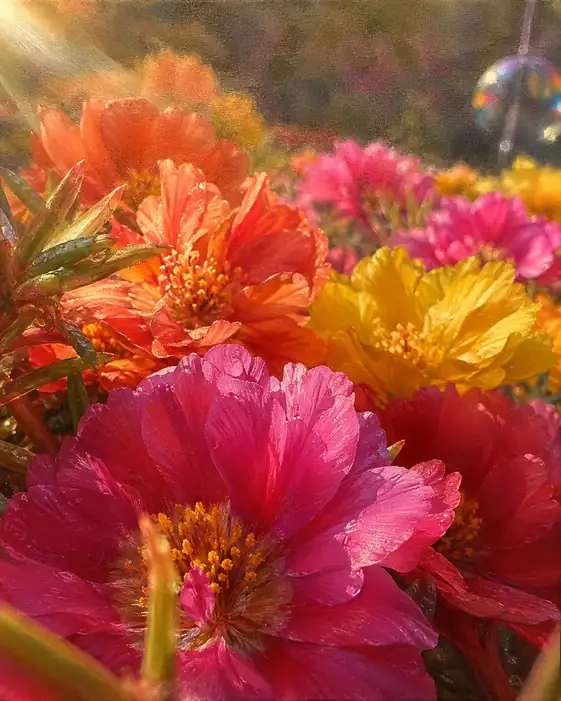 Sunlit Portulaca Blossoms and Rainbow Light
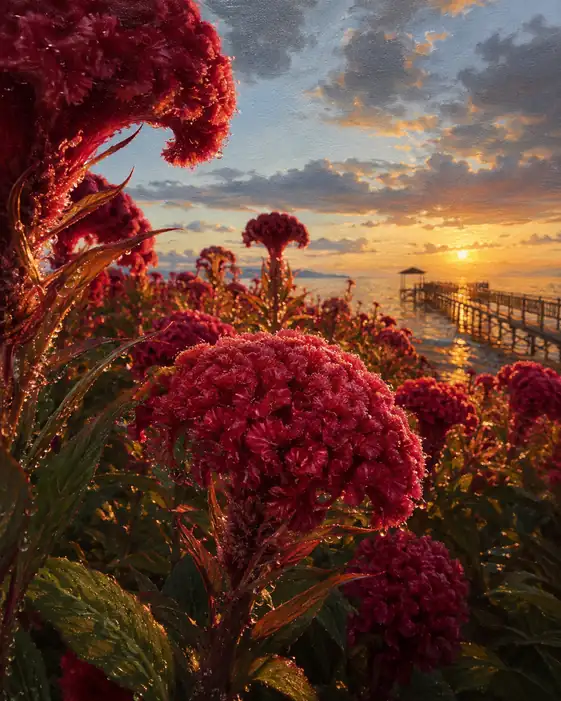 Crimson Cockscomb by the Sunset Pier
 Coastal Slopes of Rose Moss and Evening Mist