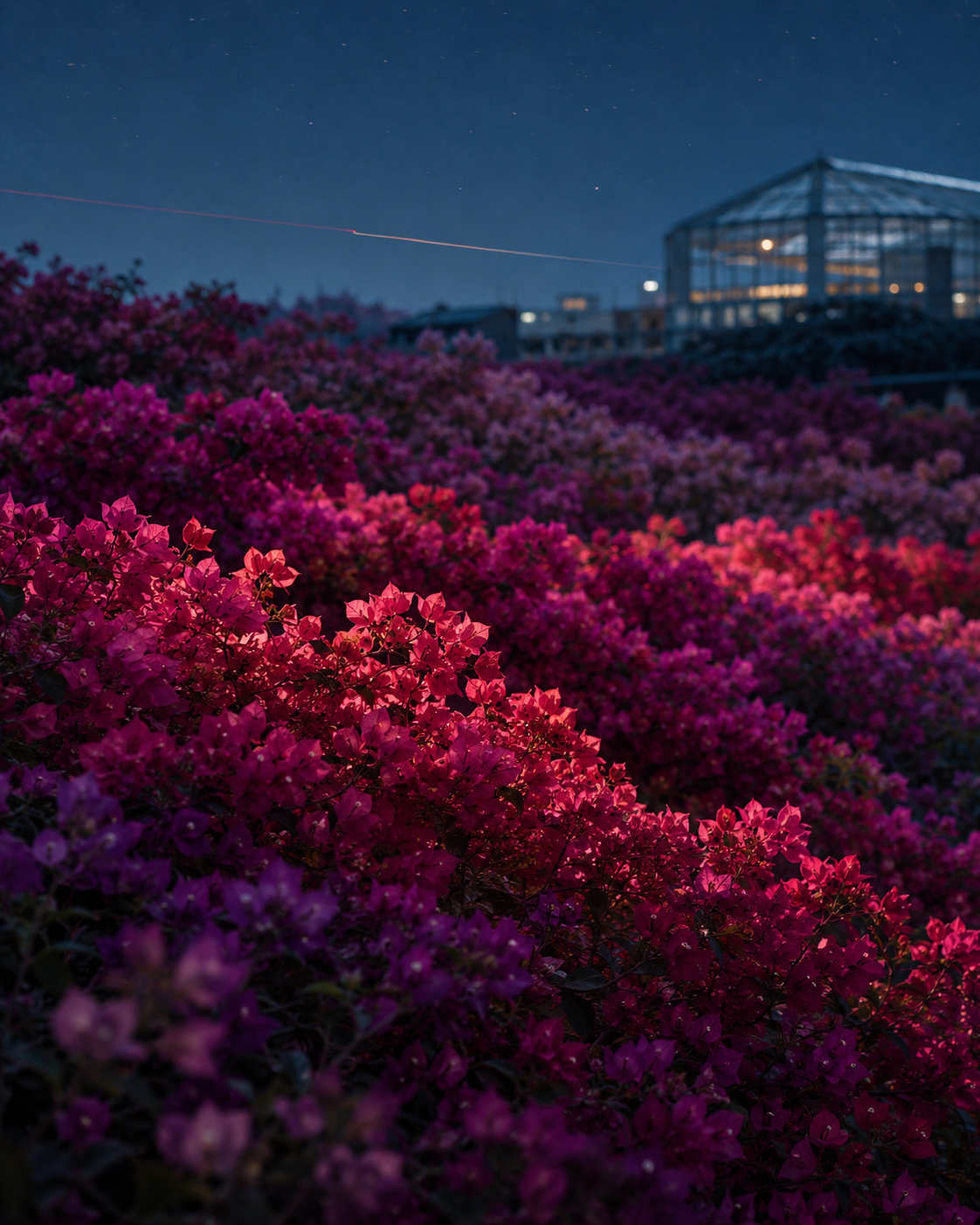
Nocturnal Bougainvillea Hills and the Glowing Greenhouse
Critique
Introduction This nocturnal landscape transforms bougainvillea fields into waves of colored darkness. A glowing greenhouse and a thin red line in the sky introduce distant signs of human activity without dispelling the scene's mystery. Description Purple and magenta flowers spread across the foreground and middle distance in broad, irregular bands. A diagonal strip near the front burns red under artificial light. At upper right, a greenhouse or agricultural building glows warm yellow-white, with dark structures around it. A narrow red-orange line crosses the deep blue sky, where a few stars remain visible. Distant silhouettes suggest additional buildings or trees. Analysis Color rather than daylight defines depth. Cooler violet fields recede, while the illuminated red band advances sharply and cuts a diagonal route into the image. The greenhouse anchors the upper-right quadrant, balancing the heavier floral mass below. Its rectilinear geometry contrasts with rolling vegetation, and the celestial line echoes the ground diagonal at a greater scale. Small stars and scattered highlights keep the blue-black areas active. Controlled blur allows the flower beds to read simultaneously as plants and undulating terrain. Interpretation and Evaluation The scene places cultivation between labor and cosmic distance. Illumination reveals only fragments: one flower strip, one interior, one line overhead. Darkness connects unseen portions and encourages imagination. The sky mark might be a contrail, aircraft light, or optical trace; its ambiguity makes human presence fleeting beside the rooted field. The warm greenhouse implies shelter and work, while blossoms remain immersed in night. A few accents suggest a much larger inhabited landscape. Conclusion Coordinated ground and sky diagonals make this agricultural site expansive and dreamlike. Its lights mark care, passage, and temporary visibility.
Same Subcategory
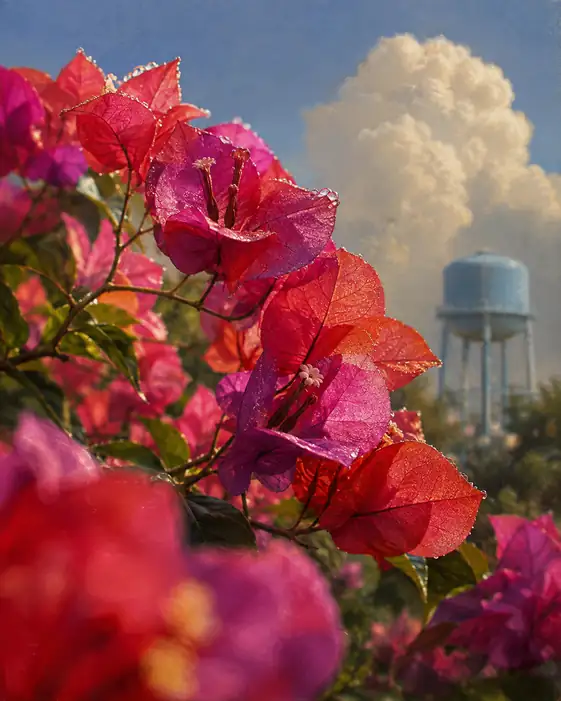 Morning Dew upon Bougainvillea beneath Summer Clouds
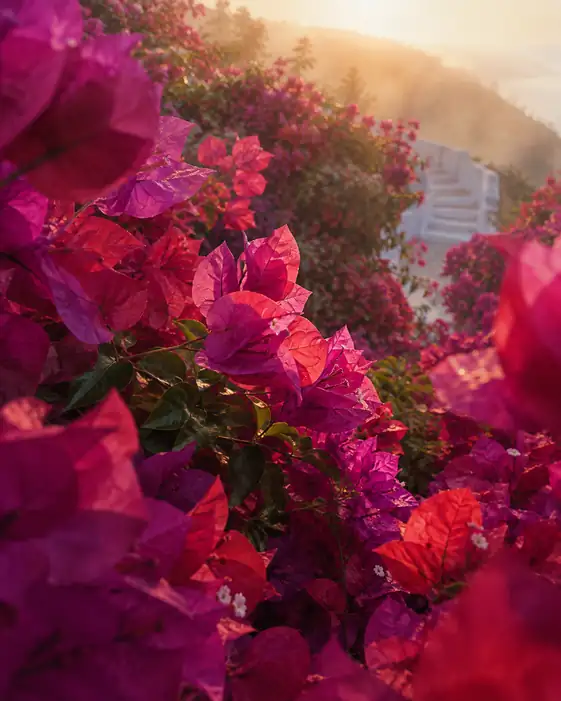 Bougainvillea along the Coastal Steps in Morning Mist
Similar Artworks
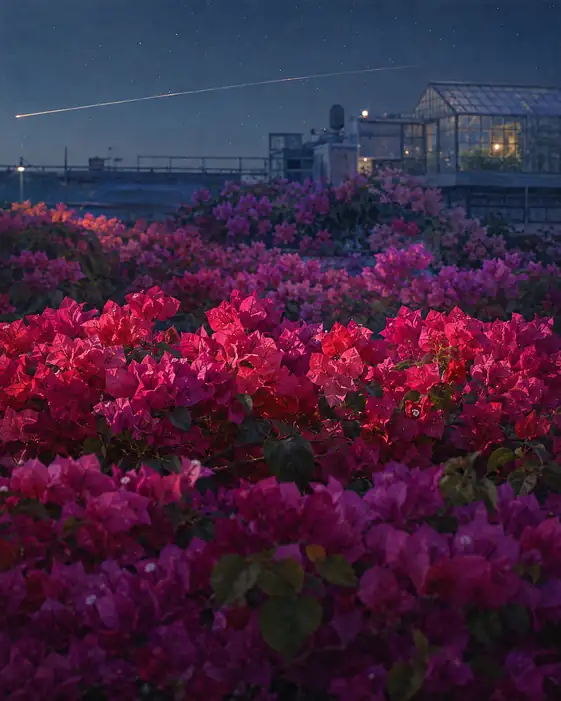 Starlit Bougainvillea Garden and the Illuminated Greenhouse
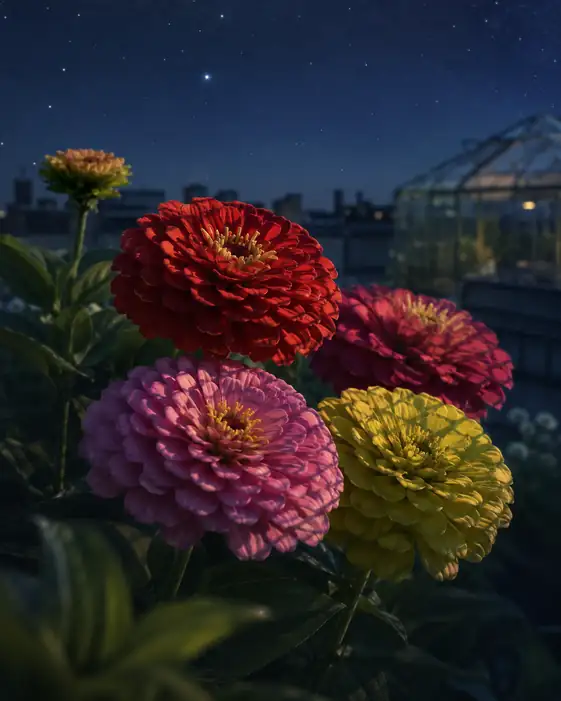 Zinnias beneath the Starlit Sky and Greenhouse
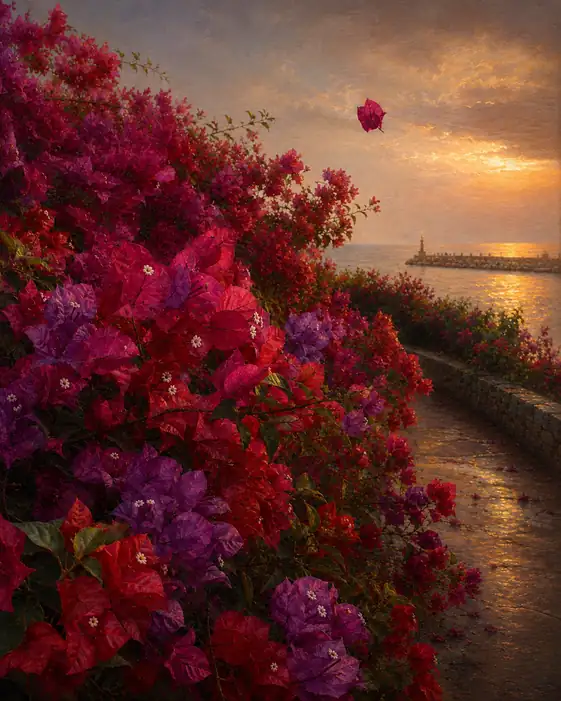 Petal in the Sunset Breeze along the Bougainvillea Coast
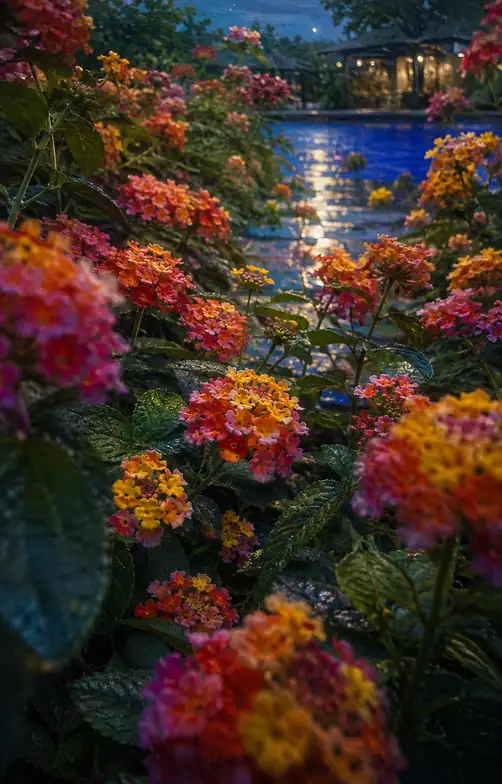 Lantana Blossoms by the Twilight Poolside
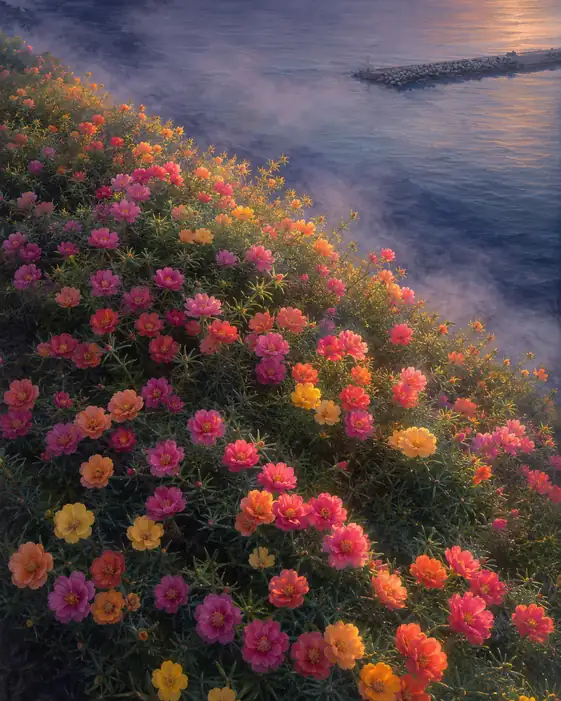 Sunset Glow over Coastal Moss Roses and the Distant Lighthouse
 Bougainvillea Glowing against the Sunset Pier
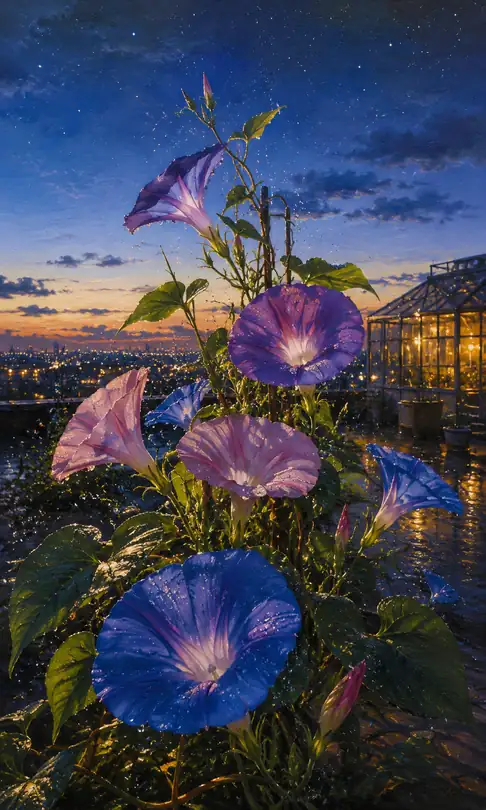 Blooms of the Rooftop Cosmos
 Luminous Bougainvillea and the Sunset Pier
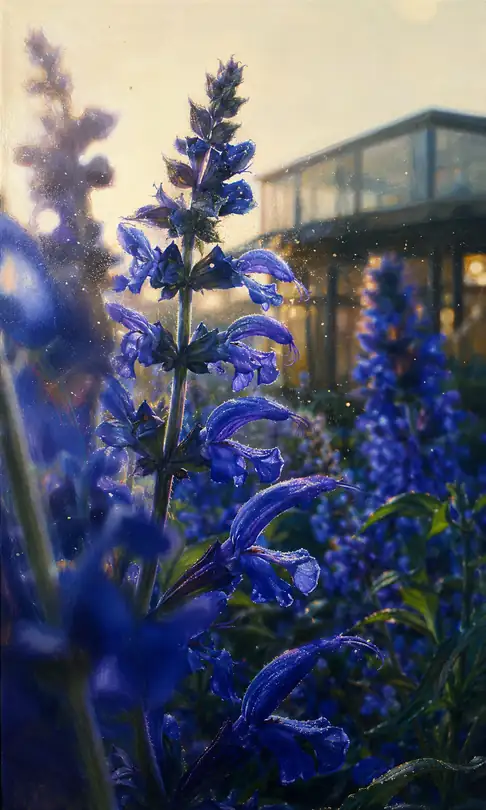 Blue Salvia in the Sunset Greenhouse Garden
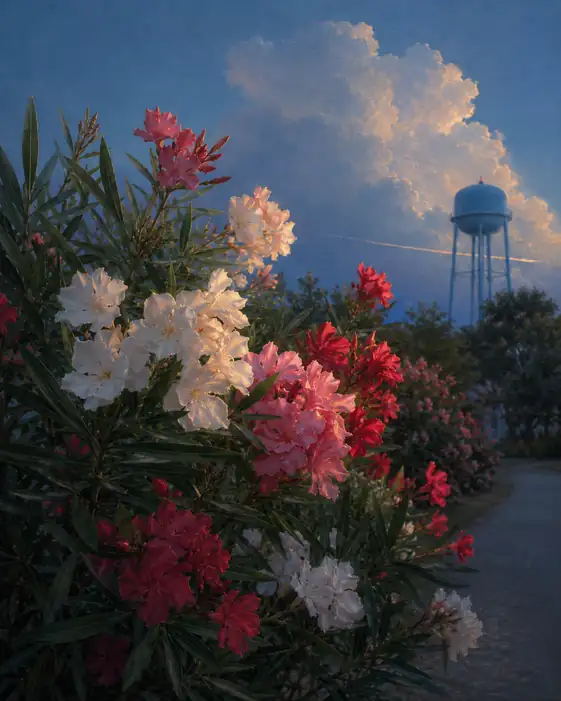 Oleanders beneath the Sunset Cloud and Water Tower