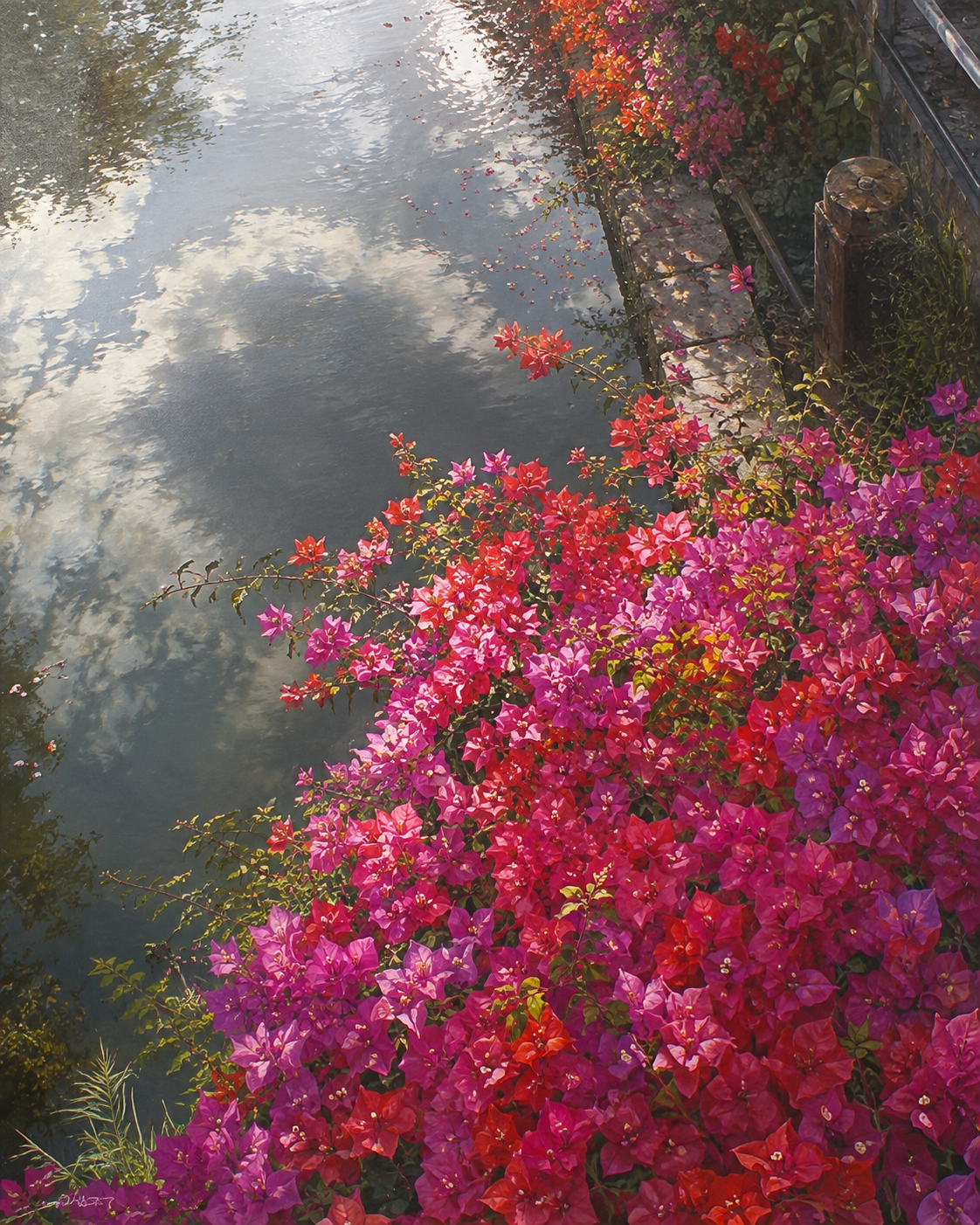
Cascading Bougainvillea over the Sky-Reflecting Canal
Critique
Introduction This sunlit view treats bougainvillea not as a single specimen but as a flowering embankment. Its saturated abundance meets a reflective path of water, creating a vivid exchange between mass and openness. Description Dense red, magenta, and violet bracts occupy the lower and right portions of the frame. Fallen petals scatter across a shallow flooded path or still water at left, where pale sky, clouds, and dark trees appear in reflection. Along the upper right edge, a concrete border, a narrow pipe or rail, and a cut wooden post introduce constructed elements. Bright sunlight catches selected leaves and petals while deeper recesses remain cool and shadowed. Analysis The composition depends on an unequal diagonal division. The flower bank presses outward from the right, while reflective water opens a quieter corridor toward the upper left. Repetition creates density without monotony because scale, hue, and sharpness continually shift. Crimson accents advance, purples recede, and green leaves punctuate the warm field. Reflections invert the vertical world and soften its contours, contrasting the crispest bracts. The hard concrete edge steadies an otherwise organic overflow. Interpretation and Evaluation The work presents cultivation as a negotiation with excess. Infrastructure contains the plants only provisionally: blossoms cross boundaries, and fallen petals colonize the water. Yet nature and construction are not simple opponents. The border gives the floral mass direction, while water receives and doubles surrounding vegetation. Detached petals become both signs of decline and new compositional marks. Brilliant color meeting subdued reflection lets exuberance and impermanence coexist. Conclusion Balancing a compressed floral bank against open reflection, the picture studies abundance, containment, and graceful dispersal.
Same Subcategory
Similar Artworks
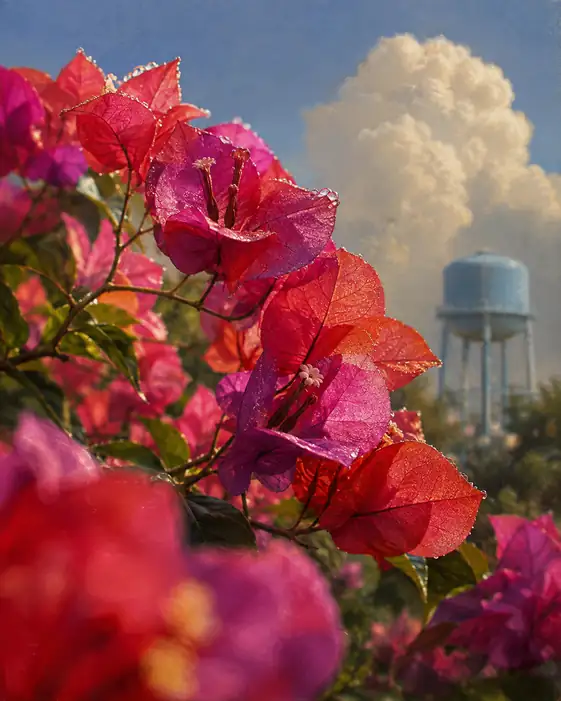 Morning Dew upon Bougainvillea beneath Summer Clouds
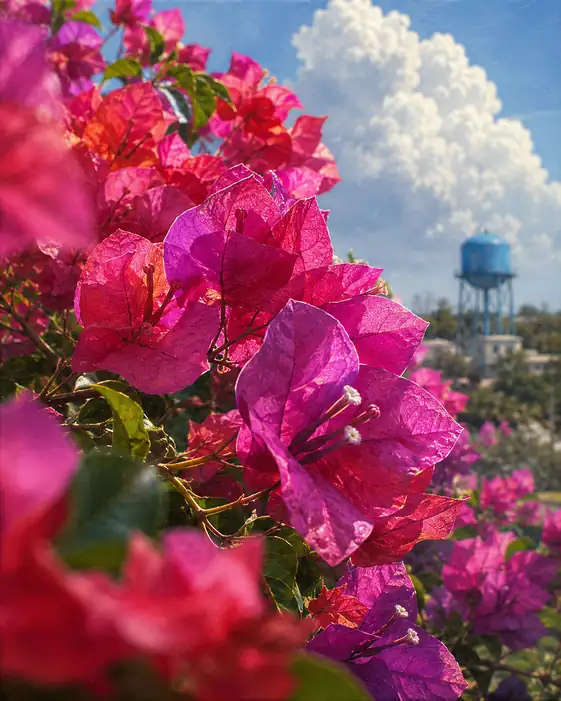 Bougainvillea beneath Summer Clouds and the Water Tower
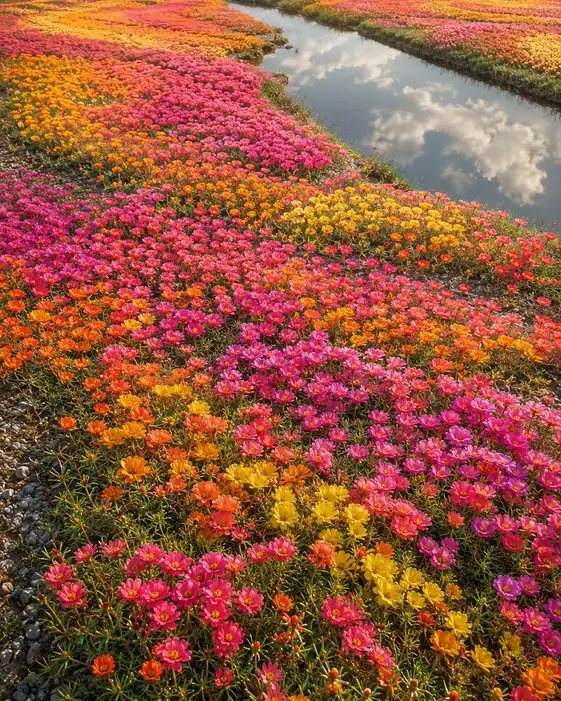 Rainbow Carpet of Moss Roses along the Canal
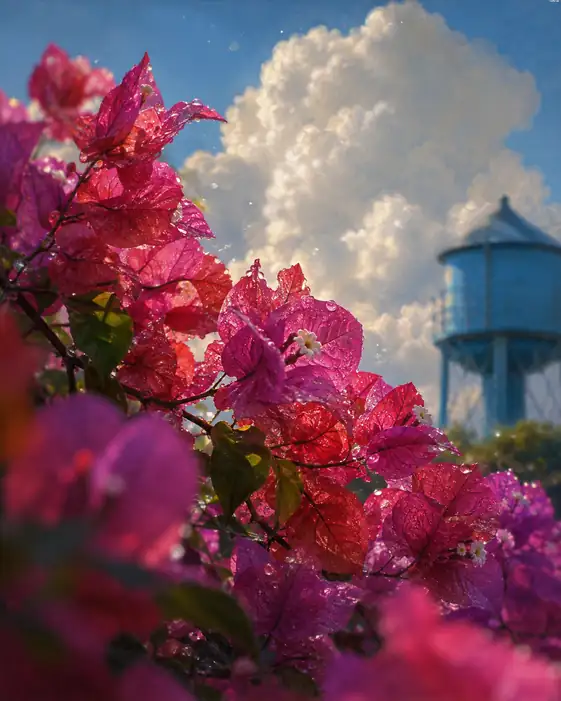 Bougainvillea beneath the Summer Cumulonimbus
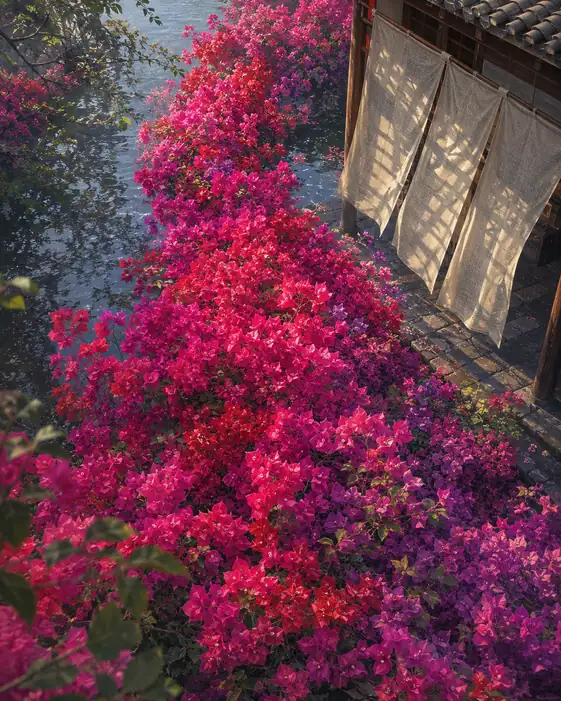 Breeze through the Crimson Canopy
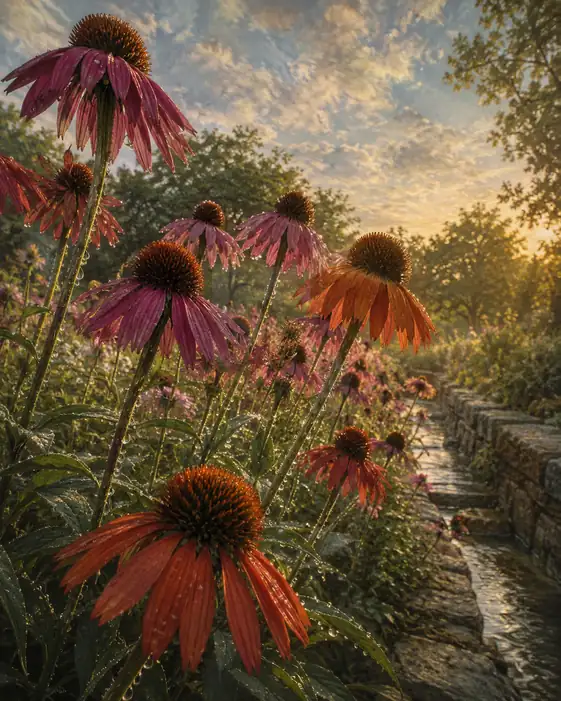 Morning Stream of Radiant Petals
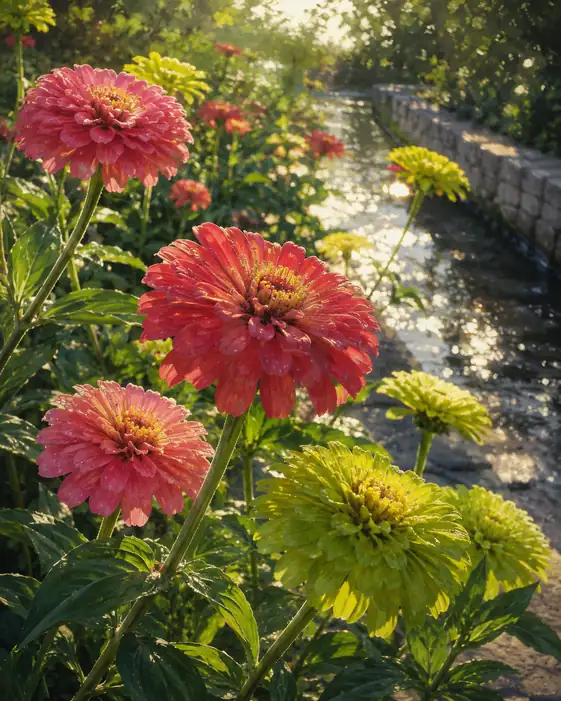 Zinnias by the Sunlit Stone Canal
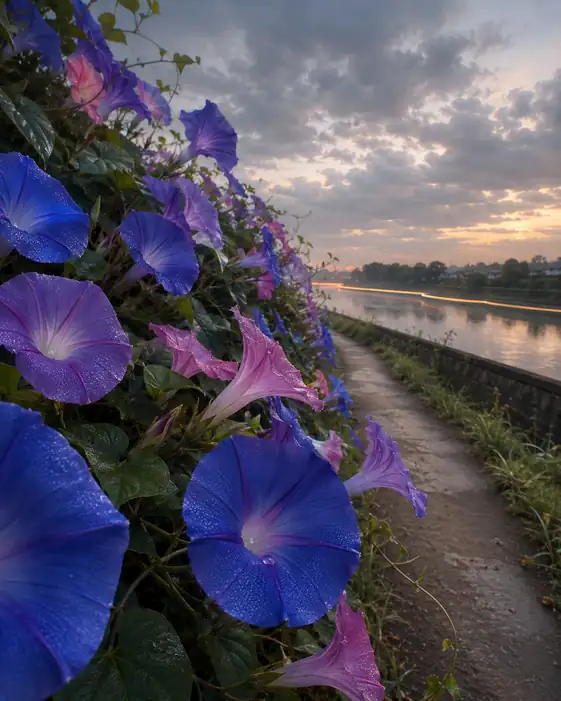 Morning Glories along the River Walk
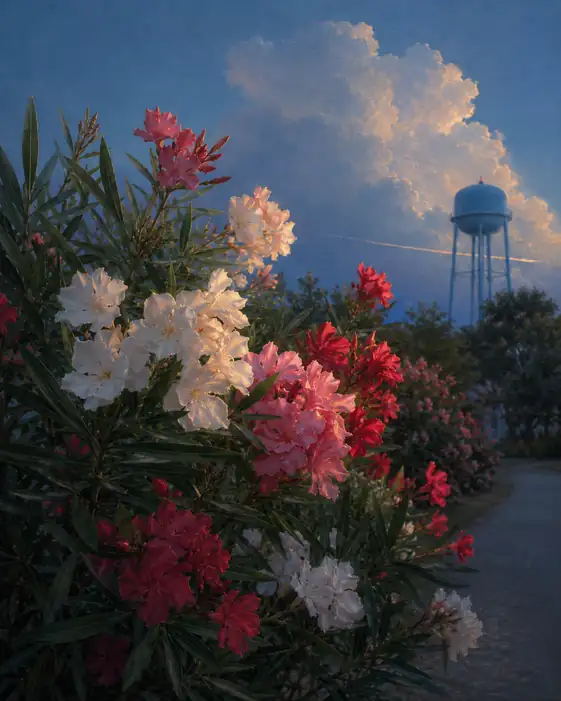 Oleanders beneath the Sunset Cloud and Water Tower
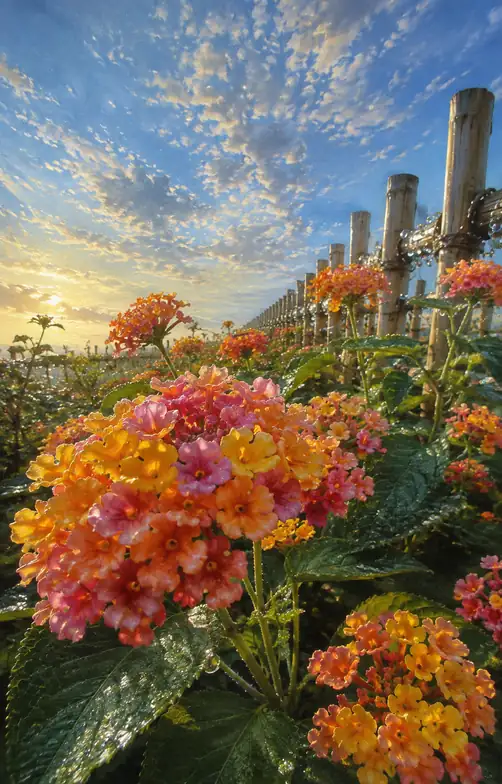 Lantana Blossoms along the Bamboo Fence under Morning Clouds