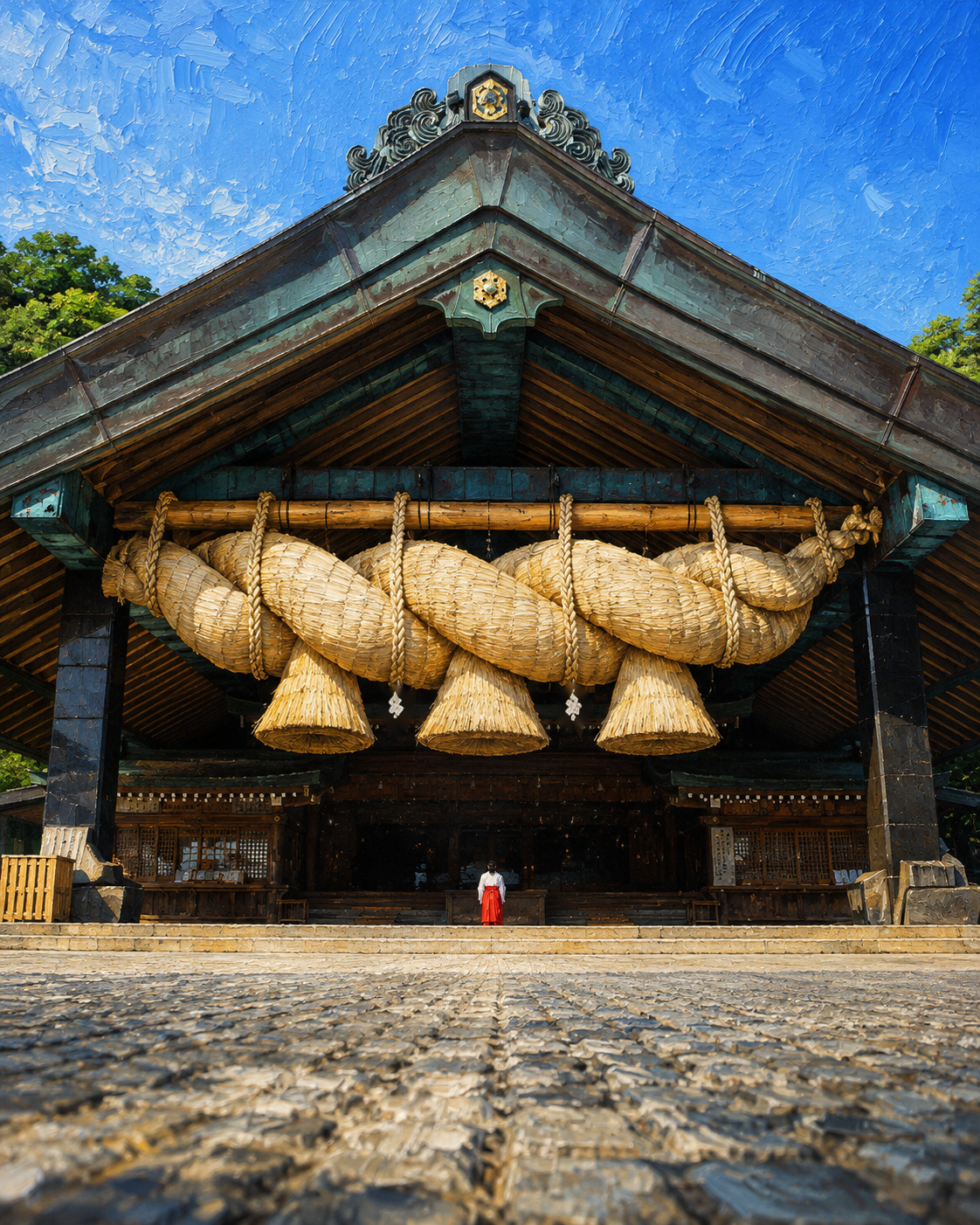
Izumo, a Prayer Binding the Sacred Realm
Critique
Introduction This ground-level shrine makes approach bodily. Rough paving swells forward before rope and roof rise overhead, so sacred scale emerges through texture, distance, and upward strain. Description Gray stones fill the lower third, their ridges enlarged by the low viewpoint and softened at bottom. Beyond steps stands a tiny white-and-red attendant. A colossal braided rope spans the dark entrance with cords and three tassels. Black columns and lattice support it. The gable rises to greened trim, cresting, and gold emblems against cropped blue sky. Analysis The composition builds vertical ascent. Pavement supplies a broad plane, the figure marks midpoint, rope creates a barrier, and roof diagonals converge skyward. Foreshortening makes stone as assertive as architecture, linking ground to ceremony. Warm straw and red advance against blue, gray, and black. Rope loops echo paving irregularities at an ordered scale. Directional marks distinguish stone, fiber, wood, and sky. Interpretation and Evaluation The image presents reverence as movement beginning at the feet. Before symbol or interior, uneven surface implies effort and pace. The attendant orients without eliminating distance. Rope establishes a protected boundary whose weight the angle intensifies. Brilliant blue and gold risk idealization, but abrasive paving, aged metal, and dark recesses ground spectacle. Elevating humble stone into ritual approach is most successful. Conclusion Through radical viewpoint, tactile continuity, and a carefully stacked hierarchy, the work converts a frontal shrine into a journey from ground to threshold to sky. Awe is produced not only by what towers above, but by the rough distance that must first be crossed.
Same Subcategory
Similar Artworks
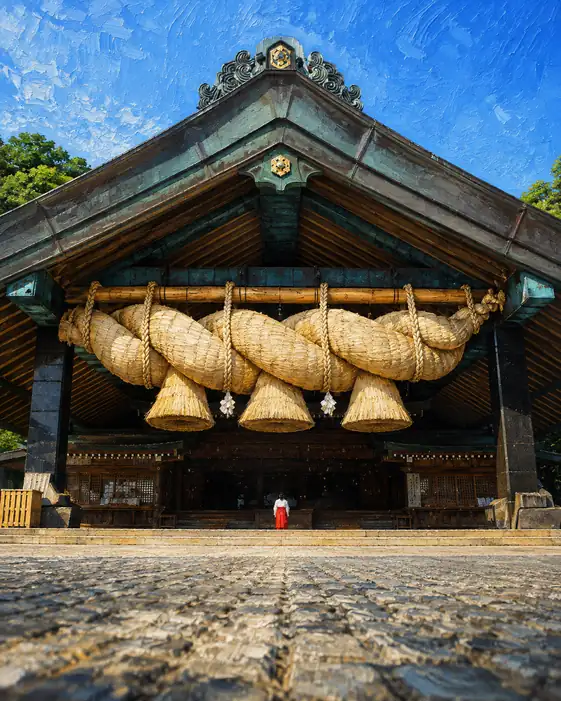 Low Angle View of the Great Shimenawa Sanctuary
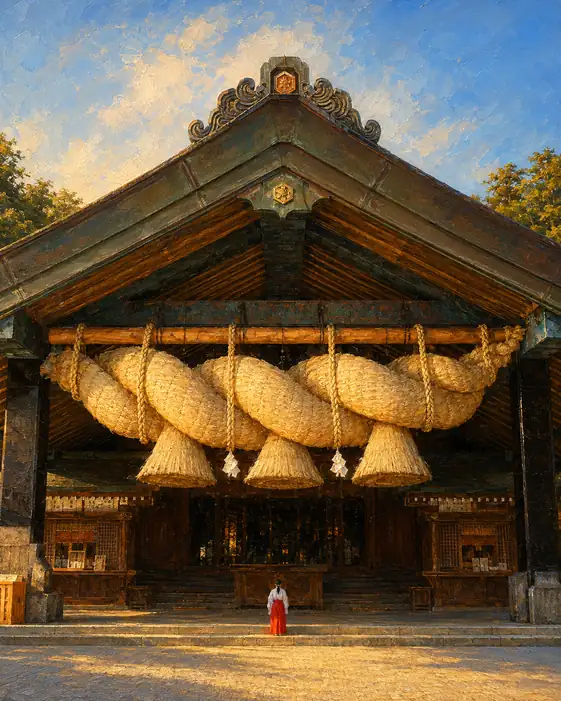 Golden Radiance on the Great Shimenawa
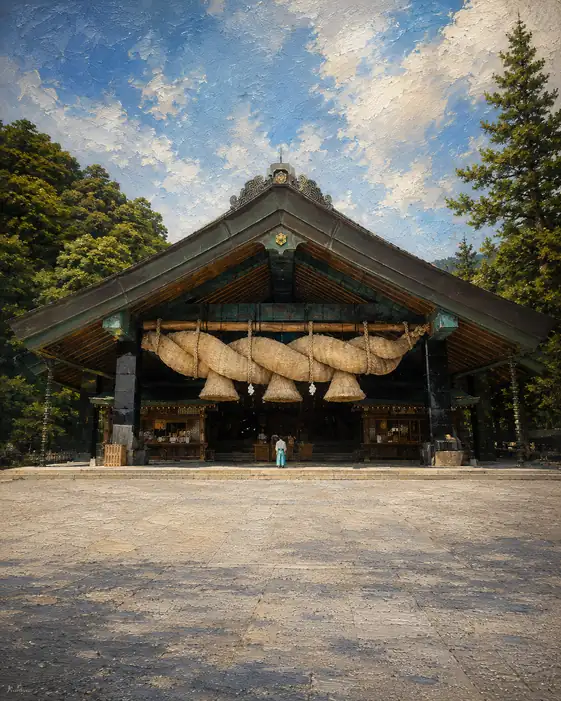 Open Courtyard before the Sacred Shimenawa
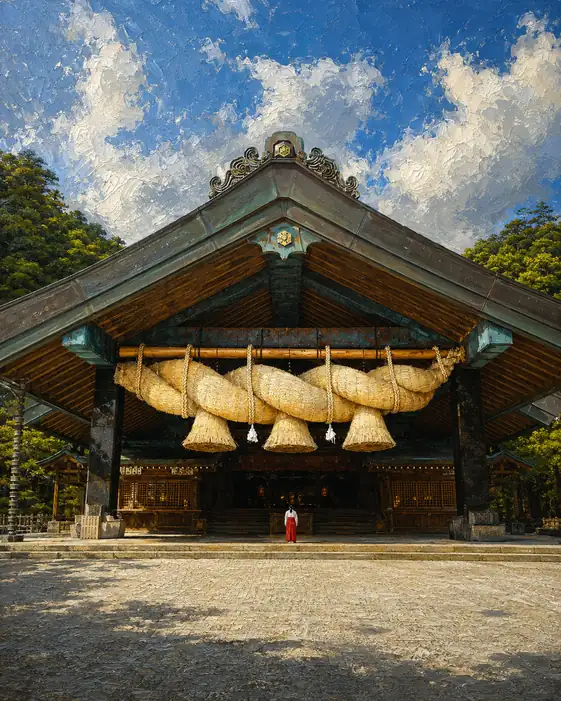 Summer Clouds over the Grand Shimenawa Sanctuary
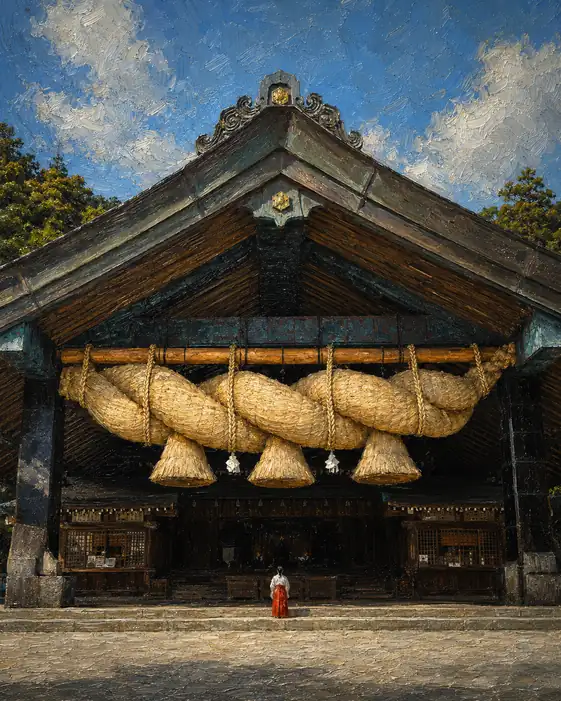 Maiden before the Sacred Shimenawa
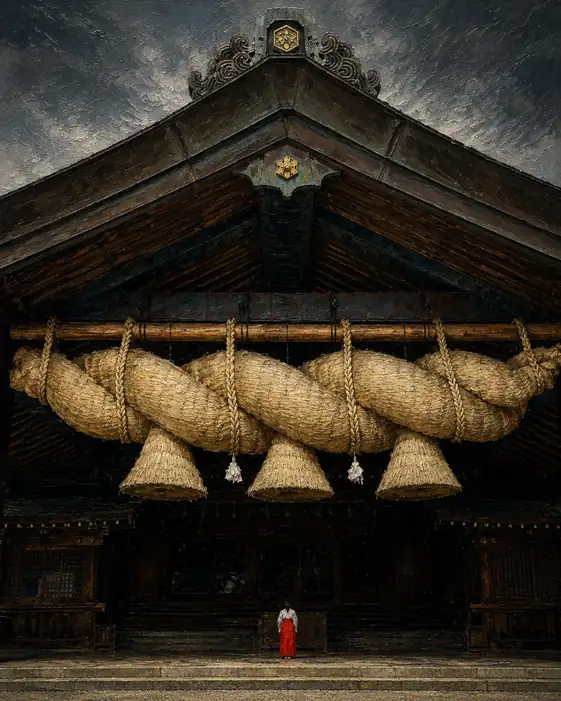 Solemn Gables and the Great Shimenawa
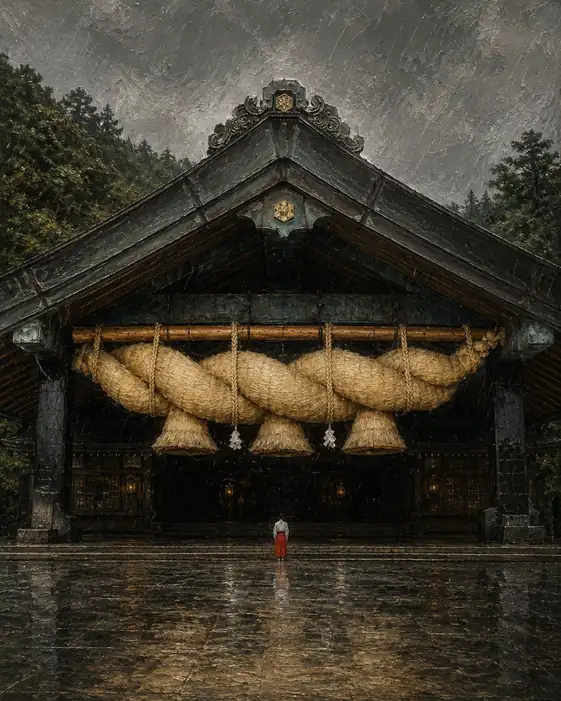 Maiden on Rain-Wet Flagstones before the Great Shimenawa
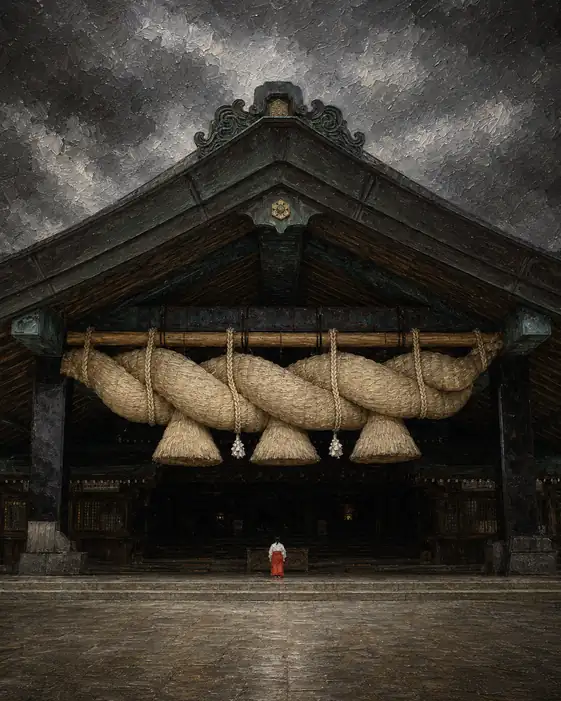 Shrine Maiden under the Storm-Laden Sky
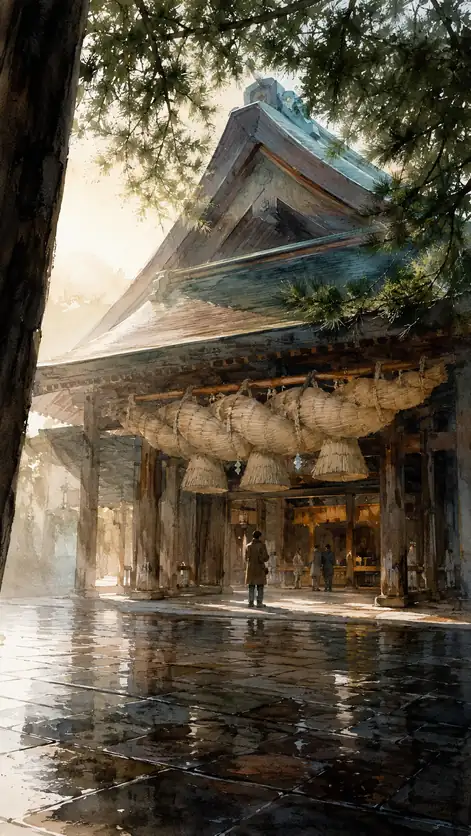 One Prayer Beneath the Great Rope
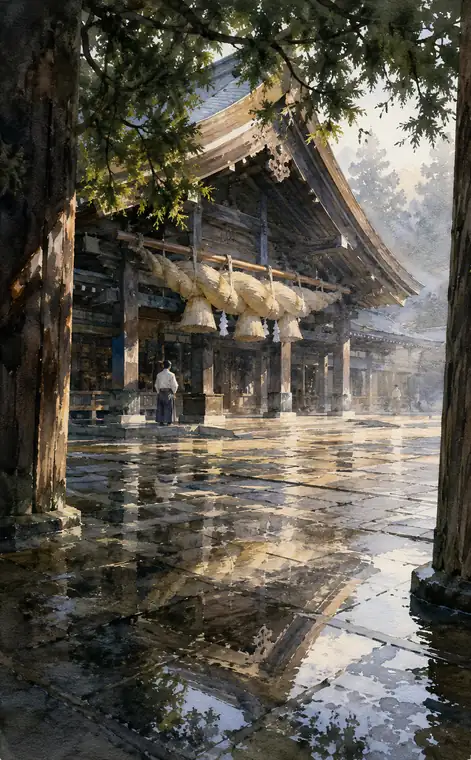 Rain Enters the House of Prayer