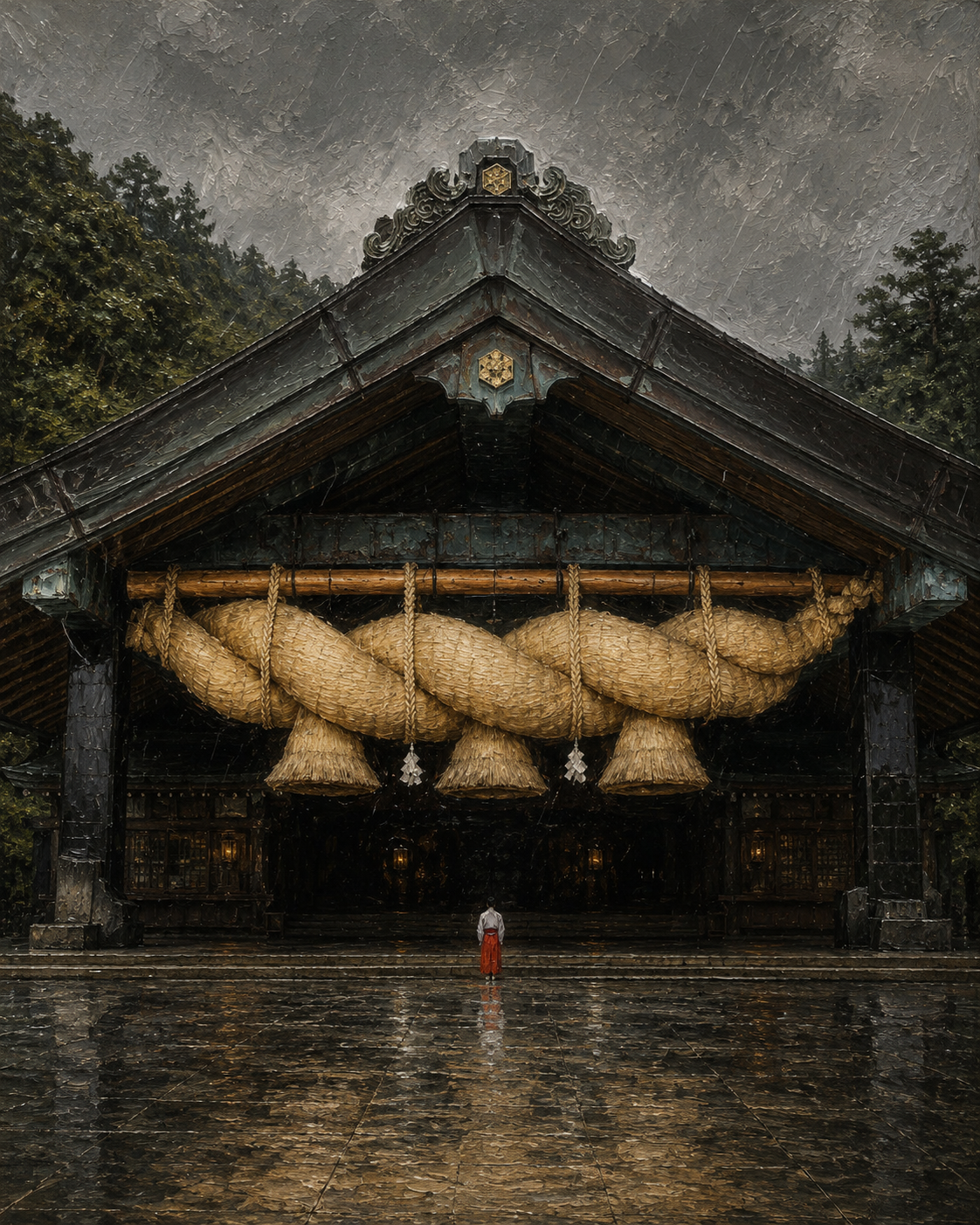
Maiden on Rain-Wet Flagstones before the Great Shimenawa
Critique
Introduction This rain-bound shrine turns the forecourt into a dark mirror. Façade and rope remain symmetrical, but falling water and broken reflections make ritual continuity appear weather-tested. Description A broad gabled shrine fills the upper half beneath gray sky and forest. Its dark roof bears greened trim, cresting, and gold emblems. A vast straw rope hangs across the entrance with three tassels. The interior glows faintly through black timber. A white-and-red attendant stands centrally. Rain streaks cross the scene; wet paving reflects straw, darkness, gold, and a narrow red trace. Analysis The steps divide solid architecture above from unstable image below. Roof diagonals converge centrally, while rope gives a horizontal stop. Reflected forms loosen into ocher and charcoal patches, extending weight forward. Red garment and mirrored echo reinforce the vertical axis. Restricted color heightens pale rope, amber lamps, and red accent. Thick strokes describe cloud and stone; finer diagonals imply rain. Interpretation and Evaluation The image presents sacred order maintained within change. Shrine, braid, and attendant resist dissolution, yet water makes every reflected form temporary. Reflection doubles the threshold without exact replication, suggesting ritual preserves meaning through variation. Forest and storm intensify seclusion, but interior lamps retain warmth. Rain, puddling, and fragile red reflection counter rigid symmetry. The mirrored figure conveys persistence without grandeur. Conclusion Through severe weather, reflective depth, and disciplined central placement, the work joins monumentality to vulnerability. The shrine remains enduring, but its meaning is renewed in the transient surface below, where rope, light, and human presence briefly gather before dispersing.
Same Subcategory
Similar Artworks
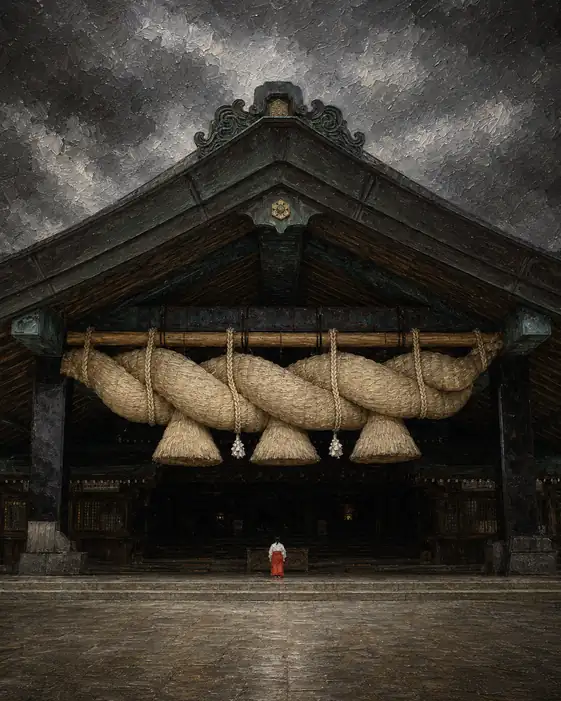 Shrine Maiden under the Storm-Laden Sky
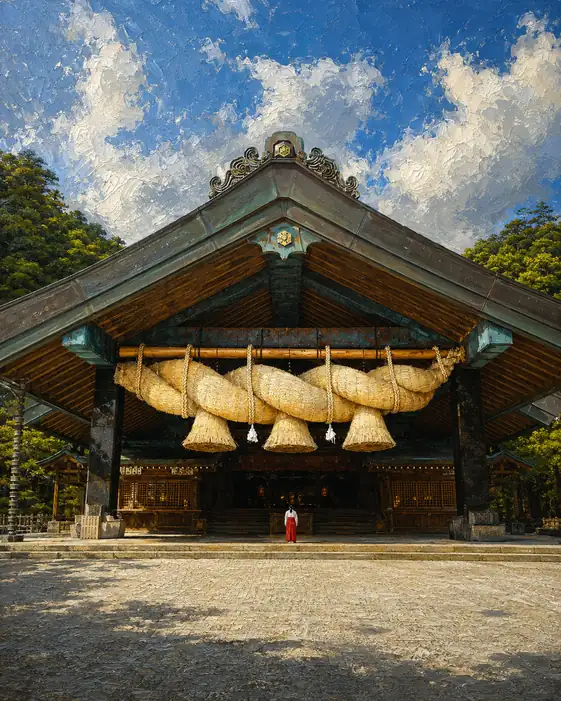 Summer Clouds over the Grand Shimenawa Sanctuary
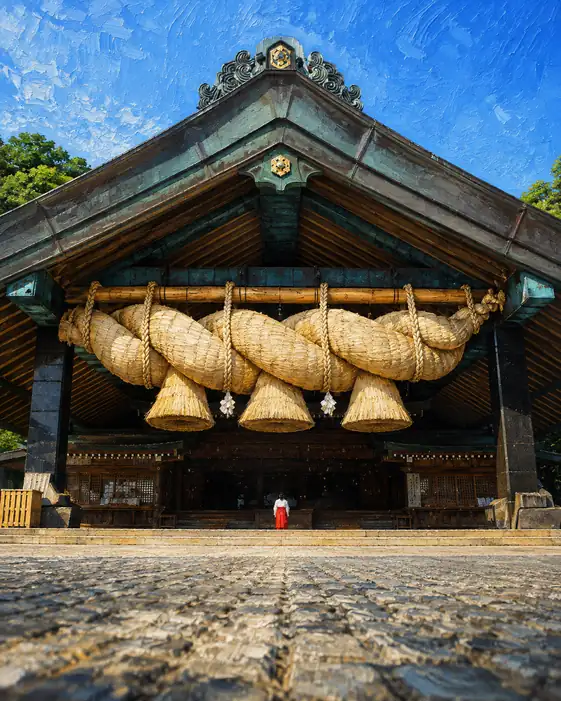 Low Angle View of the Great Shimenawa Sanctuary
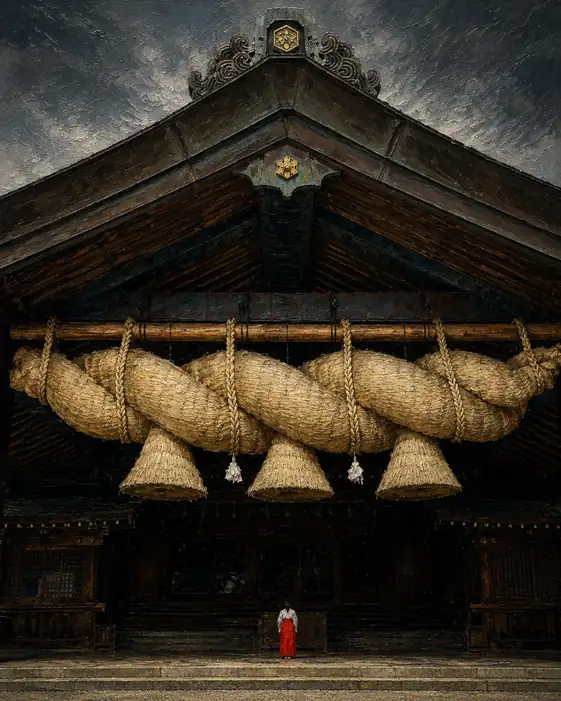 Solemn Gables and the Great Shimenawa
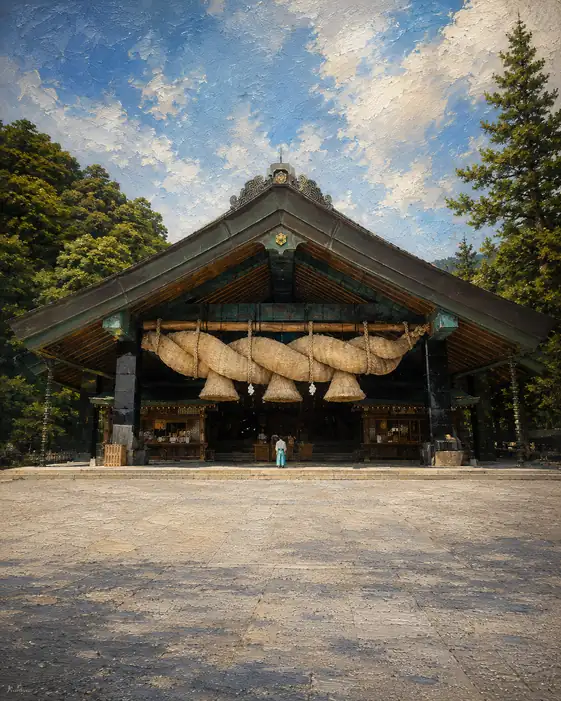 Open Courtyard before the Sacred Shimenawa
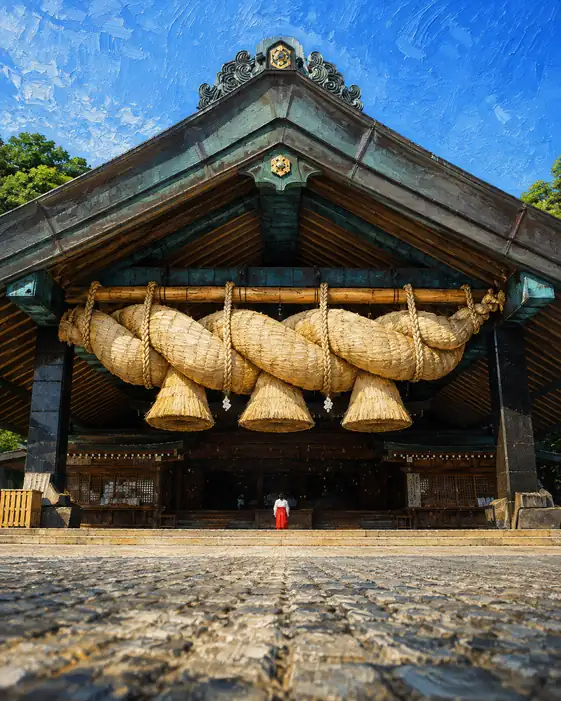 Izumo, a Prayer Binding the Sacred Realm
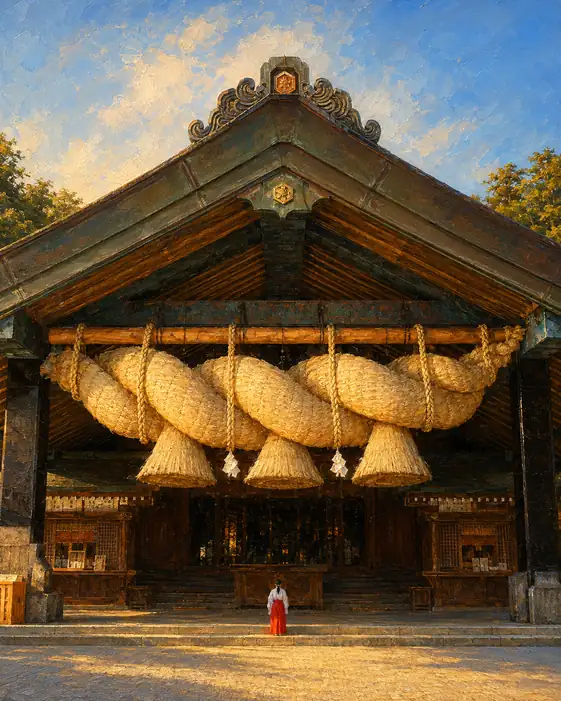 Golden Radiance on the Great Shimenawa
 Maiden before the Sacred Shimenawa
 One Prayer Beneath the Great Rope
 Rain Enters the House of Prayer