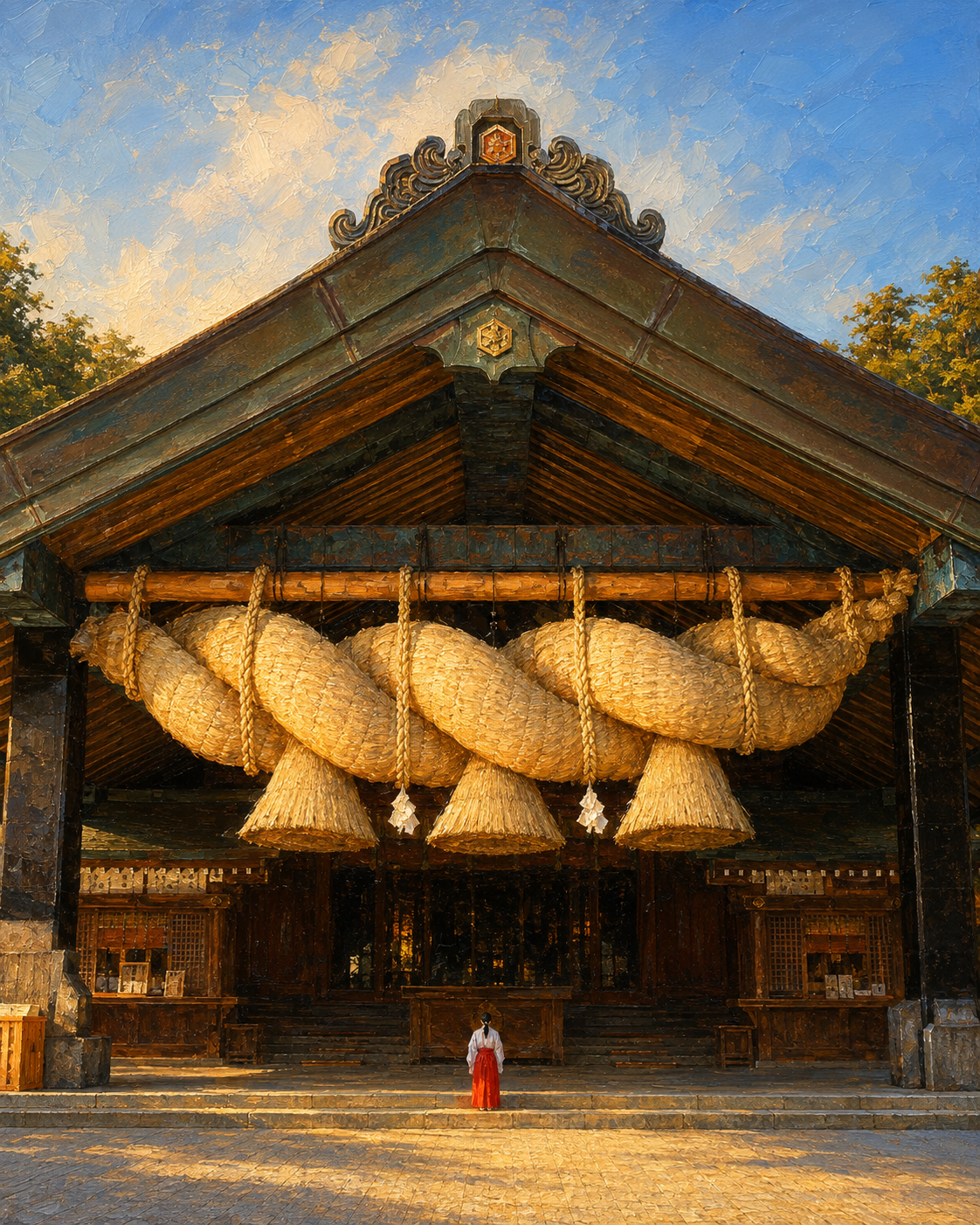
Golden Radiance on the Great Shimenawa
Critique
Introduction This sunlit shrine transforms monumental weight through warmth. The immense rope dominates, but golden illumination across straw, timber, and paving makes the threshold inhabited rather than remote. Description A symmetrical gable rises into blue sky and cream cloud. Ridge ornaments and two gold crests mark the axis. Beneath the roof, a vast braided rope spans the entrance with cords, three tassels, and white ornaments. Light catches every ridge. Lattice windows flank a black interior. A white-and-red figure stands centered as amber sunlight spreads across stone. Analysis Roof diagonals, horizontal rope, and vertical attendant form a hierarchy. Repeated oval loops create heavy rhythm, softened by radiant straw. Light descends from cloud edges to roof, rope, timber, garment, and pavement in a warm cascade. Blue sky supplies complementary coolness. The legible figure strengthens the relation between service and threshold. Dense strokes give light physical thickness. Interpretation and Evaluation The scene presents tradition as illuminated labor. The rope signifies communal making and protection, yet sunlight reveals its construction; every strand evidences hands and time. Red clothing extends warmth into human presence, connecting ritual order to action. Symmetry and gold risk idealizing authority, but weathered metal, interior shadow, and uneven stone maintain weight. Warmth entering the forecourt makes space for approach without diminishing awe. Conclusion Through coherent light, tactile braid, and centered human scale, the work balances grandeur with welcome. It shows sacred architecture not only as something preserved from the past, but as a threshold repeatedly renewed by illumination, maintenance, and presence.
Same Subcategory
Similar Artworks
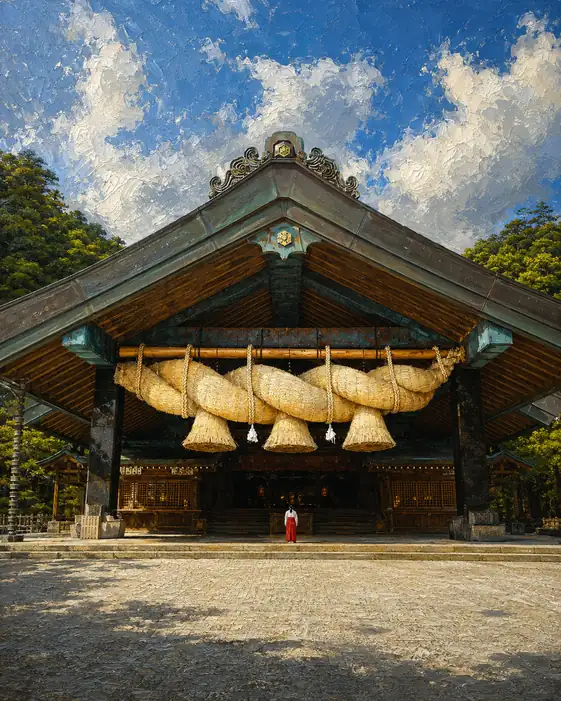 Summer Clouds over the Grand Shimenawa Sanctuary
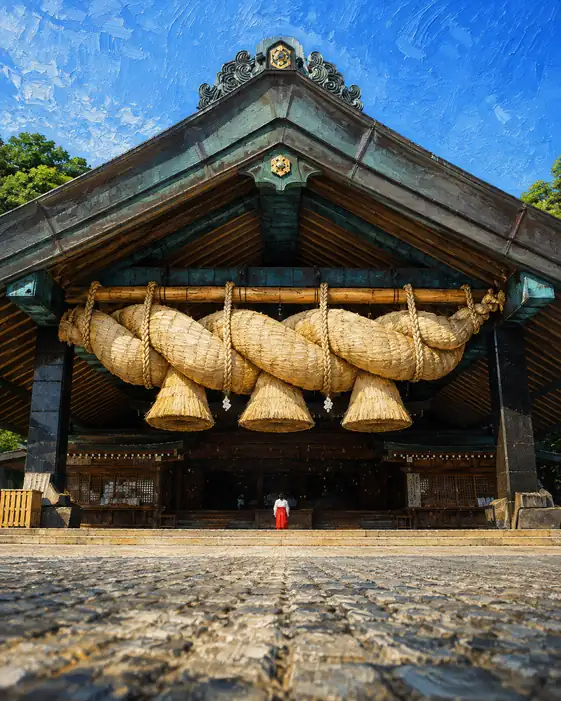 Izumo, a Prayer Binding the Sacred Realm
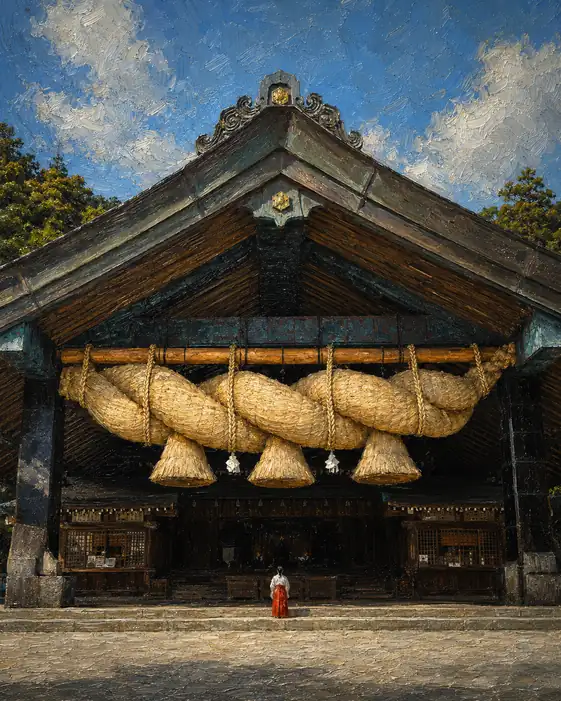 Maiden before the Sacred Shimenawa
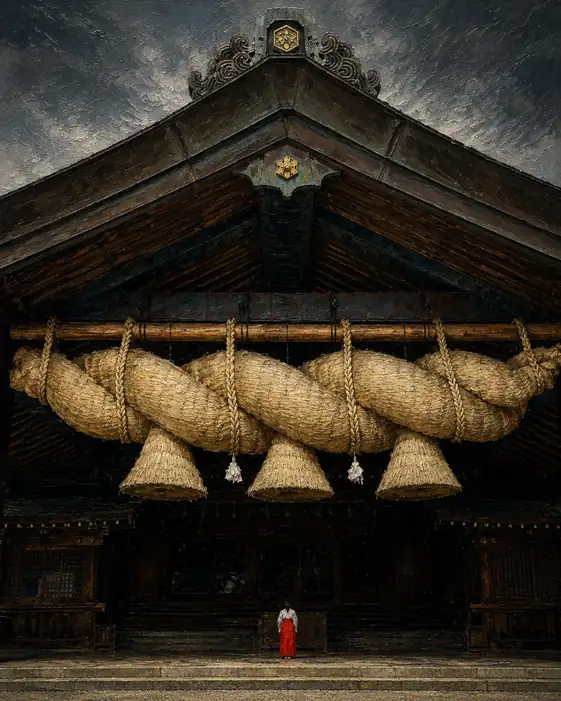 Solemn Gables and the Great Shimenawa
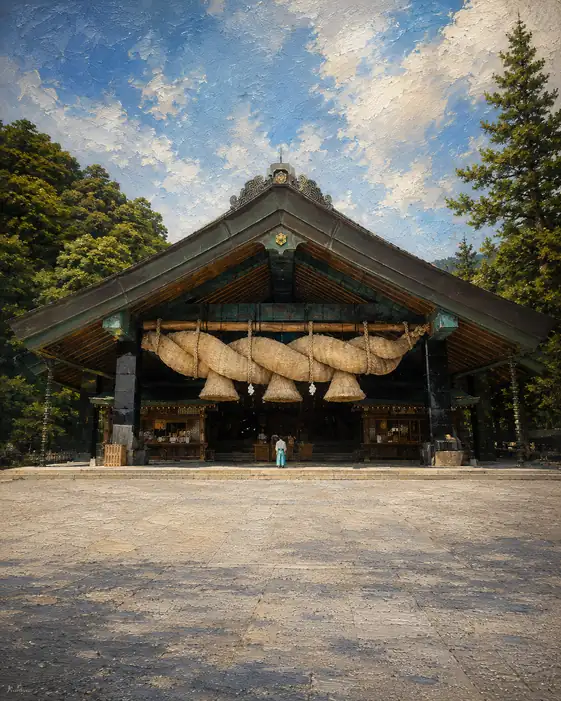 Open Courtyard before the Sacred Shimenawa
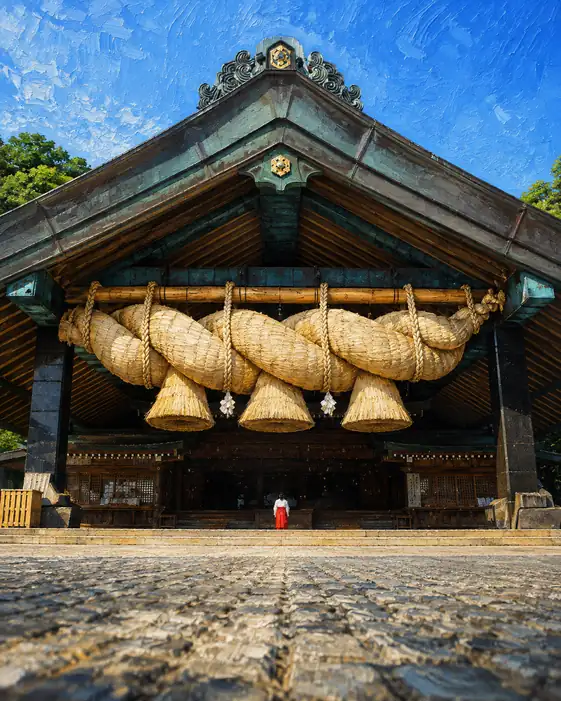 Low Angle View of the Great Shimenawa Sanctuary
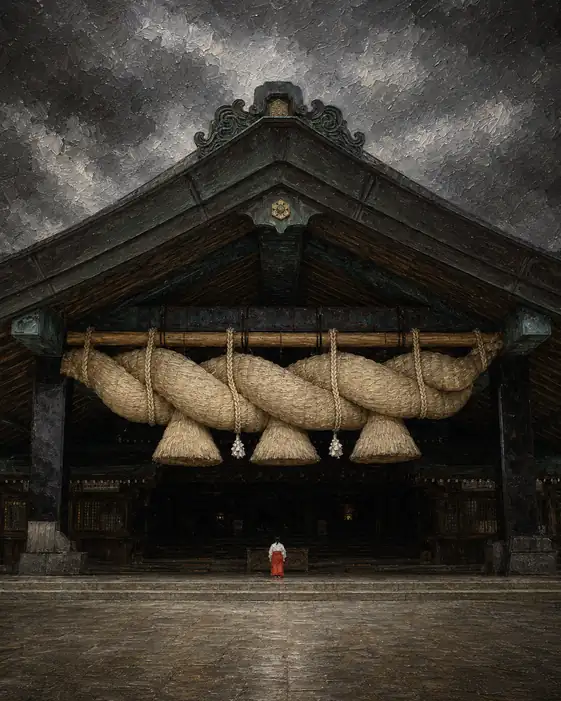 Shrine Maiden under the Storm-Laden Sky
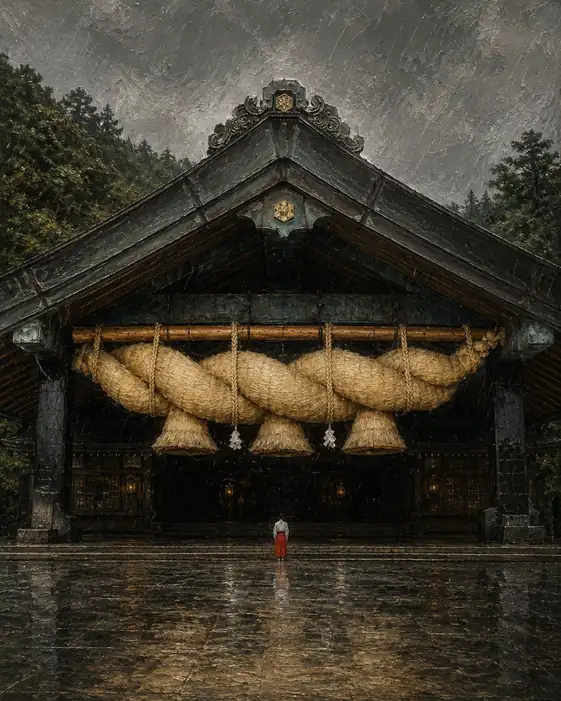 Maiden on Rain-Wet Flagstones before the Great Shimenawa
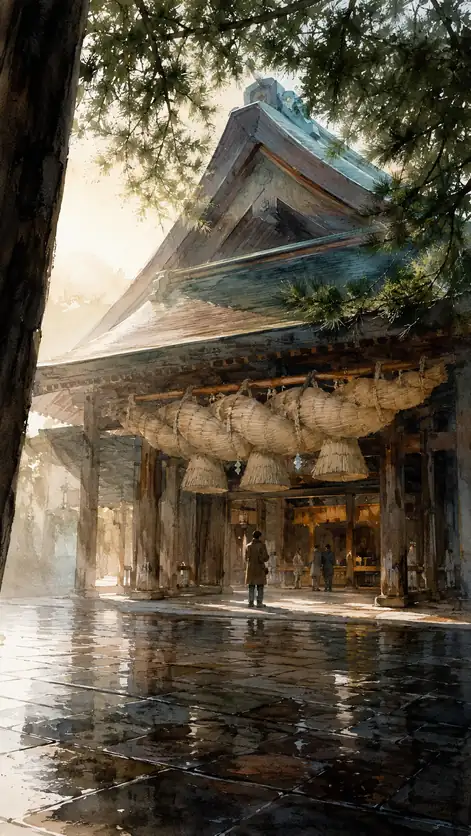 One Prayer Beneath the Great Rope
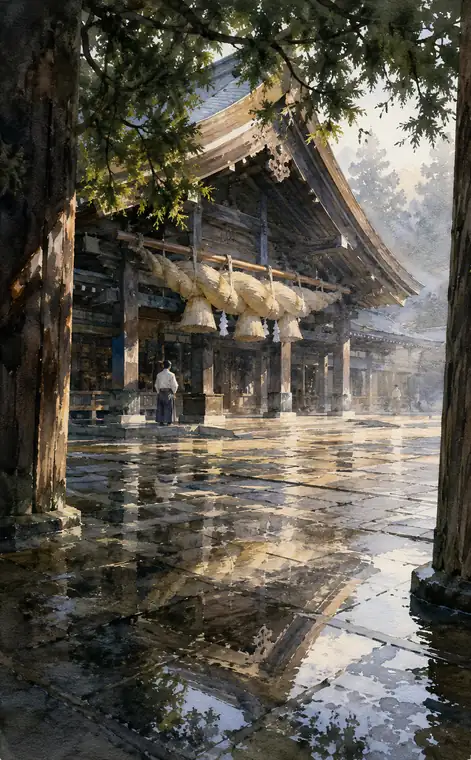 Rain Enters the House of Prayer