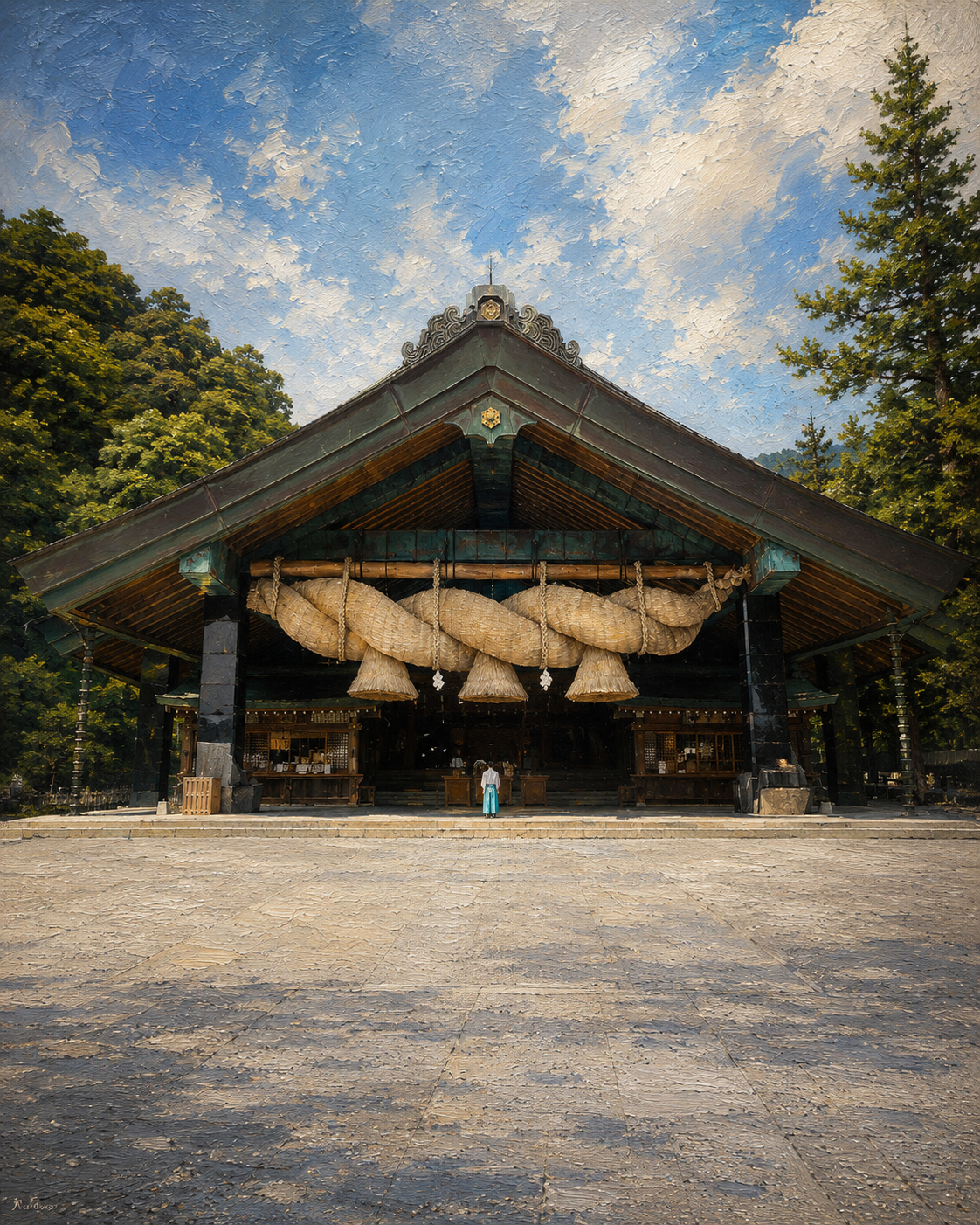
Open Courtyard before the Sacred Shimenawa
Critique
Introduction This wide frontal view places sacred architecture within bright sky, forest, and expansive forecourt. It emphasizes approach: the viewer crosses broad stone before reaching attendant and rope. Description A symmetrical gabled shrine stands upper-middle, framed by trees and a tall right conifer. Blue sky and white clouds occupy the top. The dark roof bears cresting and gold emblems. A pale braided rope with three tassels spans the entrance. A lone white-and-blue-green figure stands centrally. The lower half is light-gray pavement with seams, texture, and long shadows. Analysis Symmetry gives unusual weight to negative space. Roof diagonals converge centrally, while forecourt lines guide the eye upward. The rope creates a dense threshold between open ground and shadowed interior. Warm straw contrasts with cool roof, clothing, and sky. Trees soften triangular rigidity and add lateral depth. Thick strokes cover cloud, foliage, timber, and stone, while daylight clearly separates materials. Interpretation and Evaluation The image frames reverence as approach rather than confrontation. Empty court makes distance meaningful, while the attendant provides welcome and measure. Blue-green clothing harmonizes with roof and sky, quietly belonging to the site. Symmetry could appear static, but clouds, uneven shadows, and asymmetrical trees open it to weather and time. Generous foreground grants freedom while making the threshold consequential. Conclusion Through widened scale, lucid daylight, and a carefully preserved interval of stone, the work balances accessibility with awe. The shrine remains imposing, but forest, sky, and the patient central figure make its monumentality part of a traversable living environment.
Same Subcategory
Similar Artworks
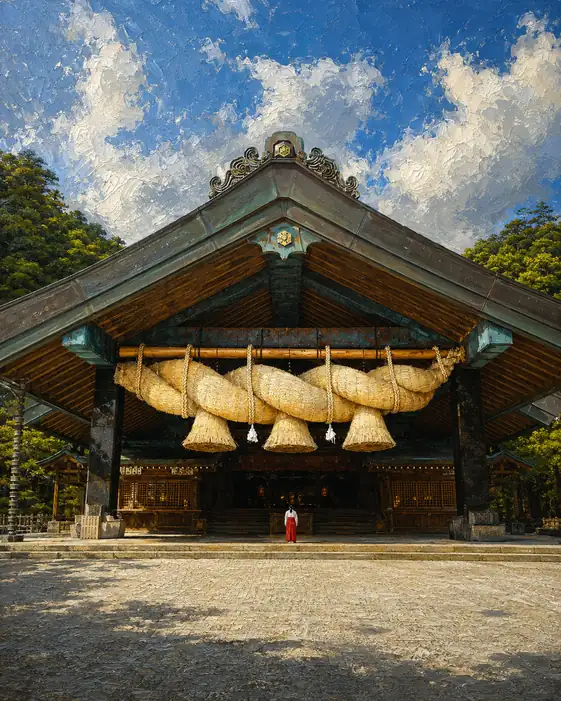 Summer Clouds over the Grand Shimenawa Sanctuary
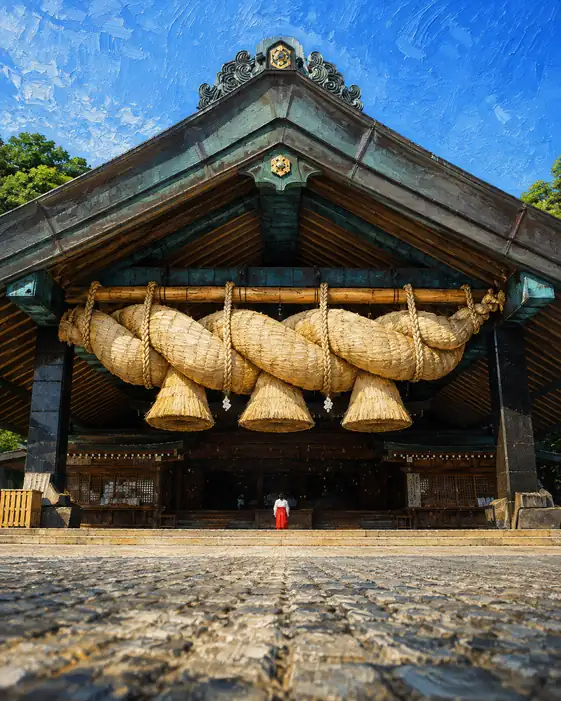 Izumo, a Prayer Binding the Sacred Realm
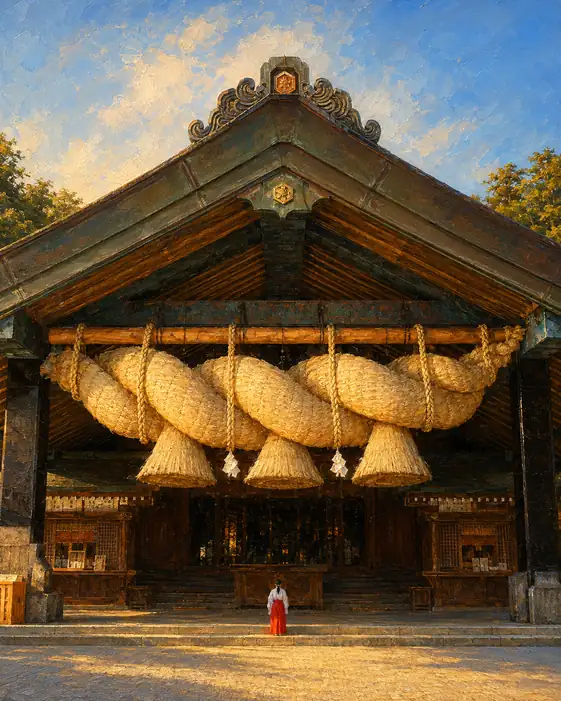 Golden Radiance on the Great Shimenawa
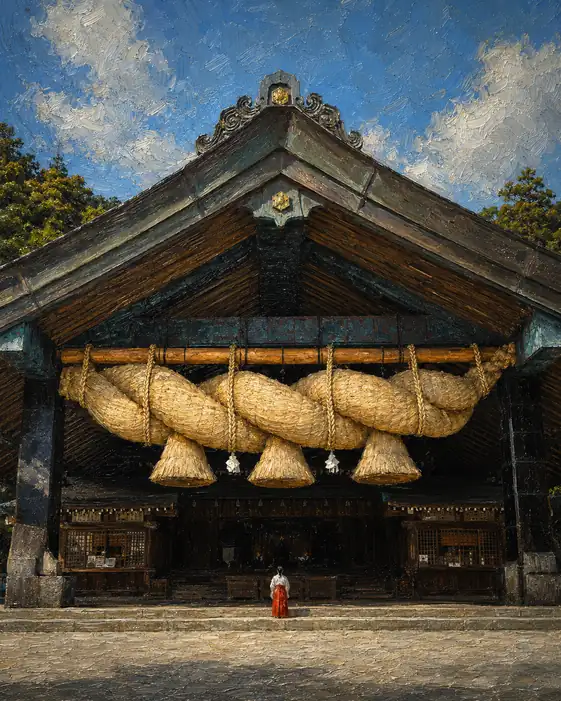 Maiden before the Sacred Shimenawa
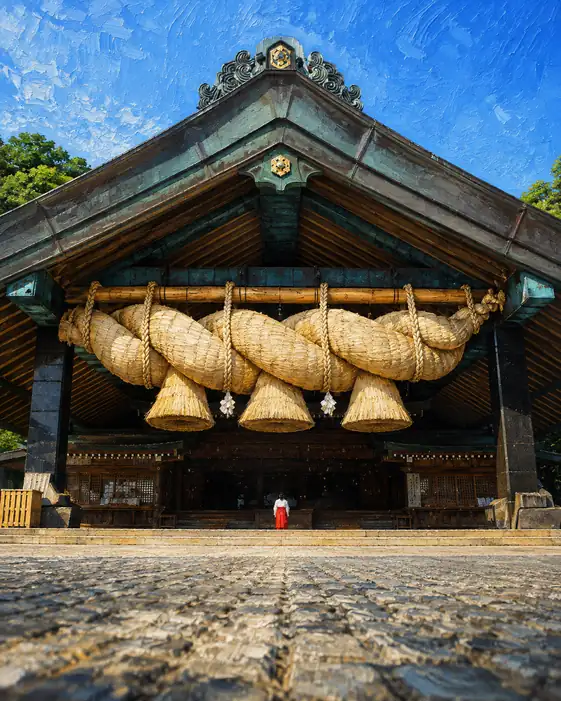 Low Angle View of the Great Shimenawa Sanctuary
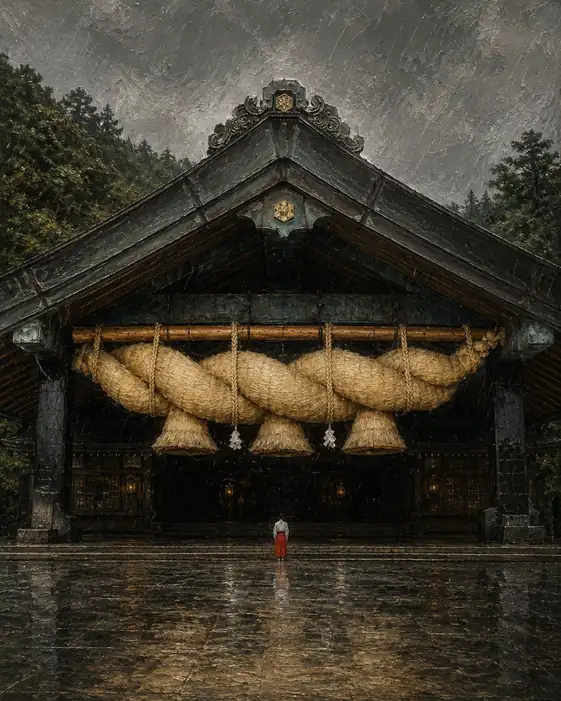 Maiden on Rain-Wet Flagstones before the Great Shimenawa
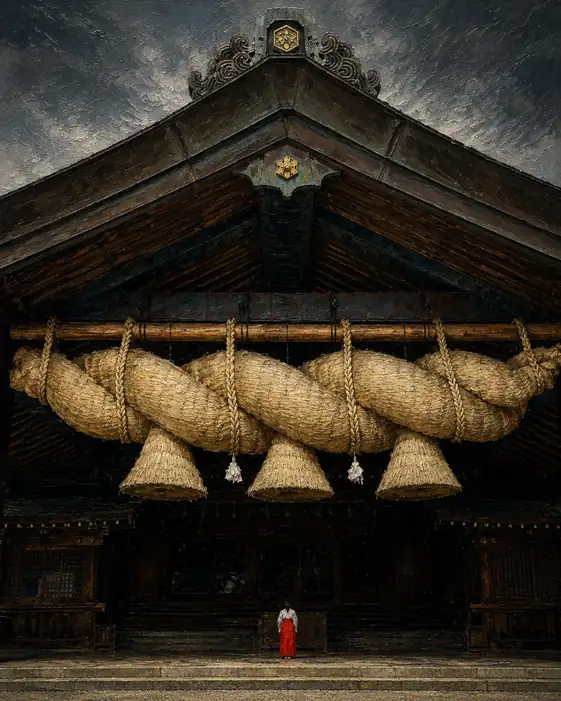 Solemn Gables and the Great Shimenawa
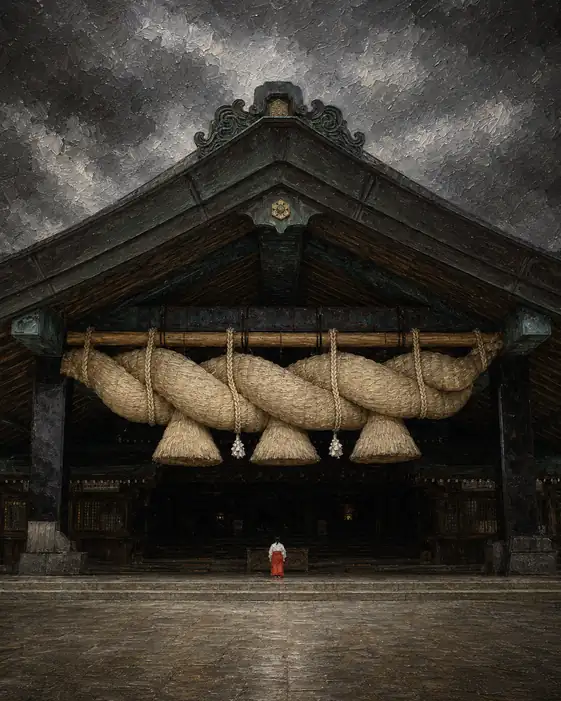 Shrine Maiden under the Storm-Laden Sky
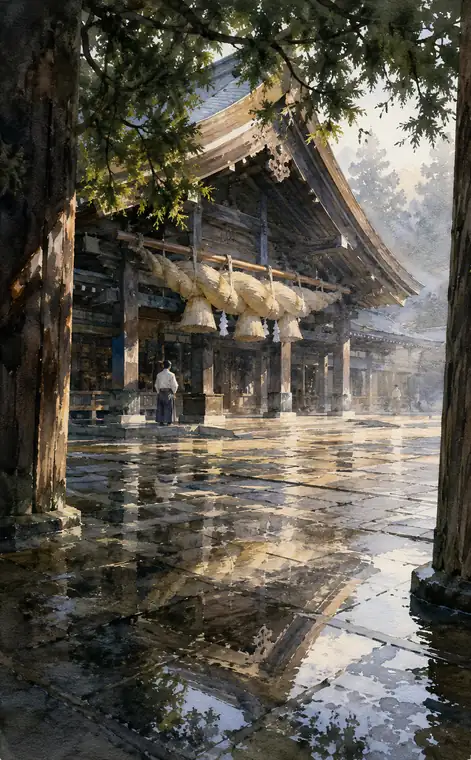 Rain Enters the House of Prayer
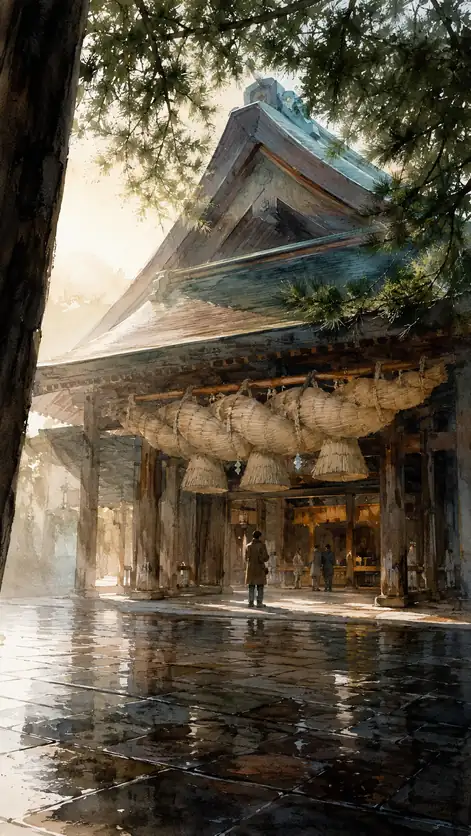 One Prayer Beneath the Great Rope