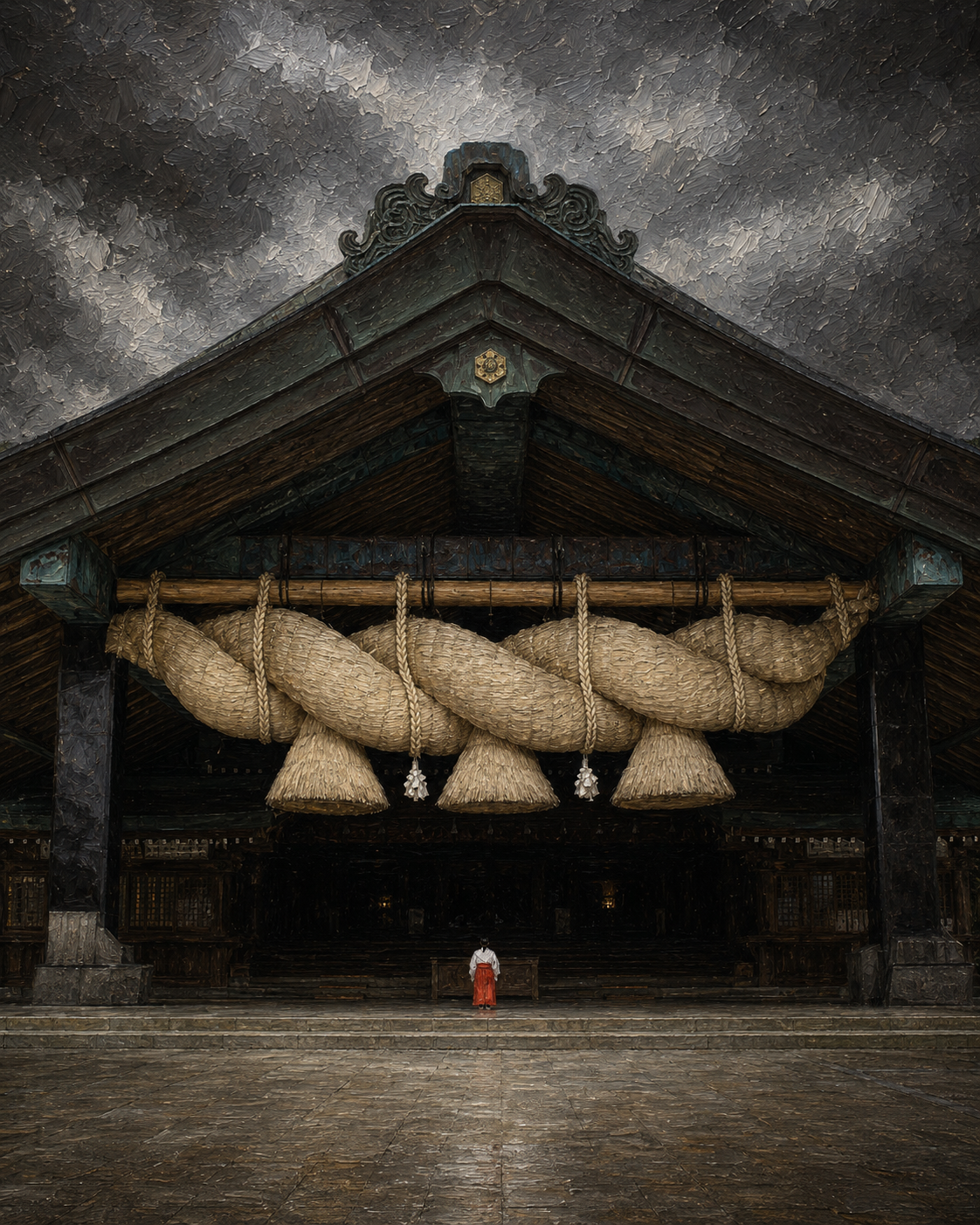
Shrine Maiden under the Storm-Laden Sky
Critique
Introduction This storm-darkened shrine emphasizes exposure and endurance over brilliance. An immense rope, solitary attendant, and wet empty courtyard make sacred scale physically and psychologically demanding. Description The symmetrical façade fills the upper two-thirds. Green-black roof planes rise to cresting and gold emblems beneath turbulent gray sky. A massive straw rope spans the entrance, secured by cords and ending in three tassels with white ornaments. The interior remains unreadable in shadow around a tiny white-and-red figure. Broad steps and rain-darkened pavement extend forward with muted reflections. Analysis Three zones control the image: agitated cloud, compressed architecture, and open wet ground. Roof diagonals converge above the rope, concentrating pressure. The swollen braid counters hard angles, yet reinforces gravity. Straw and red garment are rare warm accents within charcoal and oxidized green. Expansive foreground further reduces the figure, while stone glints echo rope fibers. Directional marks make sky churn and pavement feel weather-scoured. Interpretation and Evaluation The work presents ritual continuity under adversity. The rope embodies communal labor and protection, but storm cloud and wet stone deny effortlessness. The attendant signifies persistence beneath forces larger than one body. Symmetry could imply invulnerability, yet weathering, darkness, and exposed courtyard introduce uncertainty. The long foreground creates spatial loneliness, turning reverence from abstraction into distance that must be crossed. Conclusion Through severe tonal restraint, monumental symmetry, and an enlarged interval of wet ground, this image makes the shrine feel both sheltering and formidable. Its central figure does not command the architecture; quiet endurance gives the vast setting its human meaning.
Same Subcategory
Similar Artworks
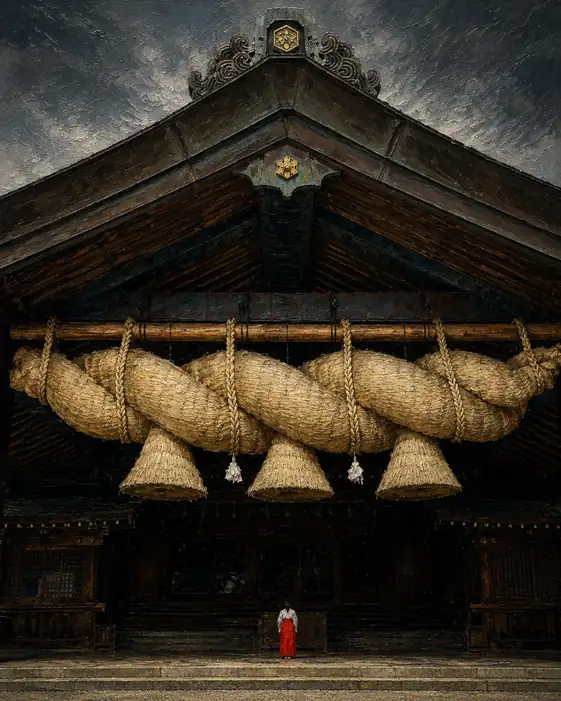 Solemn Gables and the Great Shimenawa
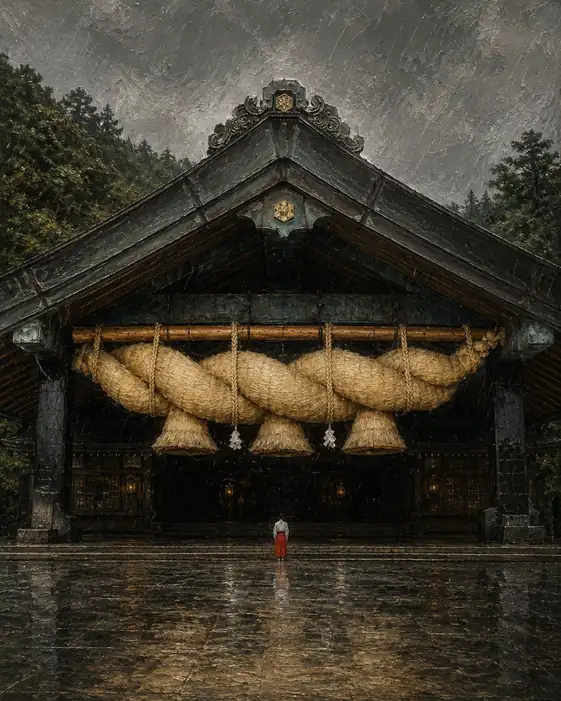 Maiden on Rain-Wet Flagstones before the Great Shimenawa
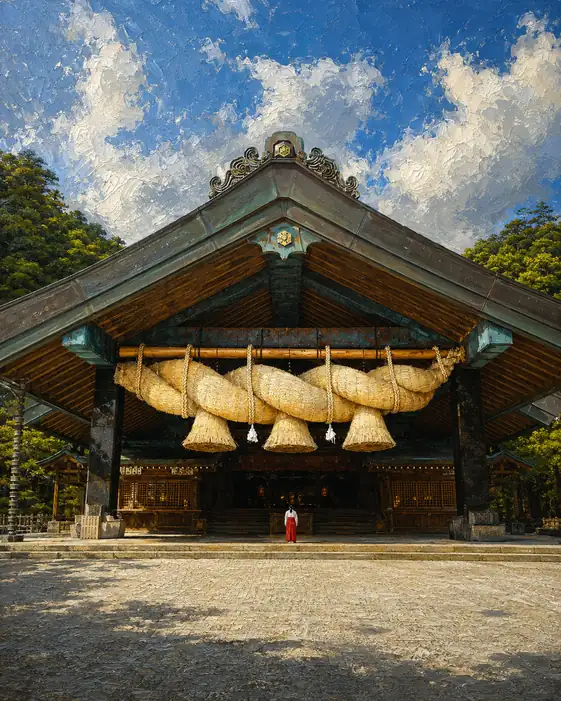 Summer Clouds over the Grand Shimenawa Sanctuary
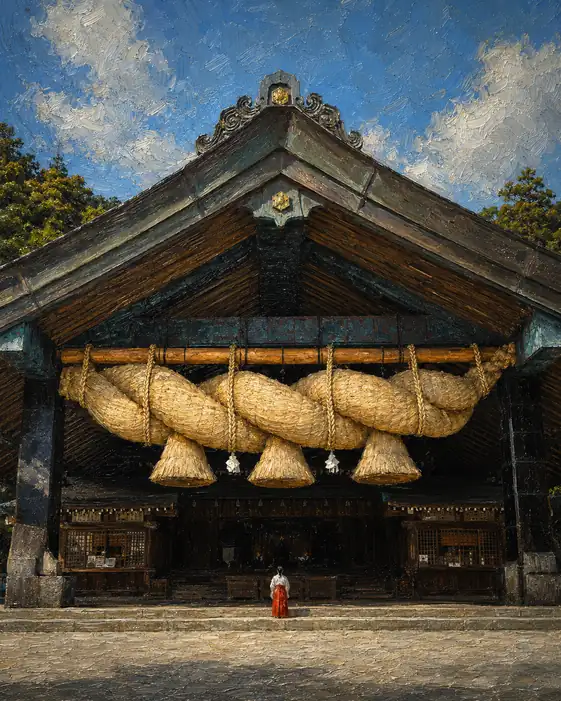 Maiden before the Sacred Shimenawa
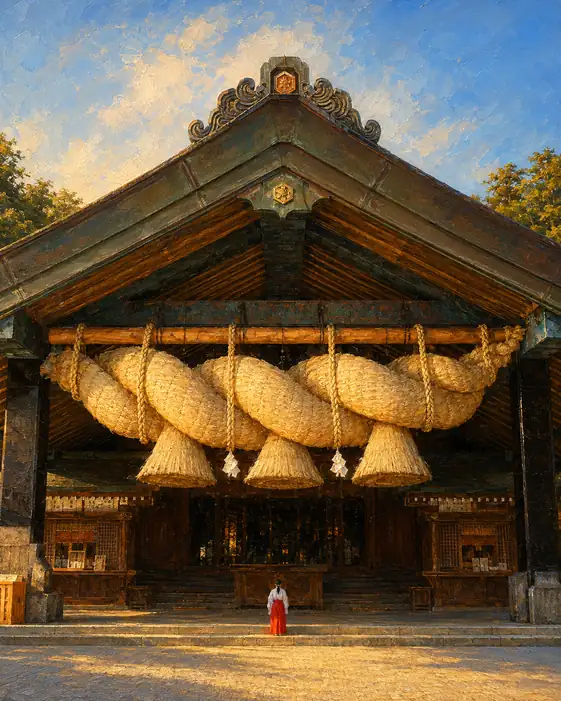 Golden Radiance on the Great Shimenawa
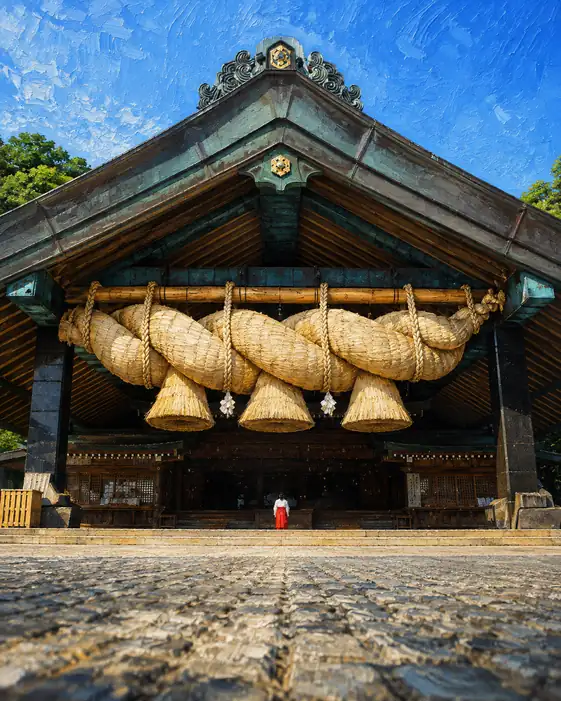 Low Angle View of the Great Shimenawa Sanctuary
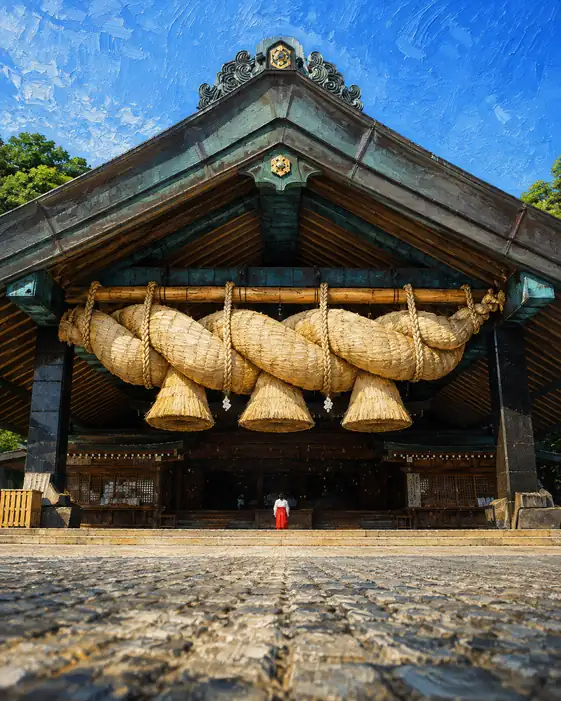 Izumo, a Prayer Binding the Sacred Realm
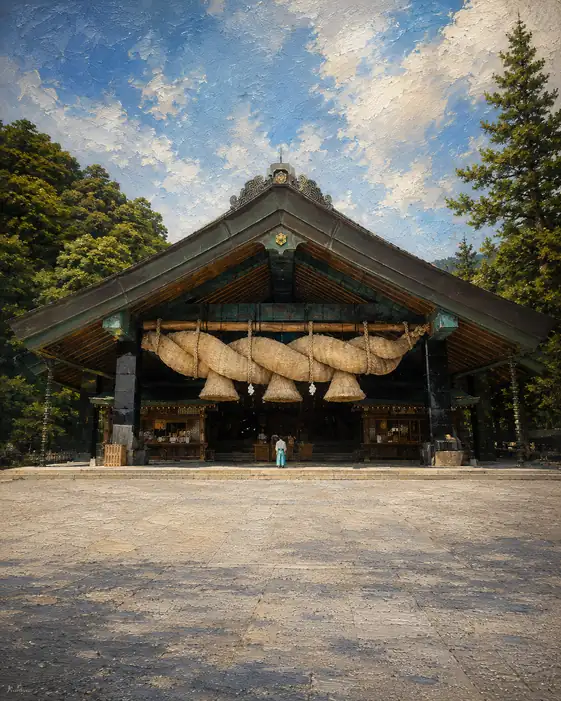 Open Courtyard before the Sacred Shimenawa
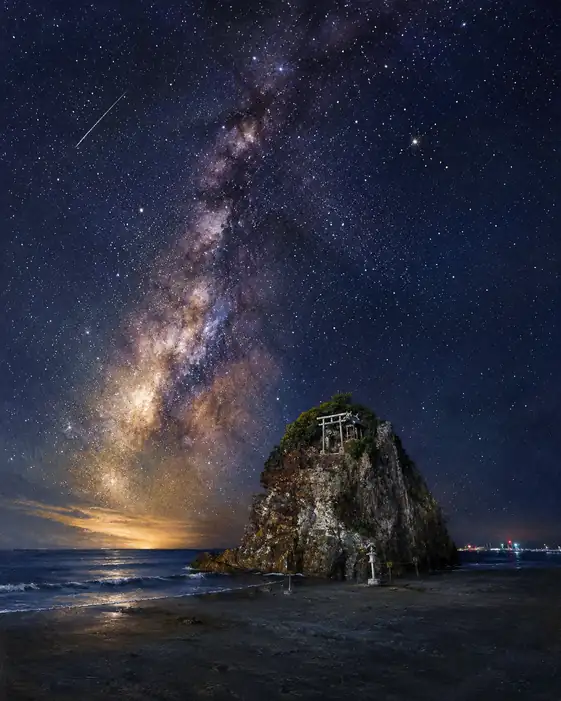 Celestial River above the Ancient Coastal Isle
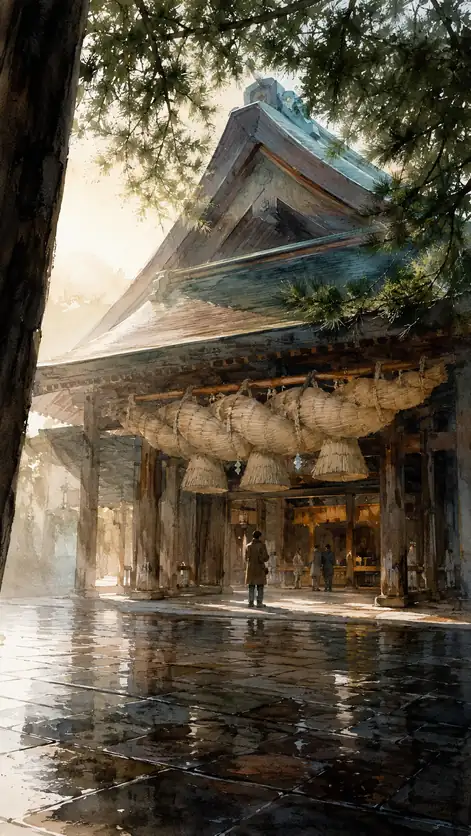 One Prayer Beneath the Great Rope