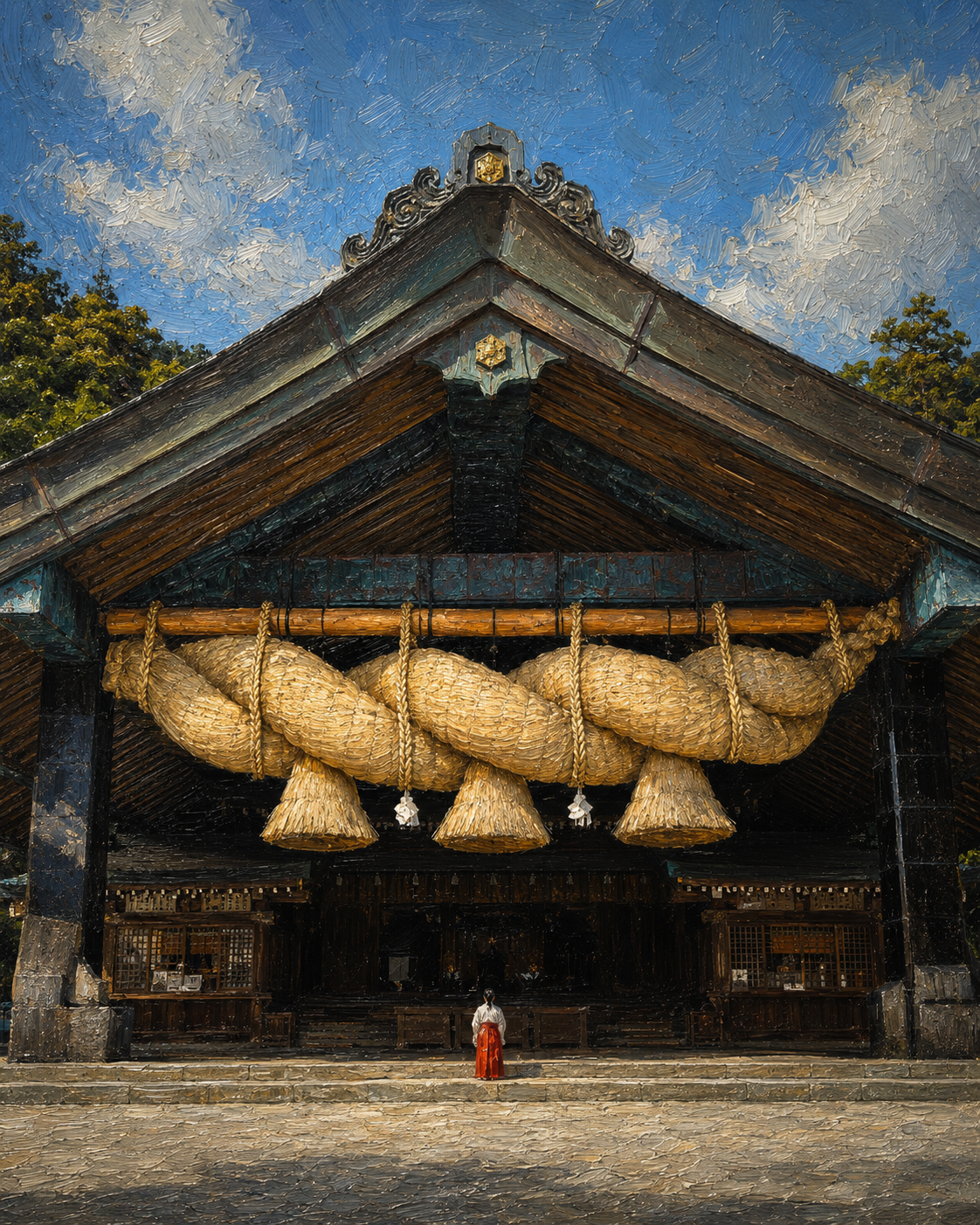
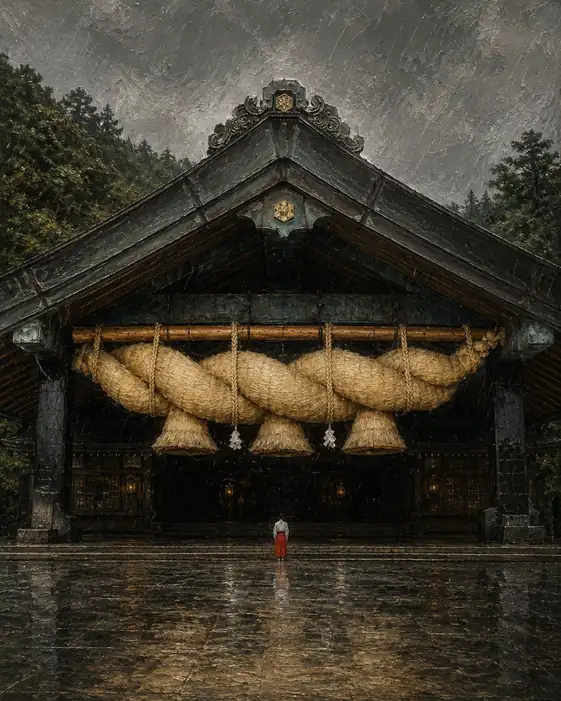
Maiden before the Sacred Shimenawa
Critique
Introduction This frontal shrine turns architecture and sacred rope into a monumental emblem. Symmetry establishes authority, while the tiny red-and-white figure supplies human scale and active ritual attention. Description A dark gable fills the upper center, edged by layered eaves, weathered green-blue metal, cresting, and gold emblems. Beneath hangs an enormous braided straw rope with three heavy tassels and white ornaments. The interior is almost black beside lattice windows. A lone attendant in white and red stands centrally. Blue sky, thick clouds, and edge trees surround the roof. Analysis Symmetry organizes every force: roof slopes converge centrally, rope spans horizontally, and figure anchors the vertical. The swollen braid counters the hard triangle with organic rhythm. Pale straw advances against timber, while red makes a decisive focus. Thick directional marks enliven sky, wood, stone, and fiber, preventing sterile balance. Cropped proximity makes the viewer confront the rope before shadowed interior. Interpretation and Evaluation The work stages collective tradition beside individual service. The rope exceeds human scale, embodying labor and sacred boundary; the attendant makes inheritance present. Bright weather contrasts with guarded interior darkness, suggesting passage from public clarity to mystery. Symmetry risks rigidity, but tactile surface, aged materials, and the minute figure introduce vulnerability. Scale disparity evokes humility without erasing agency. Conclusion Through frontal geometry, dense material texture, and one carefully placed figure, the image combines awe with lived ritual. The shrine feels massive and enduring, yet the small red accent reminds the viewer that sacred continuity depends on repeated human presence.
Same Subcategory
 Two Pilgrims Beneath the Gate of Mountains
Similar Artworks
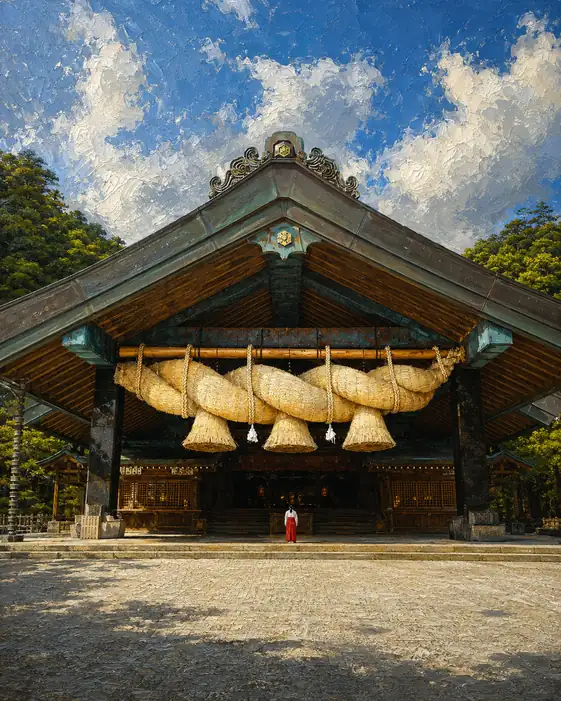 Summer Clouds over the Grand Shimenawa Sanctuary
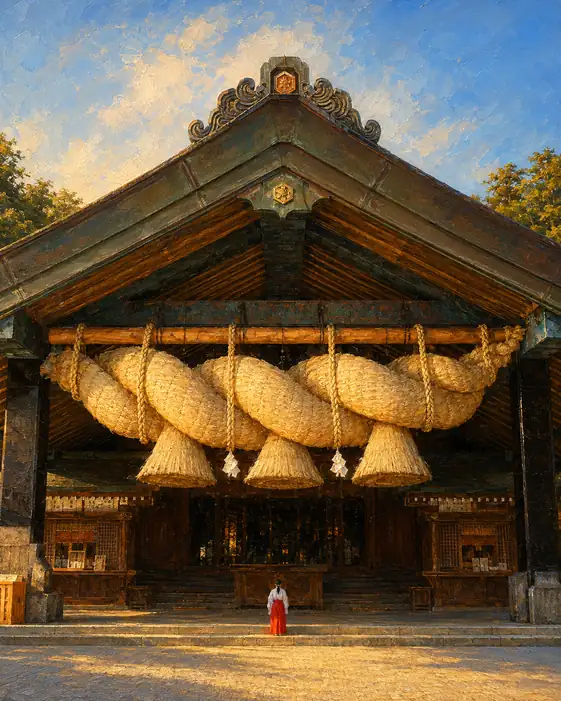 Golden Radiance on the Great Shimenawa
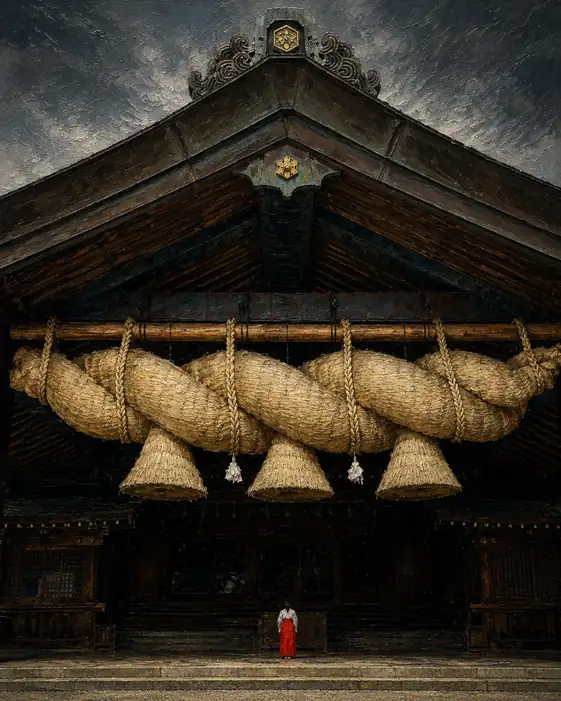 Solemn Gables and the Great Shimenawa
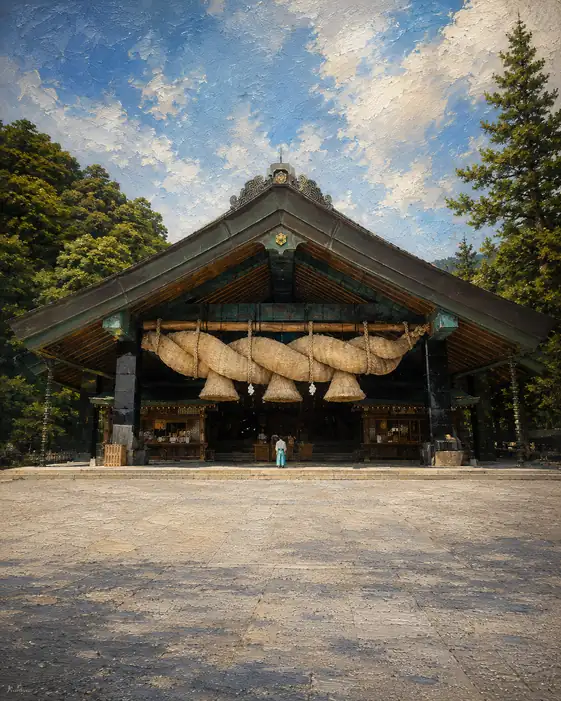 Open Courtyard before the Sacred Shimenawa
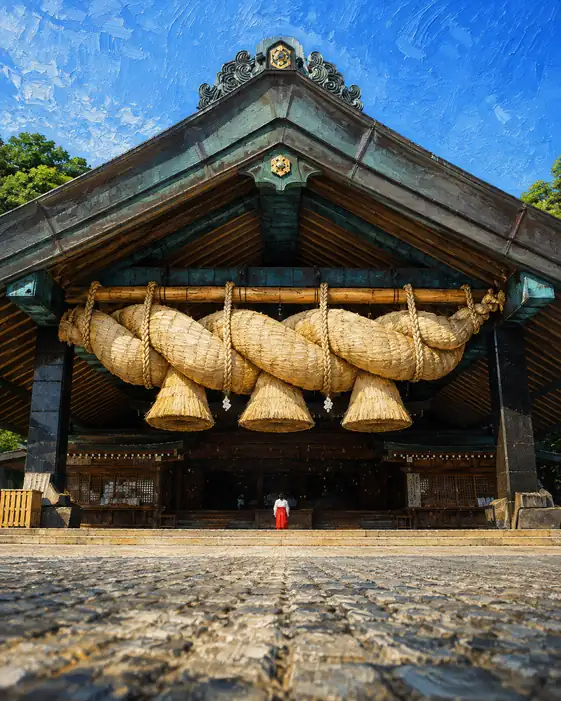 Izumo, a Prayer Binding the Sacred Realm
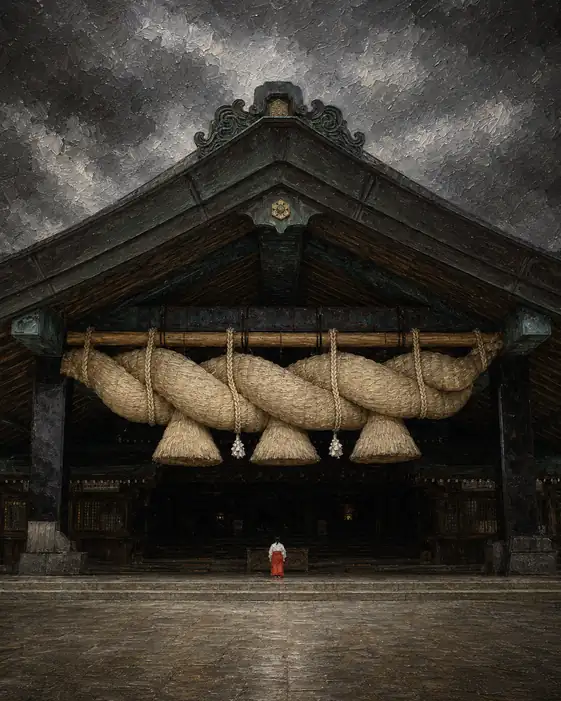 Shrine Maiden under the Storm-Laden Sky
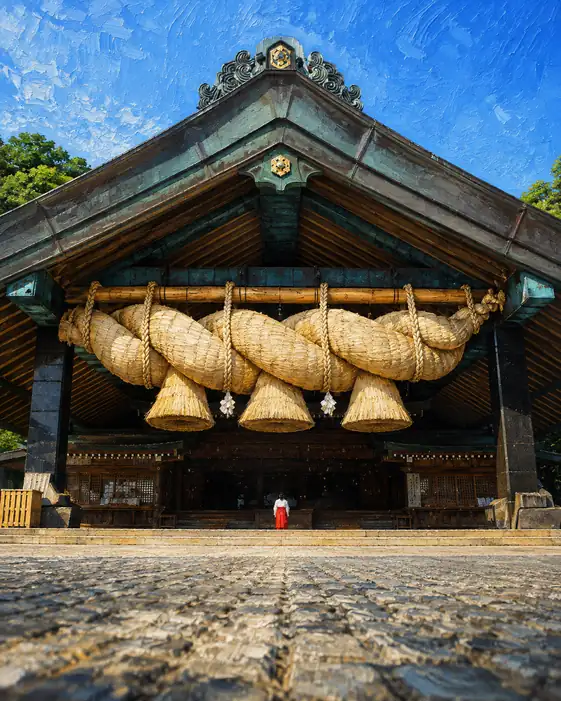 Low Angle View of the Great Shimenawa Sanctuary
 Maiden on Rain-Wet Flagstones before the Great Shimenawa
 Rain Enters the House of Prayer
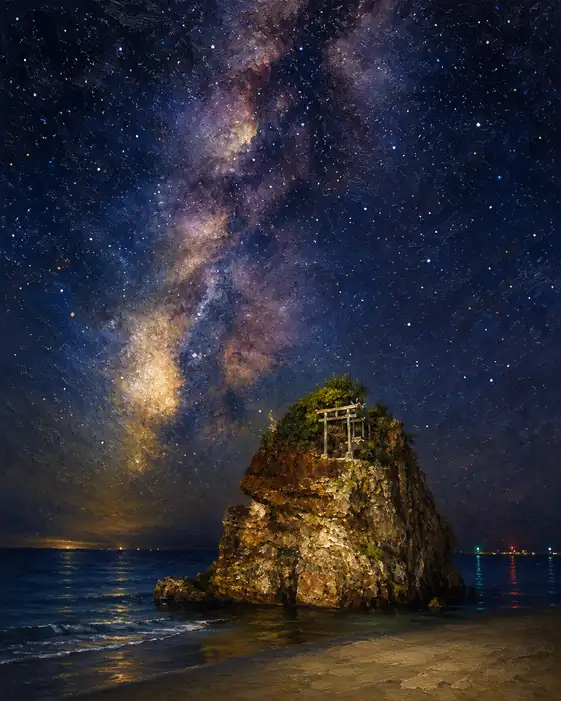 Torii of the Sacred Isle beneath the Milky Way