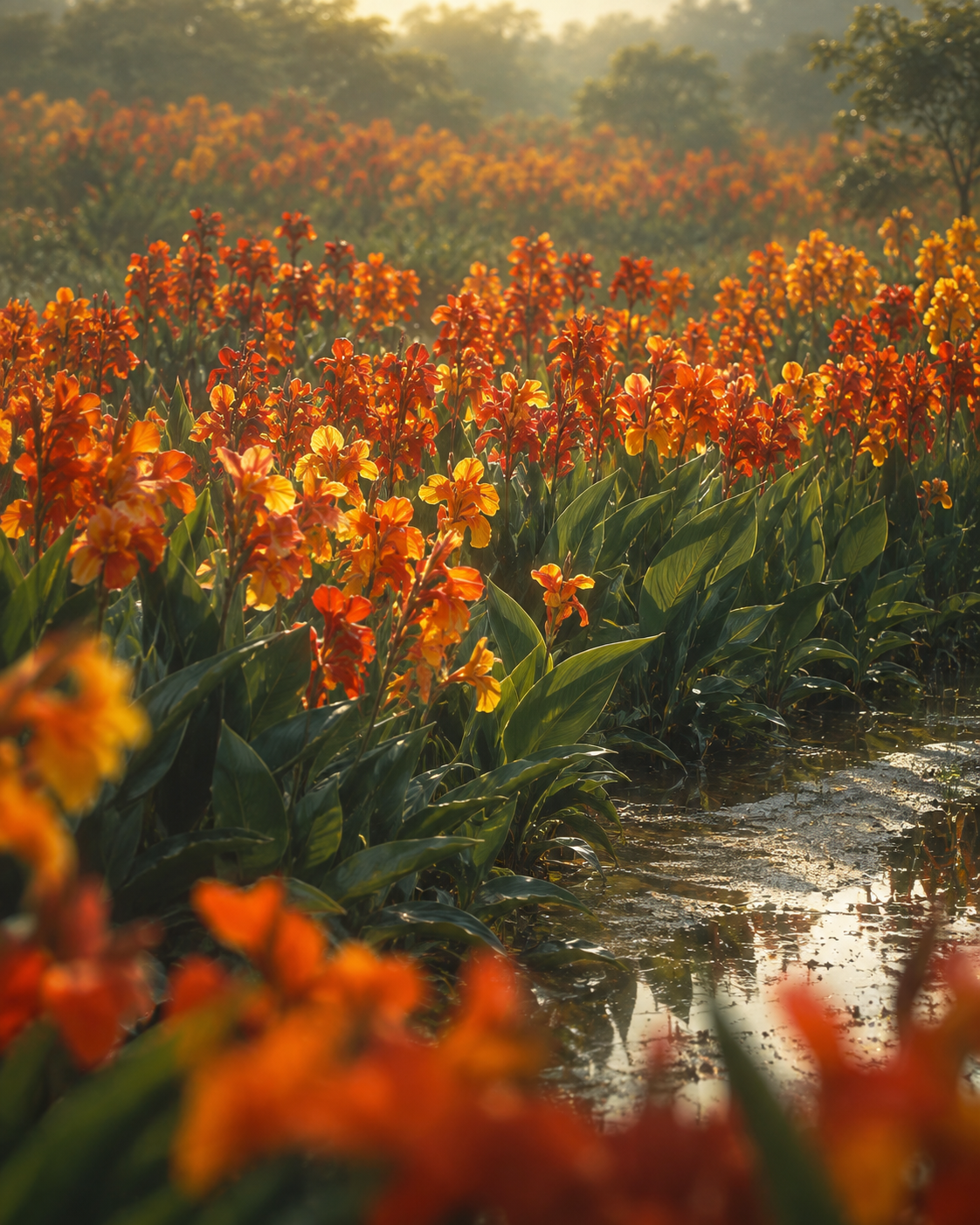
Sunlit Canna Field by the Morning Waters
Critique
Introduction This morning field turns repeated canna into a warm current through mist. A flooded right-hand track interrupts the floral expanse with rough reflection, revealing material conditions beneath its color. Description Orange, scarlet, and yellow flowers fill bands from foreground to distant trees. Broad leaves overlap beneath upright stems. Lower blooms blur strongly, the center remains crisp, and farther rows soften into amber haze. At right, a shallow muddy channel curves inward, carrying foam, ripples, reflections, and sunlight. Dark trees close the horizon under pale morning light. Analysis Repetition establishes rhythm and scale. Central blossoms retain irregular petals, but distant flowers merge into orange pulses, extending the field. The channel cuts diagonally through these bands as a dark reflective counterform. Backlight ignites thin edges while broad leaves remain cool and weighty. Foreground blur places the viewer within the crop. Alternating sharpness, haze, and silhouettes construct depth without one vanishing point. Interpretation and Evaluation The work makes abundance inseparable from water, soil, and weather. The inconvenient channel exposes the field's dependence on water and doubles flowers in unstable reflection. Upright blooms suggest resilient growth above softened ground. Golden light idealizes, but mud, foam, and bent leaves resist pastoral fantasy. Orderly color bands contrast effectively with the irregular watercourse: cultivation has structure, while natural processes revise it. Conclusion Through repeated warm forms, atmospheric recession, and a tactile reflective interruption, the image gives a flower field both radiance and physical credibility. Its beauty emerges not despite the wet ground but through the visible exchange among light, water, leaf, and bloom.
Same Subcategory
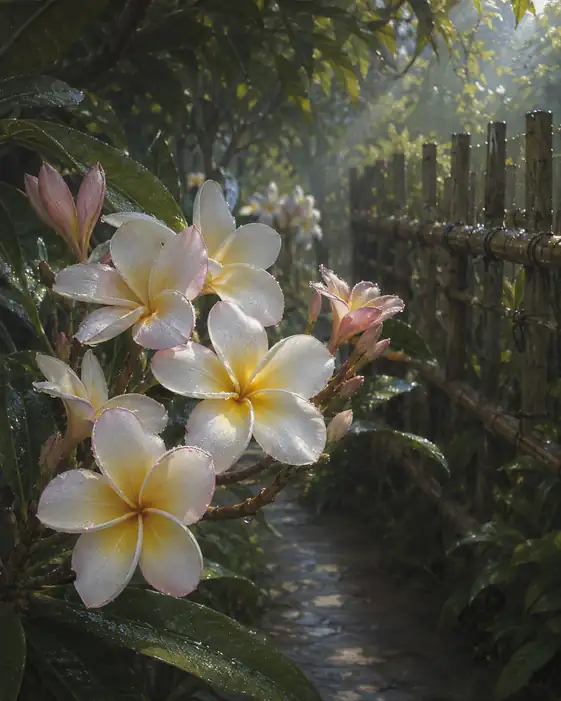 Dewy Plumeria Blossoms beside the Bamboo Fence
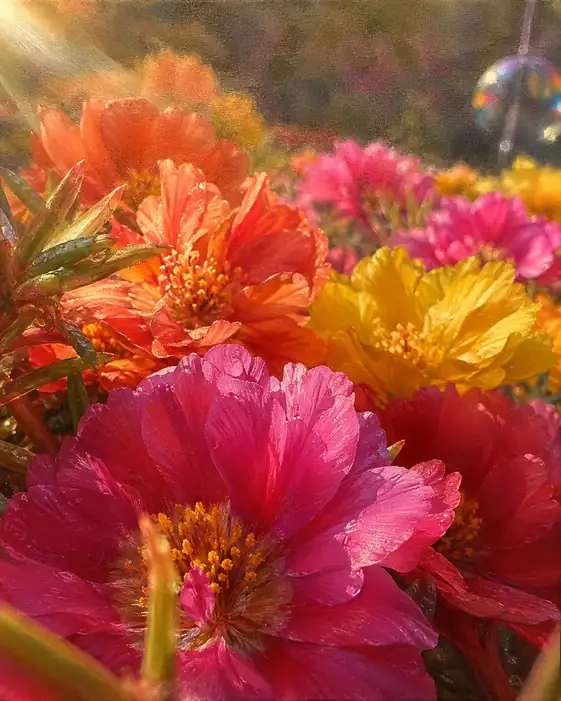 Sunlit Portulaca Blossoms and Rainbow Light
Similar Artworks
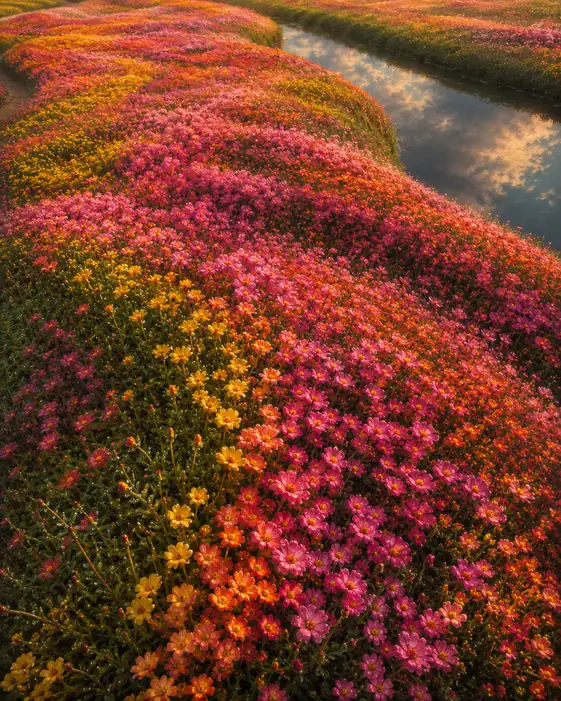 Woven Petals along the Sunset Stream
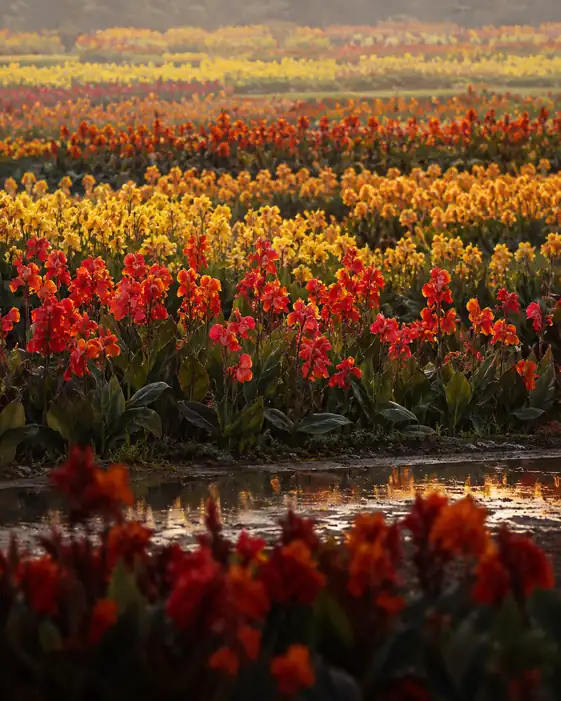 Golden Bands across the Canna Field
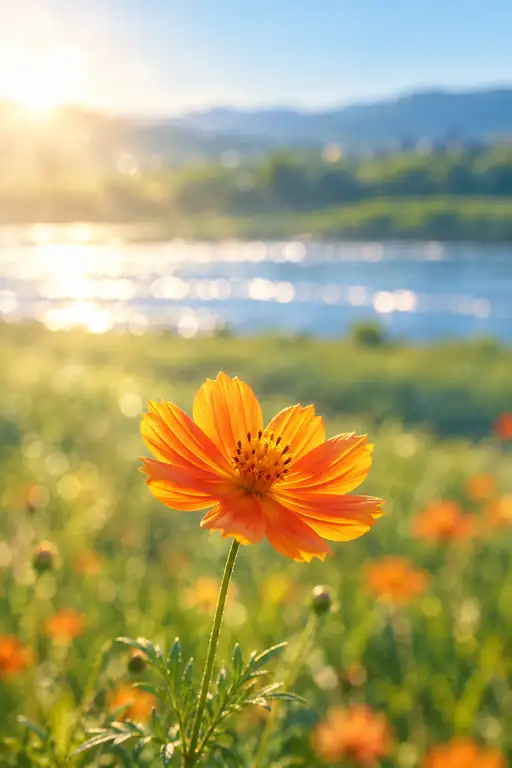 Translucent Amber Cosmos by the River
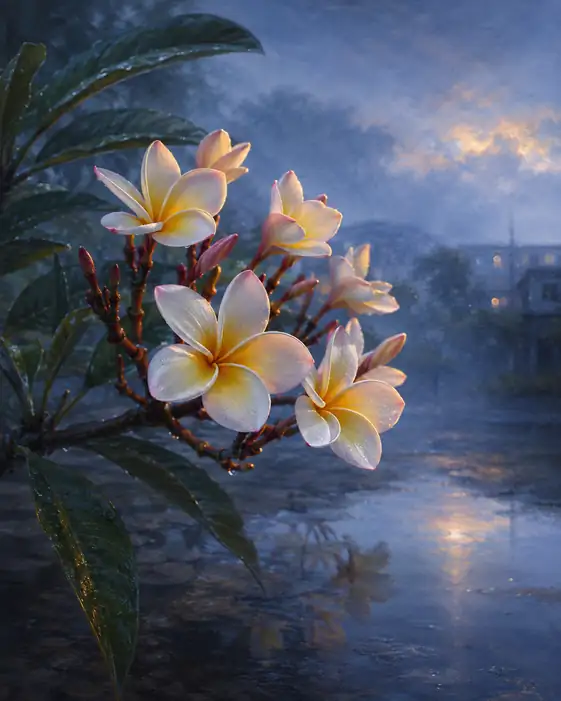 Plumeria Blossoms reflected on the Wet Pavement at Dusk
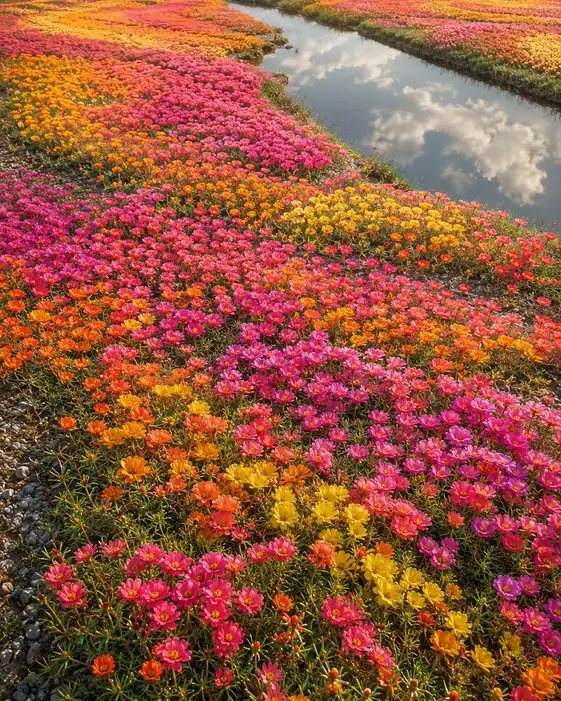 Rainbow Carpet of Moss Roses along the Canal
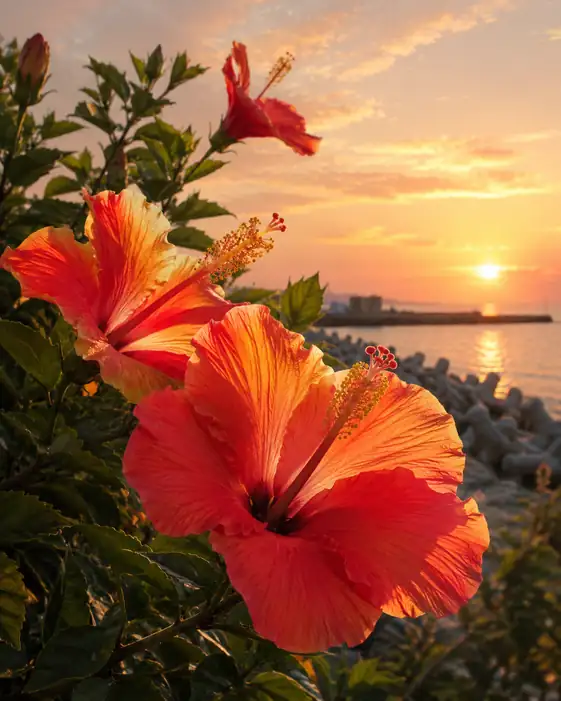 Sunset Radiance on Coastal Hibiscus
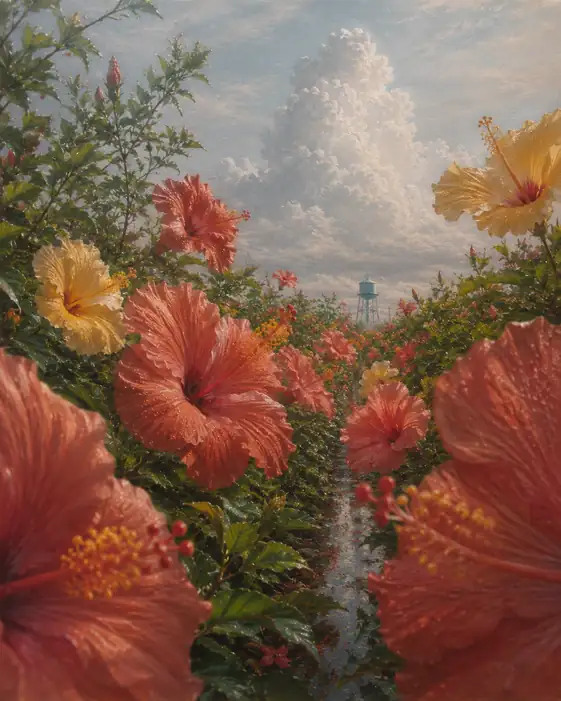 Hibiscus Field under the Cumulus Tower
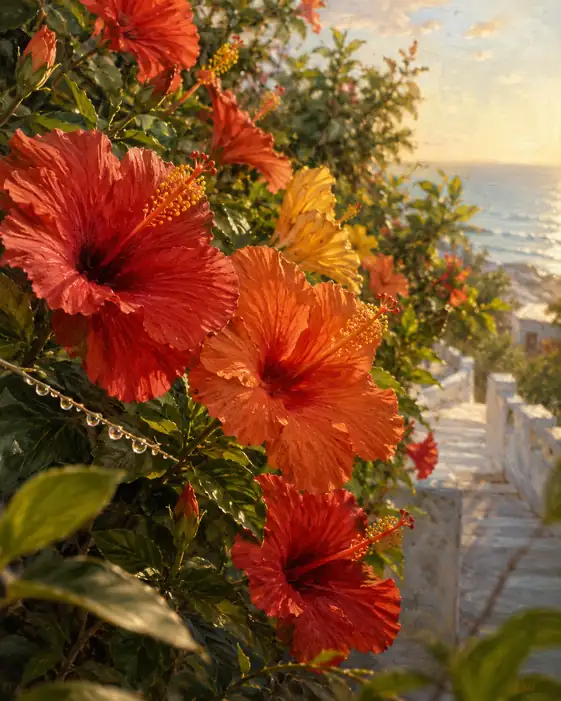 The South Wind Blooms on the Stairway of Light
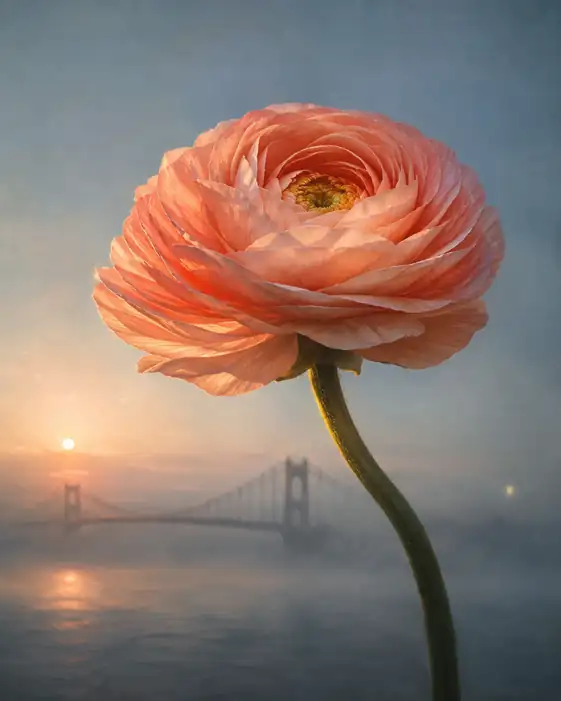 Giant Ranunculus above the Misty Suspension Bridge
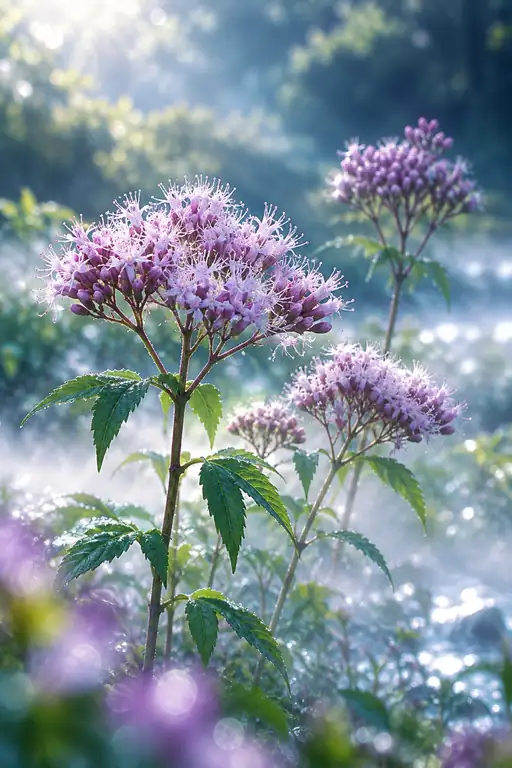 Where the Morning Mist Has Threads