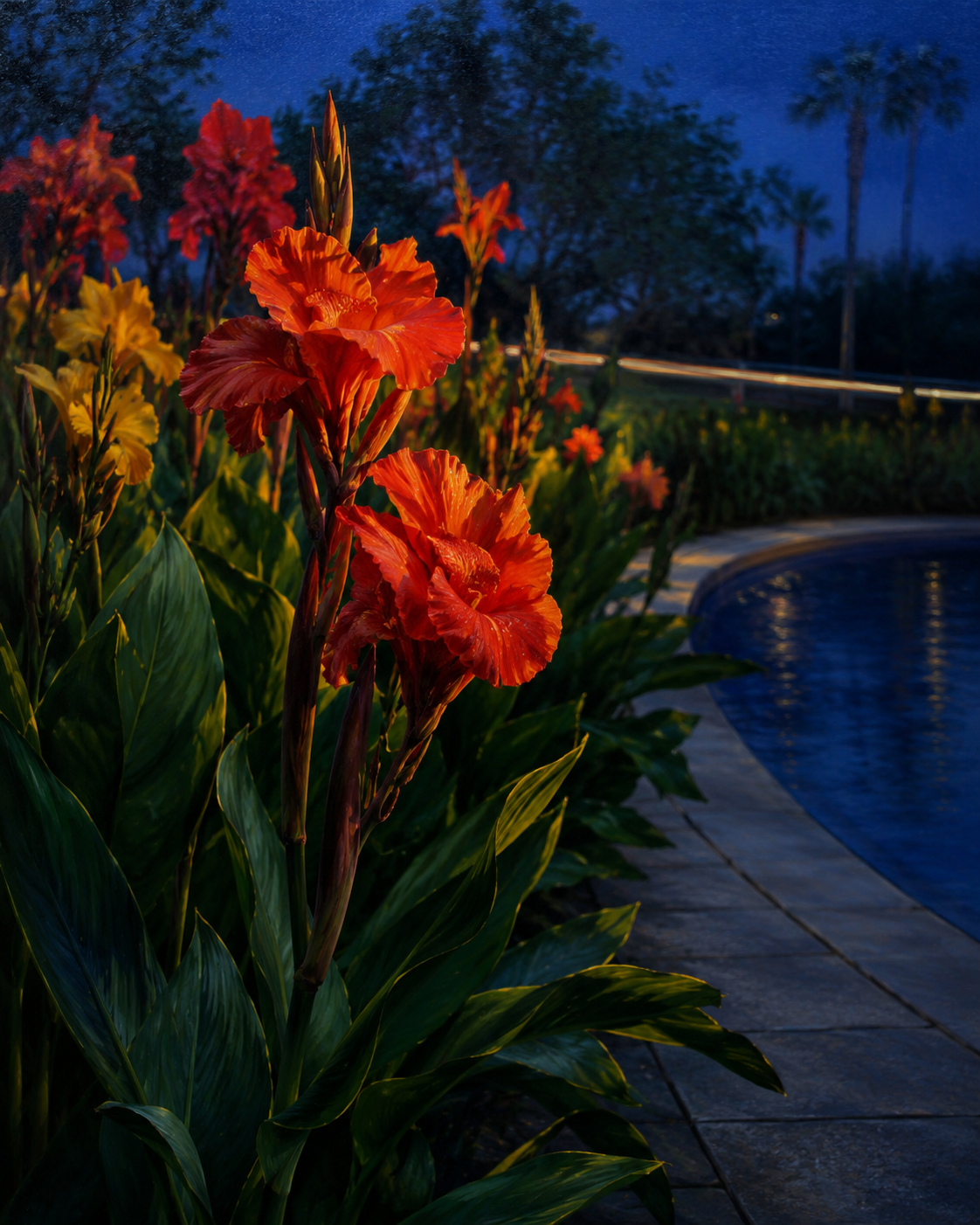
Glowing Canna Lilies in the Twilight Garden
Critique
Introduction This poolside night scene gives canna flowers the intensity of contained flame. Orange-red surfaces rise against blue surroundings, while curved pool and distant light extend the botanical drama. Description Two orange blossoms occupy left-center on tall stems beside unopened spikes. Yellow and red flowers repeat behind them among broad glossy leaves. At right, pale stone curves around a blue pool holding broken amber reflections. Trees and slender palms silhouette against cobalt sky. A warm streak runs horizontally through the middle distance. Analysis Color contrast establishes hierarchy: warm flowers advance from cool foliage, water, and sky. Light strikes petal ridges and leaf edges, leaving stems below in shadow; this models volume without dispersing night. Vertical stalks oppose the pool's broad curve and distant horizontal. Main blooms sit near their intersection. Repeated flowers recede in declining clarity, while the walkway measures transition from vegetation to water. Interpretation and Evaluation Artificial garden light becomes transformative rather than merely functional. It isolates blossoms, making them generate heat, yet reflections reveal the external system. The pool introduces cool silence, and palms extend the scene into a larger night. Complementary saturation risks theatricality, but unlit leaves, restrained paving, and uneven flower stages retain depth. Strongest is the tension between upward canna stalks and water's calm circular enclosure. Conclusion Through disciplined illumination and a clear interplay of vertical, curved, and horizontal movement, the work turns a planted pool edge into a compact nocturnal stage. Its power comes from allowing warmth to flare locally while preserving the surrounding darkness as an active presence.
Same Subcategory
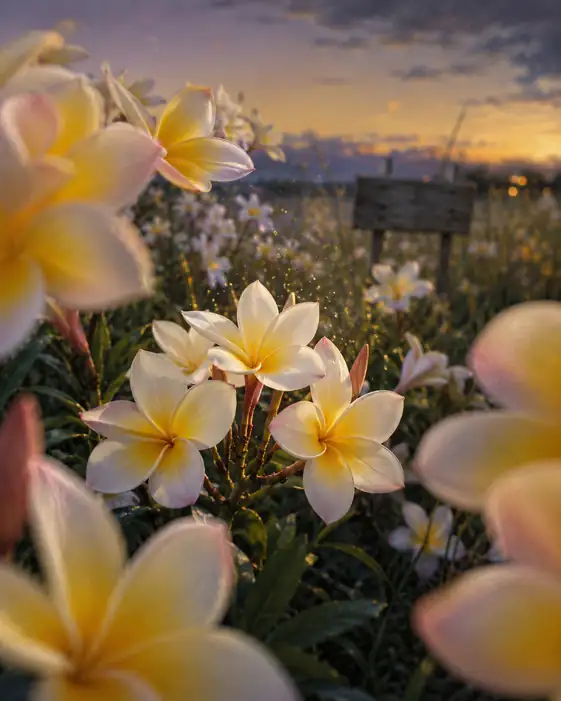 Golden Sunset Glow upon the Plumeria Meadow
Similar Artworks
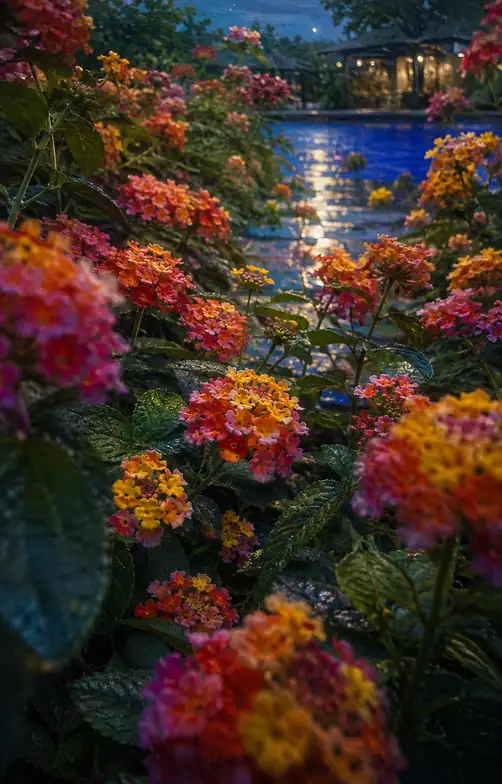 Lantana Blossoms by the Twilight Poolside
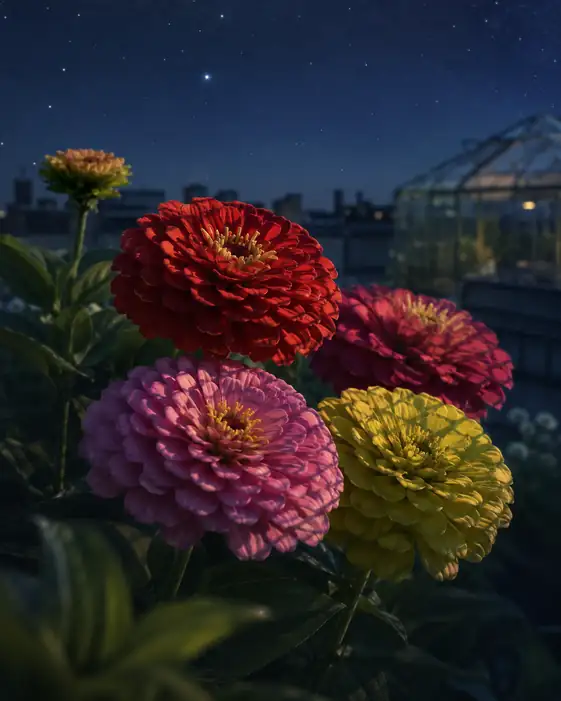 Zinnias beneath the Starlit Sky and Greenhouse
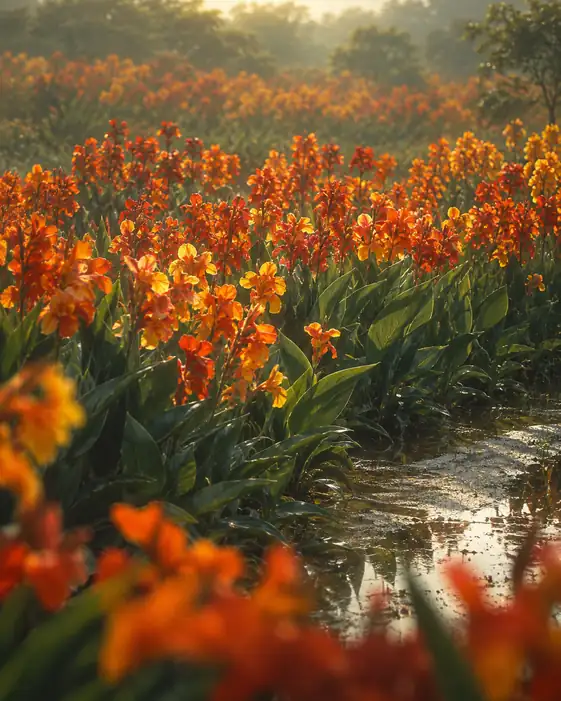 Sunlit Canna Field by the Morning Waters
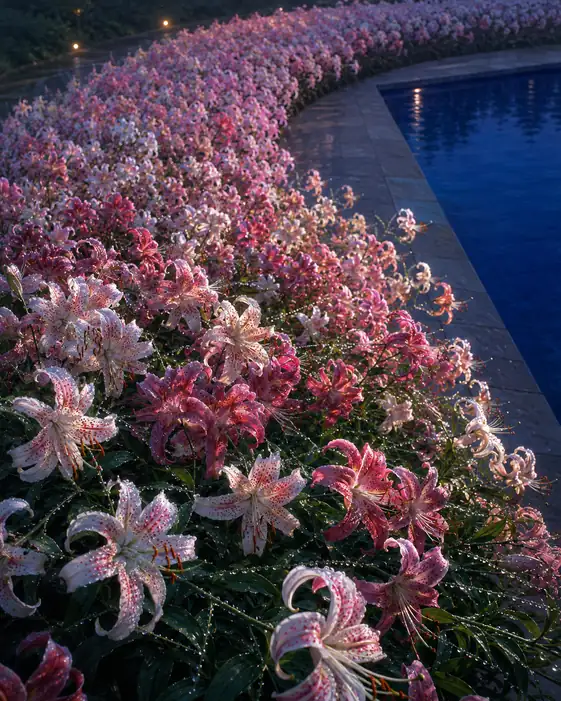 Arching Showy Lilies along the Poolside
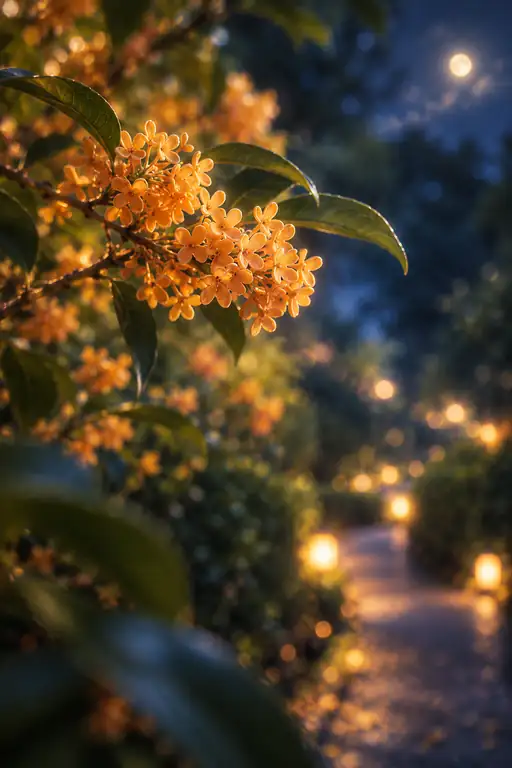 Golden Pathway of Osmanthus Scents
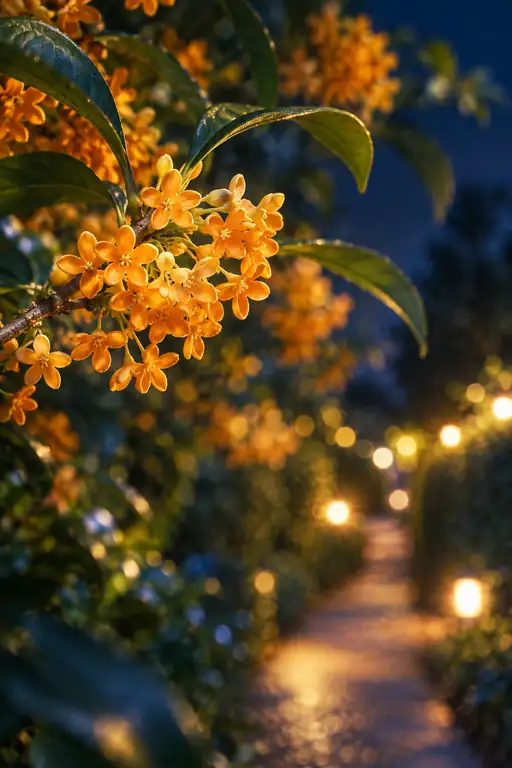 Fragrant Twilight along the Lantern Path
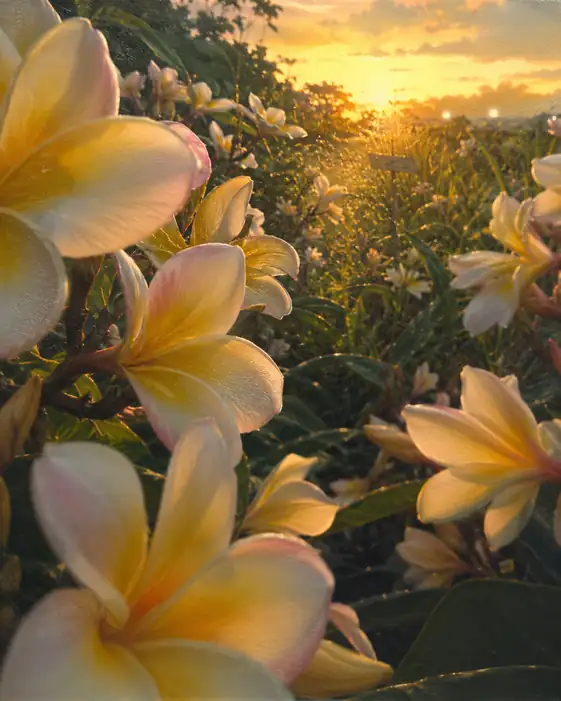 Golden Sunset Glow upon the Plumeria Garden
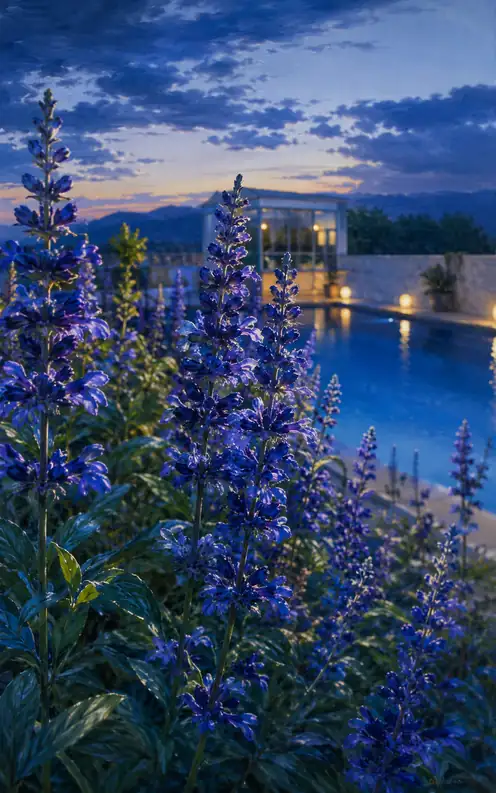 Blue Salvia by the Twilight Poolside
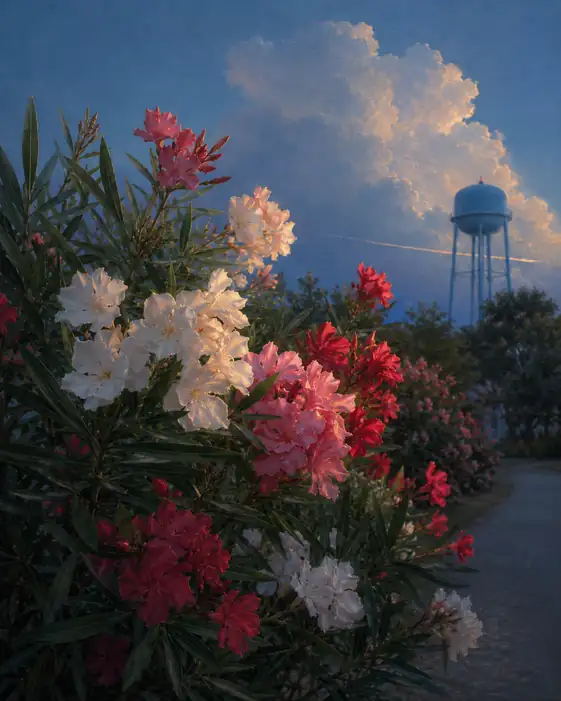 Oleanders beneath the Sunset Cloud and Water Tower
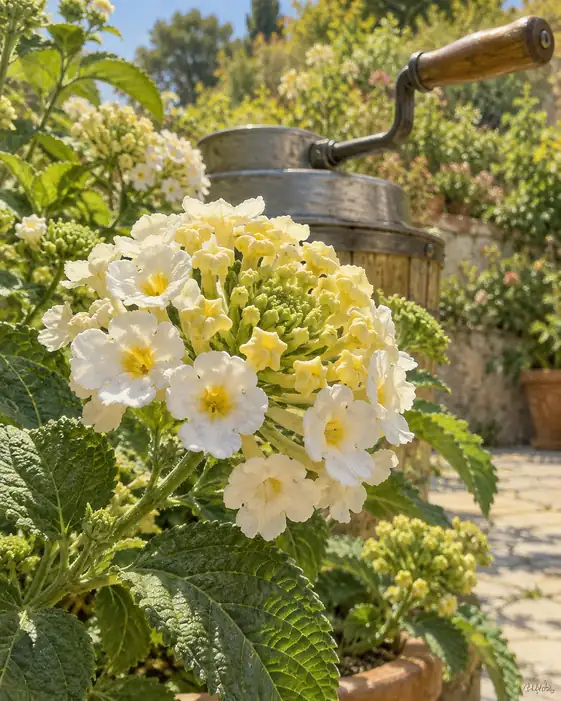 The Day Opens in My Garden