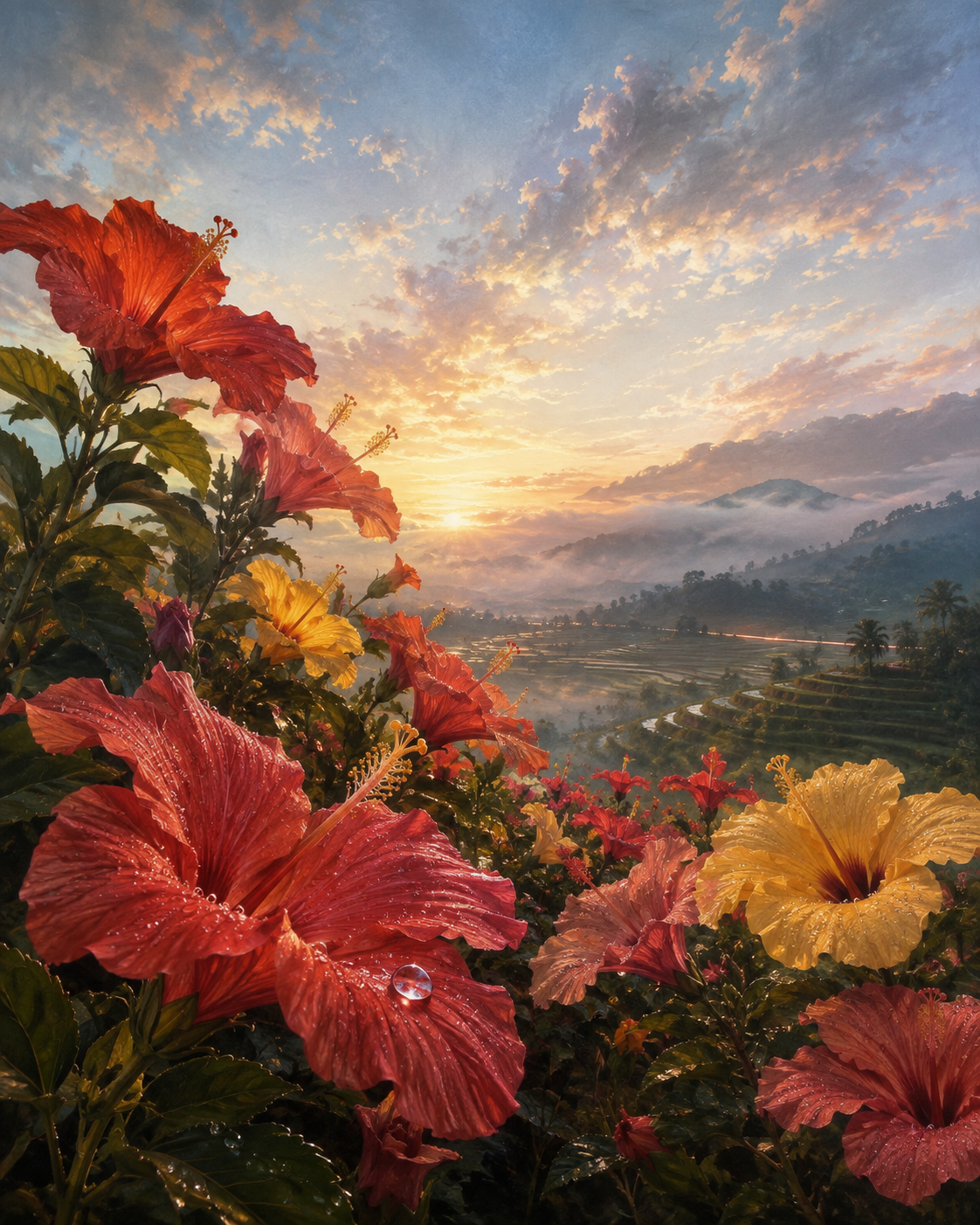
Morning Dew on Hibiscus above the Terraced Valleys
Critique
Introduction This mountain sunrise uses dewy hibiscus as a threshold to a terraced valley. Flowers and sky are not separate spectacles; repeated curves, moisture, and light bind growth across different scales. Description Large red and yellow blooms fill the lower and left edges. Veins crease broad petals, and droplets cling to flowers and dark leaves, including one conspicuous bead. Beyond, green terraces curve around the right hillside and reflective fields cover the valley. Mist gathers among slopes and trees. The sun rises beneath blue mountains, illuminating peach-gray clouds that fan outward. Analysis The floral frame leaves a central corridor toward sunrise. A red bloom anchors lower left, yellow balances right, and upper blossoms continue the ascent. Radiating stamens anticipate rays and sweeping clouds. Terraced arcs repeat petal contours at landscape scale, while flooded plots enlarge dew into reflective surfaces. Reds and golds advance against blue ridges. Despite density, recession from crisp droplets to soft mist keeps space breathable. Interpretation and Evaluation The image presents fertility as a connected system. Dew, field water, mist, and cloud suggest one circulating element sustaining garden and agriculture. Terraces reveal human shaping, yet follow rather than oppose the mountain. Dramatic light and flawless blooms approach idealized plenitude, but wet surfaces, dark foliage, and obscured slopes lend weight. Most effective is the scale transformation: one droplet becomes a lens for reconsidering the irrigated valley. Conclusion Through nested curves, atmospheric depth, and a shared vocabulary of water and illumination, the work unites intimate flowering with cultivated terrain. Its radiance celebrates abundance while also revealing the networks of moisture, labor, and weather on which that abundance depends.
Same Subcategory
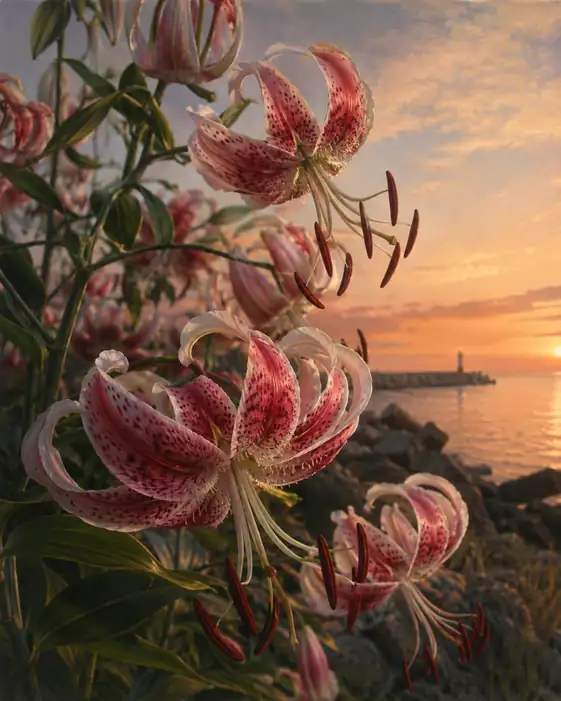 Showy Lilies on the Sunlit Coastal Rocks
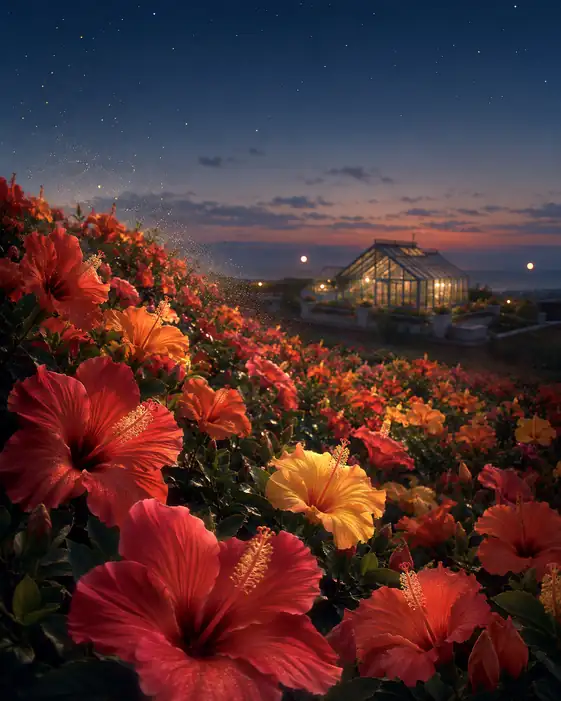 Hibiscus Hill beneath the Twilight Stars
Similar Artworks
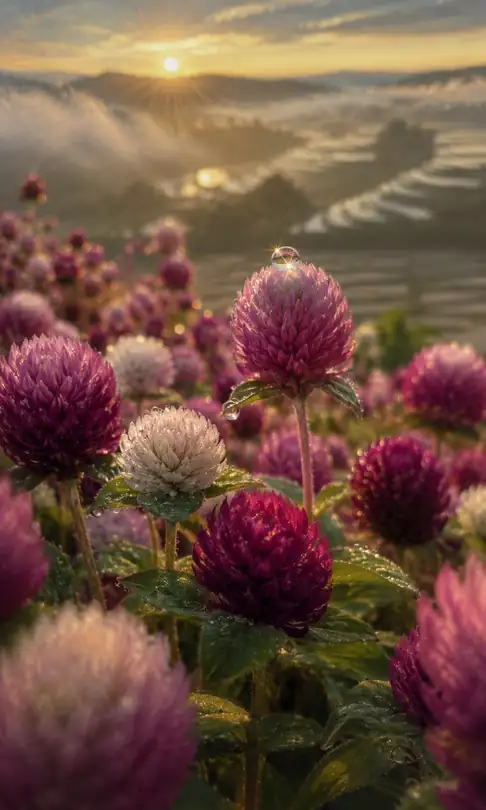 Morning Dew upon Globe Amaranth and Terraced Hills
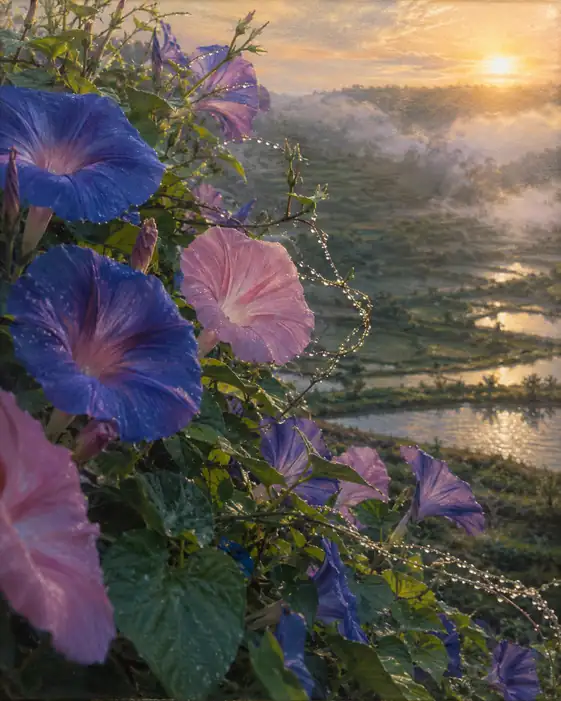 Morning Dew across the Terraced Valley
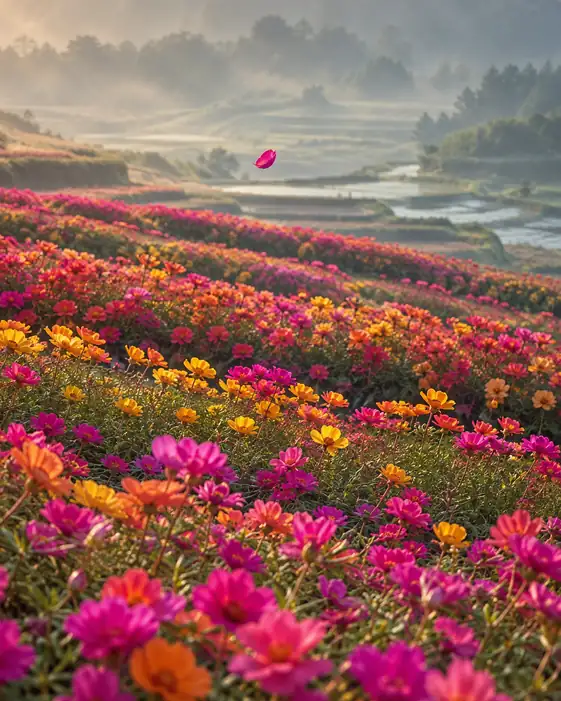 Floating Petal above the Terraced Garden
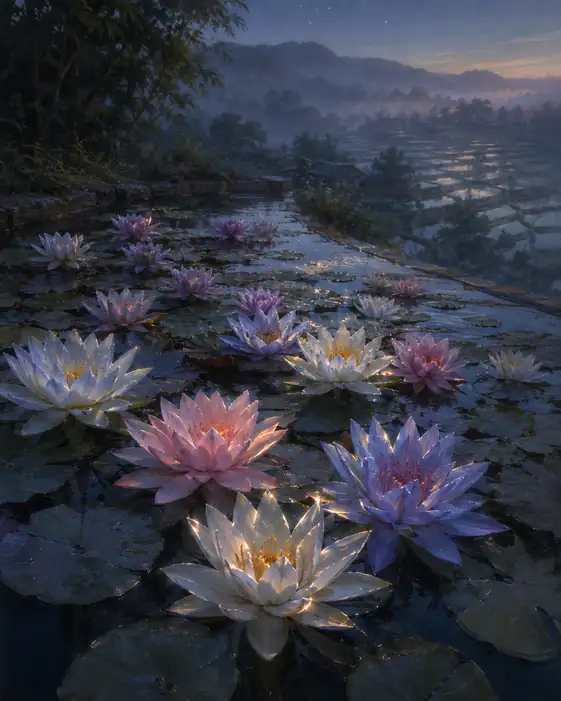 Terraces of Morning Mist and Floating Petals
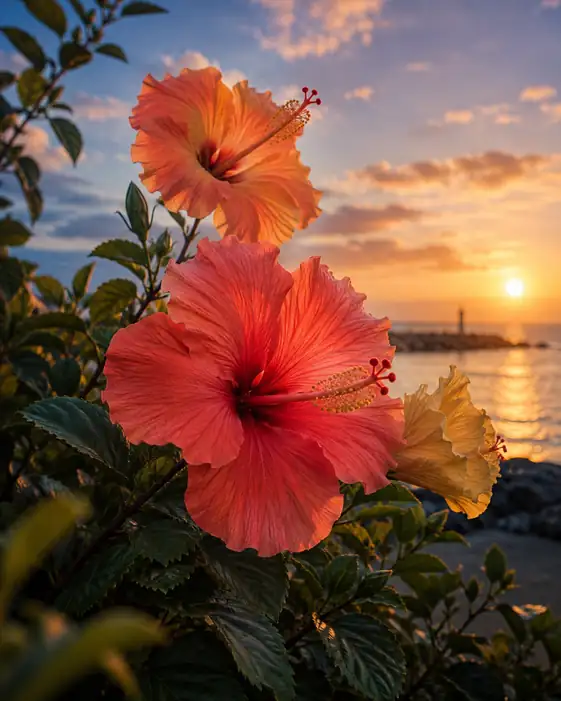 Hibiscus Glowing against the Sunset Harbor
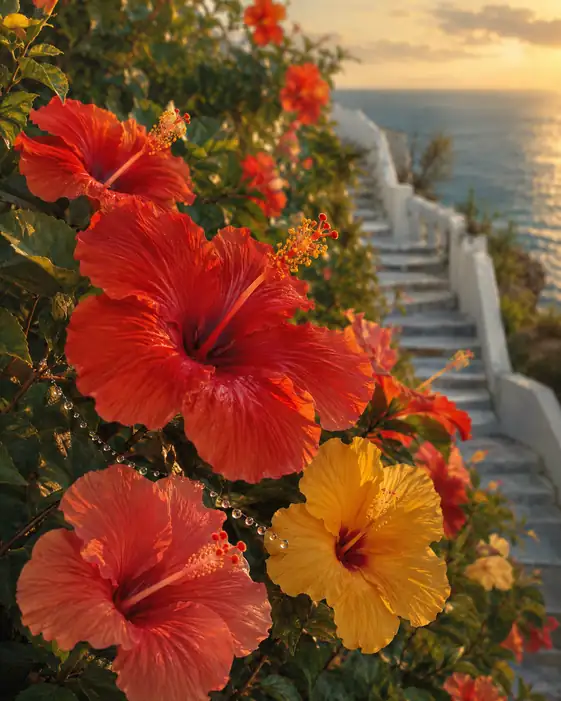 Hibiscus along the Coastal Stairway at Sunset
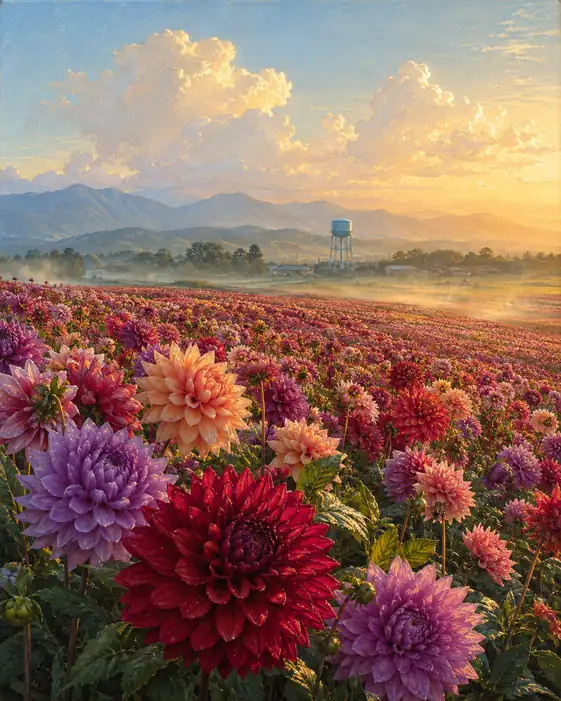 Dahlia Slopes beneath the Morning Clouds
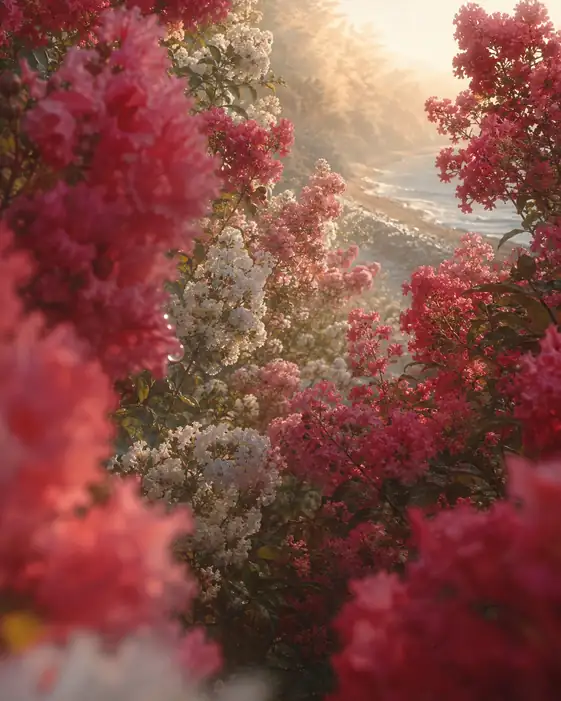 Crape Myrtle along the Sunlit Coastline
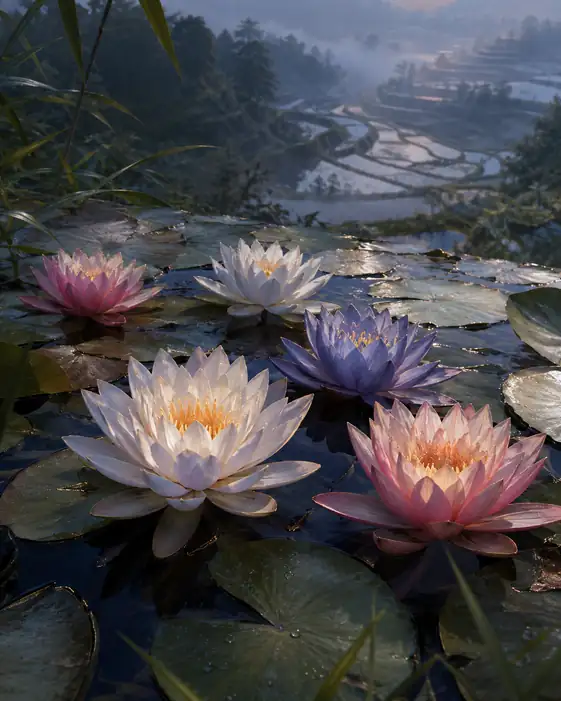 Water Lilies overlooking the Terraced Valley
 Hibiscus Summit above the Terraced Valleys