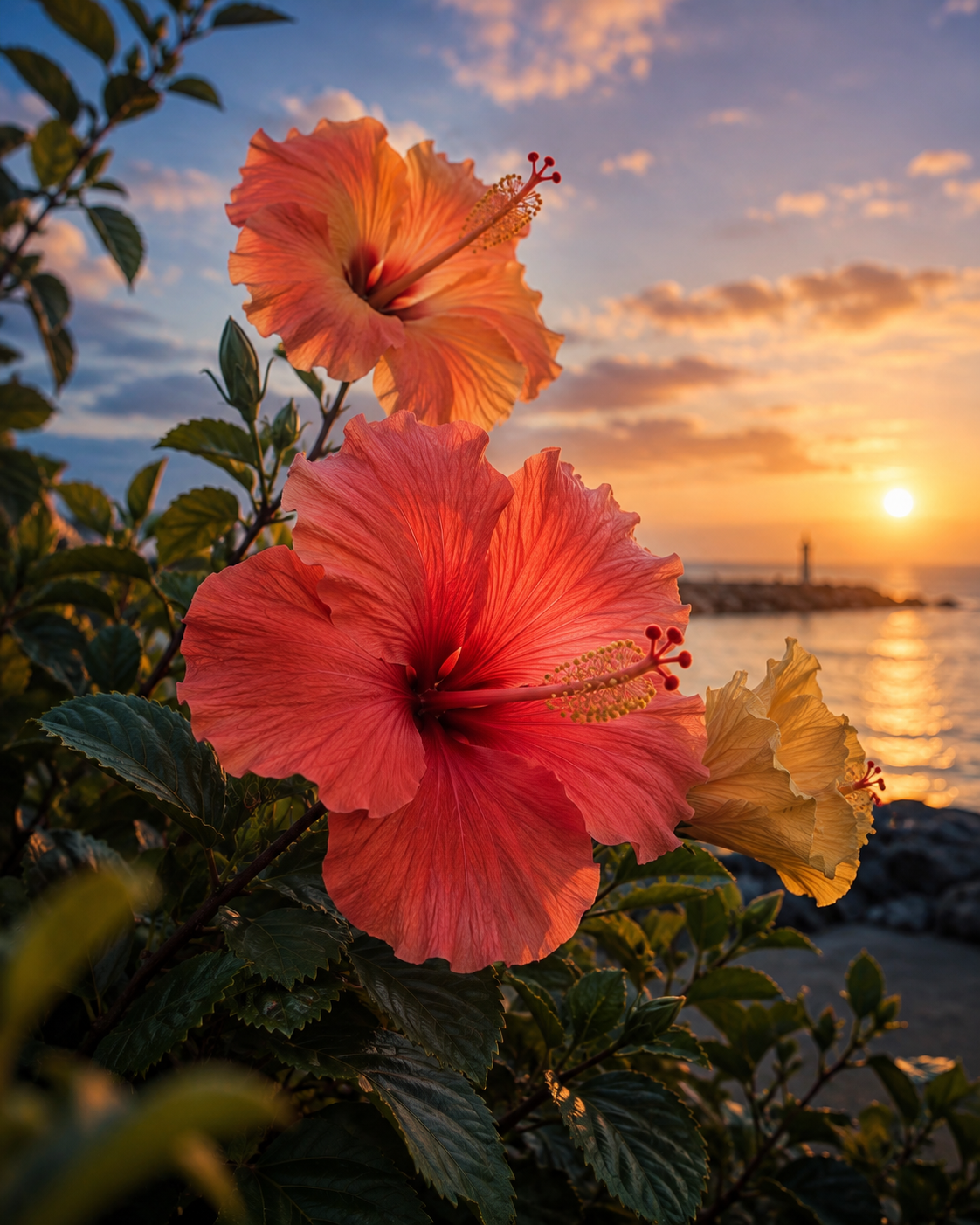
Hibiscus Glowing against the Sunset Harbor
Critique
Introduction This sunset portrait enlarges three hibiscus blooms into companions to sun, sea, and beacon. The sumptuous foreground opens at right toward a clear horizon, preventing pure ornament. Description A broad red hibiscus fills the center, pleated petals surrounding a dark throat and long horizontal column. Above, a peach blossom faces upward; at right, a smaller yellow flower turns toward light. Serrated leaves and buds support them. The low sun lays broken gold across the sea. A dark breakwater and slender beacon cut the horizon beneath pink clouds. Analysis The blooms establish a triangle: central red provides weight and upper peach extends into sky. Their columns point rightward toward sun and beacon. Warm color travels from petals to clouds and reflection, while green leaves anchor the lower half. Fine veins make flowers tactile; the sea becomes soft bands and glittering marks. This contrast separates near and far. The beacon's tiny vertical repeats stems at radically reduced scale. Interpretation and Evaluation The image joins two brief culminations: full bloom and final daylight. Both radiate because change is imminent. The breakwater introduces human measure and watchfulness, while flowers occupy the living shore. Their solar orientation feels responsive rather than staged. Reds and golds approach idealization, but cool foliage, dark rocks, and the utilitarian beacon provide resistance. The chain from flower column to reflection to distant marker is especially persuasive. Conclusion Through triangular placement, directional detail, and a disciplined warm-cool balance, the work connects floral intimacy with maritime breadth. It makes the sunset feel less like a backdrop than a light in which petals, water, and human landmark briefly share one rhythm.
Same Subcategory
Similar Artworks
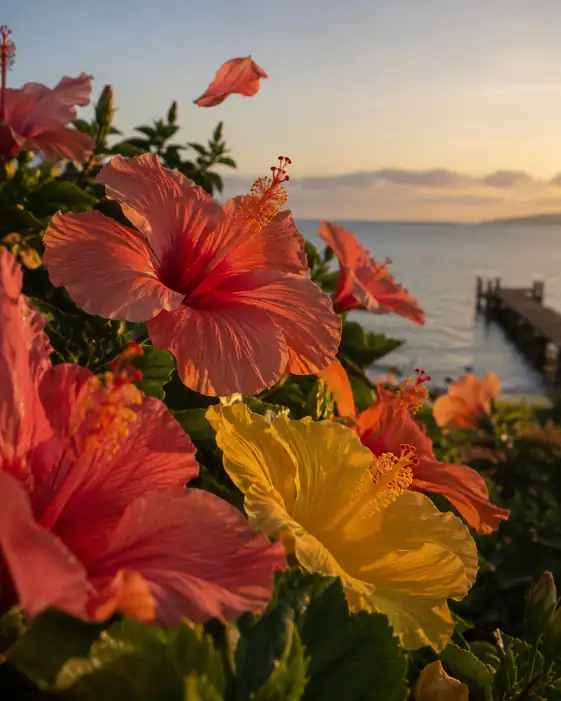 Sunset Breeze and Coastal Hibiscus
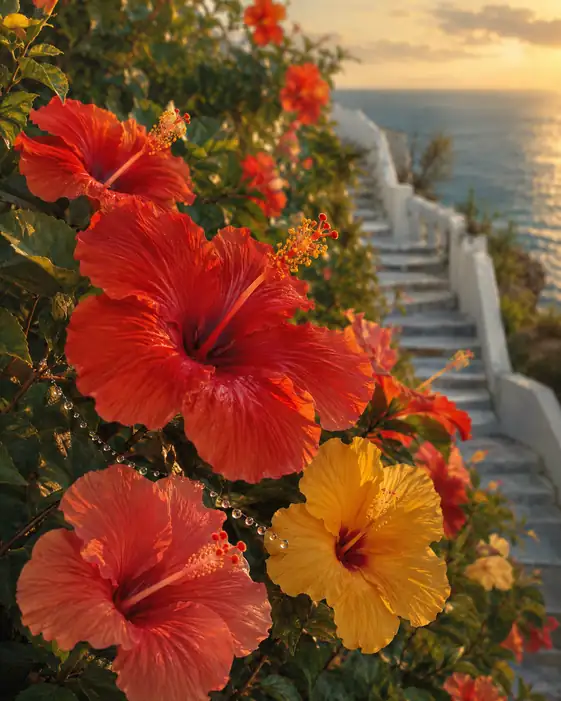 Hibiscus along the Coastal Stairway at Sunset
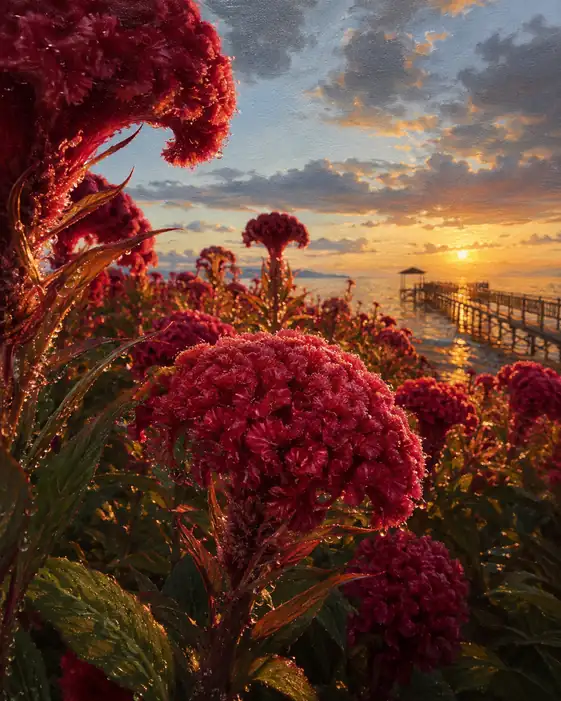 Crimson Cockscomb by the Sunset Pier
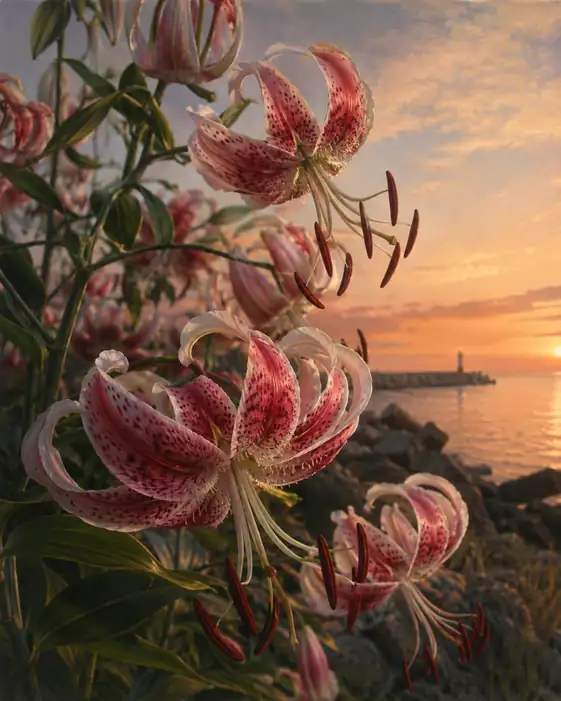 Showy Lilies on the Sunlit Coastal Rocks
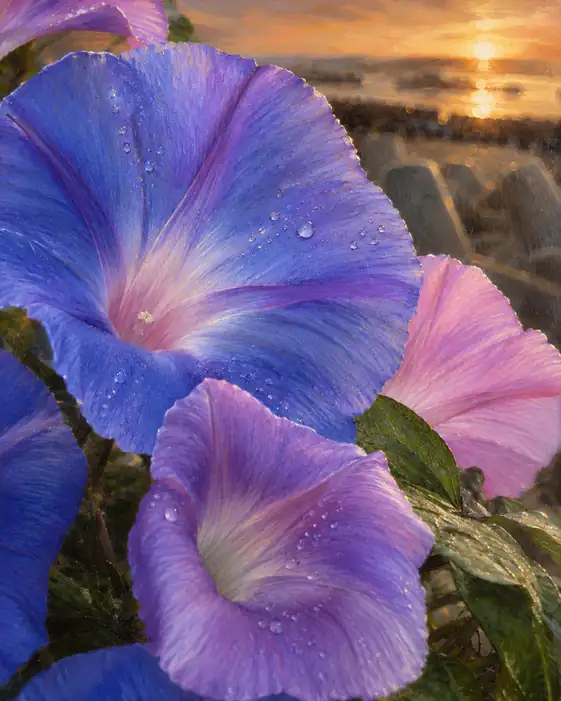 Evening Glory by the Sunlit Coast
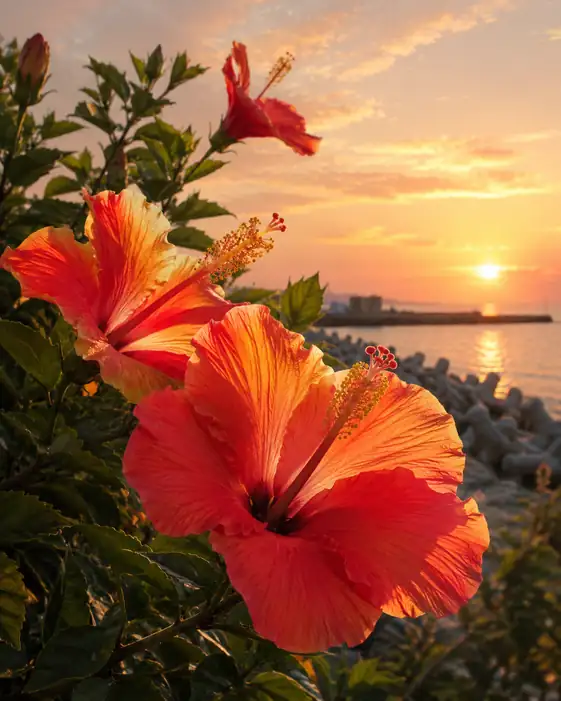 Sunset Radiance on Coastal Hibiscus
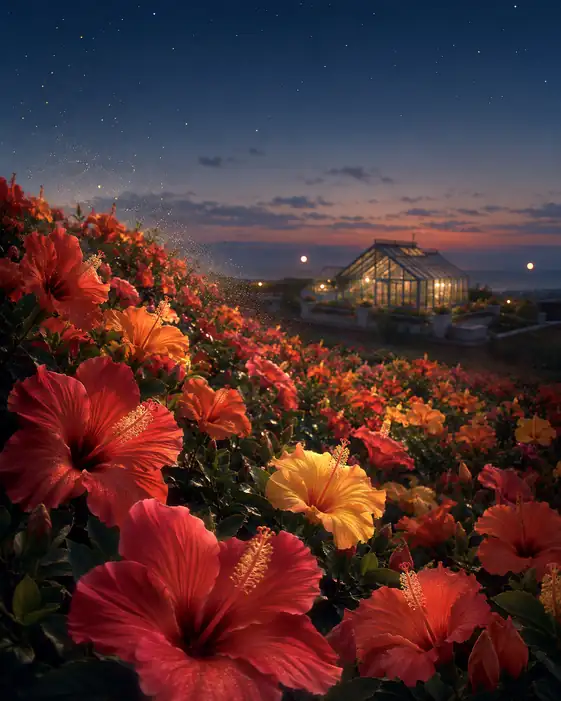 Hibiscus Hill beneath the Twilight Stars
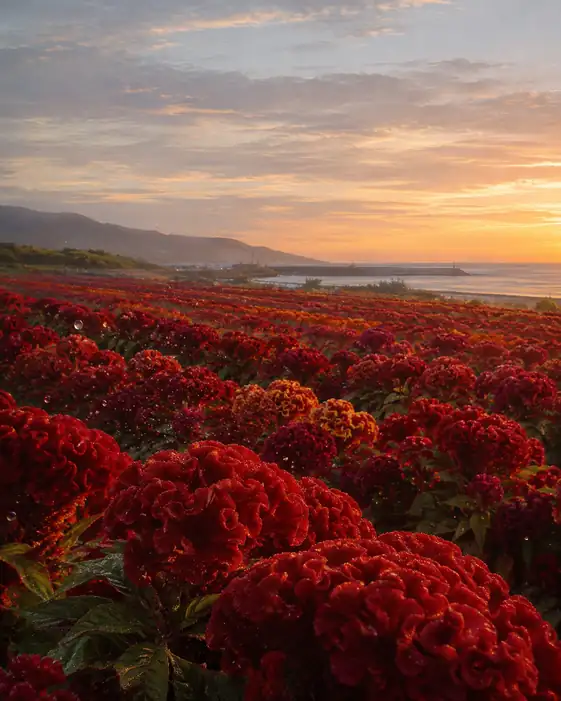 Crimson Slopes of Cockscomb at Sunset
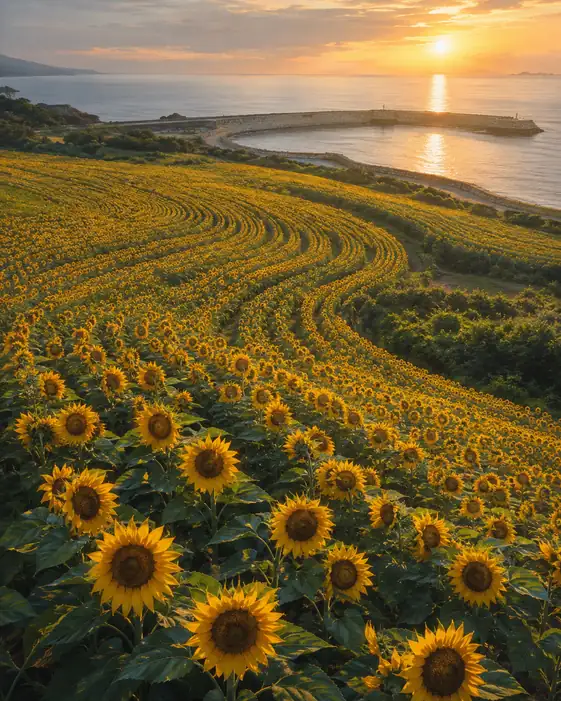 Golden Arcs across the Coastal Slopes
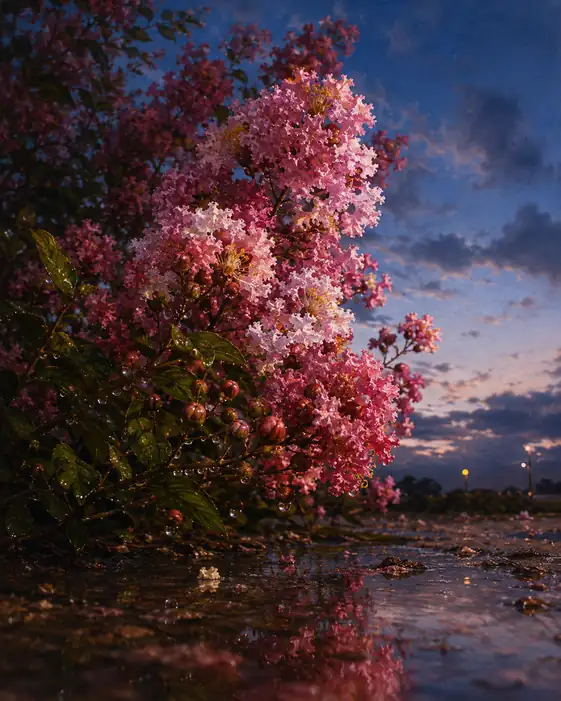 Crape Myrtle Reflected in the Twilight Puddle