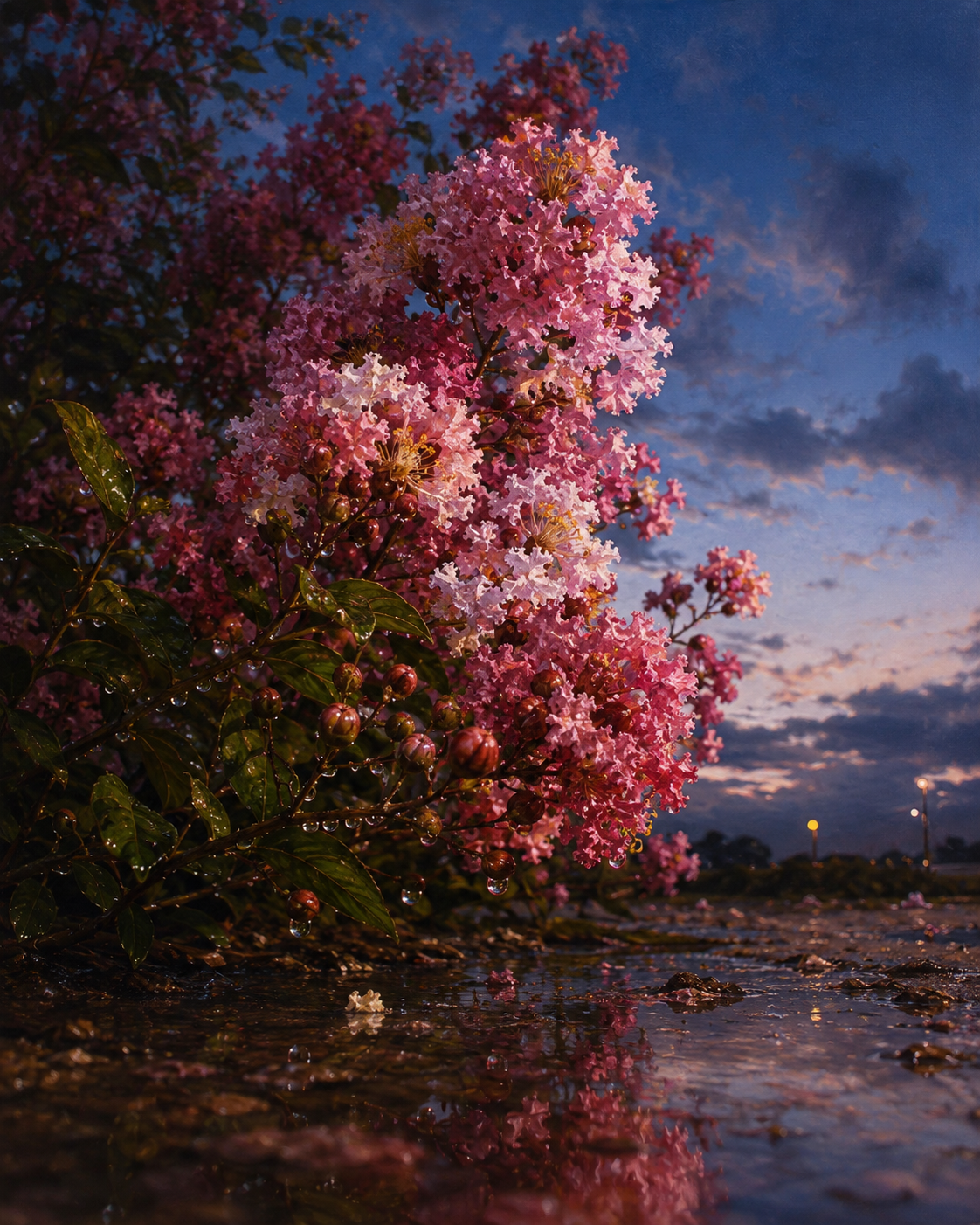
Crape Myrtle Reflected in the Twilight Puddle
Critique
Introduction This rain-soaked twilight scene brings a flowering branch to puddled ground. The low viewpoint makes it monumental, while droplets, reflections, and distant lamps transform a roadside aftermath into a study of renewal. Description A pink-and-white cluster rises diagonally from lower left to upper center. Dark leaves, unopened buds, and branches carry beads of water. A shallow puddle reflects broken crimson and violet among stones and fallen petals. The sky shifts from deep blue to a warm horizon beneath gray clouds. Amber and white streetlights glow far right. Analysis The ground-level perspective creates two answering worlds. The branch occupies the upper-left mass, while its unstable reflection spreads below; open sky and roadway relieve the right. A diagonal stem joins these zones. Pink stands against complementary blue, yet wet surfaces borrow the horizon's amber. Bright points repeat from leaf to puddle to streetlamp, linking different scales. Sharp foreground textures yield to softened distance. Interpretation and Evaluation The work treats rain as correspondence. Water gathers sky, flower, earth, and artificial light into one reflective system. Closed buds, open blooms, and fallen petals show growth and loss together. Roadside lamps prevent pure pastoralism, placing fragile radiance beside infrastructure. Saturated pink might overwhelm, but blue sky and wet earth give it gravity. The imperfect mirror is especially effective, preserving beauty through distortion rather than duplication. Conclusion By lowering the eye and allowing water to connect every layer, the image discovers grandeur at ground level. Its emotional force rests in the balance of drenched weight and upward flowering, as evening gathers around a branch that still holds light.
Same Subcategory
 Crape Myrtle along the Sunlit Coastline
Similar Artworks
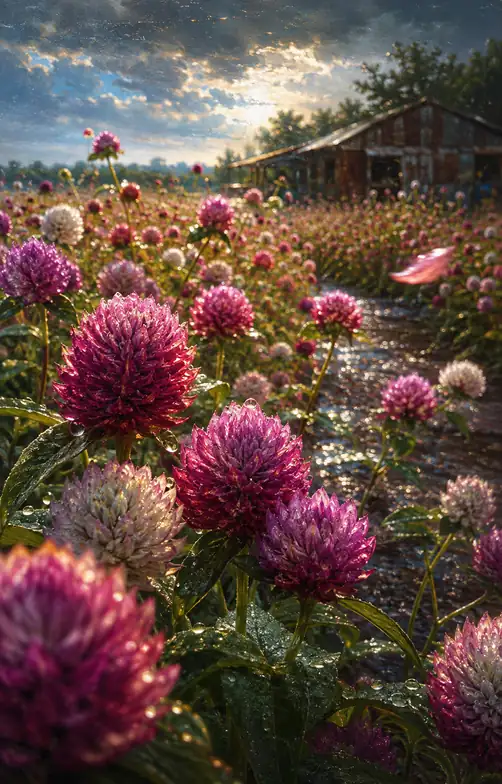 Globe Amaranth after Rain by the Old Barn
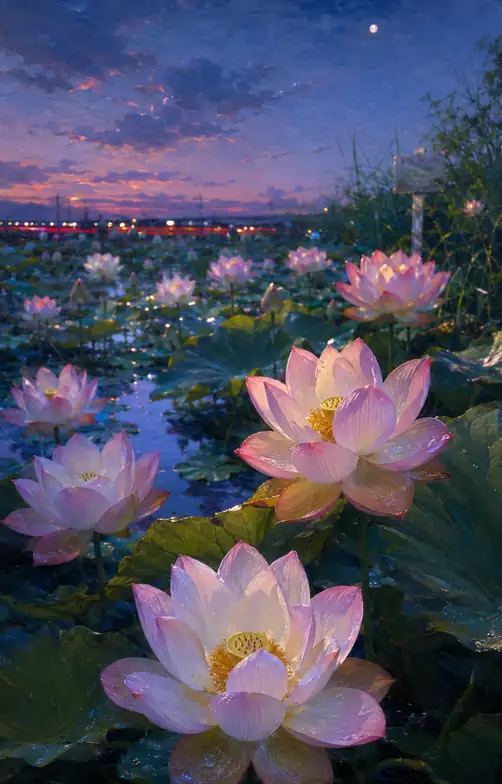 Petals between the Moon and the City Glow
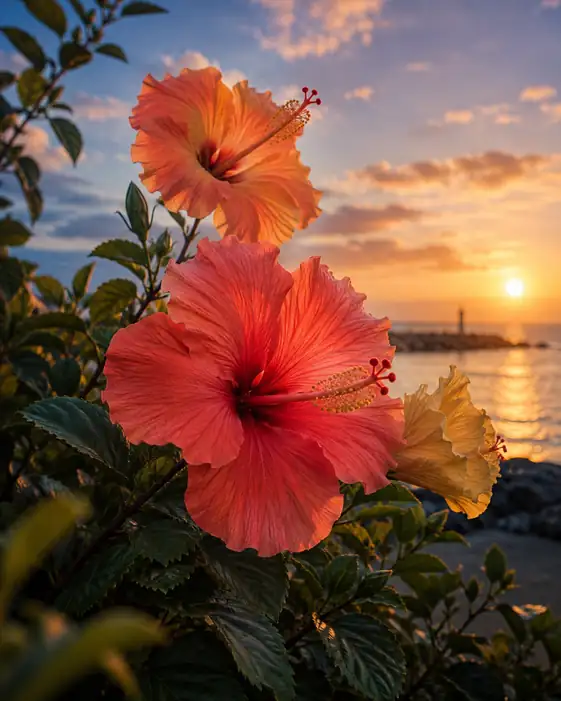 Hibiscus Glowing against the Sunset Harbor
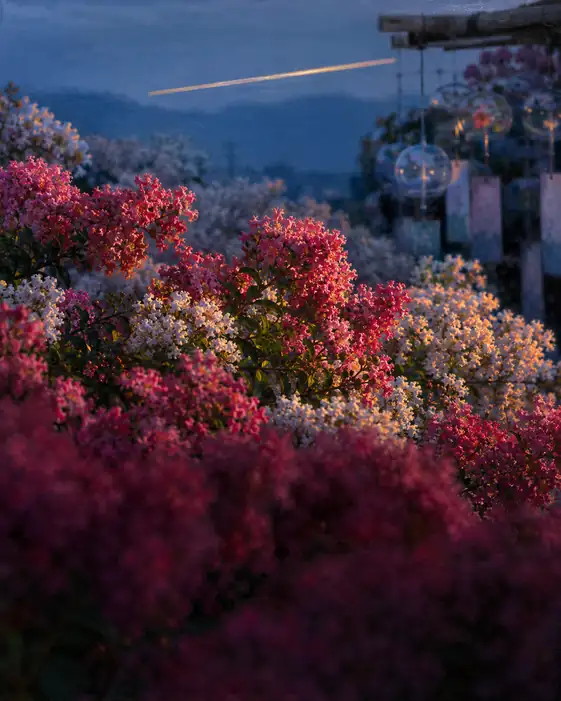 Crape Myrtle and Wind Chimes Beneath the Twilight Trail
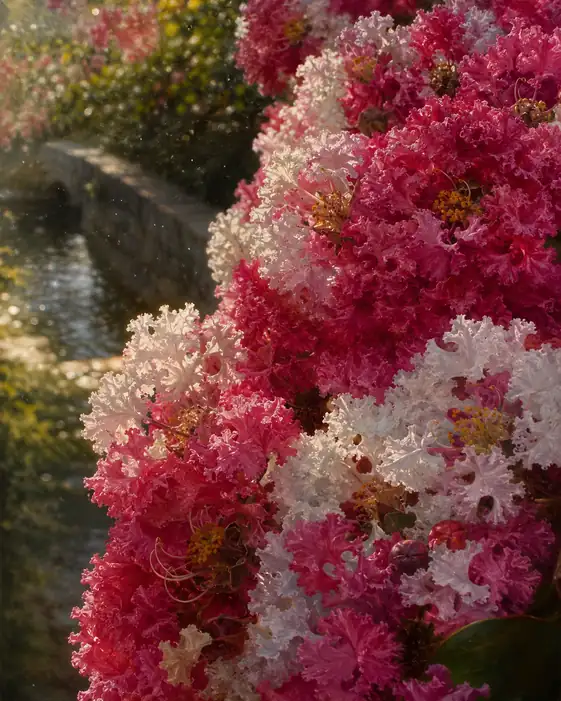 Crape Myrtle Blossoms by the Stone Bridge
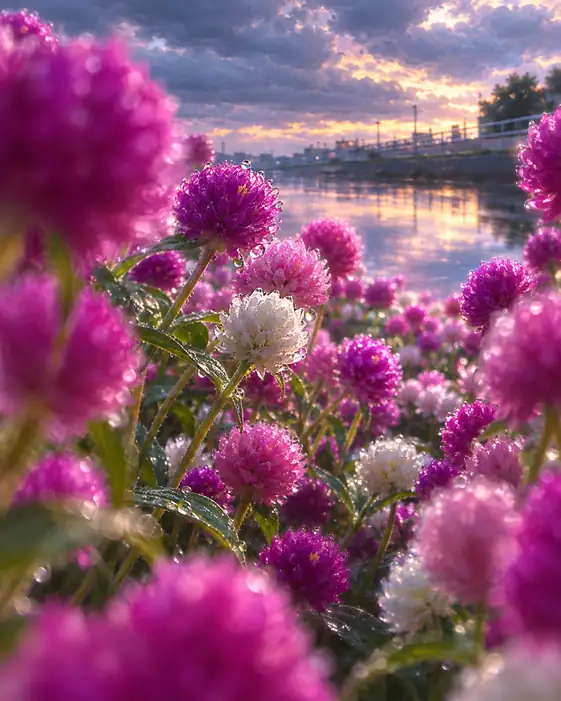 The Morning Crimson Wishes Met White Prayers
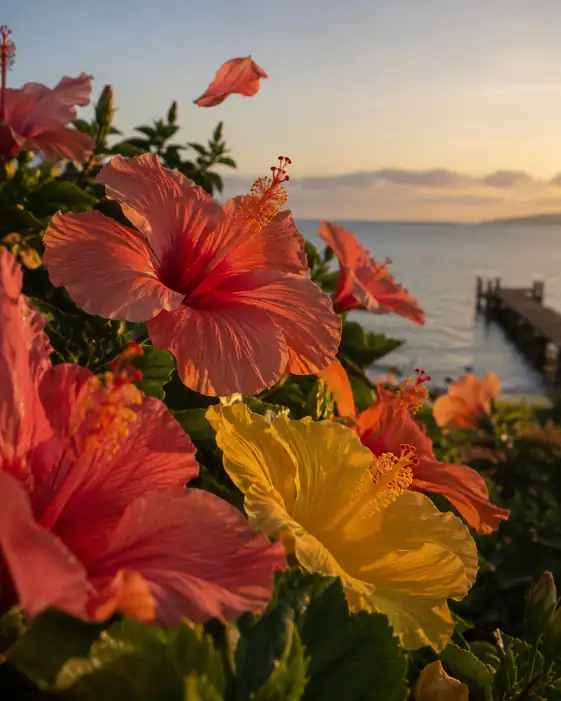 Sunset Breeze and Coastal Hibiscus
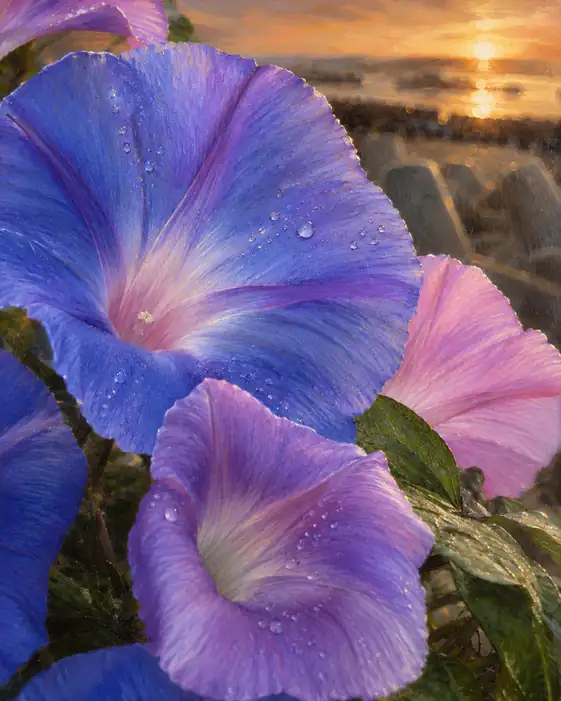 Evening Glory by the Sunlit Coast
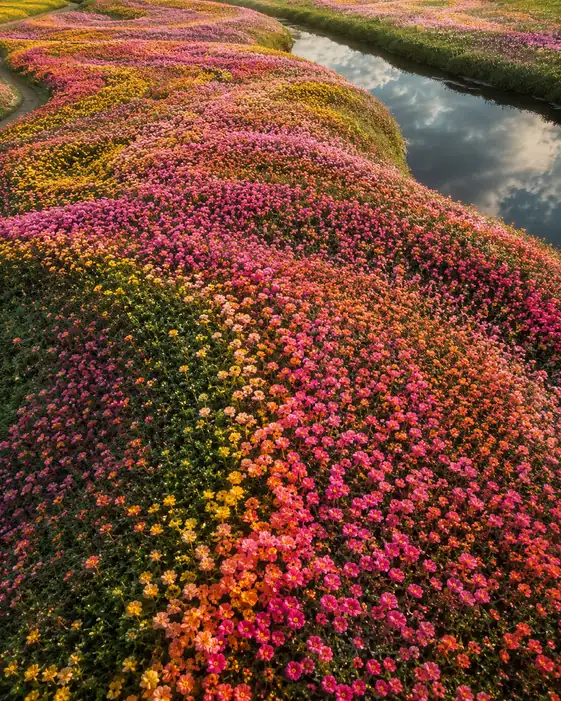 Sunset Waves of Portulaca Blooms
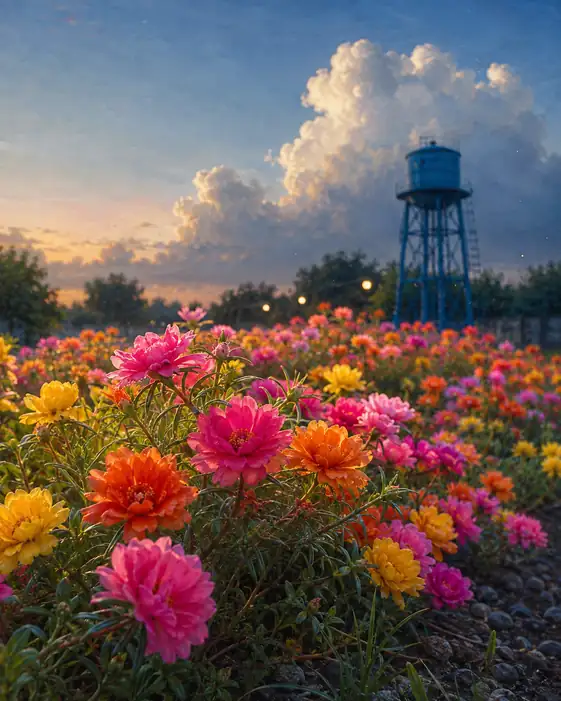 Rose Moss under the Water Tower and Cloud