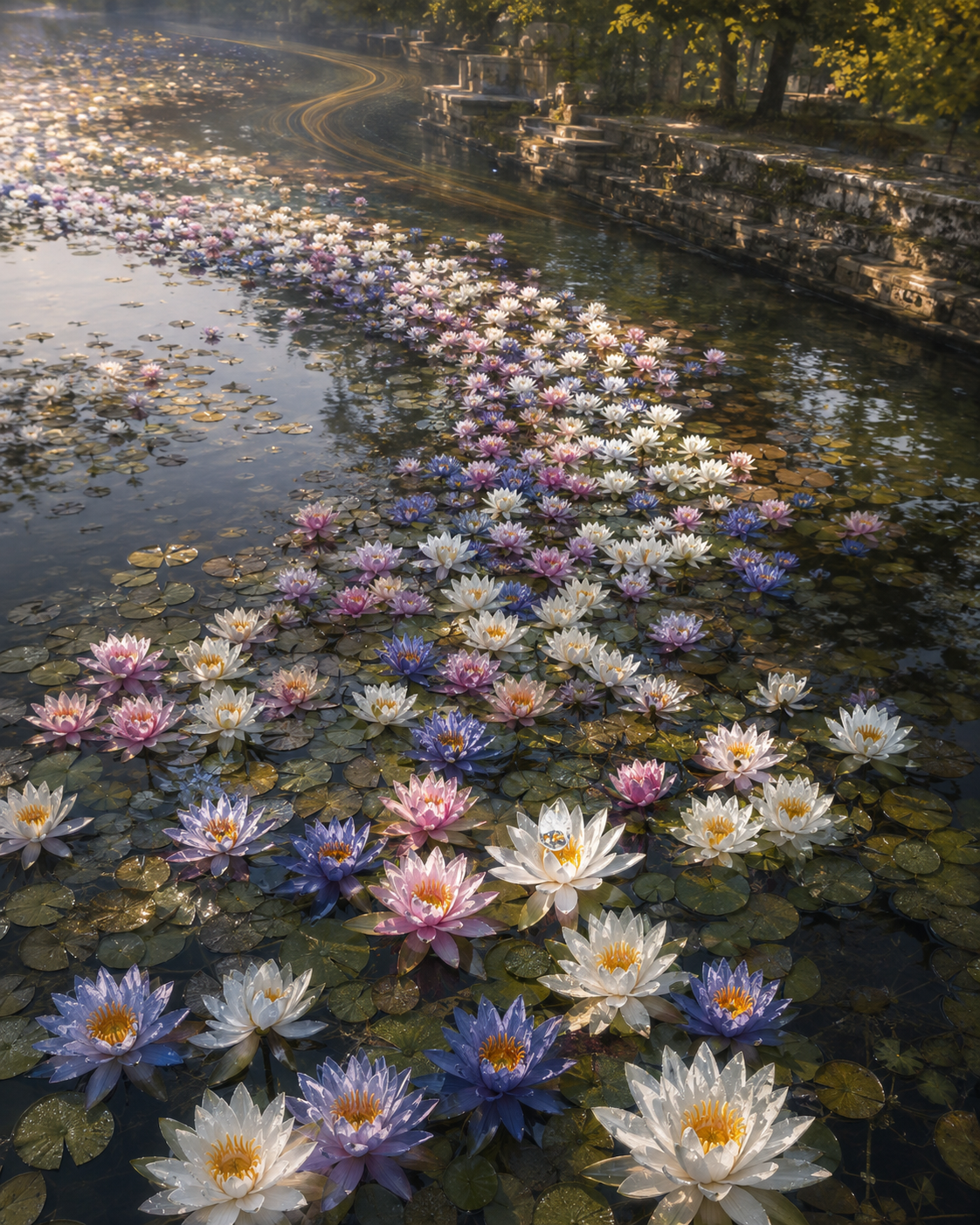
Winding Path of Water Lilies along the Canal
Critique
Introduction Seen from above, this sunlit canal becomes a study in movement. A dense current of lilies winds like a river, turning an orderly park channel into an organic procession. Description White, pink, and blue blossoms crowd a sinuous band that crosses the foreground and bends toward the upper left. Dark pads bind them into a continuous stream. On the right, pale stone steps and an embankment run beneath trees. Open water above carries sweeping golden reflections, while bright illumination gives the scene morning clarity. Analysis The floral band serves as subject and compositional path. Its turns oppose the stable masonry edge, creating tension between cultivated boundary and unruly growth. Foreshortening compresses foreground blossoms, then rapidly reduces their scale to intensify distance. Distributed whites provide luminosity, pinks add warmth, and blue flowers echo the water. Above, gold reflections continue the curve with less weight, keeping the dense lower half open. Interpretation and Evaluation The scene proposes cultivation as collaboration. Stonework defines the channel, yet lilies invent their own route, producing a living countercurrent to the bank. Their abundance conveys vitality, while uninterrupted progression suggests renewal. The many pastels risk sweetness, but dark water, firm stone, and irregular spacing supply resistance. Especially effective is the transition from tangible flowers to immaterial light: the motif persists after its forms disperse. Conclusion This work converts a familiar ornamental canal into an energetic exchange between design and growth. Its winding structure guides the eye decisively without feeling rigid, and the final golden traces extend the lilies' motion beyond their visible limits. The result is buoyant, spatially assured, and celebratory.
Same Subcategory
 Gondola through the Bougainvillea Canal
Similar Artworks
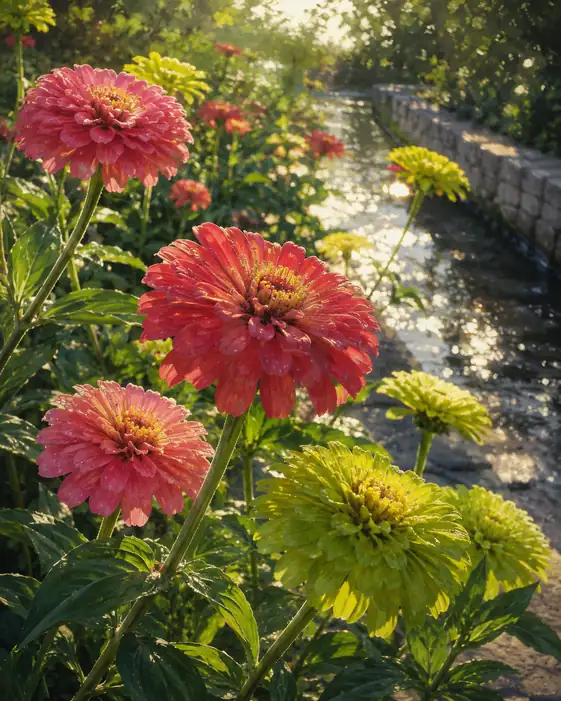 Zinnias by the Sunlit Stone Canal
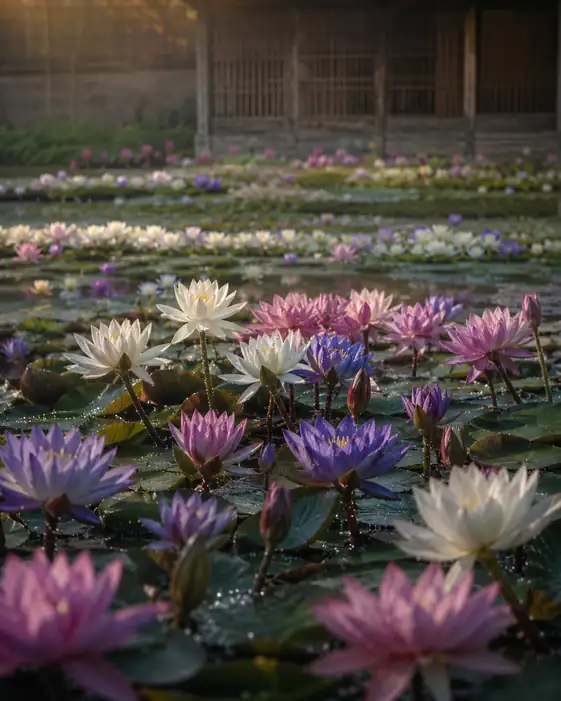 Morning Radiance over the Lily Pavilion
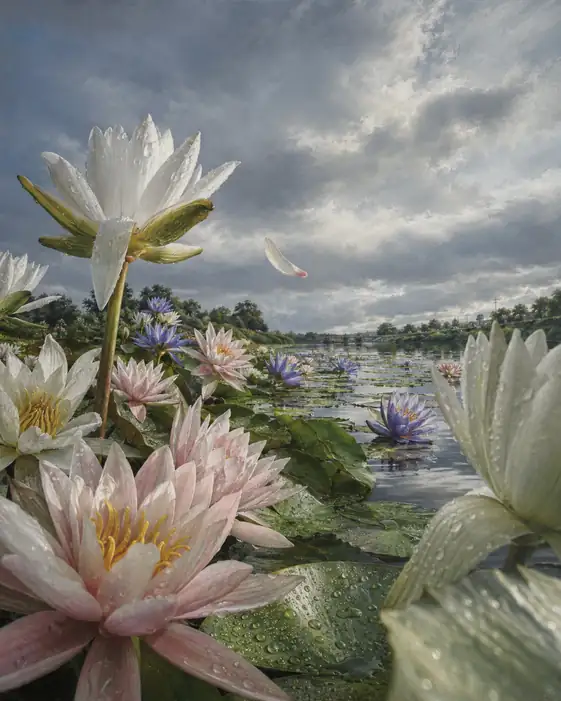 Floating Petal over the Rain-Wet Lilies
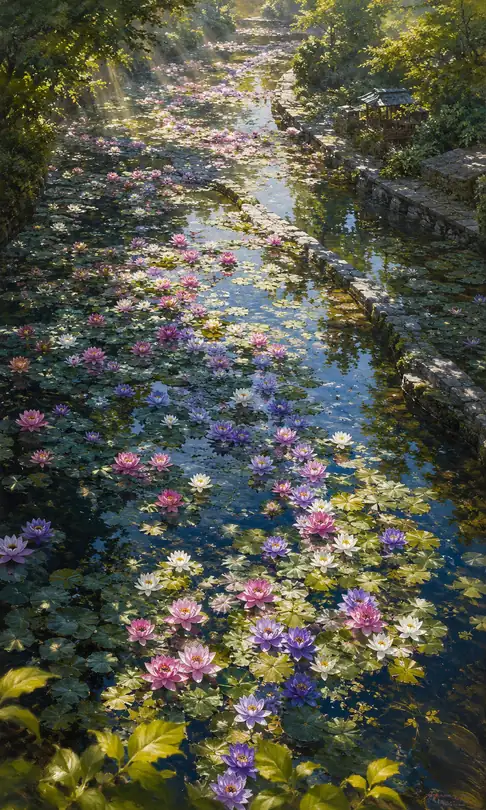 Sunlit Canal of Water Lilies
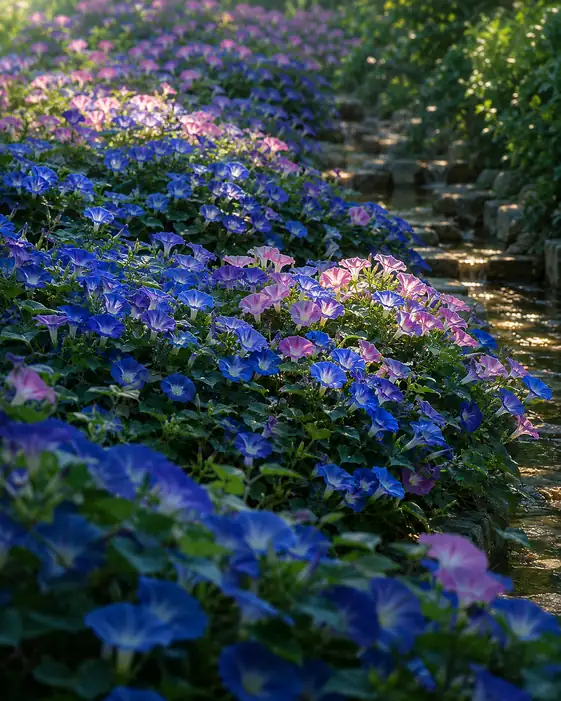 Flow of Azure Blooms in Morning Sun
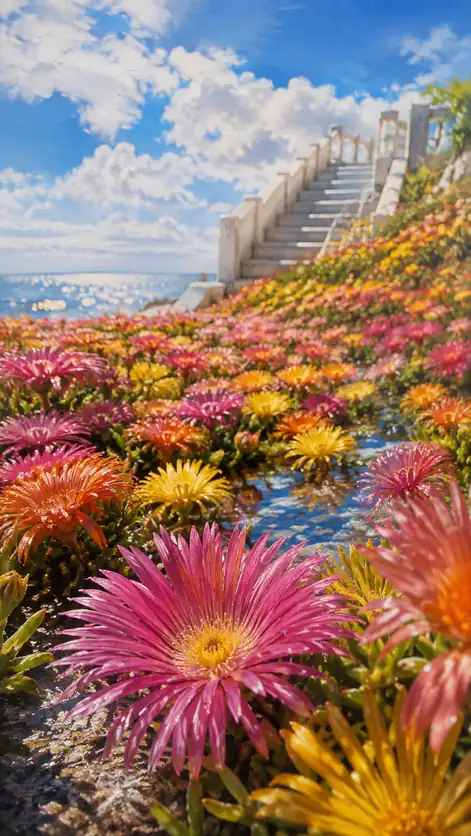 Coastal Stairway and Livingstone Daisies
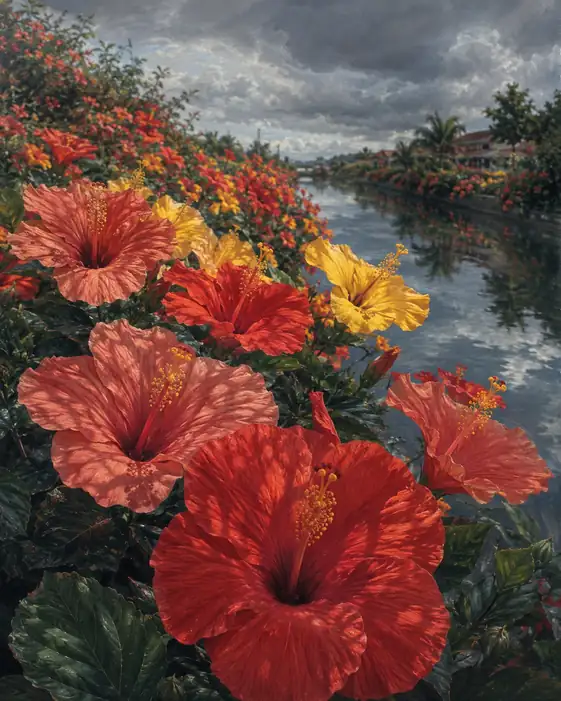 Hibiscus along the Storm-Laden Canal
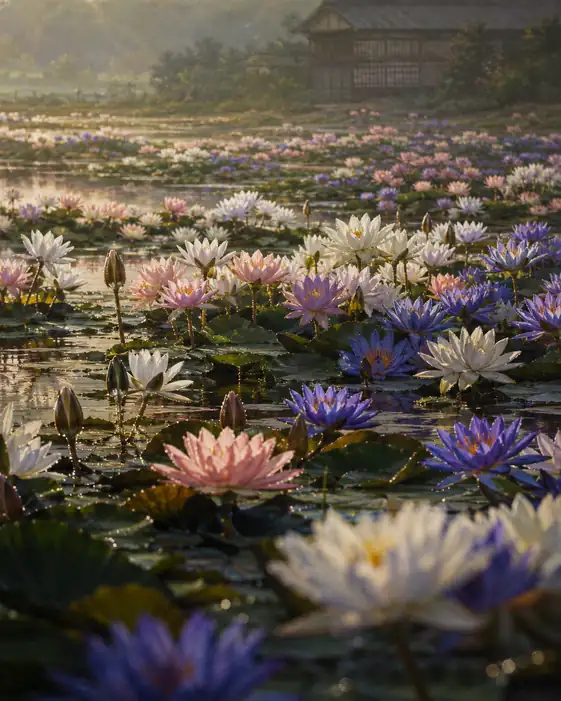 Golden Dawn over the Lily Pavilion
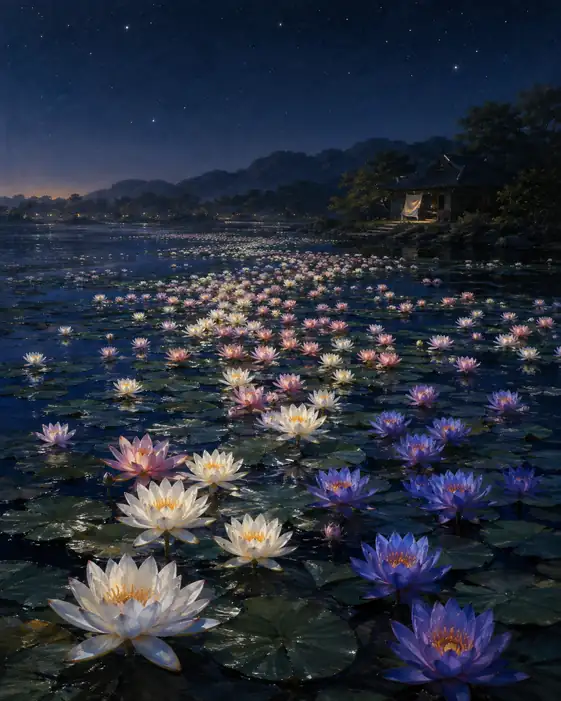 Moonlight Haven and the River of Lilies
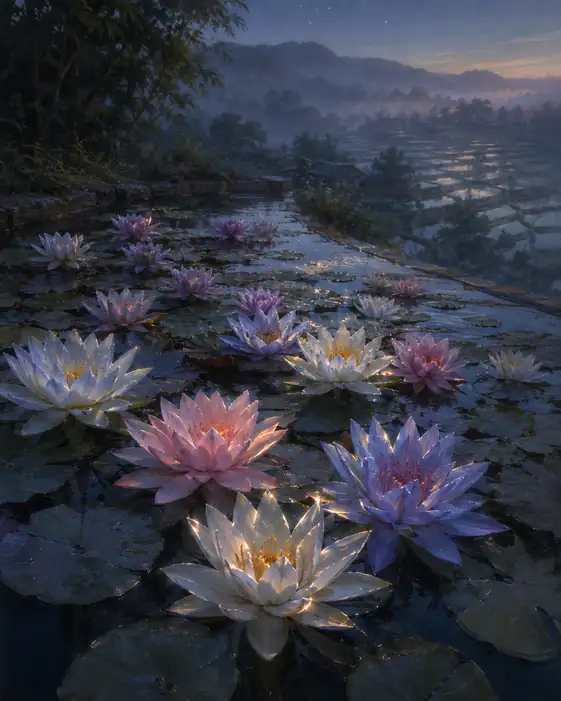 Terraces of Morning Mist and Floating Petals