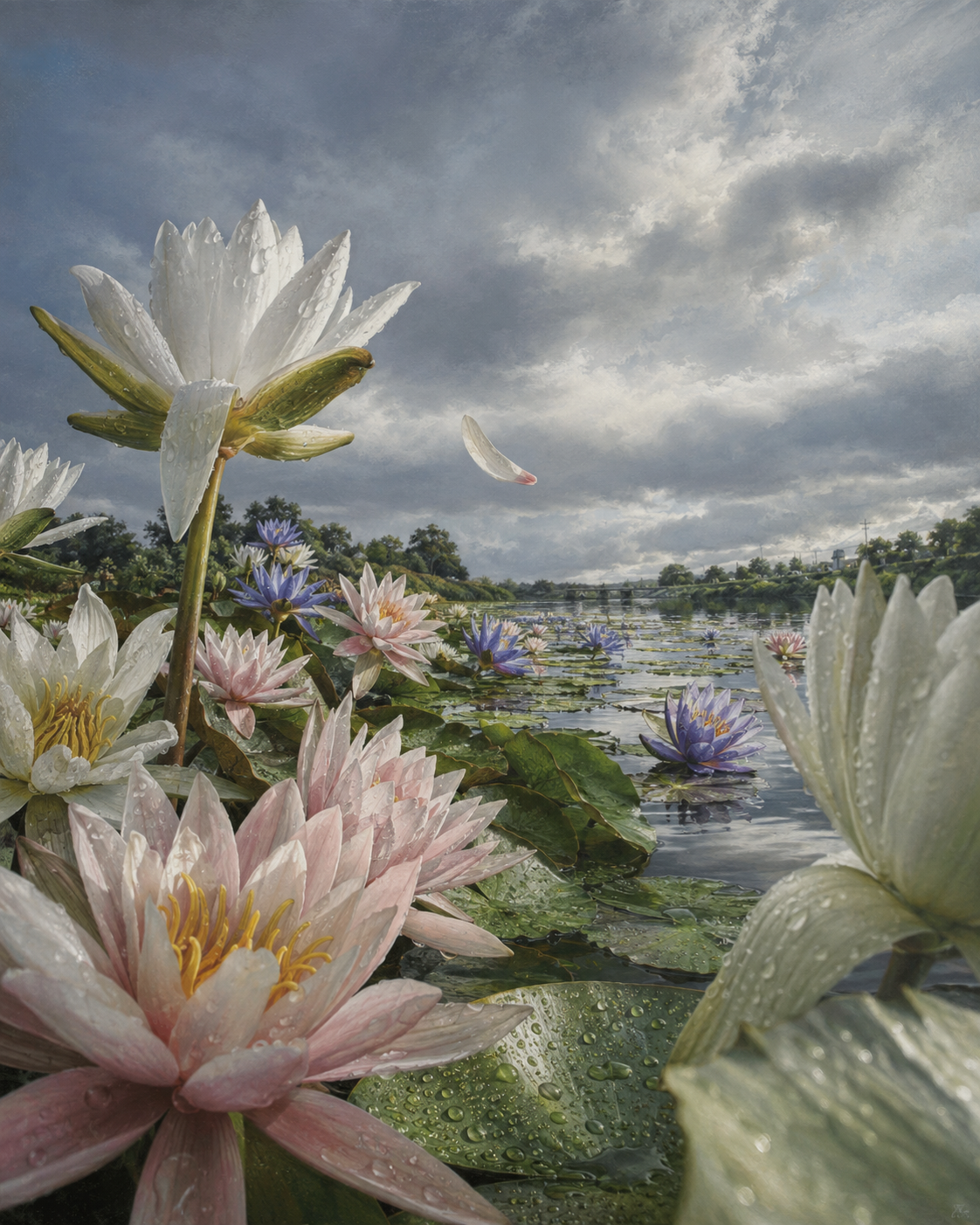
Floating Petal over the Rain-Wet Lilies
Critique
Introduction This painting views a rain-soaked water-lily pond beneath a turbulent gray sky. Large white and pink flowers press close to the viewer, while violet blossoms and a narrow water route recede toward a distant bridge. Description A tall white flower at upper left is seen partly from below, exposing green sepals and a wet stem. A pale pink blossom opens across the lower left, and another white flower is cropped at right. Smaller pink, white, and blue-violet lilies spread through the middle ground among pads covered with droplets. A detached petal hangs in the air near center. Analysis The oversized side flowers form an asymmetrical frame around the open water, while the channel leads centrally into depth. Upright stems and pointed petals answer the distant poles, and the bridge supplies a stabilizing horizontal. Gray cloud masses dominate the upper half, but breaks of white light repeat on wet petals, leaf drops, and reflected water. Pale pink and violet provide restrained color against green and silver. Sharp moisture textures gradually soften toward the bridge and settlement. Interpretation and Evaluation The floating petal makes the storm's remaining movement visible, while the upright blooms suggest resilience after rain. Water appears in several states: pond surface, reflection, leaf droplets, cloud vapor, and suspended moisture. Depiction distinguishes each state alongside ribbed petals, thick pads, grasses, masonry, and distant vegetation with assured technique. The low viewpoint and dramatic sky give the floral subject originality, and the restrained palette prevents the weather effect from becoming theatrical. Conclusion What first appears to be a fresh post-rain flower study gradually becomes an account of a whole watershed, connecting lilies, falling petal, cloud, pond, channel, buildings, and human crossing.
Same Subcategory
 Petals Drifting on the Mountain Stream
Similar Artworks
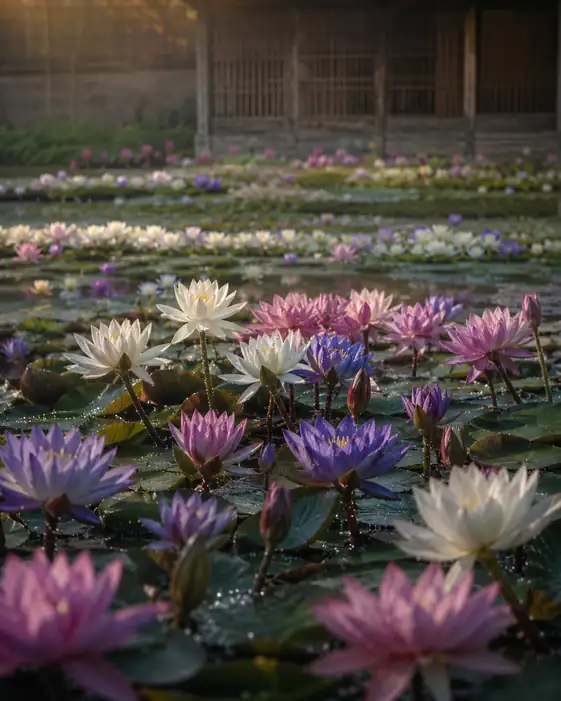 Morning Radiance over the Lily Pavilion
 The Morning Crimson Wishes Met White Prayers
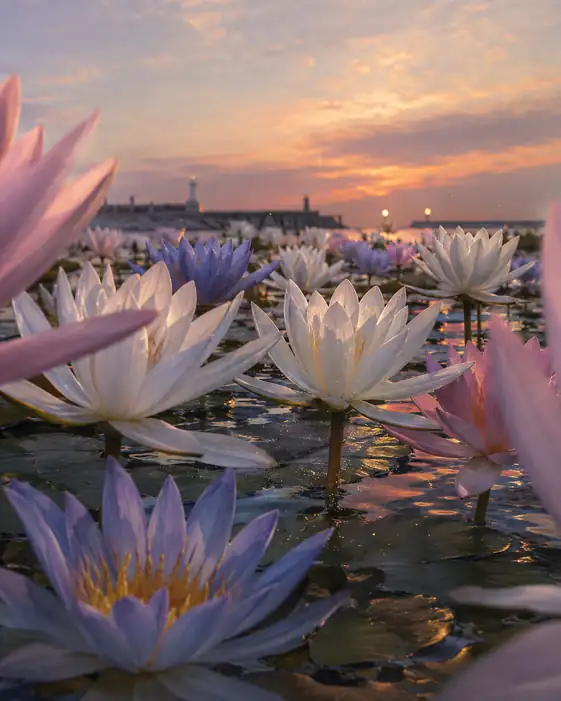 Lilies of the Twilight Harbor
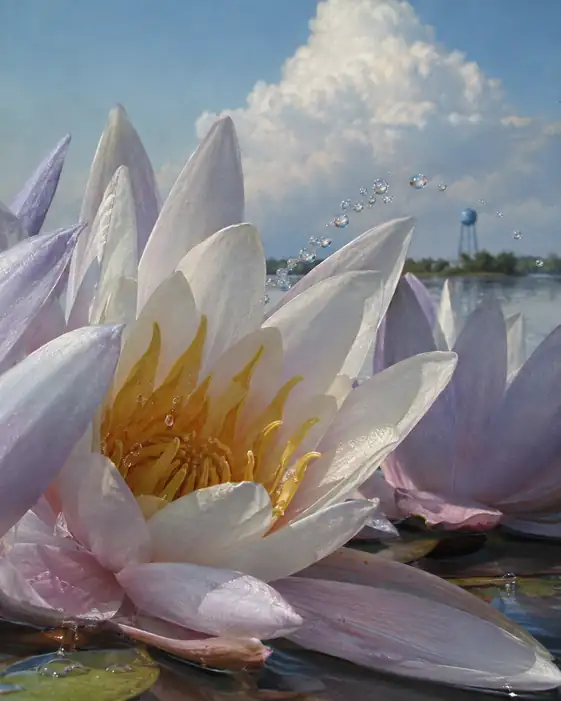 Water Lily and Droplets beneath the Summer Cloud
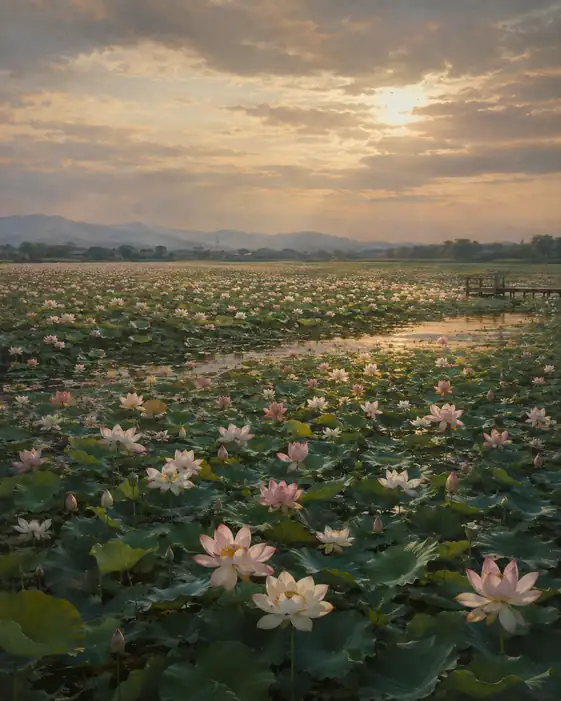 Sunset Radiance over the Vast Lotus Marsh
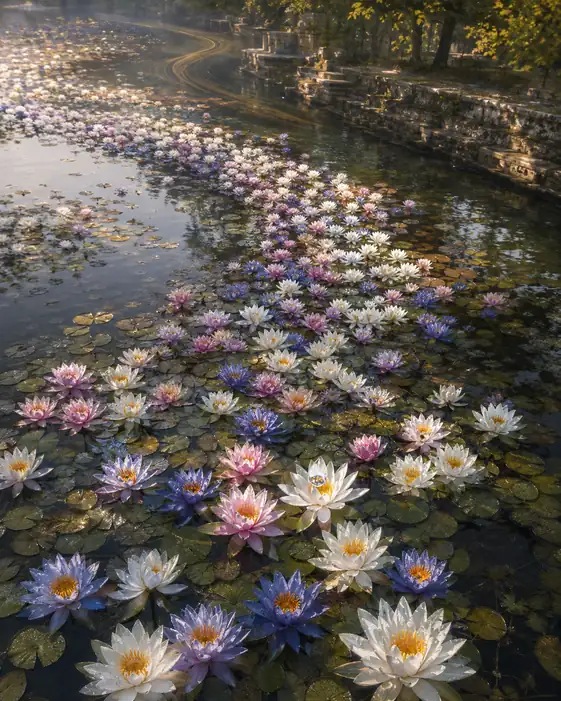 Winding Path of Water Lilies along the Canal
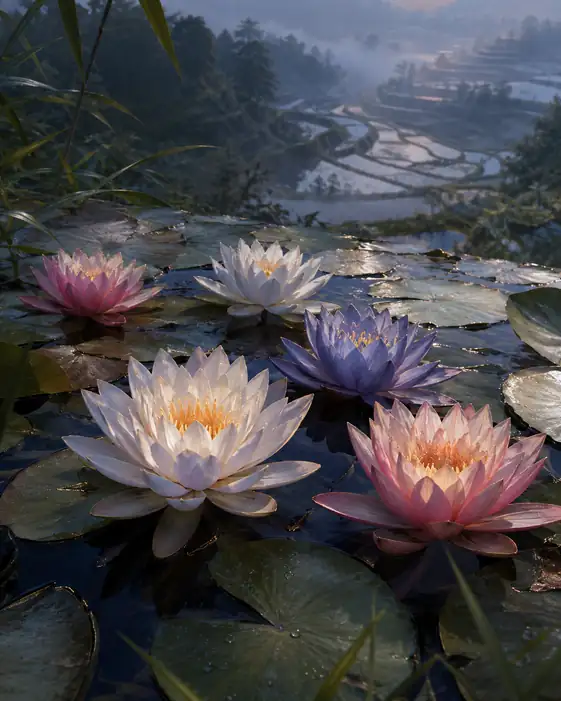 Water Lilies overlooking the Terraced Valley
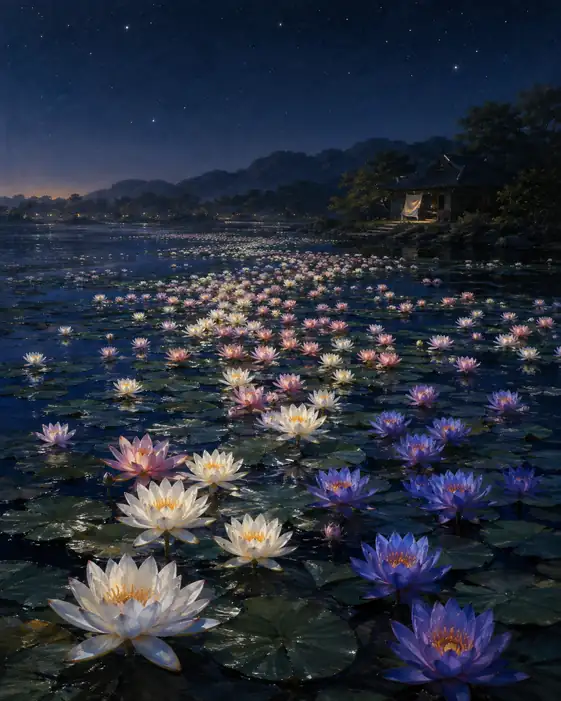 Moonlight Haven and the River of Lilies
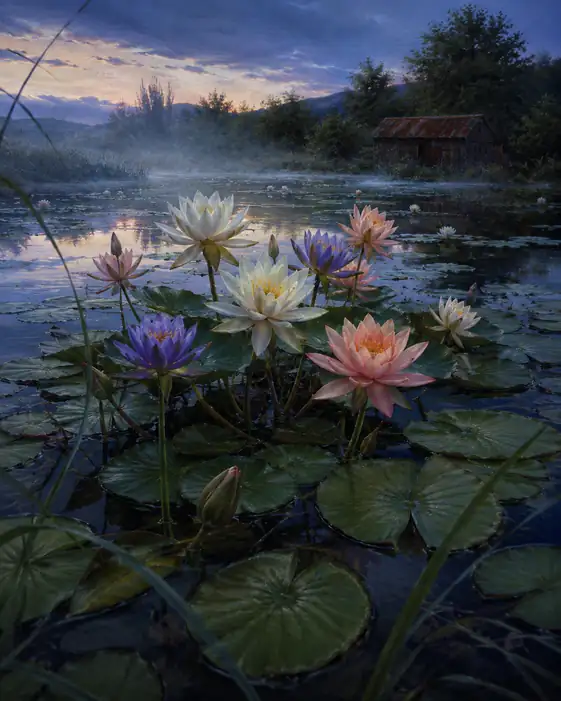 Water Lilies by the Misty Boathouse
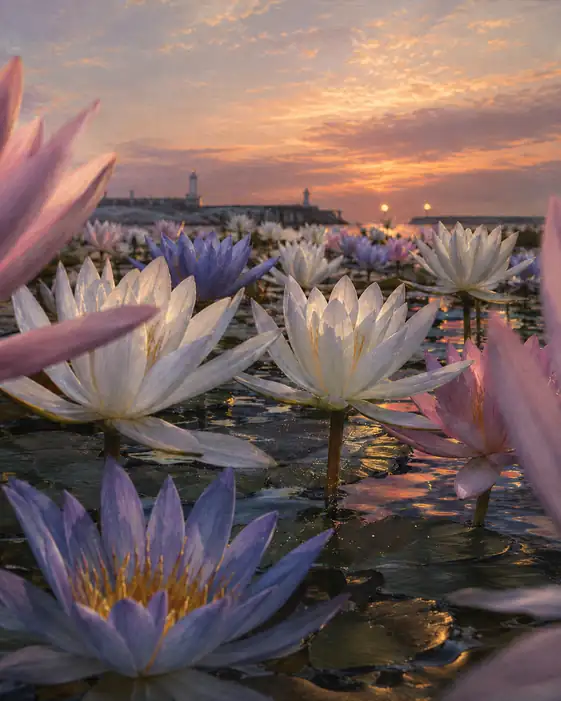 Water Lilies under the Sunset Harbor